by Steve Benen | Mar 16, 2026 | Iran Tensions, Maddowblog, News, Politics
During the first week of the war in Iran, multiple British news outlets reported that the HMS Prince of Wales aircraft carrier was preparing for possible deployment to the Middle East to assist the United States and Israel. Seven days into the conflict, however, Donald Trump, who has a habit of insulting and alienating our closest allies, used his social media platform to deliver a message to leaders in the U.K.: Don’t bother.
“The United Kingdom, our once Great Ally, maybe the Greatest of them all, is finally giving serious thought to sending two aircraft carriers to the Middle East,” the American president wrote. “That’s OK, Prime Minister Starmer, we don’t need them any longer — But we will remember. We don’t need people that join Wars after we’ve already won!”
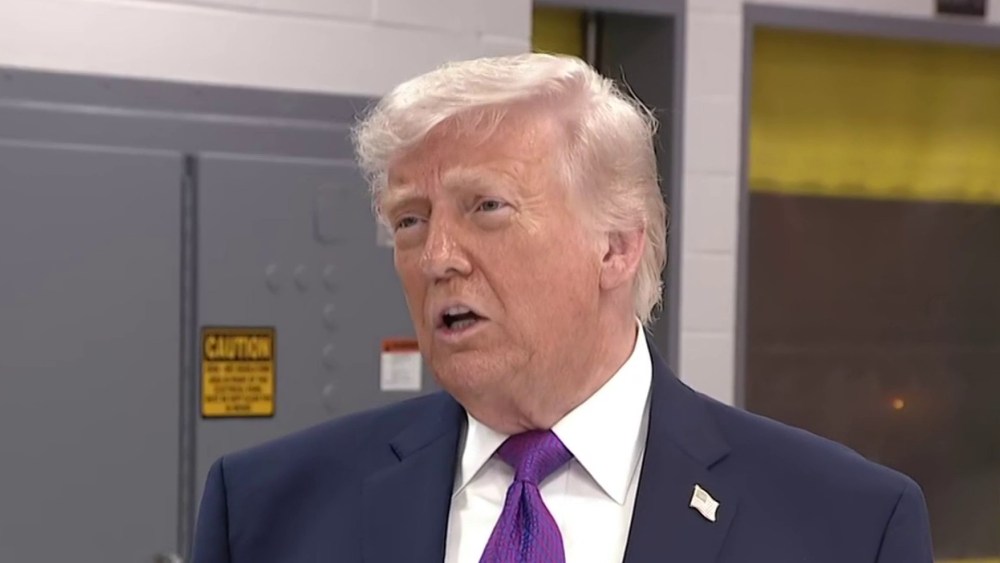
Those attitudes were again on display on Friday when Trump appeared on a Fox News radio program and was asked whether Ukraine has helped the United States with drone defenses. “No, we don’t need the help,” the Republican replied — overlooking the inconvenient fact that our Ukrainian allies have offered and provided the United States with valuable assistance.
Roughly a day later, the American president started reading from a very different kind of script.
On Saturday morning, Trump published a self-defeating message to his social media platform in which he said Iran’s military capabilities have been “destroyed 100%,” except for its drones, mines, missiles, boats and ships. (This was not intended to be amusing.) He added, “Hopefully China, France, Japan, South Korea, the UK, and others, that are affected by this artificial constraint, will send Ships to the area so that the Hormuz

by Paul Waldman | Mar 15, 2026 | Opinion, Politics
Gas prices at the pump have have risen about 50 cents since Trump started his war against Iran, and with tanker traffic through the Strait of Hormuz all but shut down, they could keep rising.
“Get ready for oil to be $200 a barrel,” said an Iranian government spokesperson who, of course, has a reason to predict the price getting that high. The price for a barrel of Brent crude was about $73 before Trump attacked Iran. It was above $100 Friday, and The Associated Press reported that some analysts predict a prolonged closure of the strait could make oil $150 a barrel.
But you know which drivers don’t feel a wave of anxiety as they motor past gas stations with higher prices than the day before? Those in electric vehicles.
Because of Trump and congressional Republicans, there are fewer EV owners than there otherwise would be.
Unfortunately, because of Trump and congressional Republicans, there are fewer EV owners than there otherwise would be, and we’re falling behind other nations — especially China — in the race to create a secure, affordable energy future that produces less pollution.
When Trump came into office, he promised limitless energy abundance and “energy dominance” if only we would turn away from those prissy renewable sources of energy and back toward the kind you get when a bunch of manly men drill into the ground. It wasn’t just rhetoric; the One Big Beautiful Bill he signed last year was the most concerted attack on renewable energy we’ve ever seen.
The bill repealed a whole series of green tax credits, loans and incentives, starting with the $7,500 credit for buyers
by Steve Benen | Mar 13, 2026 | Iran Tensions, Maddowblog, News, Politics
Among the many things Americans don’t know about the war in Iran is how much the U.S. military offensive costs and will continue to cost as combat operations continue. As of a week ago, congressional sources with knowledge of the matter said the war was costing the United States an estimated $1 billion a day.
It now appears that the price tag was even more. MS NOW reported Thursday as part of the network’s live blog coverage:
The Trump administration told Congress at a briefing this week that the first week of the Iran war cost at least $11.3 billion, a congressional source told MS NOW.
The figure, which was first reported by The New York Times, is not exhaustive and does not include the cost of the build-up before the war, the source said.
In other words, the initial estimate was $1 billion a day, and the administration has since revised that number to roughly $1.6 billion a day. Whether that number might yet grow again is unclear.
To state the obvious, the most important cost in any war is the human cost, and this avoidable conflict has already taken a brutal toll, from the American service members who have been killed and wounded to the massive casualties in Iran, including an apparent American missile strike on an Iranian girls’ school that killed 175 civilians, most of whom were children.
But given the broader circumstances, and the role of political leaders in shaping the war’s future, it’s important to acknowledge the fact that this is an election year, and many congressional Democrats have already seized on the growing financial costs.
Indeed, House Minority Leader Hakeem Jeffries
by Steve Benen | Mar 13, 2026 | Economy, Maddowblog, News, Politics
Throughout last year, as the U.S. economy struggled, Republican officials repeatedly insisted that there was good news on the way, and Americans wouldn’t have to wait too much longer to see satisfying results. As recently as August, for example, Treasury Secretary Scott Bessent confidently predicted to a national television audience that the U.S. economy is “really going to pick up in the fourth quarter” of 2025.
It did not pick up in the fourth quarter of 2025. CNBC reported:
Economic growth was much slower than expected in the final three months of 2025 while core inflation rose to start 2026, the Commerce Department reported Friday.
Gross domestic product, a measure of all the goods and services produced across the sprawling U.S. economy, rose at a seasonally and inflation-adjusted annual rate of just 0.7% in the fourth quarter, according to the department’s Bureau of Economic Analysis.
The original expectations for the fourth quarter, spanning October through December, was 2.5% growth. This led to disappointment a month ago when a preliminary tally showed 1.4% growth.
This newly revised figure showed the economy grew at just half of that earlier, disappointing data.
What’s more, in light of this new information, we now know that the economy grew at a 2.1% pace across all of 2025 — down from 2.8% in 2024. Excluding the pandemic, 2025 showed the weakest economic growth in the United States in nine years.
In other words, despite endless Republican hype, economic growth and job growth were significantly stronger during Joe Biden’s final year in office compared with the first year of Donald Trump’s second term.
The White House has not yet offered a persuasive explanation as to
by Steve Benen | Mar 13, 2026 | Maddowblog, News, Politics
When a lengthy government shutdown came to end in the fall, members created a new deadline of Jan. 30 to keep federal operations going through the end of the fiscal year. By and large, both parties showed little appetite for another shutdown, and the appropriations process ran relatively smoothly.
That is, until federal immigration agents shot and killed Alex Pretti, at which point everything quickly changed, and Democrats demanded sweeping reforms to Immigrations Customs Enforcement (ICE) and Customs and Border Protection (CBP).
This led to a brief, partial government shutdown, which began on Jan. 30, but which was resolved a few days later with a compromise package: The parties agreed to fund the entirety of the federal government, except the Department of Homeland Security, for the rest of the fiscal year. As part of the deal, Congress and the White House gave themselves two weeks to negotiate changes to immigration enforcement tactics.
To the surprise of no one, those bipartisan talks failed and funding for the massive agency expired, causing a DHS-specific shutdown.
One month later, efforts to end the standoff are going nowhere, though there has been some relevant activity on Capitol Hill in recent days. The New York Times reported:
The congressional impasse over funding the Department of Homeland Security is entering its second month after the Senate on Thursday again deadlocked over providing money for the agency, even as airports continued to experience security line backups.
The latest Republican proposal to end the standoff was difficult to take seriously: GOP senators proposed reopening the entirety of DHS, without any reforms whatsoever, for two weeks. This approach needed 60 votes to advance, and it
by Steve Benen | Mar 13, 2026 | 2026 election, Maddowblog, News, Politics
About a month ago, CNN reported that Donald Trump was determined to make health care “a central focus of his midterm sales pitch,” which seemed difficult to believe but apparently was a sign of things to come.
In fact, in his remarks to House Republicans this week, the president said, in reference to health care: “We can own the issue. For the first time ever, Republicans can own that issue.”
Trump on healthcare: “We can own the issue! For the first time ever Republicans can own that issue.”— Aaron Rupar (@atrupar.com) 2026-03-09T21:22:40.017Z
Anything’s possible, I suppose, but neither he nor his party should get their hopes up.
The latest national NBC News poll, released this week, asked respondents which party they trust more on a range of issues. Democrats fared well on some questions, including a 20-point advantage on one issue: health care.
Republicans are welcome to try to turn that around between now and Election Day, but existing public attitudes aren’t the only hurdle in their way. There’s also the GOP’s record to consider. The New York Times reported a few weeks ago:
The Trump administration’s proposed new rules for Obamacare plans next year would shift more health care costs to Americans, with much higher deductibles that could lead to larger medical bills.
Under the proposal, people who rely on the Affordable Care Act for their health insurance coverage could choose plans with much lower monthly premiums. But that could leave them exposed to medical expenses totaling thousands of dollars more than A.C.A. plans do now before their insurance would kick in.
This, of course, comes on the heels of Republicans making a deliberate choice to raise