by Paul Waldman | Mar 18, 2026 | Opinion, Politics
There is no doubt the American Israel Public Affairs Committee has a great deal of power and influence. Yet in the Democratic Party at least, a dwindling number of candidates want to be publicly associated with the country’s most prominent pro-Israel political organization. It is no surprise, then, that multiple news organizations, including The New York Times and Chicago’s WBEZ, have found links between AIPAC’s donors, registered agents and vendors and new super PACs with innocuous-sounding names like Elect Chicago Women and Affordable Chicago Now. Those groups have poured at least $21 million into open-seat congressional primaries in and around Chicago, blanketing the airwaves with ads that don’t mention Israel at all.
AIPAC’s goal of keeping Israel a bipartisan cause looks increasingly endangered.
For all the money it invests, AIPAC’s goal of keeping Israel a bipartisan cause looks increasingly endangered. In many races, AIPAC can’t find a Democrat who will unequivocally stand by the Israeli government the way it would like. While Republicans have long been mostly unanimous in supporting Israeli Prime Minister Benjamin Netanyahu’s government, AIPAC also wants to elect Democrats who won’t put conditions on aid for Israel or be too critical of Israel’s government — because a bipartisan cause is more insulated from the shifting political winds of a particular moment.
But this election year is making clear how rapidly the politics of support for Israel is shifting, to the point where even among candidates who have historically supported aid to Israel, support from AIPAC has become a black mark with which few Democrats want to be tarred.
Play
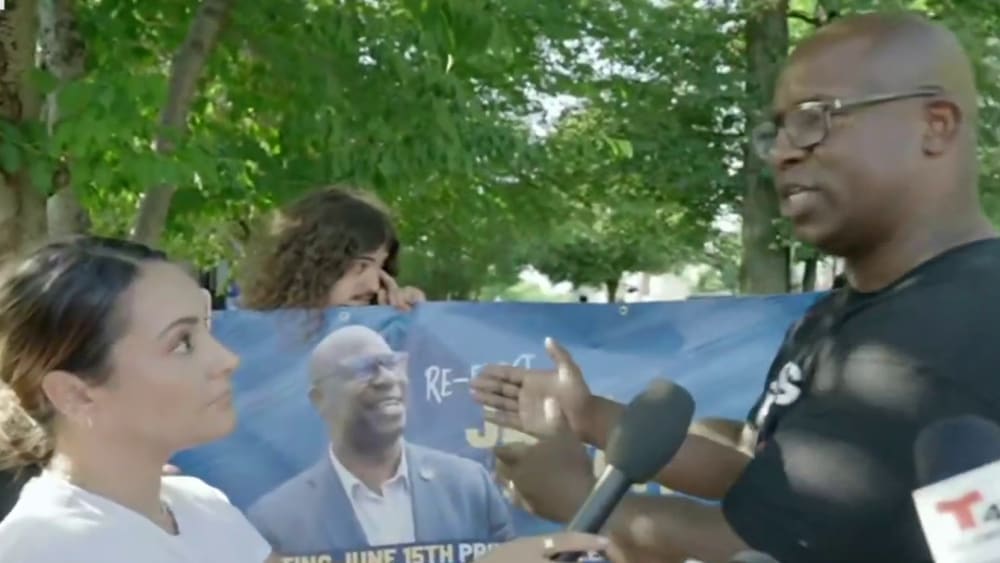
‘Because AIPAC are bullies’: Rep. Bowman says voters ‘are afraid’ to discuss heated
by Sumayyah Waheed | Mar 18, 2026 | Opinion, Politics
On Friday, a federal judge blocked the Trump administration from ending Temporary Protected Status for 1,100 Somali residents, four days before that protection was set to expire. The judge noted that thousands of Somalis could face severe risks, including “detention and deportation, physical violence if removed to Somalia, and forced separation from family members.” Separately, on Monday the Supreme Court said it would soon decide whether to lift lower-court orders that have so far blocked the administration from ending TPS for more than 350,000 Haitians and 6,000 Syrians.
Mohamed is one of tens of thousands of people who may be torn away from their families, friends, schools, workplaces: in short, the lives they’ve spent building in the United States.
I work as senior policy counsel at Muslim Advocates, one of the organizations representing Somali and Syrian plaintiffs in these cases, and I’ve witnessed the devastating impact this uncertainty is having on our clients. Take Mohamed Doe, who has lived in the U.S. for years as a TPS holder from Somalia. His Temporary Protected Status is his sole basis for a work permit and driver’s license, both of which he needs to take care of himself and his pregnant wife. Mohamed works as an educator and a coach for two sports teams, serving as a critical source of career and educational guidance and counseling for his students. Now he and his family are in limbo as they await a final court decision.
Mohamed is one of tens of thousands of people who may be torn from their families, friends, schools, workplaces: in short, the lives they’ve spent years building in the United States. In addition to representing Somalis and Syrians,
by Steve Benen | Mar 17, 2026 | Maddowblog, News, Politics
By any fair measure, 14 months into his second term, Donald Trump’s presidency is failing. His economic record is an embarrassment, the war he launched in Iran is causing adverse consequences he should have seen coming, his crusade against his perceived enemies is faltering, and even the most conservative Supreme Court in generations has refused to endorse his illegal trade tariffs agenda.
Just as notably, the Republican incumbent is historically unpopular, at least in part because two-thirds of Americans are convinced that Trump simply has the wrong priorities.
On Monday, he seemed eager to prove those critics right.
When the White House announced that the president would hold an afternoon press conference, many assumed that he’d take the opportunity to update the nation on the latest war in the Middle East. Instead, speaking at a Kennedy Center board lunch, Trump fielded questions that touched on a wide variety of subjects — not because reporters asked questions about them, but because the president wouldn’t stop bringing them up.
Trump: “There’s never been a paint. I said, ‘Some day I’m going to discover a paint where you don’t have to actually use gold leaf.’ Gold leaf is a very very big and expensive process, but it’s a beautiful thing, but not when you use paint.”— Aaron Rupar (@atrupar.com) 2026-03-16T16:40:34.533Z
In apparent reference to Kennedy Center renovations, Trump went on and on about, of all things, paint.
“There’s actually never been a paint that’s made that will look like gold. … Either gold leaf it or use real gold bullion, or you use a different color,” he said. “Nobody’s ever been able to make a gold paint that looks
by Steve Benen | Mar 17, 2026 | Justice Department, Maddowblog, News, Politics
The list of missteps at Donald Trump’s Justice Department over the past 14 months is not short, but among the most unsettling developments is the frequency with which Main Justice has fired federal prosecutors as part of a brazenly partisan purge. Making matters worse is the fact that U.S. attorneys’ offices have reportedly struggled to find qualified replacements, with lawyers feeling understandable reluctance to join an administration in which the rule of law has been overtly weaponized.
The DOJ, however, apparently has a solution in mind: Bloomberg Law reported that the department has decided to waive the policy that required newly hired federal prosecutors “to possess at least one year of experience practicing law.” From the report:
Many offices have previously adopted their own rules mandating at least three years of legal practice, rather than the nationwide baseline threshold of one year. But the reduced standards this month were implemented in federal districts such as Minnesota and Southern Florida that have experienced significant attrition to put new prosecutors to work straight out of law school.
The reporting has not been independently verified by MS NOW, but Bloomberg Law’s account was bolstered by online vacancy announcements published in at least a handful of offices across multiple states.
What’s more, the DOJ made no effort to deny the accuracy of the reporting, saying in a statement that it’s “proud to empower young and passionate prosecutors.”
Time will tell whether, and to what extent, these lower standards will affect federal criminal prosecutions, but I’m struck by the familiarity of the circumstances.
Indeed, it was less than a month ago when Reuters reported on the FBI’s lowering of its standards
by Steve Benen | Mar 17, 2026 | Iran Tensions, Maddowblog, News, Politics
Joe Kent, whom Senate Republicans confirmed last summer to serve as the director of the National Counterterrorism Center, has made headlines for a variety of unfortunate reasons, but on Tuesday morning, the Washington Republican made news in an entirely unexpected way: He announced that he’s resigning in protest from the Trump administration over the war in Iran.
In a brief item published to social media, Kent wrote:
After much reflection, I have decided to resign from my position as Director of the National Counterterrorism Center, effective today.
I cannot in good conscience support the ongoing war in Iran. Iran posed no imminent threat to our nation, and it is clear that we started this war due to pressure from Israel and its powerful American lobby.
Kent, who included an image of his formal resignation letter, added that he considers it an honor to have served under Donald Trump and Director of National Intelligence Tulsi Gabbard. His tweet concluded, “May God bless America.”
He is the first and only prominent official from the Republican administration to step down over the U.S. military offensive in the Middle East.
Kent was a contentious figure long before he joined the president’s team. Indeed, The Associated Press published a memorable report during Kent’s 2022 Republican congressional campaign, for example, highlighting his “connections to right-wing extremists, including a campaign consultant who was a member of the Proud Boys.”
The Seattle Times later noted Kent’s “reported associations with white nationalists and other far-right groups, and embrace of conspiracy theories on an array of subjects.”
Kent insisted, for example, that the 2020 presidential election was “rigged and stolen” and that the FBI was “corrupt” and needed
by Steve Benen | Mar 16, 2026 | Iran Tensions, Maddowblog, News, Politics
Much of what has transpired in the war in Iran was predictable. One need not be a foreign policy expert, for example, to realize that Donald Trump would make a series of miscalculations while ignoring sensible warnings. Similarly, the crisis in the Strait of Hormuz was unavoidable; Iran’s efforts to widen the conflict into a regional war have long been envisioned; and pretty much everyone saw the economic consequences coming.
The one thing that I’ve found surprising, however, is the near-constant focus on the president’s feelings.
Just three days into the military offensive, an analysis in The New York Times noted that Trump’s decision “to order the attack on Iran … was mostly a matter of gut instinct.” A week later, a reporter asked about Trump’s argument that he feared an Iranian strike on U.S. targets within seven days, which he then bumped down to three days; in response, White House press secretary Karoline Leavitt referred to “a feeling the president had based on facts.”
Similarly, late last week, the president told Fox News’ Brian Kilmeade how he will know when the war is over: “When I feel it, when I feel it in my bones.”
KILMEADE: When will know the war is over?TRUMP: When I feel it. I gotta feel it in my bones.— Aaron Rupar (@atrupar.com) 2026-03-13T19:26:33.919Z
There have long been concerns that the entire foundation of the war was built on the whims of a former television personality. Trump keeps confirming that those fears were well justified.
He’s not the first president to launch a dubious war, but he is the first to pursue a war policy based on vibes.
Complicating matters is the