by Maximillian Alvarez | May 13, 2026 | Article, Economy, Economy and Inequality, Media, Opinion, Politics and Movements: US
An earlier version of this speech was delivered at the 2026 Izzy Awards ceremony at the Park Center for Independent Media in Ithaca, NY, on April 21, 2026.
Friends, colleagues, fellow human beings,
You don’t need to read Project Censored’s latest State of the Free Press report to know that the state of the free press in America is not good (but, obviously, you should still read the report).
And it’s not just President Trump, his administration, and the MAGA faithful repeatedly, publicly expressing their hatred and verbalizing threats towards journalists and media organizations that don’t tow the Supreme Leader’s line. It’s not just Trump and his cabinet bullying and berating journalists at press briefings, restricting their access, and trying to make them sign loyalty pledges.
It’s also Trump’s absurd and gangsterish lawsuits targeted at ABC News, which is owned by Disney, and CBS News, which is owned by Paramount, and the morally spineless, financially self-serving capitulation of these corporate cowards to Trump by settling, rather than fighting, those lawsuits—setting the precedent for more shakedowns.
It’s the multi-pronged attempt by the Trump administration and the ruling-class-serving authors and executors of Project 2025 to destroy the Corporation for Public Broadcasting, which they succeeded in doing, and to defund and destroy PBS and NPR, which they are still trying to do now.
It’s the federal harassment, capture, imprisonment, and even deportation of journalists like Estefany Rodríguez, Mario Guevara, Sami Hamdi, and Georgia Fort. Even Don Lemon. Even Tufts grad student Rümeysa Öztürk, who was snatched off the street last year by plainclothes federal thugs for co-authoring an op-ed in her campus newspaper.
It’s the professional journalists, student journalists,
by Hayes Brown | May 13, 2026 | Opinion
Everywhere you look, the MAGA coalition that propelled Donald Trump back into the Oval Office is fracturing. The president’s poll numbers are plummeting across key demographics and dragging down congressional Republicans hoping to keep their jobs in November. Two weeks ago, the outlook for the GOP was looking especially grim, with predictions showing the House would almost surely be lost in the midterms and Republicans hanging on to the Senate by a thread.
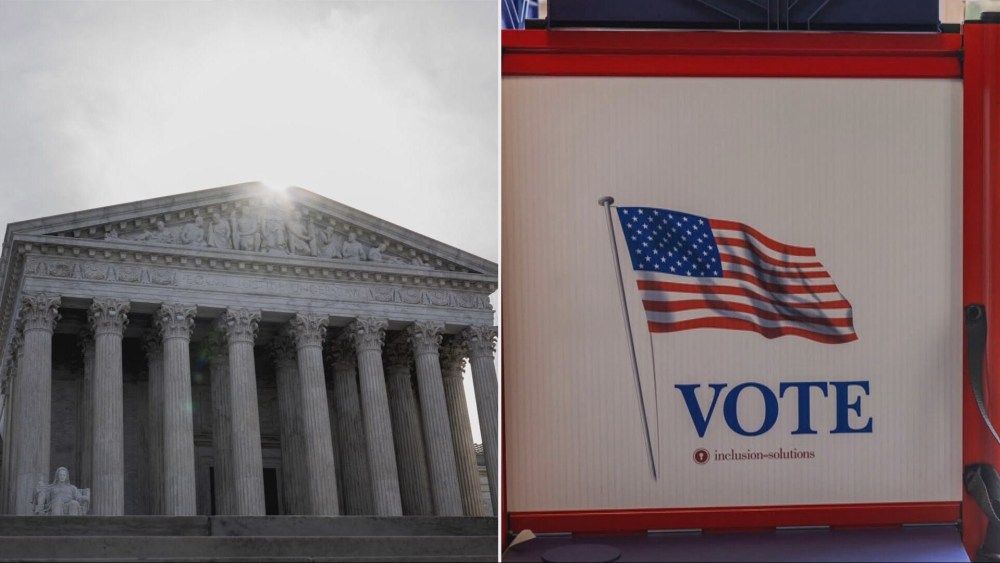
Then, in the span of about 10 days, everything shifted. The redistricting war Trump had begun, which had been looking like Napoleon’s doomed invasion of Russia, suddenly swung back in Republicans’ favor. The U.S. Supreme Court opened the door to a rush of racial redistricting across the South, and Virginia’s Supreme Court reversed Democrats’ gains in Virginia. The resulting Republican gerrymandering is acting as a superglue binding the GOP’s splintering hopes for surviving the midterms, but that gerrymandering leaves the party as fragile as ever in the long-term and destined to fall apart once Democrats can fully respond in kind.
Republican gerrymandering is acting as a superglue binding the GOP’s splintering hopes for surviving the midterms
The prevailing assumption for November’s elections was that Republicans would find themselves “cooked,” as one White House official recently told MS NOW. The factions that make up the MAGA base have all found things they don’t love about the administration. There’s the Make America Healthy Again crowd’s dismay that a weed killer hasn’t been banned, the anti-war isolationists’ anger at Trump’s Iran war and the anti-immigration wing’s furor that mass deportations are lagging.
Among so-called “normie” Republicans, as GOP pollster Kristen Solis Anderson called them
by Nicholas Grossman | May 13, 2026 | Opinion
Iran responded on Sunday to President Donald Trump’s latest peace proposal with demands of its own. The United States asked Iran to agree in principle to forfeit its nuclear program and reopen the Strait of Hormuz while it negotiates the details. Iran rejected that, asking the U.S. to pay war reparations and acknowledge Iran’s sovereignty over Hormuz, by which Iran is blocking around 20% of the world’s oil and gas supply. With both countries acting like they have the upper hand, a war-ending deal is impossible.
Trump has insisted Iran has been “defeated militarily” and reassured that “as soon as the war is over, which will not be too long, you’re going to see oil prices drop.” Wall Street has appeared similarly confident. For example, JP Morgan’s latest guidance said, by June, oil shortages will “force the reopening of the Strait of Hormuz, one way or another … following a clear and credible announcement ratified and confirmed by both sides.”
But no politicians or bankers have explained how this will happen, and their complacent insistence that it will work itself out delays the hard choices necessary to resolve the war. Resource shortages are growing, and in the coming months, they will likely get so impactful that they’re impossible to dismiss.
Play
Trump: ‘I don’t think about Americans’ financial situation. I don’t think about anybody.’
May 12, 2026 / 09:56
U.S.-Iran negotiations are in the same place they were last month, when I wrote that Iran was in a stronger strategic position than the U.S. and Trump’s only options were a humiliating surrender or military escalation (which could end in a more costly humiliation). Trump has chosen
by Molly McGrath | May 13, 2026 | Opinion
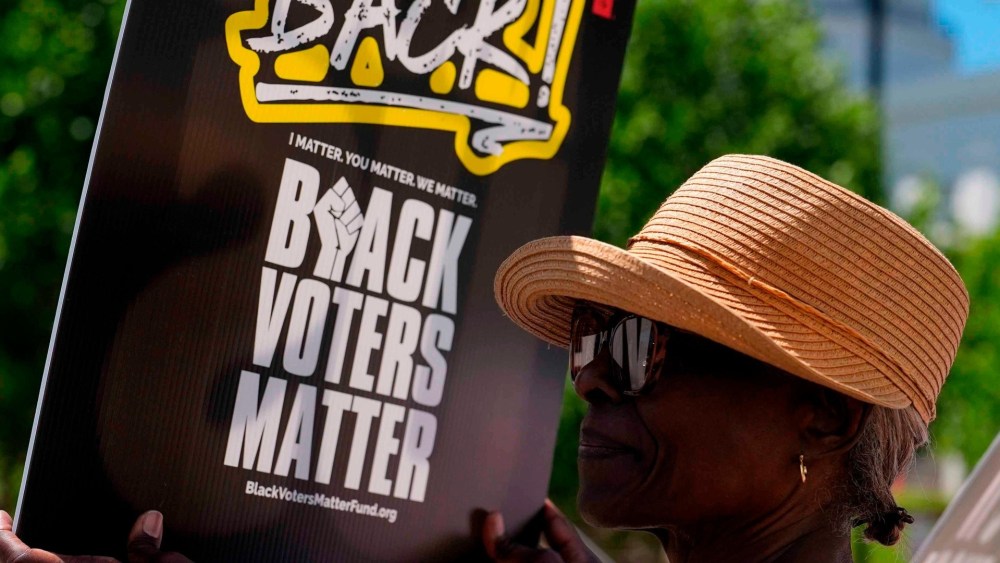
The Supreme Court dealt a blow to a remaining key protection of the Voting Rights Act less than two weeks ago in Louisiana v. Callais. Lawmakers in states across the South heard this starting shot from the high court, jumped off the block and sprinted to redraw maps to undermine Black voters’ voices.Alabama’s legislative majority wants different maps that would harm Black voters, and on Monday, the Supreme Court issued a ruling that opened the door for the majority to do just that. Plaintiffs in the case — everyday Black Alabama voters and civic organizations affected by this court decision — immediately went back to the district court to ask them to keep the current map, given people are already voting under it.
Play
Alabama pushes for new congressional map that would eliminate black-majority district
May 11, 2026 / 10:41
Louisiana is trying to stop a primary election that’s already underway and is signaling it will eliminate one or both of the state’s two majority Black congressional districts. South Carolina has opened a process to extend its session to gerrymander its state voting maps. Mississippi lawmakers have signaled they will consider redrawing the state’s maps. And Tennessee just became the first state to adopt new maps after Callais.
This is a crisis for democracy, but the people are making their dissent heard, testifying and rallying at statehouses across the region. Voters in these states refuse to quietly accept these cynical attempts by lawmakers to choose their voters in order to unfairly retain power. The day after the decision, tens of thousands registered for a single organizing call with the “No Kings” coalition.
Hundreds showed up outside
by Zeeshan Aleem | May 13, 2026 | Opinion
In his decade in national politics, Donald Trump has transformed the meaning of the political gaffe. As a campaigner and as president, he has demonstrated an uncanny ability to bulldoze over controversies stemming from embarrassing, tone deaf or outright offensive remarks. But it’s genuinely hard to see how a tin-eared remark he made Tuesday won’t haunt him.
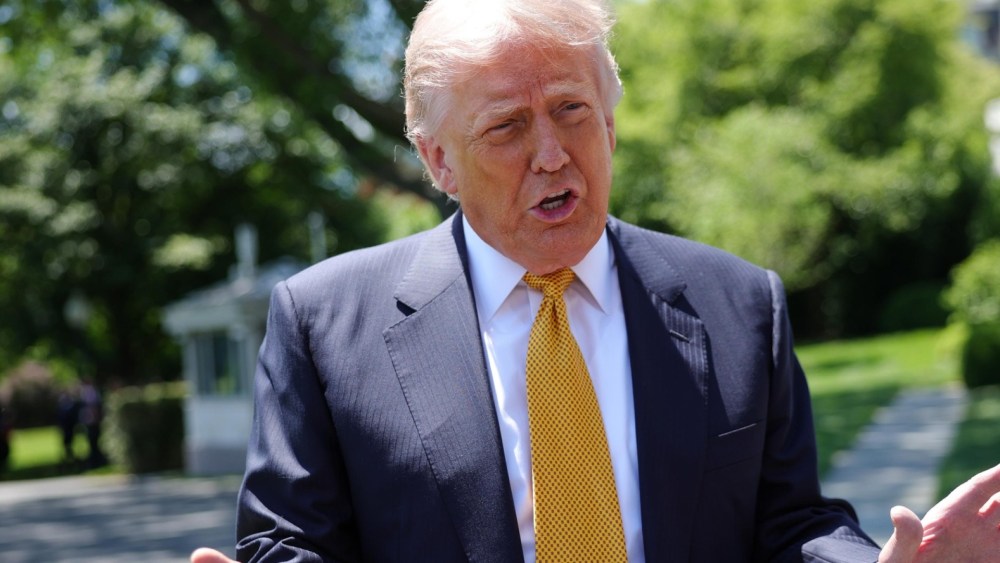
Before leaving for his trip to China, Trump took questions from the press on the White House lawn. About 10 minutes into his appearance, a reporter asked, “When you’re negotiating with Iran, Mr. President, to what extent are Americans’ financial situations motivating you to make a deal?”
Without hesitation, Trump replied, “Not even a little bit.”
He continued: “The only thing that matters when I’m talking about Iran — they can’t have a nuclear weapon. I don’t think about Americans’ financial situation. I don’t think about anybody. I think about one thing: We cannot let Iran have a nuclear weapon. That’s all.”
I don’t think about Americans’ financial situation. I don’t think about anybody.
Democrats have just received the ideal video clip for midterm messaging.
Trump’s favored escape hatch — passing off an off-color or foolish remark as a joke — is not available here. In clips of his remarks, which immediately spread like wildfire on social media, Trump speaks emphatically, and his tone makes it clear that he’s speaking with clear and serious intention.
President Trump said he doesn’t think about Americans’ financial situations as he negotiates with Iran, “not even a little bit,” as he took questions from reporters before leaving for China.”The only thing that matters when I’m talking about Iran, they can’t have a nuclear… pic.twitter.com/Yb2ErKl8t2—
by Zeeshan Aleem | May 12, 2026 | Opinion
President Donald Trump will arrive in Beijing on Wednesday evening for his first trip to China since 2017. Compared with that visit almost a decade ago, Trump is in a far weaker position to push his agenda, and Chinese President Xi Jinping is better positioned to exploit his vulnerabilities.
It’s a high-stakes visit during which Trump, in face-to-face meetings with Xi, is expected to negotiate issues including the war with Iran, trade, artificial intelligence and Taiwan. But Trump will start on his back foot.
The president’s ill-fated “excursion” in Iran will be top of mind for him and Xi, but it weighs on them differently. The choice to enter the war alongside Israel is arguably the biggest political error of Trump’s career. He has caused a global economic crisis, his poll numbers have plunged to new lows, the isolationist wing of his party has turned against him, and his already poor international reputation is in tatters. Trump needs the war to end as quickly as possible to forestall a lingering economic downturn before the midterm elections.
While the U.S. and China have a shared interest in ending the war, Trump is more desperate for it.
By contrast, Xi, who is in the middle of an unprecedented third term, has only consolidated political power in China over the past decade. He remains confident as a global player and is not pressed over Iran in the same way Trump is. To be sure, China wants the war to end: It imports oil through the Strait of Hormuz, and no country is immune to a possible global recession triggered by an endless war. But China’s energy independence