by Mike Wise | Jun 9, 2026 | Opinion, Sports
There was a time when Donald Trump wasn’t just welcomed at the world’s most famous arena but when his attendance was trumpeted. In that not-so-distant past, Trump, who was born in Queens, was a part of Manhattan’s fabric, a New Yorker through and through. “Donald! Donald!” the fans called as he rounded the glass partition of the hockey rink where the New York Rangers played. It was 1999, Wayne Gretzky’s last season. “The Apprentice” was five years away, the White House not even a glint in his eye. When he shook hands and nodded knowingly to the Madison Square Garden masses, they felt happy that their rich and famous neighbor acknowledged them.
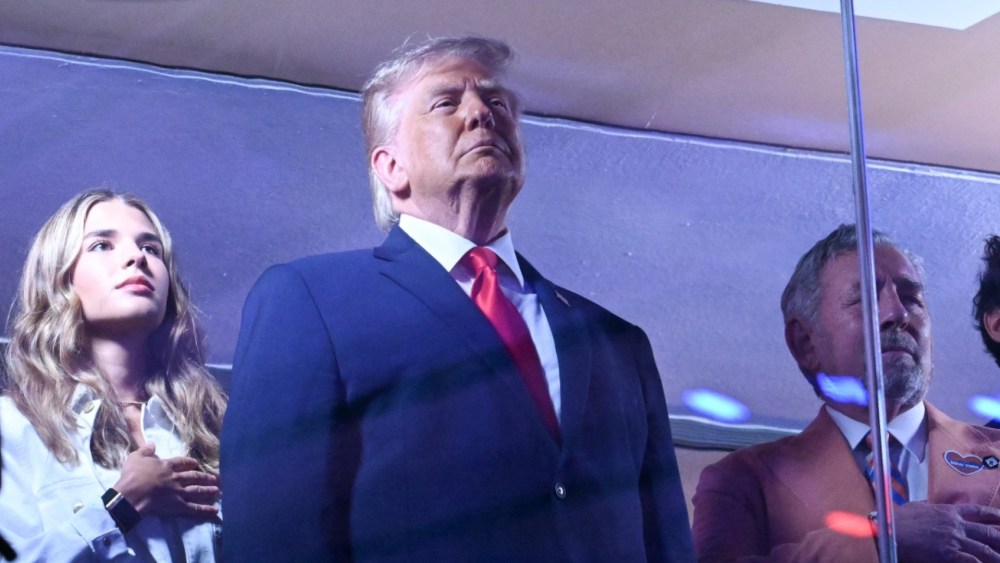
But Monday night, as President Donald Trump smiled broadly and saluted while “TheStar-Spangled Banner” blared and his image was shown to masses on the big screen for nearly eight seconds before Game 3 of the NBA Finals?
Outright disdain.
Heckling, jeering from every part of the arena was focused like a beam of white, hot angry light into owner James Dolan’s luxury suite where Trump stood.
Heckling, jeering from every part of the arena was focused like a beam of white, hot angry light into the owner James Dolan’s luxury suite where Trump stood. Secret Service agents, who had commandeered the boxes on each side of the owner’s box, pressed their fingers to their earpieces, as if they were trying to hear above the noisy and disrespectful din.
The intensity of the Garden’s displeasure did not wane even when Trump’s granddaughter Kai was shown behind him. The president smiled and saluted throughout his cameo, as if he was impervious to the crowd that likely
by Zeeshan Aleem | Jun 9, 2026 | Opinion
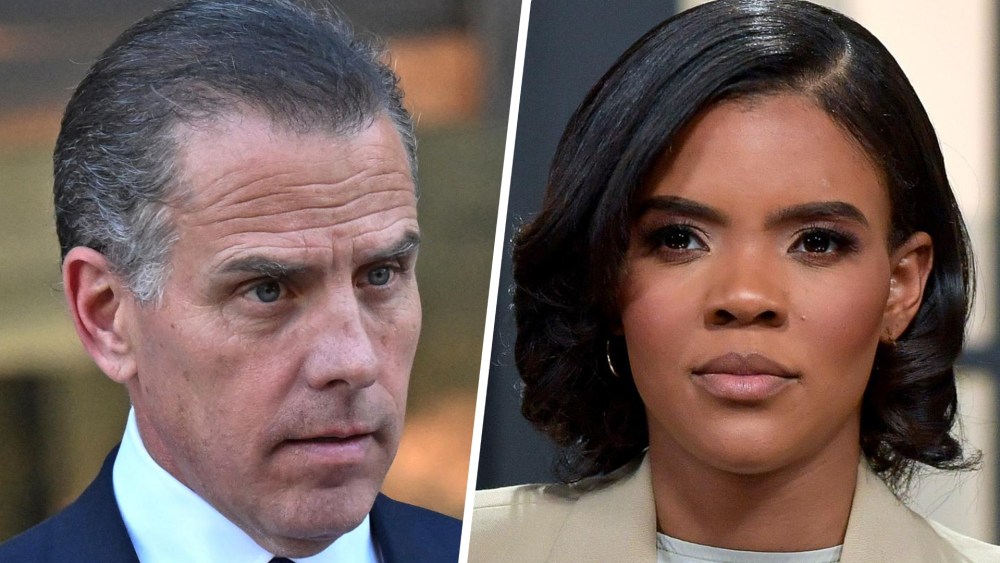
“I’m Hunter Biden. You’ve never actually heard from me,” posted the son of former President Joe Biden to X and Substack on May 19.
It was an unexpected proclamation from a long-controversial figure in Democratic politics, whose personal scandals, nepo baby tendencies and criminal conduct have long been the stuff of political culture wars and tabloid coverage — and even a factor in electoral outcomes. But Hunter Biden’s note marked the opening salvo of a deliberate bid to reinvent himself using the miraculous powers of the social Internet.
And at the moment, it’s strangely kind of working.
Biden has been posting and replying to other people’s posts frequently, and getting a ton of engagement, thousands of reposts and vaguely positive media coverage for his commentary. He’s published posts on a variety of topics — sobriety (Biden has battled drug and alcohol addiction), his family, gratitude, his paintings, fundraisers for homeless people. Mostly it’s in writing, but sometimes he puts up videos with snippets of life philosophy in the style of Instagram influencers.
My suspicion is that Biden knows tapping into the attention economy could be parlayed into future opportunities.
Part of the reason Biden is breaking through is he’s making blunt, self-deprecating humor a significant part of his online persona. For example, he once complained that a photoshopped image of him smoking a pipe featured what looked more like a meth pipe than a crack pipe, asking to be mocked more accurately. (Biden has openly discussed an addiction to crack cocaine.) He ended that post with the phrase, “Thank you for your attention to this matter” — a nod to Trump’s signature sign-off on many
by Richard L. Hasen | Jun 9, 2026 | Opinion
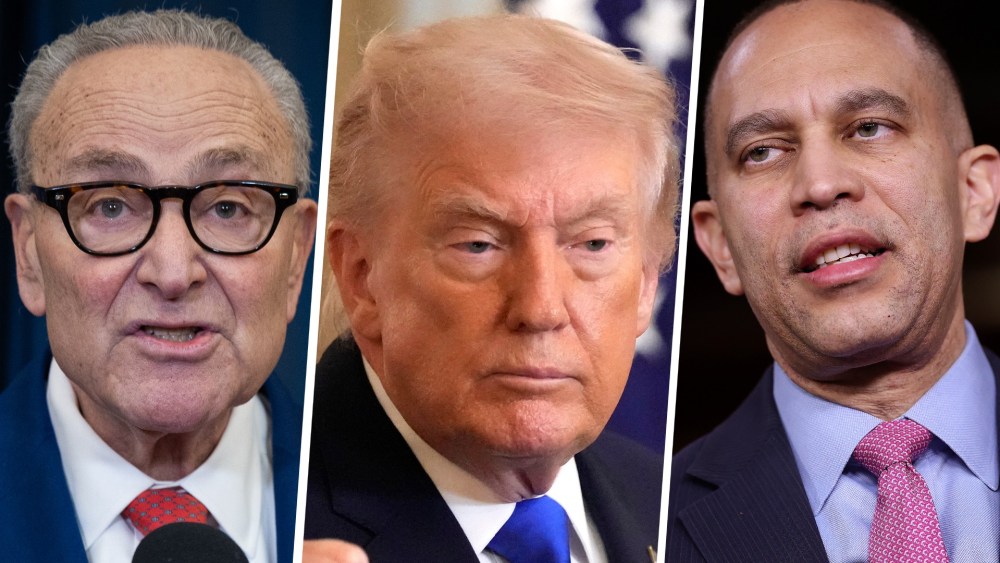
During normal times, the president of the United States would not routinely claim, without evidence, an epidemic of “voter fraud.” But Donald Trump is on another tirade about supposed fraud — this time in California’s primary elections. If there’s any good news, though, the publicity and pushback against his claims will inoculate the public against similar unsupported charges in November’s midterms, if control of Congress depends upon late-arriving results in the Golden State.
Let’s begin with some obvious points. California’s vote-counting process is notoriously slow. Millions of the state’s voters choose to vote by mail, and election officials’ efforts to confirm that voters have followed all the rules take some time. The state has unusually lenient rules for both the receipt of mail-in ballots (timely postmarked ballots may be counted if election officials receive them within seven days of the election) and for curing defective ballots (such as mail ballots on which a voter forgets to add their signature). Despite the popularity of mail-in ballots, the state has not prioritized saving state resources over a quicker vote count.
Further, it is rather routine that California results show Republican and more conservative candidates doing well in initial tallies, only for Democrats and liberal candidates to appear to “gain” as more ballots are tallied. Voters who have lived in the same place longer, own a home, are white and are wealthier are all more likely to receive and send back their ballots early — and they are also more likely to vote Republican.
President Trump has incessantly fueled beliefs on the right that voter fraud is prevalent in Democratic states.
Think about election tallying
by Jessica Levinson | Jun 8, 2026 | Opinion
Our system of government is based on distrust. We revolted against a monarchy and decided to decentralize power, with the hope that bad people and bad decisions are less likely to wield actual power. We not only divide power among three branches of government, but we also divvy up power between a federal government and state governments.
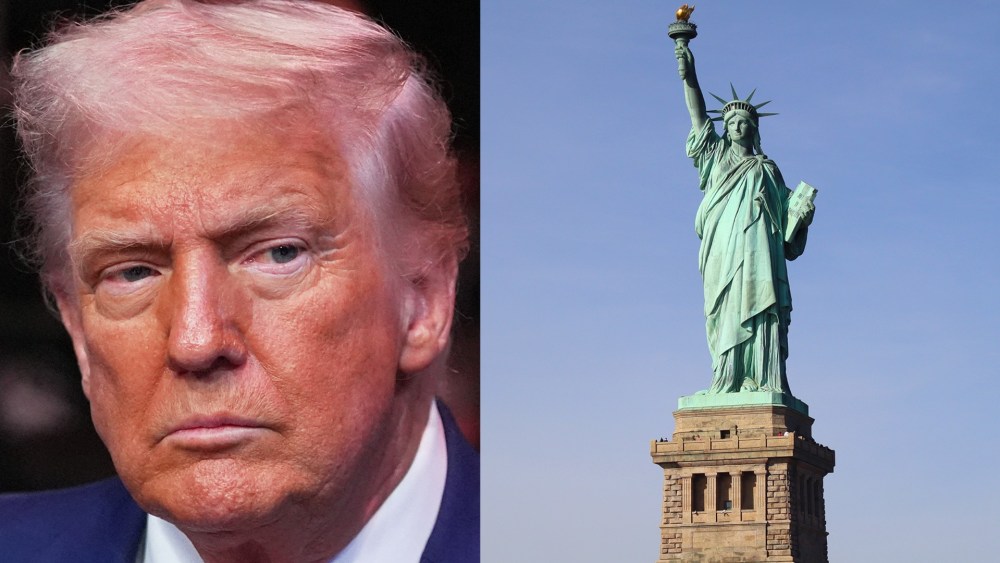
You can be forgiven if you think our system of horizontal separation (three branches of government) and vertical separation (federal and state governments) is collapsing all around us. The enlargement of the executive branch, to the detriment of the legislative branch and the states, didn’t begin with President Donald Trump. And it won’t end with him unless Congress and the states reclaim their constitutionally endowed power, or judges and the public push presidents back into their lane.
If any government entity wants to put these conditions on the receipt of federal funds, it should be Congress, and not the executive branch through the U.S. Department of Agriculture.
Recently, a federal judge did just that and pushed back against the Trump administration’s attempt to condition $74 billion in nutrition and farm aid to states — including Supplemental Nutrition Assistance Program (SNAP) benefits — on the states’ decision to acquiesce to Trump administration policies on transgender people; diversity, equity and inclusion; immigration enforcement; and other topics. We are, to be clear, talking about money that goes to feed the poorest among us, including tens of millions of children.
U.S. District Judge Myong Joun, who has apparently read the Constitution, put at least a temporary stop to the administration’s attempts to coerce the states into action.
The case involves a suit
by Jacques Berlinerblau | Jun 8, 2026 | Opinion
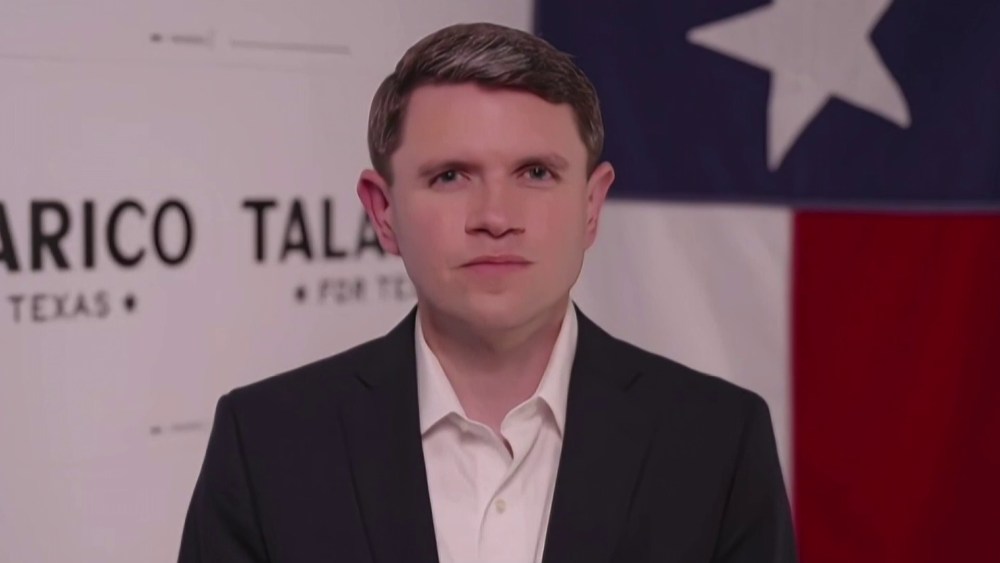
As Texas Attorney General Ken Paxton ramps up his Senate campaign against James Talarico, he and his party have dug in to “othering” the fresh-faced Democrat. Paxton’s reference to his opponent as “Talafreako” pretty much sums up the GOP’s Manosphere-coded attack strategy.
Adhering to the script, White House deputy chief of staff Stephen Miller has alleged that Talarico is the Democrats’ “first transgender Senate candidate.” Others have dubbed him Gaydo O’Rourke — a reference to failed 2018 Democratic senate candidate Beto O’Rourke. (This malicious queering of Talarico has been undercut somewhat by photos that circulated of him and his girlfriend). With the dignity that befits their offices, President Donald Trump and Paxton held up images comparing the former schoolteacher to Mad Magazine’s Alfred E. Neuman.
Republicans doing opposition research are likely going to fixate on one quality that distinguishes him from nearly every other non-Black Democratic candidate in the 21st century.
Transphobic, homophobic, sophomoric and, yes, Tofu-based taunts will undoubtedly gain traction among some sectors of Texas’ conservative electorate. But in the coming months, Republicans doing opposition research are likely going to fixate on one quality that distinguishes him from nearly every other non-Black Democratic candidate in the 21st century. That’s because James Talarico is a seminarian.
His pursuit of a Masters of Divinity (which is temporarily on hold during his candidacy) creates a seemingly irresistible target for his Republican detractors — not because of his religion, but because of how he engages critically with religious text and theory and then stumps about it on the campaign trail.
To understand why this mix is so volatile, we need to understand what happens in the
by Christina Wyman | Jun 7, 2026 | Opinion
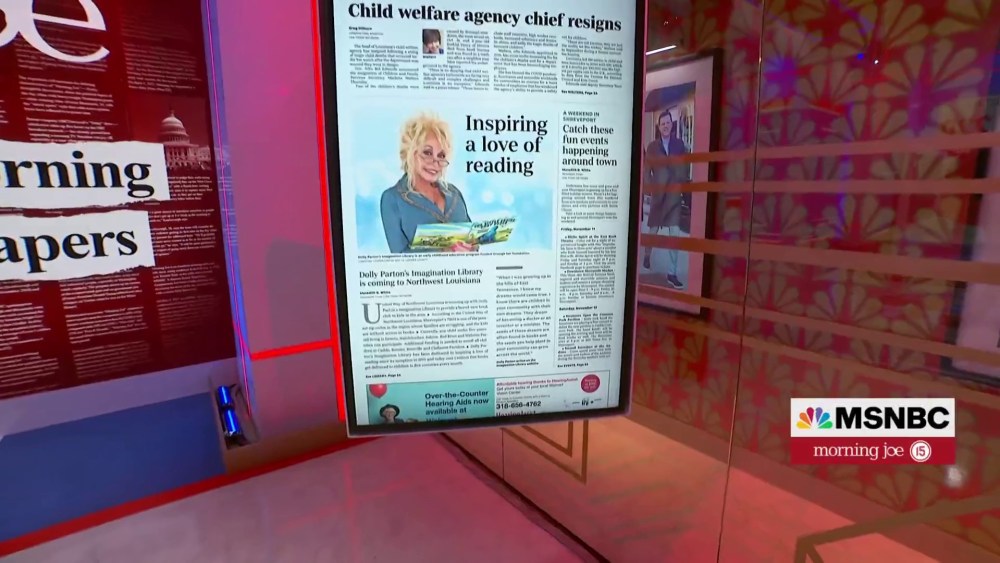
The Missouri Department of Elementary and Secondary Education recently announced it would freeze enrollment in Dolly Parton’s Imagination Library, a literacy initiative that offers one free book per month for children from birth until five years old. More than 20 states provide full or partial funding for the program, which claims to have donated over 300 million books to kids in the U.S. and elsewhere. The beneficiaries includes 170,000 Missouri children, but the state’s Republican-dominated legislature decided to cut the program’s funding from $6 million to $2 million.
As a teacher and author for children, I know the consequences of these cuts are all too clear. I have witnessed firsthand what it looks like when children do not have access to books. Such a drastic cut to such an important service is more of the same as far as this country’s continued acts of political and economic violence against its own citizens.
The impact of access to books is also a symbolic one.
From literacy advocates to the American Association of Pediatrics to even the current U.S. government, everyone agrees that early childhood literacy is critical. According to Take Action For Libraries, a nonprofit political action committee, early access to books paves the way for a lifetime of learning, with more books in the home potentially leading to higher educational attainment.
The impact of access to books is also a symbolic one. I grew up in a working-class household and could feel, at a young age, that my family’s socioeconomic status did not measure up to that of many of my peers. We lived in a small walk-up apartment in Brooklyn; we spent