by Ja'han Jones | Jun 11, 2026 | Opinion
Republican lawmakers continued their efforts to downplay and obscure the crisis of racist extremism during yet another hearing centered on the Southern Poverty Law Center.
I’ve been documenting the Republican Party’s dubious crusade against the SPLC, the organization known for assisting law enforcement with investigating racist extremist groups. The Trump administration’s recent indictment of the SPLC on allegations the group defrauded investors by financing the extremist groups they claim to fight has ramped up that attack and fits a long tradition of white conservatives denying the origins, existence or extremism of racist organizations like the Ku Klux Klan. (The SPLC has denied any wrongdoing.)
That propaganda effort continued Tuesday at a House hearing where Republicans accused the SPLC of “manufacturing hate” despite the organization having been an important partner to the federal government for decades in rooting out white supremacist extremism — a national security threat acknowledged by officials from both the Biden administration and President Donald Trump’s first administration.
House Judiciary Committee Chairman Jim Jordan’s line of questioning left little doubt about his effort to portray the SPLC as nefarious and the impetus for various acts of racism. At one point, Jordan asked SPLC CEO Bryan Fair whether his organization’s work was “all about the money.” At another, Jordan said the SPLC’s fundraising had increased after the deadly white supremacist rally in Charlottesville in 2017, to which Fair replied by saying the group’s funding went up after Trump became president.
The sentiment fueling the Republican Party’s resentment toward the SPLC appears to be the same angst-ridden sentiment expressed on Tuesday by Trump’s Medicare and Medicaid administrator, Mehmet Oz, when he complained to Fox

by Zeeshan Aleem | Jun 11, 2026 | Opinion
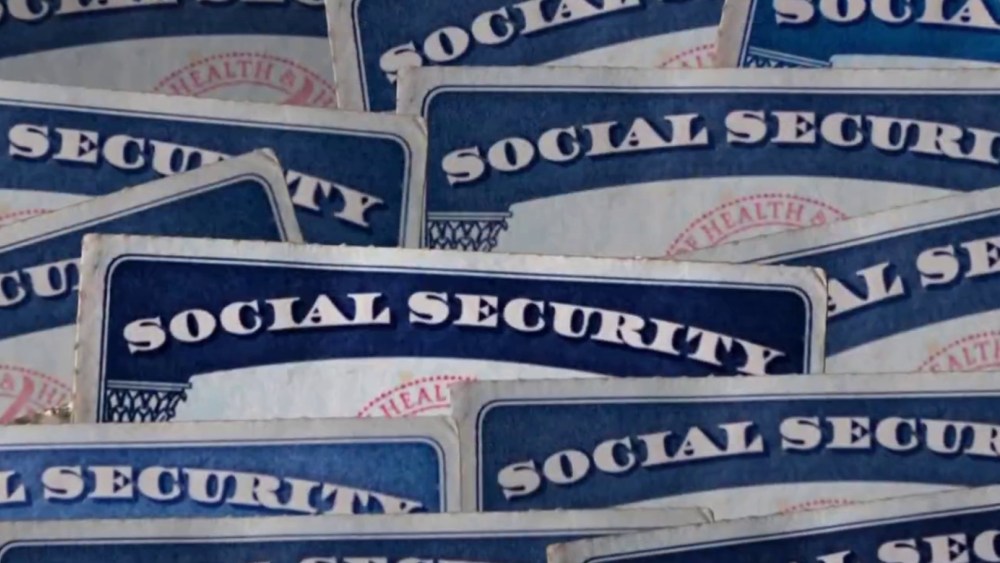
The date when Social Security’s trust fund is expected to run out of money just got bumped up. The fund is now projected to empty in 2032, according to a new report released by Social Security’s trustees.
The new depletion date isn’t an earth-shaking change — it’s only a quarter earlier than the estimate in last year’s report. But it illustrates how President Donald Trump’s policies are degrading a program he promised to never jeopardize — and accelerating an approaching crisis in how our government will assist the elderly and disabled.
The report names three factors that contributed to the earlier insolvency date. One is a declining fertility rate, but the other two drivers can be traced back to Trump: a drop in immigration into the country, and the “substantial effect” of the tax policies in the One Big Beautiful Bill he signed last summer.
Trump’s acceleration of the program’s insolvency comes atop his assaults on the program’s administrative capacities.
Reduced immigration during Trump’s second term — especially when coupled with a declining fertility rate — strains Social Security because the program is funded through payroll taxes. Those come out of people’s paychecks, and fewer workers supporting an aging population means the program receives less revenue. Indeed, Social Security already has been tapping its trust fund for the better part of the past two decades because the program’s costs have exceeded its cash income. And as the Center on Budget and Policy Priorities pointed out last year, last year’s tax cuts were a boon to the rich but a bust for the solvency of the Social Security trust fund.
To be clear, if the
by Dr. Omer Awan | Jun 10, 2026 | Opinion, Politics, Sports
The 2026 FIFA World Cup, which begins this week, is expected to bring millions of visitors from dozens of countries to the United States. I have tickets to the World Cup finals next month, and I’m finding it hard to contain my excitement at my opportunity to watch what I know will be the pinnacle of competition in a sport loved by billions of fans worldwide.
But as a doctor, I can’t help but think about how dangerously unprepared the United States is to meet the public health demands of hosting the largest sporting event in U.S. history. The World Cup will bring with it significant public health risks, bringing people from all corners of the world together, where infectious diseases can easily travel and become amplified in enclosed, semiconfined spaces such as stadiums, bars and restaurants.
As a doctor, I can’t help but think about how dangerously unprepared the United States is.
I know firsthand how infectious diseases spread in mass gatherings. As a Muslim performing the Hajj in Mecca, I saw some people contract meningitis, and I was one of the countless others on that spiritual pilgrimage who became infected with an upper respiratory infection. Mass gatherings of the size of the Hajj or the World Cup provide ideal conditions for infectious diseases, heat illness, crowd injuries and foodborne outbreaks to occur.
As a practicing physician who writes and speaks about public health, I have little confidence that the U.S. is prepared for the part of its World Cup-hosting duties that includes ensuring the safety of the health of millions of visitors.
The World Cup comes to a United States that remains scarred
by Hayes Brown | Jun 10, 2026 | Opinion
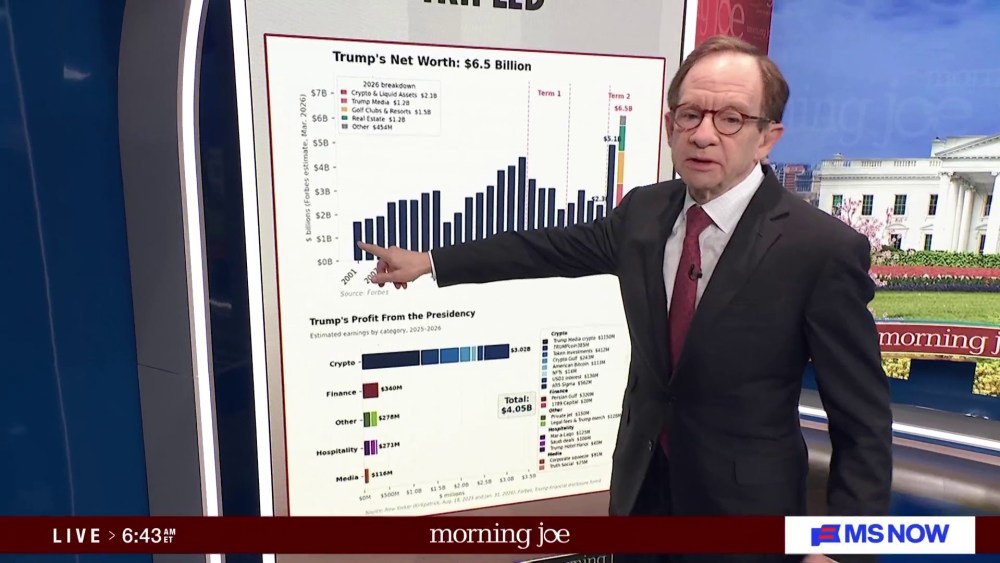
President Donald Trump and his family have cashed in big since he won the 2024 election. Of the billions of dollars they have accrued over the past 18 months, the lion’s share has reportedly come from cryptocurrency assets that bear the president’s name or his family’s endorsement. The technology may be novel, but crypto lets the Trump family play the age-old game of separating fools from their money, all while leveraging Trump’s position in the White House to boost the sales pitch.
According to an in-depth investigation from Reuters, whose reporters reviewed thousands of documents, disclosures and blockchain records, the price of the crypto offerings Trump is marketing have plummeted — but not the profits that the Trumps have pocketed. Investors who trusted Trump’s business acumen have been left unable to achieve the profits they assumed were coming or even offload the assets as their worth collapsed. In effect, a predatory market that should be subject to stricter regulation from the government instead has been a massive cash cow for the president and his family.
Crypto lets the Trump family play the age-old game of separating fools from their money
(Reuters helpfully published a full methodology for how it calculated the gains and losses on the notoriously opaque crypto market. The White House did not comment directly on Reuters’ reporting but said in a statement: “All actions by President Trump and his administration are taken in the best interest of the American people.”)
Trump has long preferred projects in which he features his name prominently but takes on little, if any, financial risk. The Trump Organization’s longtime M.O. has been licensing his name to
by Ja'han Jones | Jun 10, 2026 | Opinion
Happy Tuesday. Here’s your Tuesday Tech Drop, the past week’s top stories from the intersection of technology and politics.
Treasury insecurity
The Trump administration’s choice to deepen the Treasury Department’s involvement in its racist anti-immigrant crackdown may have exposed taxpayers’ personal information, according to a new report from the Treasury’s inspector general.
The IG’s report “raises concerns about Immigration and Customs Enforcement’s ability to safeguard taxpayer information,” The Associated Press reported Monday. The IG report found the administration’s arrangement for the IRS to share data with ICE was error-prone and unreliable.
Under this arrangement, ICE can submit the names and addresses of people the agency says are in the United States illegally, and the IRS cross-references that information with tax records.
The arrangement has been challenged by lawsuits and led former acting IRS Commissioner Melanie Krause to resign from her role in February.
Any errors that result from this information sharing are important to spotlight, as the Trump administration increasingly looks to the Treasury for help with its immigration crackdown.
According to the AP:
The report states that after the agreement was signed, ICE requested address information on more than 1.2 million people, and the IRS ultimately provided last-known addresses for about 47,000 people. [The inspector general] concluded that the IRS’s automated matching process was flawed. Inconsistent formatting in ICE’s data led to questionable matches, including in cases where incomplete or inaccurate addresses were labeled as valid, the report says. Representatives from Treasury and the IRS did not respond to an Associated Press request for comment.
Read more in the AP.
New York turns to AI for help with food aid
New York City is using an artificial intelligence tool developed
by Ryan Teague Beckwith | Jun 9, 2026 | Opinion
President Donald Trump sometimes seems to fancy himself a king, so it’s not surprising that he treats his Cabinet like a royal court. In his second term, the president has filled his top posts with courtiers who compete to offer the most extravagant praise in marathon Cabinet meetings.
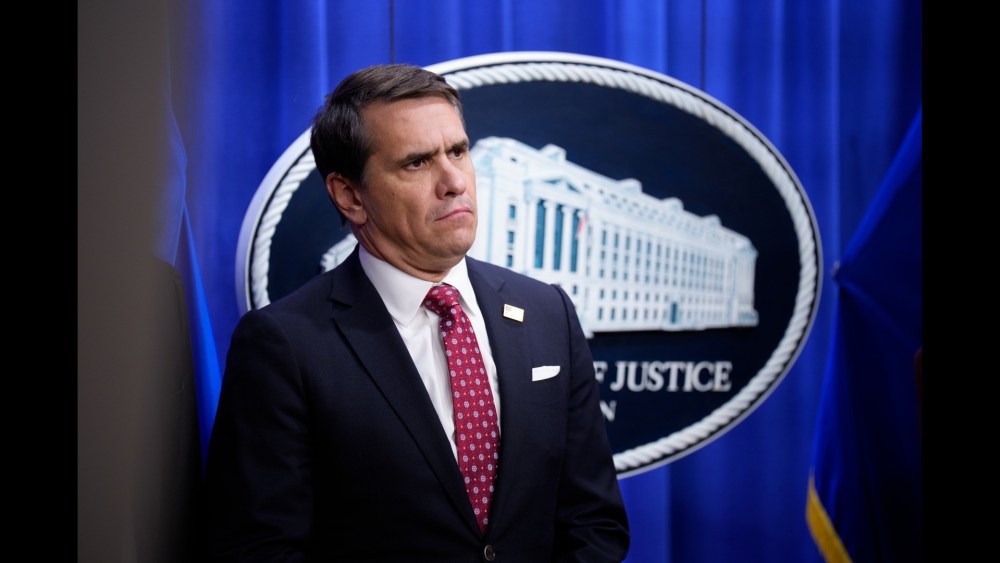
And that’s how we should look at acting Attorney General Todd Blanche’s work for the past two months. Blanche has served in a temporary capacity while Trump decided whether to nominate him permanently. It was a seemingly endless job interview — one he could fail only by disappointing the man conducting it. Last week, he finally passed the test when Trump announced that he would nominate him for the post, subject to Senate confirmation.
But his conduct during that audition should be disqualifying.
Since becoming acting attorney general in April, the president’s former personal lawyer has often seemed more like his current personal lawyer. Blanche has argued that the president has the “right” and “duty” to direct Justice Department investigations, advanced investigations involving Trump’s political adversaries, refused to recuse himself from matters presenting potential conflicts of interest, and unsuccessfully sought to create a nearly $1.8 billion fund that critics warned could reward Trump allies, including Jan. 6 defendants.
Play
‘People should be up in arms!’ Former Watergate prosecutor sounds off on Trump AG pick Todd Blanche
June 6, 2026 / 06:05
We’ve all been in job interviews, so it’s not hard to see what was going on here. When the interviewer asks whether you’re willing to work nights and weekends, you say yes. By naming Blanche acting attorney general, Trump put him in a position where he could either