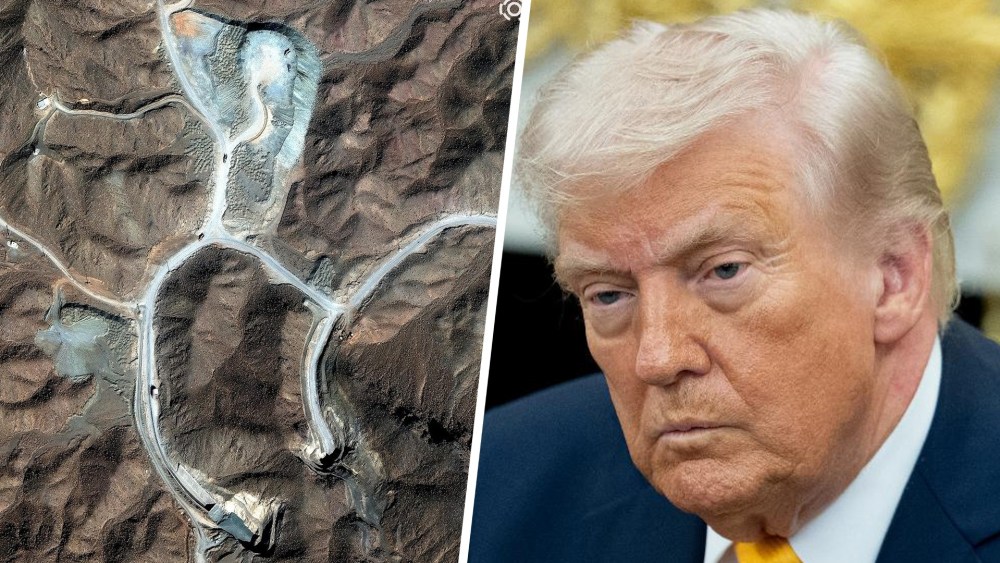
by Adam Johnson | Mar 24, 2026 | Article, Iran, Media Criticism, Opinion, Politics and Movements: International, Politics and Movements: US
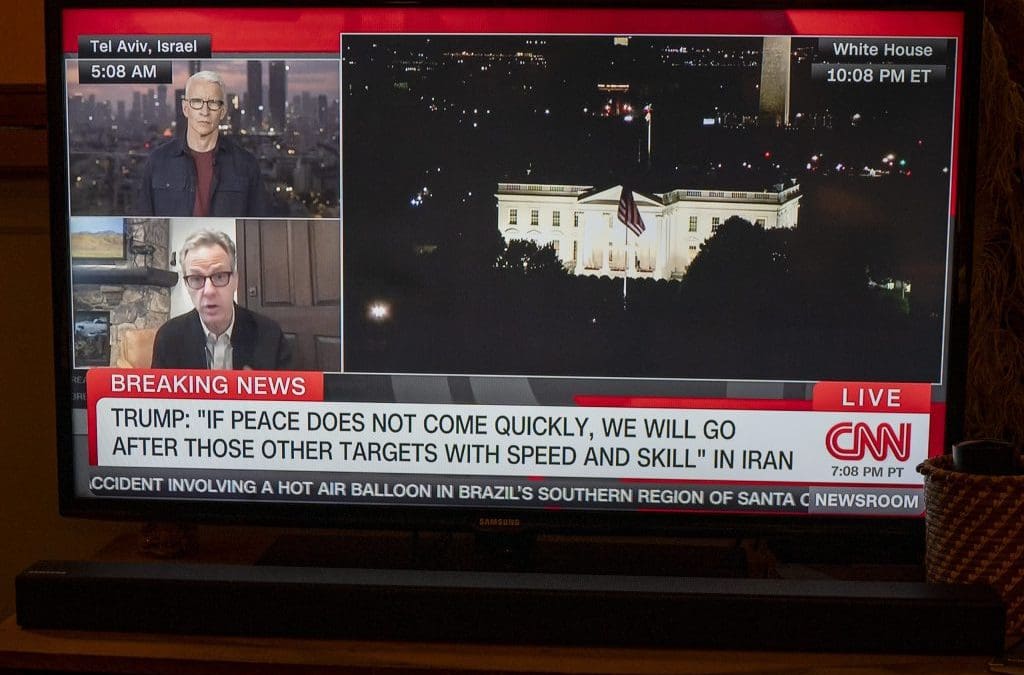
While a war against Iran remains deeply unpopular, the percentage of Americans who support its underlying logic and goals remains relatively high. The premises for wars in US discourse––whether it’s Iraq’s WMDs or Hamas’ mindless jihadist barbarity––are rarely in dispute, only the method to best contain or eliminate these existential enemies. Since Iran has not attacked the US directly (the Iraqi “Shia proxies” line is, for example, mostly a lie), and has killed fewer US civilians in the past 30 years than Israel has, building a casus belli to launch an attack on Iran has been difficult for war promoters. Absent a real threat, what one usually hears is a combination of vague reference to Iran-allied Shia militias attacking US troops in Iraq during the US Iraqi occupation (don’t ask why the US invaded both of Iran’s major neighbors), lines about Iran being the “largest exporter of terrorism in the world” (a braindead cliche that no one bothers to even explain anymore) and—the most popular and frightening—that Iran is perpetually on the brink of developing a nuclear weapon that “could” maybe, sort of, one day reach the United States. Pursuant to this latter talking point, the idea of Iran’s civilian nuclear energy program has effectively been weaponized and rendered menacing to Western audiences through many framing and rhetorical tricks, wearing down a public that has neither the time nor inclination to understand the nuances of nuclear policy.
This dynamic is reflected in a new a YouGov poll fielded by ReThink Media from February 2026 that shows 25% of Americans believe the patently false claim that Iran currently possesses nuclear weapons and
by Zeeshan Aleem | Mar 24, 2026 | Opinion
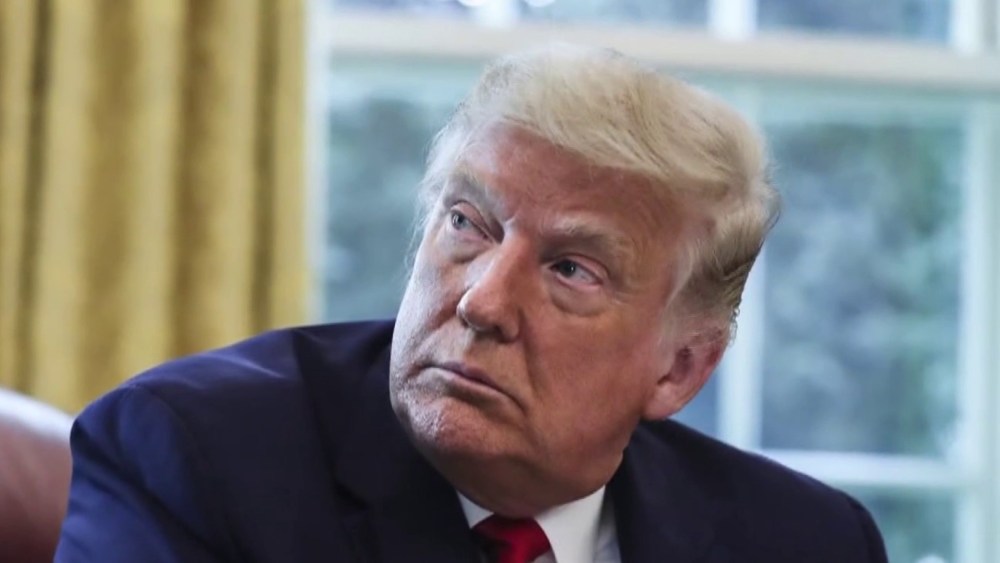
President Donald Trump issued a stern warning to Iran on Saturday: “Fully open” the Strait of Hormuz within 48 hours or face bombardment of your power plants. Iran immediately said it would not comply with Trump’s demands and promised to retaliate. Yet on Monday, Trump reversed course, announcing that he was delaying strikes on Iran’s nuclear plants for five days due to “productive” talks with the country over ending hostilities.
It is a good thing that Trump did not hit Iran’s power plants: that would effectively be an attack on the country’s civilian population, and it would mark yet another escalation in a war that should never have started in the first place. But there’s reason to be skeptical of Trump’s pivot, as well as his claims about “productive” talks.
When asked about Iran’s denials, Trump insisted that his special envoy Steve Witkoff and son-in-law Jared Kushner spoke with an Iranian official Sunday night — but declined to identify them.
Multiple Iranian officials deny the existence of the U.S.-Iranian negotiations Trump says were so “productive.” The speaker of Iran’s parliament, Mohammad Baqer Qalibaf, posted on X, “No negotiations have been held with the U.S., and fake news is used to manipulate the financial and oil markets and escape the quagmire in which the US and Israel are trapped.”
Iran’s Islamic Revolutionary Guard Corps released a statement calling Trump’s announcement an example of “psychological operations.” And Iran’s foreign ministry said Trump’s pause was “part of efforts to reduce energy prices and buy time to implement his military plans,” and that “there is no dialogue between Tehran and Washington,” NBC News reported Monday, citing the semi-official news
by Katelyn Burns | Mar 22, 2026 | Opinion
Ahead of the 2026 midterm elections, gas prices are nearing all time highs, the president has launched one of the most unpopular wars in modern American history, all while Democrats have been putting up big numbers even in deep red state races. Suffice it to say, the Republican Party is rather unpopular.
In response, Republicans seem to be trying to do what they have done for the last 10 years in an attempt to cling to power: use the law to suppress voters who aren’t likely to vote for them.
As Trump flails for a political angle to help pass this bill that he thinks he needs to keep control of Congress, the anti-transgender platform has been his fall-back.
This plan of action has guided the seemingly doomed Safeguard American Voter Eligibility Act, which President Donald Trump has been trying to pass with little luck.
As Trump flails for a political angle to help pass this bill that he thinks he needs to keep control of Congress, the anti-transgender platform has been his fall-back, evidenced when lawmakers proposed an amendment that would add a national ban on transgender girls playing girls sports, and a national ban on transgender youth receiving gender-affirming care to the bill.
But as we learned previously, transphobia won’t save Republican lawmakers, or the SAVE Act. That was confirmed on Saturday when the Senate voted down the amendment to ban transgender girls from playing girls sports, 49 to 41.
When it was first introduced last year, the act was seen by many as a transparent plan to suppress votes. It would require two forms of identification proving U.S. citizenship in order to
by Ray Brescia | Mar 22, 2026 | Opinion
When the Supreme Court issued its landmark decision in Learning Resources, Inc. v. Trump this past February, one had to sift through seven different judicial opinions spanning 170 pages to understand that the court invalidated the sweeping tariffs imposed by the Trump administration under the International Emergency Economic Powers Act. Still, that decision left many issues unresolved, the most important of which was how the administration was supposed to refund billions in illegal tariffs to those who paid them.
Instead of answering that important question, it returned the case to the relatively obscure Court of International Trade, a body created by Congress in 1980 to help resolve issues affecting, as its name suggests, international trade.
While one might think this was a recipe for mischief, an unlikely hero has arisen, Judge Richard Eaton of that court, who appears to be holding the administration’s feet to the fire and does not appear like he is about to tolerate many shenanigans should the administration seek to drag those feet in an effort to evade the law.
Play
Trump’s ‘manmade policy blunders’ such as tariffs, Iran war ‘dragging economy down’: Professor
March 17, 2026 / 10:08
While Trump administration officials may have believed they could tie the case up in the courts for months, even years, Eaton has different thoughts about how, and when, to refund those who paid these illegal tariffs, and he has laid it all out in two opinions spanning no more than six pages of text combined.
At a time when lawyers and judges gravitate toward complex reasoning, obscuring jargon and legal briefs and opinions that seemingly go on forever, Eaton has taught a masterclass in
by Michael Edison Hayden | Mar 21, 2026 | Opinion
When Alex Jones announced the death of his Infowars business earlier this month, you had to strain to hear him because he kept slurring his words.
“We’re getting shut down,” Jones told fellow pro-Trump influencer Tim Pool on March 12. “We’ve beaten so many attacks. But now we’re shutting down in the middle of next month.”
For critics of Jones and the MAGA movement he had a hand in building, hearing him announce the end of his site might seem like cause for celebration. That would be dangerously naive. Jones’ influence is everywhere, as the U.S. finds itself roiled by the very conspiracy theories he turned into a multimillion-dollar business after starting Infowars on public access TV in 1999.
The ranks of officials around Trump are now partially composed of Jones-influenced conspiracists, governing on baseless stories about antifa, vaccines and shadowy cabals.
Open Elon Musk’s X and you will find people building on Jones’ legacy as a purveyor of brain-poisoning lies — Tucker Carlson, Candace Owens, Nick Fuentes and countless smaller figures — as they apply Infowars’ conspiratorial lens to everything from the real assassination of Charlie Kirk to the fictionalized death of Israeli Prime Minister Benjamin Netanyahu. Paranoid, often explicitly antisemitic conspiracy theories now accompany almost every major news event, pushed by pundits and podcasters in the Jones mold, filling uncertainty with distortion, fear and rage.
Just look at the White House, currently inhabited by a man whose claims about fraud in the 2020 election were essentially fabricated. The ranks of officials around Trump are now partially composed of Jones-influenced conspiracists, governing on baseless stories about antifa, vaccines and shadowy cabals. The MAGA government
by Zeeshan Aleem | Mar 21, 2026 | Opinion
President Donald Trump’s war with Iran is not going well. He began the conflict with a promise to use an air campaign to initiate regime change in as little as “two or three days.” But about three weeks in, Iran’s government, military and security forces remain highly functional. No popular uprising has emerged. And Iran’s government has seized control of the Strait of Hormuz, sending global oil prices surging and Trump into a panic.
Robert Pape, a political scientist at the University of Chicago, is one of the analysts who saw this situation coming a long way off. An expert on air power and regime change who has also taught at the U.S. Air Force’s School of Advanced Airpower Studies, Pape is almost comically well suited to address the core dynamics underlying how the war on Iran is unfolding. His scholarship and his newsletter, “The Escalation Trap,” all point in one direction: Trump’s goal of toppling Iran’s regime from the air alone is doomed, because fighting a war only with air power is by its very nature ill suited to win hearts and minds.
I spoke with Pape on the phone this week, and he explained why this kind of intervention has such a poor track record, what isn’t working strategically, why Iran isn’t losing the war, and what this all means for the possibility of Trump sending in ground troops.
Our conversation, edited for length and clarity, follows.
Zeeshan Aleem: When you heard in Trump’s initial announcement that he’s going to use air power alongside Israel to clear the way for protesters to take over the government, what did you think?
Robert Pape: What