by Kevin Frey | Jun 17, 2026 | News
The future of American national security was thrown into uncertainty once again on Wednesday, after an early morning social media post from President Donald Trump appeared to put the confirmation of a top intelligence nominee on hold — and then lawmakers signaled they planned to move ahead with a key Senate hearing anyway.
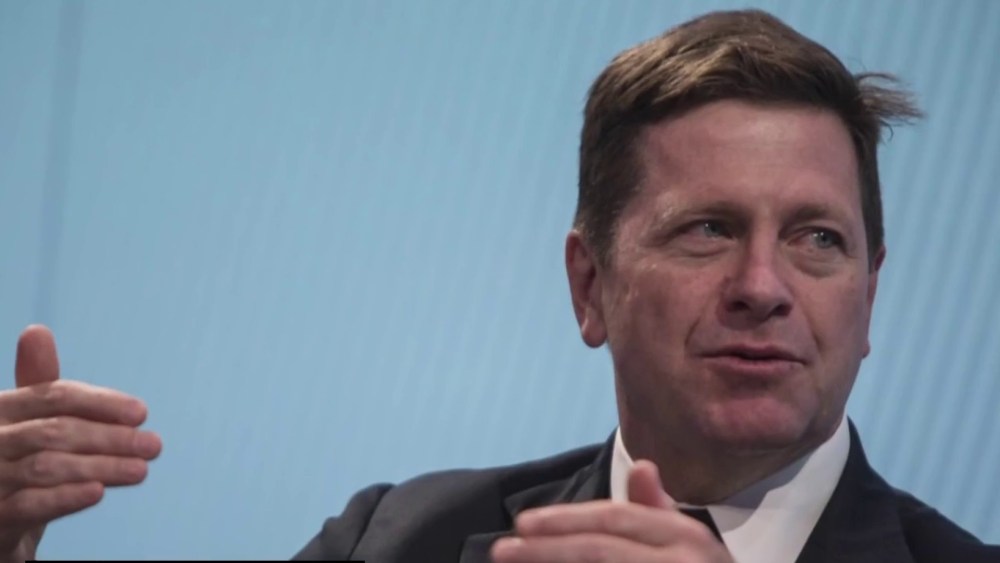
Just before 4 a.m. on Wednesday, the president wrote that a scheduled hearing to consider Jay Clayton’s nomination to serve as the next Director of National Intelligence would be “canceled,” and that the nomination wouldn’t be moving forward until Clayton’s replacement as the U.S. Attorney for the Southern District of New York is “approved.”
But senators — including some of Trump’s most loyal allies — didn’t seem to get the message.
Play
GOP Intel chair says Clayton hearing still on despite Trump’s attempt to cancel
June 17, 2026 / 08:40
Sen. Tom Cotton, R-Ark., the chairman of the Senate Intelligence Committee, wrote in his own social media post Wednesday that Clayton remains the “pending nominee” and said his committee “will proceed with his hearing as scheduled unless the president directs him not to appear or withdraws his nomination.”
Senate Majority Leader John Thune, R-S.D., echoed that message of defiance, telling reporters that “Chairman Cotton is planning to proceed.”
“And then from there on, we’ll just have to take it a day at a time until we get more clarity on kind of what the White House position is on this,” Thune continued.
When Thune was asked why he thought Trump was trying to delay the hearing, Thune’s answer was ominous: “Good question.”
It’s unclear whether Clayton will actually appear before the committee on Wednesday despite Trump’s comments.
by Sarah Lazare and Amy Livingston | Jun 17, 2026 | Article, ICE, labor, Minneapolis, Politics and Movements: US, Prisons and Policing, Reprint
This story originally appeared in Workday Magazine on June 16, 2026. It is shared here with permission.
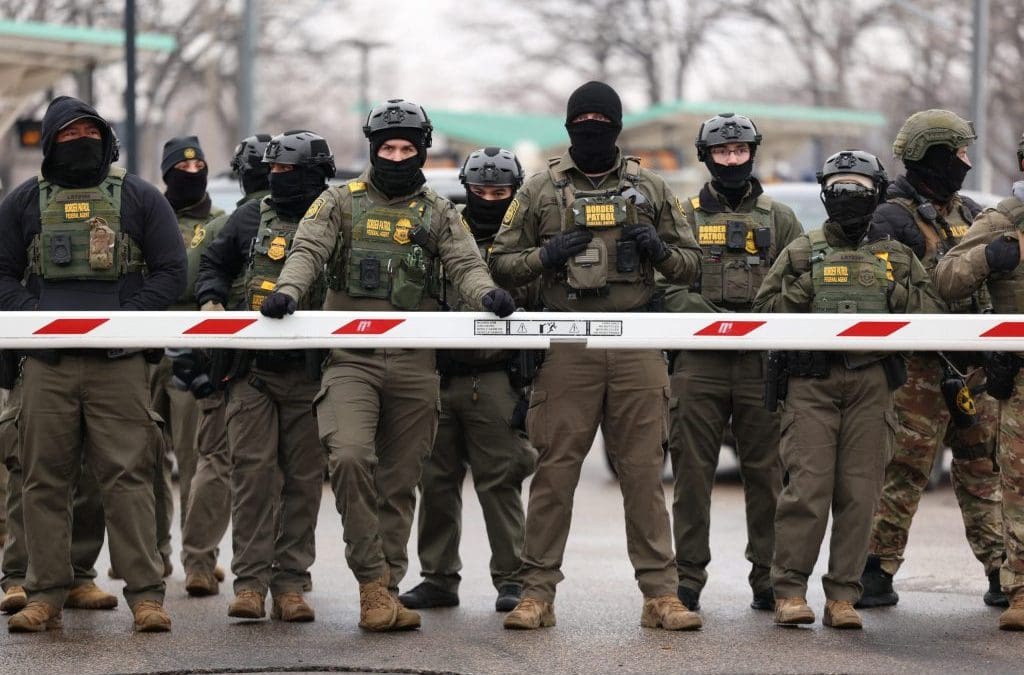
Minnesota trade unionists active in worker assemblies are among the 15 people indicted by the federal government today, as part of a sweeping crackdown on organizing in opposition to the ICE and Border Patrol since December 2025. Among a slew of other allegations, the indictment cited some of the individuals’ participation in assemblies of trade unionists and other workers held at the United Labor Centre in Minneapolis as evidence that the activists participated in a criminal conspiracy.
All 15 of the people indicted are charged with “conspiracy to impede or injure a federal officer,” which activists describe as an effort to use draconian charges to crush Minnesota’s widely celebrated organizing against the armed federal agents who descended on the state this past winter.
“Trade unionists active in worker assemblies are among those who were arrested,” says Kieran Knutson, president of Communications Workers of America Local 7250. “The trade unionists I’ve known for years are stand-up people who believe in solidarity. They believe an injury to one is an injury to all. They are outstanding union activists in their union and workplace, and I’m proud to know all of them.”
Marcia Howard, the president of the teacher chapter of the Minneapolis Federation of Educators (MFE) Local 59, confirmed that trade unionists are among those detained. “I find it telling that they are going after unionists, including educators I know of right now, that they are going after workers. I’m really pissed off,” she said.
Howard is withholding the exact number of trade unionists and their union roles out of concern for
by Erin Reed | Jun 17, 2026 | bathroom ban, bathroom bans, Criminalization, Idaho, LGBTQ Rights, News Analysis, Trans Rights
On June 16, U.S. District Court Judge Amanda K. Brailsford, a Biden appointee, issued a 30-page ruling granting a preliminary injunction blocking enforcement of Idaho’s H.B. 752, the felony bathroom ban — but it contains a major caveat: enforcement is only blocked when a single-user restroom is not available on the same floor. The law, set to take effect July 1, criminalizes transgender people for…
Source
by Steve Benen | Jun 17, 2026 | 2026 election, Maddowblog, News, Politics
Donald Trump appears to take a great deal of pride in the power of endorsement and his professed ability to singlehandedly choose election winners, especially in Republican primaries. Last September, for example, the president said, “Do you know, almost every single person I’ve endorsed has won? I can’t think of anyone who hasn’t. If I endorse a person, they win. … With the Republican Party, it’s like, 399-0. Think of that.”
As recently as March, he added, “My Endorsements within the Republican Party have been virtually insurmountable! It is such an honor to realize and say that almost everyone I Endorse WINS, and wins by a lot.”
As it turns out, the word “virtually” was doing more work there than it could handle.
Two weeks ago, in Iowa’s gubernatorial race, Trump threw his support behind Rep. Randy Feenstra, who narrowly lost his Republican primary to Zach Lahn. This week, it happened again. MS NOW reported:
Healthcare executive Rick Jackson clinched the Republican gubernatorial nomination on Tuesday, pulling off a win over Lt. Gov. Burt Jones and securing a spot in the November election against Democratic nominee Keisha Lance Bottoms. […]
Jackson, a businessman who entered politics as an outsider candidate, sought to position himself as an alternative to career politicians.
Trump endorsed Jones, the incumbent lieutenant governor, who ended up losing his primary bid by roughly five points.
When a Republican backed by the president ends up losing, which happens more than he likes to admit, Trump tends to respond in one of three ways.
Option #1: Blame others. When Feenstra lost in Iowa, for example, the president said he had not been “given the proper information.” He
by Austin Sarat | Jun 17, 2026 | Opinion
The campaign to end the death penalty in the United States got an important new ally on Tuesday, when Ohio Gov. Mike DeWine announced his opposition to capital punishment and called on his state’s legislature to abolish it. For a Republican leader of a red state who was a longtime supporter of the death penalty, the change of heart may have outsize influence beyond Ohio’s borders.
DeWine, who is term-limited, is showing that opposition to capital punishment is no longer just the preserve of liberals and progressive reformers. It has gone mainstream.
DeWine’s decision to call for the abolition of the death penalty marks something of a sea change in his views.
Whether or not the Ohio legislature acts on DeWine’s call and abolishes the death penalty, the governor’s stance may help give political cover to governors in other states who are convinced that it is long past time to move past the practice of state-sanctioned executions.
As I have argued previously, Ohio is one of America’s most important death penalty states. The punishment is authorized by law, but it has been more than eight years since the state carried out an execution. And it has a long history of capital punishment, as well as a large death row population.
That’s part of why DeWine’s announcement has a chance to resonate widely, though he has more to do. He needs to commute the death sentences of more than 100 people on Ohio’s death row. If and when he exercises that authority, his example may encourage his fellow chief executives in places like California, Kansas and Pennsylvania — each of whom also opposes the death penalty