by The Associated Press | Jun 30, 2026 | News
JUNEAU, Alaska (AP) — The Alaska Supreme Court ruled Monday that a man with the same name and party affiliation as Alaska Republican U.S. Sen. Dan Sullivan is qualified to run for the seat and ordered elections officials to place him on the August primary ballot.
The ruling came hours after the court heard arguments and just days after state court Judge Thomas Matthews found the Division of Elections had “abused its discretion” in booting the challenger Sullivan from the ballot. The Supreme Court, in a brief ruling, affirmed Matthews’ decision to include the challenger on the ballot but sent back to the division the issue of how he should be listed as a candidate “within the confines of existing Alaska ballot design law.”
The court said a full opinion explaining its decision would be released later.
Jeffrey Robinson, an attorney for the challenger Sullivan, expressed gratitude for the ruling and said he expected the division “will act in full compliance” with ballot design law in preparing the ballots. Sam Curtis, a spokesperson for the state Department of Law, said the state appreciated the quick ruling “and will work to implement the order.”
Nate Adams, a spokesperson for Sen. Sullivan’s campaign, said while disappointed by the ruling, the campaign is encouraged that Beecher “will be able to use her expertise to differentiate between the Petersburg fraud and the incumbent — Senator Dan Sullivan — to the benefit of Alaska voters.”
Division of Elections Director Carol Beecher issued a decision June 15 finding the challenger’s candidacy was not filed in good faith and instead was done with an intent to confuse voters. But Matthews said Beecher’s decision was not based

by Dr. Toyosi Onwuemene | Jun 30, 2026 | Opinion
A young man named Daniel Cressy is the first person in Louisiana to successfully undergo gene therapy for sickle cell disease — and hopefully many others will soon be able to join him. At a press conference at Manning Family Children’s Hospital, Cressy described a two-year journey that culminated in him being declared functionally cured and how that has restored his dreams of becoming a pilot.
Being functionally cured means Cressy will now likely be freed of the excruciating pain and relentless, repeated internal organ damage that comes with the disease. He now has the potential to live a new life free of intense pain, repeat hospitalizations and social stigma. His story should be a beacon of hope for the approximately 100,000 individuals living with sickle cell disease in the United States. But for more people to have access to the same treatments as Cressy, there is much to be done.
Being functionally cured means Cressy will now likely be freed of the excruciating pain and relentless, repeated internal organ damage that comes with the disease.
According to the Centers for Disease Control and Prevention, more than 90% of people with sickle cell disease are non-Hispanic Black or African American. (An estimated 3%–9% are Hispanic or Latino.) For decades, most treatments were aimed at simply decreasing disease complications. Blood transfusions helped dilute the impact of sickled cells on vital organs. Penicillin protected young children from dying from sickle cell-related infections. Other treatments helped decrease pain crises. For those with a sibling donor, a bone marrow transplant was an option.
But the possibility of a functional cure for everyone did not come until the 2023
by Nick Akerman | Jun 30, 2026 | Opinion
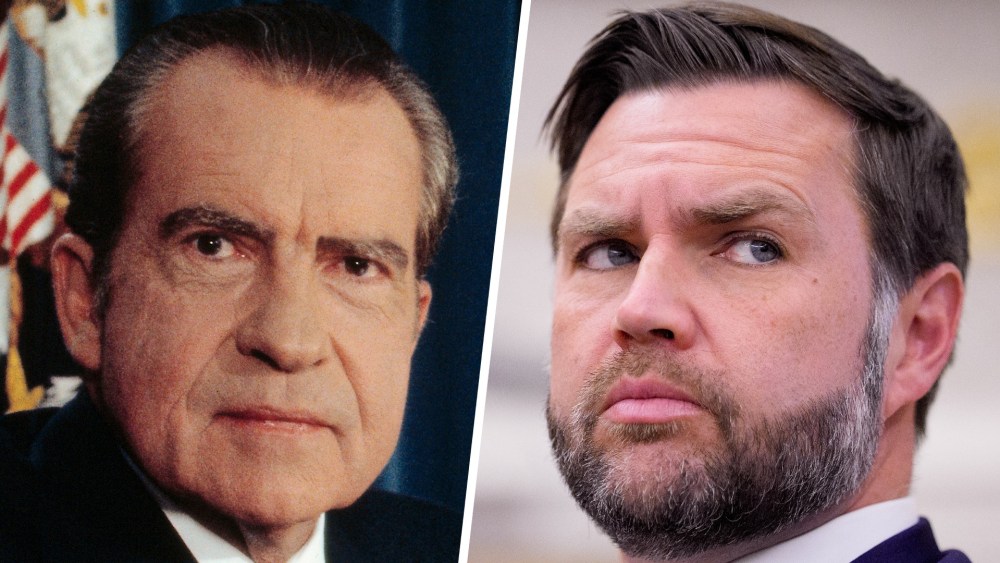
By now much has been said about Vice President JD Vance’s comments last week at the Nixon Library, where he attempted to rewrite the history of the Watergate scandal by musing that “if Watergate happened tomorrow, it would be like a 12-hour news story.”
He further stated, “If you look at the story of how the deep state took down Richard Nixon, it’s not all that different from what the same groups of people, the same institutions tried to do to Donald Trump in the first Trump administration.”
I am a former assistant Watergate special prosecutor. I was there. Vance’s description of the Watergate scandal was a fairy tale.
The June 1972 arrest of burglars at the Democratic National Committee may have been a 12-hour news story if the Nixon White House cover-up, which described the matter as a third-rate burglary, had been successful.
It was not.
While the cover-up held up through the 1972 presidential election in which Nixon won in a landslide victory, Nixon’s stonewalling began unraveling two months after he was inaugurated to his second term. On March 23, 1973, Judge John Sirica, a Republican appointee who presided over the criminal prosecution of the burglars, said he believed there was a wider conspiracy and planned to sentence the burglars to stiff sentences.
Nixon’s stonewalling began unraveling two months after he was inaugurated to his second term.
One of the Watergate burglars, former CIA operative James McCord, came forward and revealed to the judge that the burglars had been pressured to plead guilty and remain silent at the direction of others.
This breakthrough in the case was the beginning of the end for Nixon.
by Amy Peikoff | Jun 30, 2026 | Opinion, Supreme Court
The Supreme Court held today in Chatrie v. United States that the government conducted a search within the meaning of the Fourth Amendment when it acquired digital records about the cell phone location of a man accused of robbing a bank. This means that police generally need a warrant to obtain your location information from a service provider like Google. But what this means for other types of private information or media held digitally by countless service providers we rely upon daily is all but clear.At issue was whether law enforcement can use a “geofence warrant” to demand location information from Google about customers, here including Okello Chatrie, whose phones happened to be near a crime scene. The government’s answer: Yes, because once you share your location with Google, you have no Fourth Amendment interest in it and a warrant isn’t required anyway.
The Court leaves unasked the questions its own possessives raise: Whose records are these, and what follows from that ownership?
The Court disagreed. Privacy advocates are celebrating. But Justice Elena Kagan’s majority opinion missed the opportunity to declare that a person’s location data belongs to him, even if it is stored on the servers at a company like Google. The majority calls the records “his” freely, even likening them to Chatrie’s own emails and photos. What it refuses to do is let that ownership decide the case. And thus, the privacy test stays what it has been since 1967: whether “society” is prepared to recognize a person’s “expectation of privacy” as reasonable.
So the Court leaves unasked the questions its own possessives raise: Whose records are these, and what follows
by Will McDuffie | Jun 30, 2026 | 2026 election, News, Politics
Darializa Avila Chevalier, the 32-year-old democratic socialist candidate who ousted Rep. Adriano Espaillat in last week’s New York Democratic primary, told MS NOW on Monday that she is not a communist, responding to a CNN report on old social media posts in which she appeared sympathetic to communism.
Asked in a phone interview if she was a communist, Avila Chevalier said: “I’m not. I’m a democratic socialist.”
She called the focus on such rhetoric a “distraction.”
“The point isn’t whether or not I say it, the point is that they’re going to be reactive and trying to evoke a reaction to engage in that kind of distraction, and so what I’m trying to say is, I can say it until I’m blue in the face that I’m not a communist; I’m a democratic socialist,” Avila Chevalier said. “But that is again part of that distraction, where I now have to spend more time talking about that than actually addressing the issues for my communities.”
The posts, which CNN said came from a since-deleted account, included one lamenting the lack of Marxist literature in public libraries. Asked about it, Avila Chevalier said she believes “in freedom of speech, and believe[s] in making sure that we have access to all types of thought.”
“In an era of book bans, I think it’s important that we actually know what it is we’re criticizing,” she said.
Avila Chevalier defeated Espaillat after a campaign in which she defended controversial old social media posts voicing far-left policy positions, such as a desire to abolish prisons.
On Monday, she told MS NOW she wanted to use her power in Congress to transform the United