by Chris Walker | Jun 30, 2026 | 14th Amendment, Birthright Citizenship, Donald Trump, News, Supreme Court
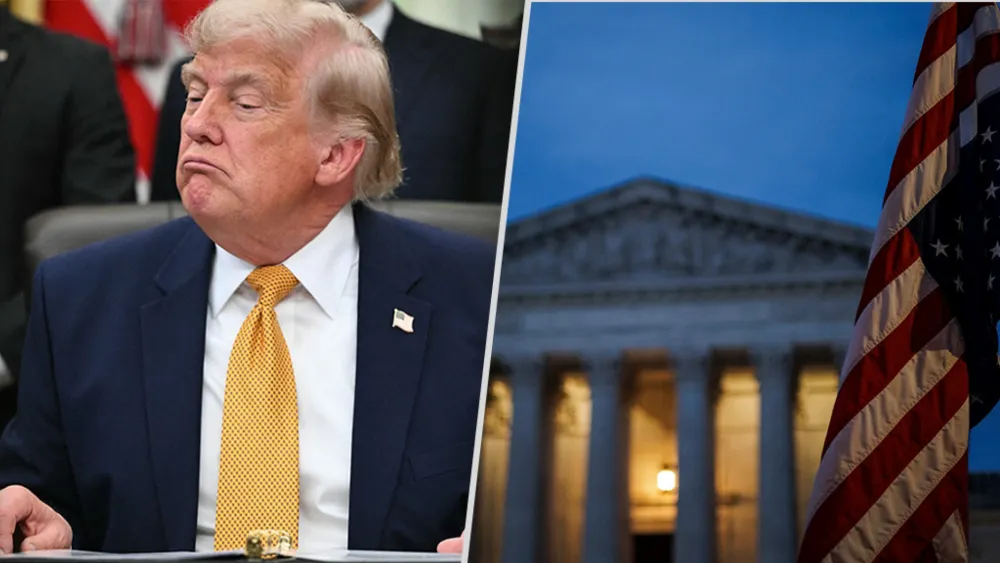
The United States Supreme Court rejected President Donald Trump’s attempt to reinterpret the 14th Amendment of the U.S. Constitution, finding that the executive order he issued on the first day of his second term in office, which sought to redefine birthright citizenship unilaterally, was improper and unlawful. In a 6-3 ruling in a case titled Trump v. Barbara, Chief Justice John Roberts…
Source
by Jordan Rubin | Jun 30, 2026 | Deadline: Legal Blog
The Supreme Court approved state bans on transgender women and girls in sports, siding with Idaho and West Virginia in cases that affect bans in more than half the states around the country.
Justice Brett Kavanaugh wrote for the court that under federal law and the Constitution, schools can “maintain women’s and girls’ sports for biological females.” The Trump appointee wrote that schools can “determine eligibility for women’s and girls’ sportsbased on biological sex.”
The court’s Democratic appointees filed separate opinions partially dissenting from the ruling.
The decision follows the court’s 6-3 ruling last term in the Skrmetti case that upheld a ban on gender-affirming care for minors. The court split along those same lines earlier this term in siding with California parents on school policies that sought to prevent outing transgender students.
In the sports cases decided Tuesday, Idaho defended its Fairness in Women’s Sports Act, the first law of its kind, passed in 2020, that banned transgender women and girls from participating in women’s student sports.
The state argued against Lindsay Hecox, who was in her mid-20s and a senior at Boise State University when the justices held oral arguments in January. She had sued in 2020 when she was a freshman and wanted to try out for the women’s track and cross-country teams. She won a preliminary injunction in the trial court, and the federal appeals court that covers Idaho said the trial court didn’t abuse its discretion in finding the ban likely violates equal protection guarantees. Hecox failed to make the teams but wound up playing for the women’s club soccer team.
Idaho argued that its law is constitutionally permissible because it’s “substantially related to Idaho’s important interest in promoting female athletic opportunities.”
In the West
by Steve Benen | Jun 30, 2026 | Maddowblog, News, Politics
To hear House Speaker Mike Johnson tell it, proponents of the bipartisan housing bill that cleared Capitol Hill last week have nothing to worry about. Asked about Donald Trump and the future of the 21st Century ROAD to Housing legislation, the Louisiana Republican told USA Today, “He won’t veto the bill.”
Time will tell whether the president makes Johnson appear foolish, but in the meantime, as Trump weighs his options, he continues to make clear that he just doesn’t much care about the proposal sitting on his desk.
Q: Will you sign that housing bill?TRUMP: It hasn’t been sent to me yet. It’s coming I understand, and then I’ll make the determination. Big deal. It’s a yawn.— Aaron Rupar (@atrupar.com) 2026-06-29T19:39:05.433Z
Asked at an unrelated White House event on Monday afternoon whether he intends to sign the bill into law, the president could barely contain his apathy. “It’s a yawn,” Trump said, describing the bill that could very well be the first and only bipartisan breakthrough of his political career.
As part of the same exchange, the Republican added that the legislation is “so unimportant” when compared to the anti-voting measure he’s desperate to get through Congress.
The president has raised some vague concerns about the substance of the package, but his Monday comments hinted at a different kind of problem: Trump simply finds this boring.
Indeed, this wasn’t even the first time. The House speaker told House Republican leaders and committee chairs at their annual retreat in March that the president told him that “no one gives a (bleep) about housing.”
As a factual matter, that’s absurd, and there’s ample evidence that millions of Americans are

by Hayes Brown | Jun 30, 2026 | Opinion
The Supreme Court has handed President Donald Trump precious few losses over its last two terms. On Monday, though, five justices voted to block the Republican National Committee’s efforts to limit the window for counting absentee ballots in federal elections. It’s a commonsense decision, something that has been exceedingly rare on the court in recent years, that allows states to count ballots postmarked by Election Day but received afterward. But common sense hasn’t stopped Trump’s outlandish demands before, so it’s hard to see that changing now.
Trump has jumped on and off the vote-by-mail train over the years since his 2020 presidential election loss
Trump has jumped on and off the vote-by-mail train over the years since his 2020 presidential election loss, at times being okay with the method and at others calling it rampant with (nonexistent) fraud. He’s revived those complaints in the aftermath of California’s most recent elections earlier this month. The state has voted almost entirely by mail in recent years, with over 80% of ballots coming in via post.
The surge of ballots being processed at California post offices on Election Day means that it can take days, or weeks, for all of them to come in and be properly tallied. As a result, there can often be phantom results based on the tabulations of in-person ballots that are then quickly eaten away as more mail-in votes are counted. We saw as much during the 2020 presidential race — and despite warnings that this would be the case, the “red mirage” that eventually flipped into a Trump loss became a major rage point for Trump.
Pennsylvania Republicans attempted to challenge ballots
by The Associated Press | Jun 30, 2026 | News
JUNEAU, Alaska (AP) — The Alaska Supreme Court ruled Monday that a man with the same name and party affiliation as Alaska Republican U.S. Sen. Dan Sullivan is qualified to run for the seat and ordered elections officials to place him on the August primary ballot.
The ruling came hours after the court heard arguments and just days after state court Judge Thomas Matthews found the Division of Elections had “abused its discretion” in booting the challenger Sullivan from the ballot. The Supreme Court, in a brief ruling, affirmed Matthews’ decision to include the challenger on the ballot but sent back to the division the issue of how he should be listed as a candidate “within the confines of existing Alaska ballot design law.”
The court said a full opinion explaining its decision would be released later.
Jeffrey Robinson, an attorney for the challenger Sullivan, expressed gratitude for the ruling and said he expected the division “will act in full compliance” with ballot design law in preparing the ballots. Sam Curtis, a spokesperson for the state Department of Law, said the state appreciated the quick ruling “and will work to implement the order.”
Nate Adams, a spokesperson for Sen. Sullivan’s campaign, said while disappointed by the ruling, the campaign is encouraged that Beecher “will be able to use her expertise to differentiate between the Petersburg fraud and the incumbent — Senator Dan Sullivan — to the benefit of Alaska voters.”
Division of Elections Director Carol Beecher issued a decision June 15 finding the challenger’s candidacy was not filed in good faith and instead was done with an intent to confuse voters. But Matthews said Beecher’s decision was not based