by Jordan Rubin | Jul 6, 2026 | Deadline: Legal Blog
The Supreme Court sided with Texas on Monday in emergency litigation over a law that its opponents said marked the first time a state has ever required its citizens “to prove their age before reading a newspaper, entering a bookstore, or even accessing the internet.”
Student and trade groups brought emergency applications to the high court against the law, called the App Store Accountability Act. The law is intended to help parents direct and supervise children’s downloads of apps and in-app purchases by requiring age verification, parental consent and age rating and content display.
A federal judge halted the law, finding that it was likely unconstitutional due to its restrictions on speech. Then a federal appellate panel granted the state’s request to lift the judge’s order, leading the groups to seek urgent relief from the high court.
Students Engaged in Advancing Texas, a nonprofit that says its mission is to mobilize young people around educational advocacy and increase youth visibility in policymaking, said the justices should vacate the appellate order “and restore the status quo protecting Texas minors’ access to constitutionally protected content and their parents’ authority to make different content decisions for their families.”
SEAT said the case raises First Amendment issues beyond Texas because most states now have laws requiring age verification or age restrictions for accessing protected speech.
The group cited a high court case from last year in another Texas appeal, where the court said states can require age verification to prevent children from accessing sexually explicit content. SEAT said this case is different from last year’s ruling in Free Speech Coalition v. Paxton because the speech at issue in that
by Chris Walker | Jul 6, 2026 | Air Pollution, Donald Trump, fireworks, Freedom 250, Independence Day, News, racial injustice
Air quality around the Washington, D.C. area declined dramatically on Sunday, one day after a massive fireworks display was put on for the United States’ 250th birthday celebration. The worst air quality ratings were recorded near neighborhoods with the highest populations of Black people, one reporter noted. In an attempt to create a record-breaking performance…
Source
by Steve Benen | Jul 6, 2026 | Maddowblog, News, Politics
The Republicans’ domestic policy megabill, which President Donald Trump signed into law a year ago this week, was remarkable in a great many ways, but one of the arguably underappreciated elements of the far-right package was how much money it threw at Immigration and Customs Enforcement.
The overall bill set aside $150 billion for immigration enforcement, with about $30 billion of that total going directly to ICE. To put that in context, Republicans nearly quadrupled the agency’s budget and ensured that ICE is far better funded than other law enforcement agencies, including the FBI.
Nearly a year later, the GOP majority in Congress narrowly approved a spending package that will fund ICE and Customs and Border Protection for the remainder of Trump’s second term, agreeing to spend an additional $70 billion on immigration enforcement.
As ICE’s budget, powers and workforce grow in unprecedented ways, it is going to be a challenge to lead this rapidly expanding agency. That task will not fall on Todd Lyons, who recently stepped down after serving as ICE’s acting director for more than a year.
If the president has his way, the job will instead fall to someone with a surprisingly low public profile. The Wall Street Journal reported:
Before backing Lance Schroyer to head U.S. Immigration and Customs Enforcement, Homeland Security Secretary Markwayne Mullin got to know him in an unusual way: Schroyer led an Oklahoma Highway Patrol security detail at the home of the then-U.S. senator.
Mullin invited Schroyer in for dinner, and the two struck up a friendship, according to people familiar with their relationship.
The Journal’s report added that Schroyer’s personal connection to Mullin has catapulted him to one of the biggest

by Mansa Musa | Jul 6, 2026 | Black Panthers, Politics and Movements: US, Rattling the Bars, Socialism, video
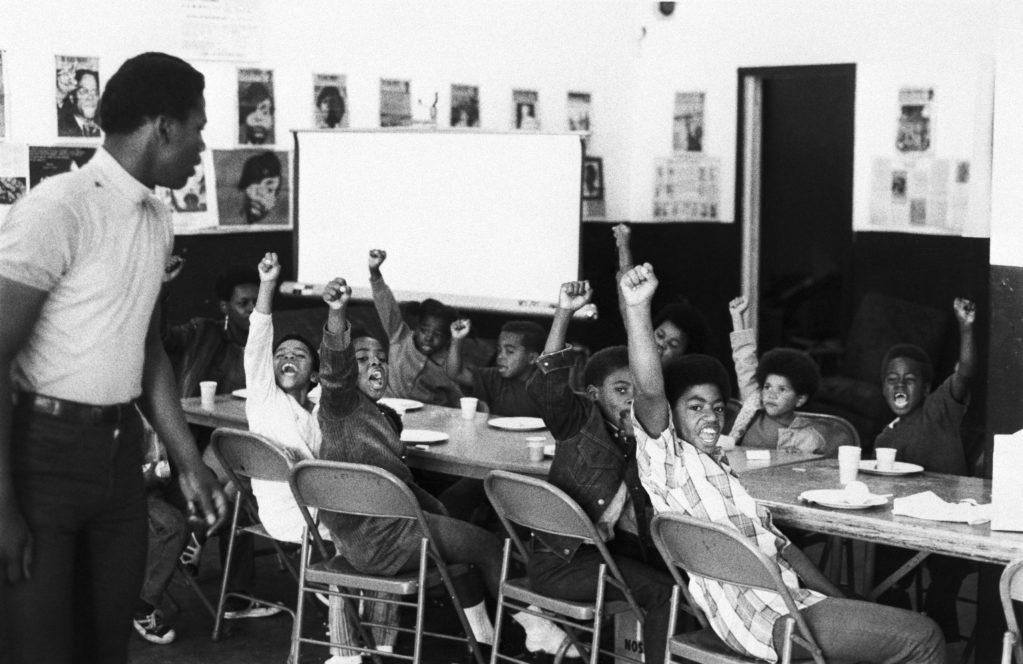
On this episode of Rattling the Bars, to commemorate the 60th anniversary of the founding of the Black Panther Party in 1966, host and former political prisoner Mansa Musa speaks with Dr. Joy James and Dr. K. Kim Holder about the history of the Panthers and their unique approach to, and practice of, communal socialism.
This is Part 2 of a two-part conversation. Watch Part 1 here.
Guests:
Dr. Joy James is Ebenezer Fitch Professor of Humanities at Williams College. She is the author of numerous books, including: In Pursuit of Revolutionary Love; Resisting State Violence; and Shadowboxing: Representations of Black Feminist Politics. Creator of the digital Harriet Tubman Literary Circle at UT Austin, James is also editor of The New Abolitionists: (Neo)Slave Narratives and Contemporary Prison Writings; Imprisoned Intellectuals; Warfare in the American Homeland; The Angela Y. Davis Reader; and co-editor of the Black Feminist Reader.
Dr. K. Kim Holder is an assistant professor of educational foundations and Africana studies at Rowan University. Dr. Holder earned his doctorate from the University of Massachusetts Amherst in Multicultural Education and African American Studies, his masters in Early Childhood Education from Bank Street College of Education, and B.A. in History from Hampshire College.
Credits:
Producer / Videographer / Editor: Cameron Granadino
Transcript
The following is a rushed transcript and may contain errors. It will be updated as soon as possible.
Mansa Musa:
Let me ask y’all this. We know that at this juncture right now where we stand at right now, the contradiction that exists between the leadership or the lack of leadership in this country, because when we come into space saying like we saying socialism, we defining and we making
by Joseph Winters | Jul 6, 2026 | Banks, Climate Crisis, Coal, Fossil Fuels, Net Zero, News Analysis, Oil and Gas Industry, plastics
For the past two years, more than a dozen major banks have been not only reneging on their climate commitments, they’ve been actively making the crisis worse. In 2024 and 2025, during the leadup to President Donald Trump’s second inauguration, all six of the nation’s largest banks abandoned the Net-Zero Banking Alliance, a voluntary climate coalition, precipitating the Alliance’s complete…
Source