by Derrick Z. Jackson | Jul 19, 2026 | Opinion
On Tuesday the Trump administration officially published in the Federal Register what may be a mortal blow to the Endangered Species Act, the key law that aided the spectacular recovery of birds like the bald eagle and the peregrine falcon. The administration’s new rule, which was issued by the Interior and Commerce departments and becomes effective Sept. 14, deletes a critical definition of what constitutes “harm” to species on the brink of extinction.
Under the old definition, harm wasn’t limited to actions that directly killed or injured wildlife. Developers, industrial polluters and landowners were also prohibited from rolling out bulldozers and backhoes and causing “significant habitat modification or degradation” that damaged or destroyed endangered species’ “breeding, feeding or sheltering” areas.
There is a whole world of lesser-known toads, salamanders, turtles, bees, butterflies and fishes that could blink out before we know it.
There are 2,300 species listed under the Endangered Species Act. Some of the more widely known species are the northern spotted owl, the California condor, the Florida panther, the whooping crane, the manatee and some species of wolves. But there is a whole world of lesser-known toads, salamanders, turtles, bees, butterflies and fishes that could blink out before we know it.
It is obvious who benefits from this outrageous change. Oil and gas drillers, building contractors, mining companies, road construction groups, ranchers and the U.S. Chamber of Commerce have all chafed at the appropriately broad interpretation of “harm.” In one statement, the Independent Petroleum Association of America claimed the Endangered Species act was “destroying economic growth and job creation.” In a bald-faced press release hailing the change, Interior Secretary Doug
by Erum Salam | Jul 19, 2026 | 2026 election, Congress, News
For decades, the American Israel Public Affairs Committee operated as the quiet enforcer of a bipartisan consensus: Politicians of both parties supported Israel — AIPAC made sure of it — and the U.S.-Israel relationship was widely understood to be a non-issue in campaigns.
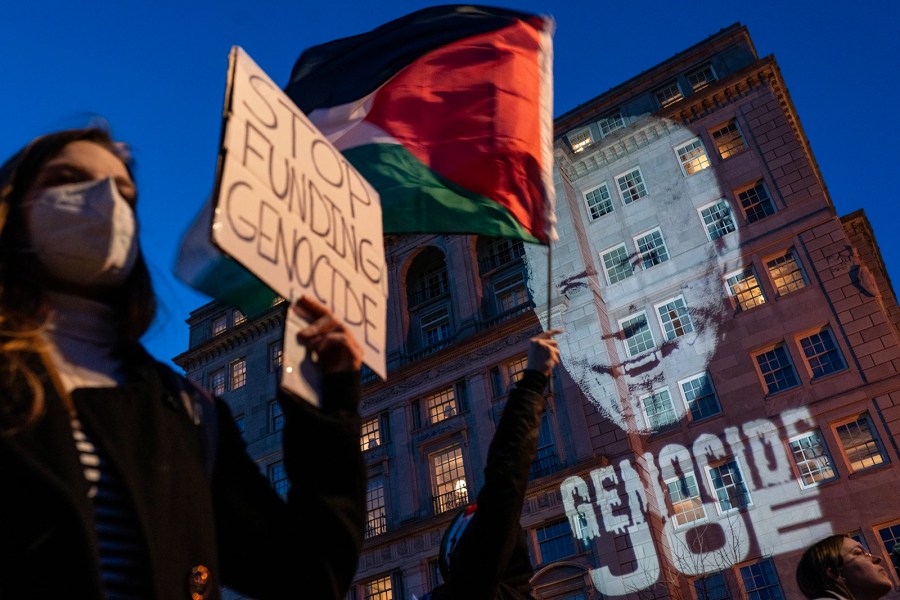
That arrangement publicly ruptured this week with a House floor vote that split Democrats, including their leadership, on whether to cut off military aid to Israel over its actions in Gaza and the West Bank.
The amendment was symbolic. Lawmakers in both chambers have rejected similar versions for years, and this one, like the others, was never going to pass.
But the numbers voting in favor of such measures have surged in tandem with the mounting Democratic primary wins by candidates who built their campaigns on opposing Israel’s war in Gaza, often over AIPAC-backed opponents.
In May, a record 40 Senate Democrats voted against further military aid to Israel, a roll call that would have been unthinkable two cycles ago. On Wednesday, 103 out of 211 Democrats voted similarly on the House amendment.
Some of those voting against the amendment to cut $3.3 billion in security aid to Israel, including Minority Leader Hakeem Jeffries, D-N.Y., said they had concerns about its scope and political ramifications but agreed with its message.
Some of those voting in favor of cutting off aid, including Democratic Whip Katherine Clark and former Speaker Nancy Pelosi, said they didn’t actually want it to pass but cast their votes to mark the need for a fundamental shift in U.S. policy toward Israel.
“For the good of the Israeli people and the Palestinian people, it is clear that U.S. policy must change,”
by The Associated Press | Jul 19, 2026 | Criminal Justice, News
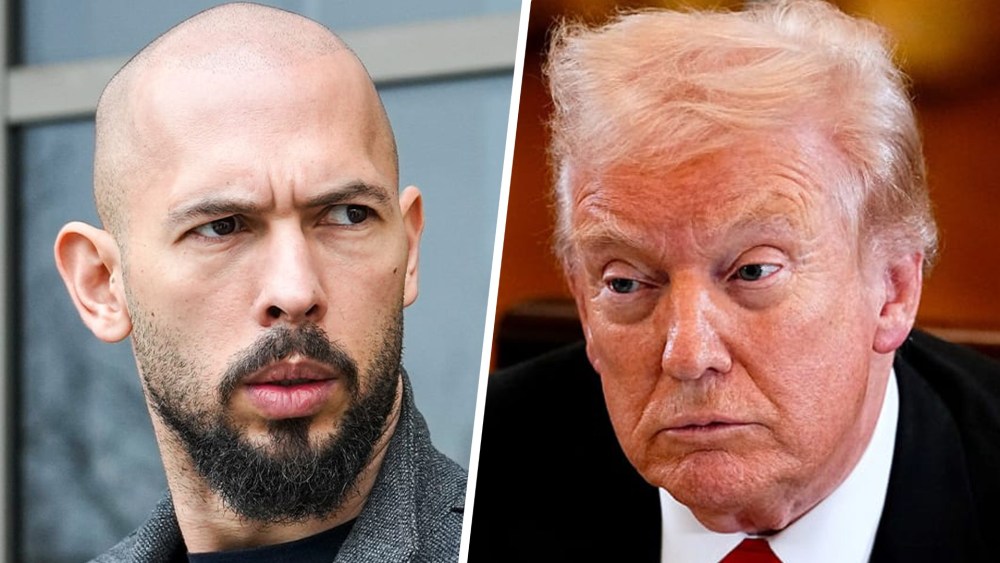
Influencer brothers Andrew and Tristan Tate, whose social media empire promoting wealth, male dominance and misogyny has made them among the world’s most polarizing internet personalities, were arrested Saturday in Miami as British authorities sought their extradition on rape and sex trafficking charges.
The brothers were taken into custody by the U.S. Marshals Service on a sealed warrant, agency spokesperson Brady McCarron told The Associated Press, placing the United States at the center of an international legal saga that has stretched from Romania to Britain.
Play
ProPublica: White House official intervened into a federal investigation into Andrew Tate
November 19, 2025 / 11:35
British prosecutors announced Saturday that they were seeking the brothers’ extradition on charges alleging they raped and trafficked women between 2010 and 2017.
The dual U.S. and British citizens moved to Romania in 2016. They were arrested there in 2022, accused of participating in schemes to lure women for sexual exploitation. They denied those allegations and the case didn’t go forward because of legal and procedural irregularities.
The pending charges in the United Kingdom accused the brothers of abusing women in an area north of London, where they grew up. Their lawyers had said they denied the allegations.
Andrew Tate, 39, first reached a mainstream audience as a contestant on the U.K. reality television show “Big Brother” in 2016. He was removed from the show when a video surfaced that appeared to show Tate assaulting a woman. He and his brother Tristan Tate, 38, are vocal supporters of U.S. President Donald Trump.
Andrew Tate has amassed over 10 million followers on X but has been banned from platforms like YouTube, TikTok and Instagram for violating hate speech guidelines. His most widely
by Soorin Kim | Jul 19, 2026 | News
Two political action committees affiliated with President Donald Trump paid nearly $8 million in legal bills over the first six months of this year, paying law firms that have been defending him in personal and political court fights that have trailed him through 18 months of his second term.
Save America and Make America Great Again PAC also reported about $5 million still owed to law firms, according to their latest disclosure filings.
Since Trump’s return to the White House last year, several of his high-profile court battles have slowed down and so has his political committees’ legal spending, but many of the cases have not gone away completely, still costing the president millions in legal bills. This week, $5.6 million in damages and interest paid by Trump was transferred to writer E. Jean Carroll, three years after a jury found him liable for sexually abusing her in 1996 and later defaming her on social media.
Also this week, a federal judge lambasted Trump’s settlement with the IRS as the product of collusive, backroom dealings. And Trump is still appealing his conviction on 34 felony counts of falsifying business records to conceal a hush money payment to adult-film actress Stormy Daniels during the 2016 campaign.
According to the latest campaign finance disclosures, the biggest chunk of Trump-affiliated PACs’ legal bills in the first half of this year went to Sullivan & Cromwell LLP, a law firm that has represented Trump in his appeal of the hush money case. The firm, which has also reportedly been engaged to handle Trump’s ongoing appeal of Carroll’s $83.3 million verdict over additional defamation claims, has been paid
by MS NOW | Jul 18, 2026 | Letter to the editor, Opinion
MS NOW welcomes letters from readers who want to respond to our journalism, add context, raise a thoughtful disagreement or share a perspective that may help other readers better understand an issue. Please review our submission guidelines. Then use this form to send us your letter.
To the editor:
I am writing in response to Matthew Bartlett’s July 17 op-ed, “The omissions from Trump’s primetime address tell their own story”:
I am a retired independent voter. I believe in facts, such as Joe Biden won the 2020 presidential election by 306 to 232 electoral votes and approximately 51.3% of the popular vote, vs 46.8% of the popular vote for Donald Trump.
In 2024, Trump played the same tired election fraud campaign, begging the American people to distrust our elections. He won by 312 electoral votes to 226 for Vice President Kamala Harris. The popular vote totals were much closer than in 2020, with Trump at 49.8% and Harris getting 48.3%.
If our elections are rife with fraud, how does Trump explain his 2024 win? Remember when he said on the campaign trail, “Get out and vote, just this time. You won’t have to do it anymore. Four more years, you know what, it’ll be fixed. It’ll be fine. You won’t have to vote anymore.”
We’ve witnessed the extreme lengths Trump and his administration are willing to go to demoralize voters, to demonize people and to audaciously engage in unscrupulous, unethical means to interfere in the 2026 elections. He is the epitome of pot-kettle.
And Trump ignorantly thinks American citizens consider voting to be a burden.
— Terry Lynne Hale
Kansas City, Missouri
To send a