by Sen. Angus King | Jul 19, 2026 | Opinion, White House
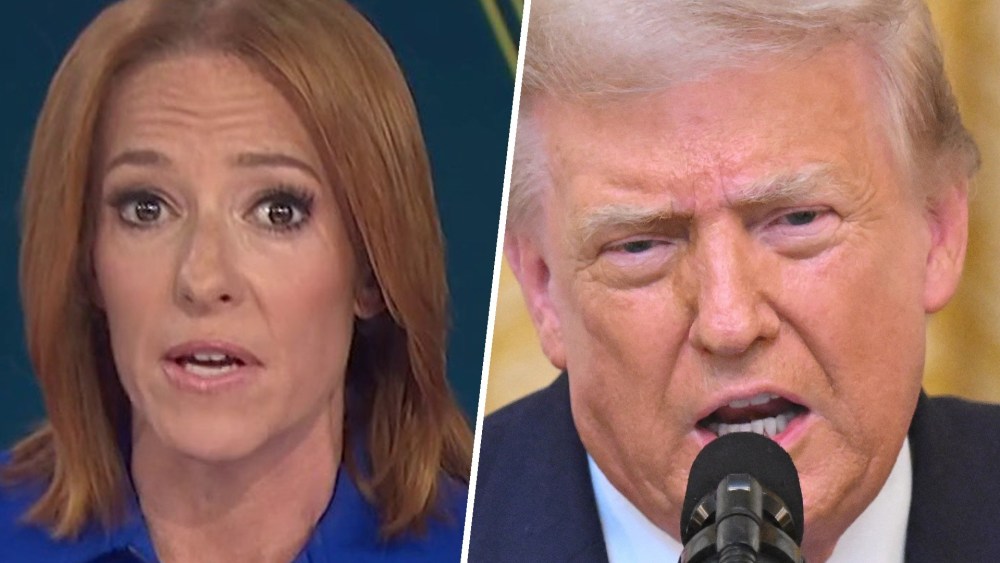
Foreign adversaries have been working for years to divide Americans and, especially, to undermine public trust and confidence in our democratic system. Thursday night, President Donald Trump gave these efforts a tremendous boost, not to alert Americans to danger but to build a case for his takeover of our elections.
In some respects, the president’s speech was a big yawn. But it’s worth considering what he did and didn’t say to understand where we are and where things may be headed.
Play
Fact-checking Trump’s speech on alleged election tampering
July 16, 2026 / 09:37
Here are my key takeaways:
1. The intelligence specter that wasn’t. Despite breathless buildup by the White House before the speech, the big reveal was that China hoovered up voting lists and contemplated some kind of influence operation in the 2020 presidential election … and the 2016 election and the 2018 midterms and every election since. This has been reported by the U.S. intelligence community frequently over the past 10 years. The critical thing is that China didn’t carry out interference operations, which also has been previously known and widely reported.
2. The speech was purposely confusing. The president talked about the Chinese acquisition of voter databases without mentioning that anyone can buy voter information in most states. That followed by the suggestion that the Maduro regime manipulated voting tabulations in Venezuela in 2020 implied that China has done something similar here. The intelligence is unanimous that China didn’t.
Since Trump returned to office last year, his administration has set about deliberately sabotaging the capacity of the federal government to protect our election infrastructure.
3. The speech was massively hypocritical. Since Trump returned to office last year, his administration has set about deliberately sabotaging the capacity of the federal government to protect
by Erum Salam | Jul 19, 2026 | News
Two prominent progressives campaigned with Michigan Senate candidate Abdul El-Sayed on Saturday night, hoping to boost his candidacy in a Democratic primary that has become the next major intraparty fight.
Sen. Bernie Sanders, I-Vt., and Rep. Alexandria Ocasio-Cortez, D-N.Y., had earlier endorsed the former public health official in the Aug. 4 primary to replace retiring Sen. Gary Peters, D-Mich. But several other establishment Democrats — including Peters and Senate Minority Leader Chuck Schumer, D-N.Y. — are backing Rep. Hayley Stevens, D-Mich., in the primary.
It’s the first endorsement of the 2026 election cycle for Ocasio-Cortez in a contested Senate primary, while Sanders has backed dozens of candidates.
“We know why we’re here: We are here because in November, Democrats have to win a majority in Congress. We have to win a majority in the House and we have to win a majority in the Senate,” she told an enthusiastic crowd. “And we need a firewall against an administration that is hellbent on tearing down in four years what it took this country 250 years to build!”
In her lengthy speech, Ocasio-Cortez emphatically denounced the Trump administration as “corrupt” and characterized El-Sayed as the best choice for Democrats to go up against it.
“You deserve a politics that treats the disease and not just the symptoms of what brought us Donald Trump. That doesn’t negotiate with or placate corruption, but one that defeats it once and for all,” she said.
“You deserve a politics that treats the disease and not just the symptoms of what brought us Donald Trump. That doesn’t negotiate with or placate corruption, but one that defeats it once and for all.”Rep.
by Lindsay Beyerstein | Jul 19, 2026 | Opinion, White House
“[A] lot of the people who are going and getting four-year degrees, they’re not like engineers and doctors. They have effectively fake jobs,” Vice President JD Vance told podcast host Mike Rowe last week. This is ironic, given that the Constitution doesn’t even give the vice president a full-time job. The position carries just two responsibilities: breaking ties in the Senate and not dying. Every vice president has to decide how to fill the rest of their time. Al Gore championed emerging technologies and the environment. Dick Cheney massively expanded the surveillance state. Vance goes on podcasts to spread conspiracy theories.
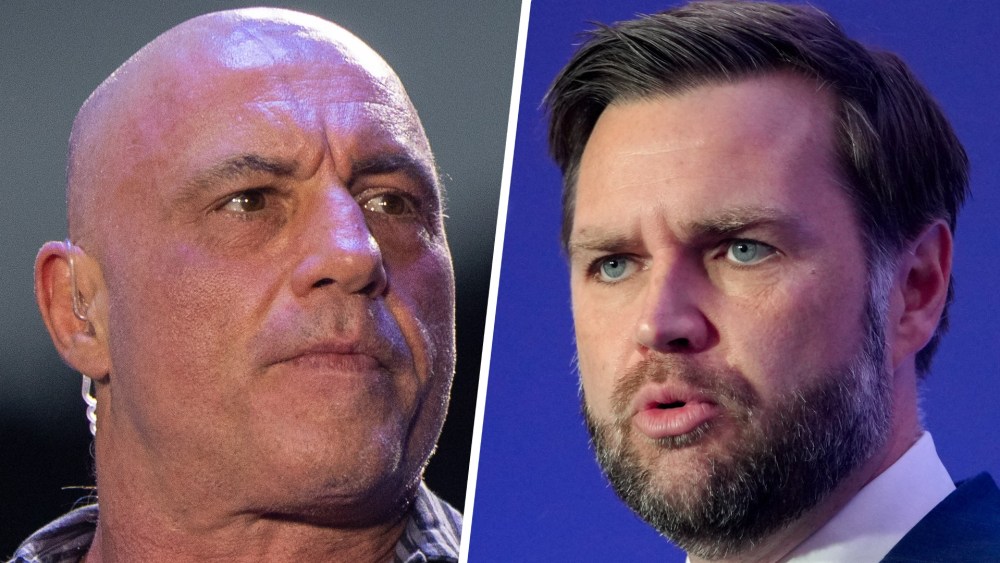
In his 2016 memoir, “Hillbilly Elegy,” Vance denounces conspiracy theorists as “fringe lunatics.” But once a paranoid ethos became nonnegotiable for an ambitious Republican, he changed his tune. Now, Vance appears to be the administration’s chief conspiracy communicator. This week, Vance went on Joe Rogan’s podcast to discuss the big lie of voter fraud, aliens, the deep state, Jeffrey Epstein and why so many people have accused him of being an antisemite.
“So I have, like, effectively unlimited access to information,” Vance boasted. But there’s a catch.
Vance’s mission is to keep low-propensity male voters and their idols, like Rogan, in the MAGA fold despite Trump hiding the Epstein files, breaking his promise of no new wars and failing to release any juicy details about extraterrestrials or the Kennedy assassination. That means walking a delicate line between validating the paranoids’ worldview and praising his boss.
“What is it like being the vice president?,” Rogan asked, hard-hitting as ever, “Like how much access do you have to information?
“So I have, like, effectively unlimited access
by Erum Salam | Jul 19, 2026 | News
President Donald Trump on Sunday called for Congress to add Iran to the Russia sanction bill, further undermining an initial agreement aimed at ending sanctions for Iran as the ceasefire progressed.
But Trump is instead seeking to weaken the memorandum of understanding reached between the U.S. and Iran as hostilities have escalated and two U.S. service members were killed in Jordan on Saturday.
“Republicans should add Iran to the Russian Sanctions Bill. That’s what Lindsey wanted to do, and it was going to happen. IMPORTANT!!!,” the president wrote on his social media platform Truth Social, referencing his friend, the late Republican Sen.Lindsey Graham, S.C., who died suddenly earlier this month.
Trump’s about-face on sanctions relief for Iran is notable and comes after the administration has already reimposed sanctions on Iranian oil exports, a key source of cash for the economically- crippled Islamic Republic. It also comes as the U.S. launches fresh strikes against the country in retaliation for the killing of U.S. troops. The Associated Press reported on Sunday that the U.S. had also hit the construction site of a planned nuclear power plant in southwestern Iran.
Trump told NewsNation on Saturday that he “couldn’t care less” about the memorandum of understanding, the framework agreement signed by both countries in June aimed at ending the war.
The threat of new sanctions – albeit via Russia, an Iranian ally — is part of what’s becoming an erratic negotiating strategy for Trump in the Middle East that some White House allies say is harming the U.S. negotiations to end the war.
Trump earlier this week quickly dropped a threat to impose a 20% fee on commercial cargo traveling
by Zeeshan Aleem | Jul 19, 2026 | Opinion, White House, World
I visited Russia with friends for the 2018 FIFA World Cup, and it was one of the great trips of my life.
Entering the country was a breeze. Between chasing matches in three cities, we drifted about with no particular agenda other than entertaining ourselves. We wandered through parks, drank vodka, admired the beautiful architecture, temporarily picked up smoking cigarettes, looked at art and partied day and night. Russia is not known for a warm public culture, but it was easy in such a festive atmosphere to make local friends — some of whom I stayed in touch with long after that summer. The experience went so smoothly, and I felt so good about the experience, that between returning to the States and the end of the World Cup, I somehow found myself rooting for Russia’s team (alongside others) as it progressed, even suspiciously so, in the tournament. When I think back on the trip, I remember the rich Russian culture that rarely gets covered in the Western press.
A political scientist might describe my fond memories of my Russia World Cup trip as a perfect example of the efficacy of sportswashing — that is, governments staging sports events to launder their reputation and divert attention from their misdeeds. The World Cup brightened my perspective on Russia: A well-run tournament, organic social connections and pleasant vibes improved my feelings toward the country. I spent little time thinking about Russia’s vicious ruler or authoritarian repression, and my stories about the fun surrounding the games I saw likely encouraged others to consider traveling there, or at least to think of the country a bit