by Ja'han Jones | Feb 2, 2026 | Opinion, White House
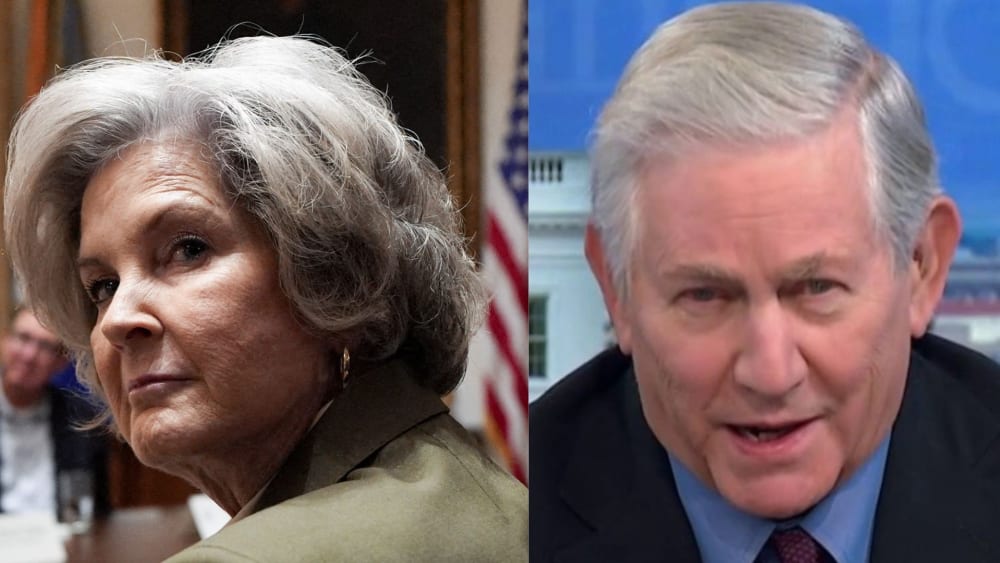
Director of National Intelligence Tulsi Gabbard is the subject of a whistleblower complaint involving material so classified, it’s been withheld from Congress for months and reportedly locked away in a safe as the Trump administration considers what to do with it.
Details on the whistleblower complaint, filed last May, appear in a bombshell Wall Street Journal report published Monday that refers to the situation as a “cloak-and-dagger mystery” befitting a spy novel. From the report:
The filing of the complaint has prompted a continuing, behind-the-scenes struggle about how to assess and handle it, with the whistleblower’s lawyer accusing Gabbard of stonewalling the complaint. Gabbard’s office rejects that characterization, contending it is navigating a unique set of circumstances and working to resolve the issue.
A cloak-and-dagger mystery reminiscent of a John le Carré novel is swirling around the complaint, which is said to be locked in a safe. … It also implicates another federal agency beyond Gabbard’s, and raises potential claims of executive privilege that may involve the White House, officials said.
In a statement to the Journal, a spokesperson for Gabbard’s office confirmed the existence of the complaint but called it “baseless and politically motivated.” The Journal quotes the whistleblower’s lawyer, Andrew Bakaj, who said it was “confounding for [Gabbard’s office] to take weeks — let alone eight months — to transmit a disclosure to Congress.”
The article reports that congressional staffers have been blocked in their efforts to gain access to it, a situation that a source with knowledge of the matter confirmed to MS NOW’s national security reporter David Rohde on Monday.
It’s unclear at this point whether or how the complaint will see
by Naveena Sadasivam | Feb 2, 2026 | Biden Administration, Carcinogens, Clean Air Act, Donald Trump, EPA, News, Pollution, Trump Administration, White House
Last spring, the Environmental Protection Agency made a surprise announcement: President Donald Trump would consider giving some polluters exemptions from a handful of Clean Air Act rules. To get the ball rolling, all it would take was an email from a company making its case. The EPA set up a special inbox to receive these applications, and it gave companies about three weeks at the end of March…
Source
by Erum Salam | Feb 1, 2026 | News, White House
A federal judge dismissed a misconduct complaint filed by the Department of Justice against Chief U.S. District Judge James E. Boasberg, who oversaw a case related to the Alien Enemies Act case last year.
The complaint, filed by Attorney General Pam Bondi‘s office in July 2025, alleged that Boasberg, an Obama appointee, made “improper public comments” about President Donald Trump to Supreme Court Justice John Roberts and other federal judges “that have undermined the integrity and impartiality of the judiciary.” The DOJ claimed that Boasberg made the comments at a semiannual judicial conference the previous March, where he warned about how Trump would “disregard rulings of federal courts” and trigger “a constitutional crisis.”
Boasberg previously ruled against Trump’s use of the Alien Enemies Act of 1798 to carry out his mass deportation plans. Last March, Boasberg imposed restrictions on the federal government from removing anyone under the law. Despite Boasberg’s order, the Department of Homeland Security removed more than 200 noncitizens from the U.S. to a notorious prison in El Salvador.
Boasberg’s efforts to pursue contempt proceedings against administration officials, related to questions about compliance with that order, have been on hold since mid-December.
In his newly released dismissal of the misconduct complaint, Jeffrey Sutton, chief judge of the U.S. Court of Appeals for the Sixth Circuit, said the DOJ failed to provide sufficient evidence of Boasberg’s supposedly prejudicial statements and noted that such conversations between judges are normal during this kind of event. Sutton’s decision was issued December 19.
“A key point of the Judicial Conference and the related meetings is to facilitate candid conversations about judicial administration among leaders of the federal judiciary
by Sydney Carruth | Jan 9, 2026 | News, White House
President Donald Trump on Friday urged nearly 20 American oil executives to invest a combined $100 billion in rebuilding Venezuela’s decrepit energy infrastructure, presenting the plan as a way to drive down global oil prices and ease costs for American consumers.
But oil industry leaders have expressed deep skepticism about pouring substantial capital into Venezuela, where profitability and government stability remain deeply uncertain. Several energy giants have lost billions of dollars in previous Venezuelan ventures, and executives in attendance on Friday said they would need to see “significant” changes in the country before they could invest.
“You can imagine to re-enter [Venezuela] a third time would require some pretty significant changes from what we’ve historically seen here and what is currently the state,” Exxon Mobil CEO Darren Woods said at the White House meeting. “Venezuela today, it’s uninvestible, and so significant changes have to be made to those commercial frameworks, the legal system.”
Asked what backstops would be implemented to prevent oil companies from losing billions if Venezuela becomes unstable, Trump said that the companies “know the risks.”
Trump’s proposal envisions top executives from Chevron, Exxon Mobil, Shell and other major oil companies dramatically boosting Venezuelan oil production to reduce global prices to around $50 per barrel.
“The plan is for them to spend — meaning our giant oil companies will be spending at least $100 billion of their money, not the government’s money,” Trump said in the East Room on Friday. “They don’t need government money, but they need government protection and need government security.”
Trump attempted to assuage industry concerns by promising them “total safety” and “total security” if they agreed to drill in

by Hayes Brown | Dec 17, 2025 | Opinion, White House
White House chief of staff Susie Wiles broke the mold when she signed onto the hugely influential job. The first woman to hold the role, she’s also skillfully avoided making headlines during the first year of President Donald Trump’s second term. But that all changed with a pair of bombshell articles published Tuesday from Vanity Fair that shoved the reticent backstage player directly into the spotlight.
It’s true that Wiles has tamped down on the conniving and backbiting that characterized Trump’s first turn in the White House. She may even outlast the longest of the four(ish) chiefs that held the job during those years. But based on what she revealed over the course of her 11 on-the-record interviews with author Chris Whipple, her job survival depends on being exactly the enabler-in-chief that Trump has needed at his side.
Wiles herself disagrees with that moniker, but by her own admission, she hasn’t had any major confrontations with the president over weighty topics such as constitutional rights or a policy’s cost in human lives. (After the Vanity Fair articles were published, she denounced them in a statement as “a disingenuously framed hit piece on me and the finest president, White House staff and Cabinet in history.”)
She instead says the difficult conversations she’s had with Trump in her current role are “over little things, not big.” Wiles prefers to see herself as someone judicious in her pushback. “So no, I’m not an enabler,” she told Whipple. “I’m also not a b—-. I try to be thoughtful about what I even engage in. I guess time will tell whether I’ve been effective.”
It’s a responsibility that Wiles
by Victor Maung | Dec 15, 2025 | earthquake, education, immigration, military coup, Myanmar, News, Trump Administration, White House
When a 7.7-magnitude earthquake struck on March 28 in Mandalay, the second-largest city in Myanmar, 20-year-old Kyi Noo Khin watched the walls of her family home crack and crumble. For a moment, she thought she might lose everything. In June, while still recovering from the aftermath of the quake, another kind of shock struck her. “It was unexpected, honestly,” Noo Khin said of the Trump…
Source