by Ali Velshi | Jun 7, 2026 | Velshi
This is an adapted excerpt from the May 31 episode of “Velshi.”
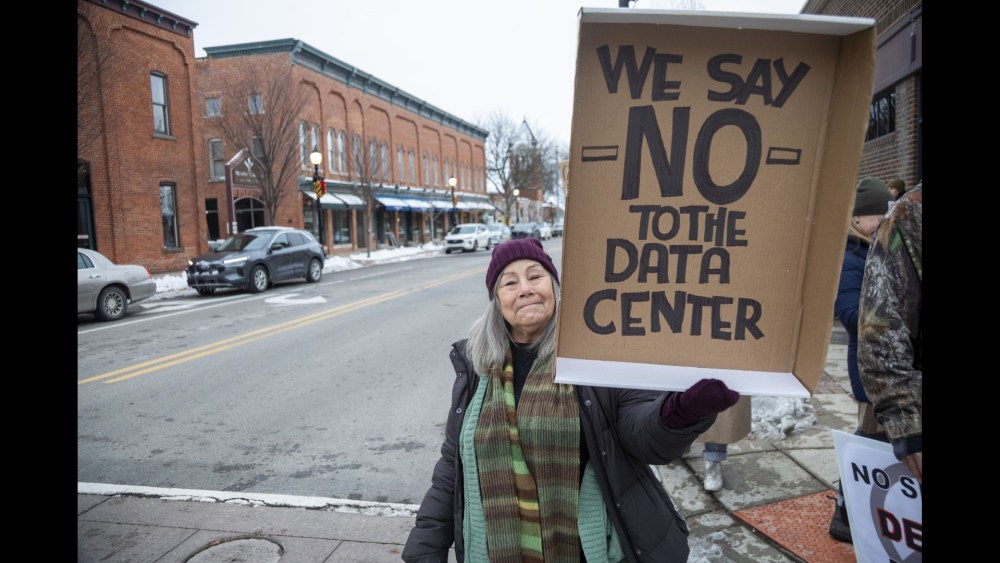
Just search “utility companies” under news, and you’ll find a familiar story playing out across the country: report after report of skyrocketing electric bills and mounting public anger with service providers. Out-of-control utility bills have become another aspect of the country’s affordability crisis, driven by an industry operating with too little accountability.
Retail electricity prices rose 7% in 2025 alone, part of a nearly 40% rise since 2021, which makes it the fastest period of electricity price growth on record. The average household’s monthly electric bill has climbed from roughly $121 in 2021 to $156 today, marking a nearly 30% increase that outpaces inflation.
In the words of the American Economic Liberties Project’s Matt Stoller: “Where’s all the f&$*#ing money going?”
Meanwhile, utility companies continue to ask regulators to let them charge even more money. In just the first three months of this year, utility companies sought approval for $9.4 billion in rate increases. That follows a record-setting 2025, when they requested $31 billion, more than double what they sought the year before.
According to the consumer advocacy group Powerlines, “Today, nearly 80 million Americans are struggling to pay their utility bills, forgoing basic expenses like food, education, and health care to keep their lights on.”
In the words of the American Economic Liberties Project’s Matt Stoller: “Where’s all the f&$*#ing money going?”
For their part, the utility companies will point to extreme weather, aging infrastructure, the transition to cleaner energy and now the enormous power demands of data centers. And while that is real, it doesn’t add up — and it hasn’t for years. We
by Ali Velshi | Jun 2, 2026 | Velshi
This is an adapted excerpt from the May 31 episode of “Velshi.”
The year was 1976. America was celebrating the bicentennial, its 200th birthday. It was a monthslong affair that featured different kinds of events across the country.
In New York, a parade of dozens of historic ships sailed from New York Harbor and up the Hudson River. In Washington, D.C., the National Air and Space Museum held its grand opening on July 1, 1976 — timed to correspond with the bicentennial celebrations.
Some of the most elaborate and highest-profile celebrations took place in Philadelphia, the birthplace of the nation, where the founding fathers signed the Declaration of Independence.
In America’s case, its anniversaries often gloss over the racial dynamics underlying much of the country’s history and politics.
In the week leading up to July 4, 1976, the city hosted what it called “Freedom Week,” which featured street fairs, concerts and other events. An estimated 2 million people visited the city, including Queen Elizabeth, who took a trip to Independence Hall and gifted the country the Bicentennial Bell, which was forged at the same place as the original Liberty Bell.
But 1976 was also an uneasy time in the United States. Richard Nixon had just resigned as president in disgrace less than two years before, and the country was still dealing with the political turmoil left by the Watergate scandal. Americans were also experiencing an energy crisis triggered by conflicts in the Middle East.
But every 50 years since its founding, America has made a big deal of celebrating its anniversary. It’s supposed to be a time for the country to reflect on its history and its
by Ali Velshi | May 5, 2026 | Velshi
This is an adapted excerpt from the May 3 episode of “Velshi.”
On Thursday, the Senate passed a 45-day extension of Section 702 of the Foreign Intelligence Surveillance Act, one of the most sweeping surveillance powers in American law. The extension was passed under the pretext that Congress would use the time to negotiate real reforms.
But this is just the latest in a long bipartisan tradition of treating warrantless access to your private communications as a feature, not a bug.
To understand why this matters, you have to go back to the days after the 9/11 attacks. In that atmosphere of deep national trauma, the Bush administration moved quickly to expand the government’s surveillance powers.
At its center is the Foreign Intelligence Surveillance Court, created after Watergate to provide judicial oversight of foreign intelligence targets. The court operates in secret, with the government as the only party present. Over time, it has become little more than a rubber stamp, approving the vast majority of surveillance requests, according to government transparency reports. Government transparency reports show that in 2025, the court fully denied just four out of 287 surveillance applications, less than 2%.
When the government surveils a foreign target, it inevitably sweeps up the communications of any American on the other end of those conversations too.
Under Section 702, the U.S. government can collect the electronic communications of foreign nationals abroad without an individual warrant for each target. It also allows agencies like the National Security Agency and the FBI to compel U.S. telecommunications providers to turn over data, including emails, text messages and phone calls.
But when the government surveils a foreign target, it inevitably
by Ali Velshi | May 5, 2026 | Velshi
This is an adapted excerpt from the May 2 episode of “Velshi.”
According to Gallup, 55% of Americans say their financial situation is getting worse. That’s higher than at any point in the last 25 years — higher than the 2008 financial crisis and higher than the pandemic, when Covid-19 literally shut down major parts of the global and American economy.
GDP, the broadest measure of total economic activity we have, did grow 2% over the first three months of the year. However, a large portion of that growth was driven by businesses investing in artificial intelligence. An increase in government spending, propelled by the war with Iran, also pushed up GDP.
Much like this war in Iran is Trump’s war of choice, this edge of financial crisis is the president’s economy of choice.
Despite the rising GDP, 70% of voters told Fox News they feel like the overall economy was getting worse for them and their families.
That’s because voters don’t vote based on the GDP. They vote based on the economy they experience every day, which is heavily influenced by factors such as inflation. In March, the annual rate of inflation increased nearly a percentage point from the previous month.
So it’s no surprise that the University of Michigan’s consumer sentiment index, which measures how optimistic people feel about the economy, hit an all-time low in April.
This economic malaise did not emerge suddenly, nor can we be sure that those in charge are prepared to address it, or even want to. In fact, quite the opposite.
Much like this war in Iran is Donald Trump’s war of choice, this edge of financial crisis is the
by Ali Velshi | Mar 30, 2026 | Velshi
This is an adapted excerpt from the March 29 episode of “Velshi.”
An investigation into a scandal within Donald Trump’s administration, which has largely flown under the radar, now appears ready to break open into a Watergate-level crisis for the president.
While it’s tempting to recall Watergate as being triggered by a break-in, it actually had its roots in an antitrust scandal — and in a thread that two lawmakers refused to stop pulling on.
In the early 1970s, the Nixon administration stood accused of interfering in a Justice Department case against International Telephone and Telegraph, or ITT, which was a conglomerate that controlled telecom, hotels, defense contracts and plenty of other things.
The allegation at the center of the scandal was that the Justice Department went easy on ITT’s antitrust case in exchange for corporate funding of the 1972 Republican National Convention.
A Texas Democrat named Wright Patman, then chair of the House Banking Committee, tried to investigate. But he was blocked by members of his own party, who called it too risky to do in an election year.
So Patman passed the information to Democratic Sen. Sam Ervin of North Carolina, and an investigation followed. Piece by piece, the scandal came into focus.
Davis helped pick the referees, then showed up to play the game.
The ITT antitrust case may seem obscure today, but it revealed the administration’s willingness to bend rules for political and corporate gain, setting the stage for the Watergate break-in, which is the part of the scandal most Americans remember.
As investigators began digging into these financial and political connections, Richard Nixon’s campaign grew increasingly paranoid about leaks and opposition research. That fear
by Ali Velshi | Mar 10, 2026 | News, Velshi
This is an adapted excerpt from the March 7 episode of “Velshi.”
America is at an inflection point. We are witnessing something that we have not seen yet in Donald Trump’s dangerous second term: accountability.
Accountability is a critical principle of a functioning democracy, and, arguably, the entire ethos of this administration has been to avoid it at all costs — to openly flout the law, the Constitution, the balance of power, ethics, morals and basic human empathy with zero consequences.
Now, there have been some consequences: demonstrations and town halls led to massive Democratic victories in New York City, New Jersey and Virginia in November, and a monumental anti-election rigging ballot initiative in California. Protests in Minneapolis and around the world led to changes in the government’s approach to its immigration crackdown.
This isn’t just the downfall of one corrupt and dishonest Trump lackey; it’s proof that the system is not broken — at least not yet.
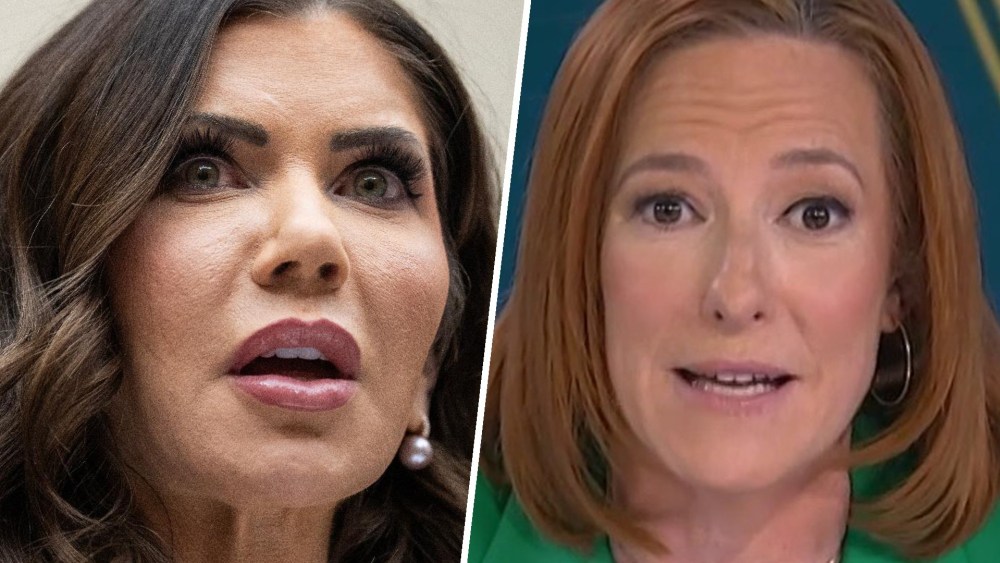
That was citizen-driven accountability. But recently, we saw a mirror of that from our elected officials when Trump announced the long-overdue firing of Kristi Noem as Homeland Security secretary.
This isn’t just the downfall of one corrupt and dishonest Trump lackey; it’s proof that the system is not broken — at least not yet.
It is proof that even while the president himself was granted an unimaginable protection against prosecution by the Supreme Court, much of his anti-democratic administration is not immune to accountability.
It’s proof that pressure works.
For months, Noem had become a growing liability to the Trump administration. She was dogged by criticism over spending at the department, including a $220 million ad campaign starring herself that was