by Lily Becker | Aug 7, 2026 | Congress, News, Science, White House
The Japanese tech giant SoftBank Group gave $50 million to Donald Trump’s presidential library in January 2026 — two months before the Trump administration approved a federal land lease that will allow the firm to build what could become the world’s largest artificial intelligence data center.
The company confirmed the timing of its donation in a written response to Sens. Elizabeth Warren, D-Mass., and Richard Blumenthal, D-Conn., and Rep. Melanie Stansbury, D-N.M., who released the letter Thursday.
The White House referred questions to the Donald J. Trump Presidential Library Foundation, which did not respond to a request for comment. SoftBank and the U.S. Energy Department also did not respond.
Although the $50 million gift was reported earlier this year, its timing around the land lease deal remained unknown. The Democratic senators said SoftBank’s donation — the library’s largest known donation — came squarely within the timeframe in which SoftBank was seeking federal approval for its Ohio project.
“Are we expected to believe it’s a coincidence that two months after SoftBank donated $50 million to the Trump library, his administration announced a massive lease deal for SoftBank’s data center?” Warren said in a statement. “Again and again, it seems like Trump is putting handshake deals with CEOs over what’s best for Americans.”
The lawmakers highlighted a sequence of events that they questioned.
In December 2025, reports surfaced that SoftBank and the administration were discussing a plan to use money from Japan’s $550 billion U.S. investment commitment to build Trump-branded industrial parks across the country. By January, SoftBank’s proposal was reported to be on the short list for selection.
That same month, SoftBank donated $50 million to the Trump

by Ann Keller | Aug 2, 2026 | Congress, Opinion, Science
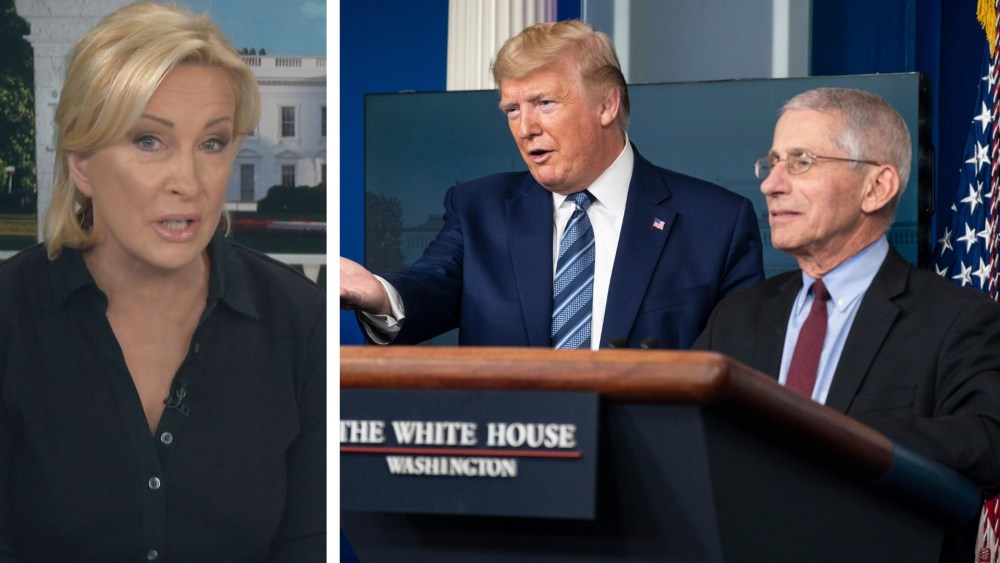
I was not surprised to see Republican senators try to take down Dr. Anthony Fauci last week. But I am disappointed.
When the first cases of Covid-19 were discovered in a hospital in Wuhan, China, I had already studied the U.S. public health response to seven epidemics and pandemics. The political theater and shoot-the-messenger tactics deployed in Wednesday’s hearing are nothing new. But the current focus on public health officials’ errors during a time of crisis and ever-shifting information isn’t about improving readiness for the next pandemic. It’s about assigning blame in a black-and-white binary, and that’s a mistake.
Skepticism is essential in the process of separating fact from fiction. We have more confidence in results that have survived such pressure testing.
Imagine if, when the next novel infectious disease threatens our health, we celebrate learning instead of punishing it? If we anticipate learning and are ready for it, that could go a long way toward improving our experiences in the next pandemic. But for this to happen, we need to come to terms with the messy reality of learning in the sciences. One can hope that scientists, as they gather data during a pandemic driven by a novel infectious disease, will be able to reduce uncertainties in a linear and predictable fashion. But that is not the norm.
I am a social scientist. When I discover something new and present my findings to my colleagues, the most likely result is that they will tell me all the ways they think I might be wrong. Skepticism is essential in the process of separating fact from fiction. We have more confidence in results that have
by Anthony L. Fisher | Jul 30, 2026 | Opinion, Science, World
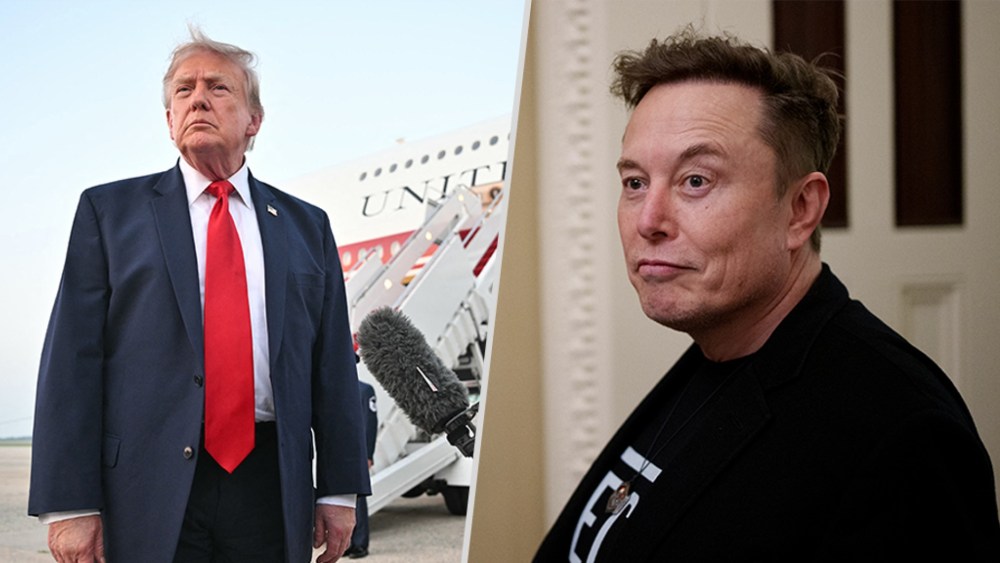
Elon Musk, the world’s richest man, thoroughly embarrassed himself last week during a mostly amicable interview with Zanny Minton Beddoes, editor-in-chief of the self-described “radical centrist” British newsmagazine The Economist. He displayed puddle-deep knowledge on subjects in which he claims expertise, a callous disregard to human suffering and a hair-trigger temper at being calmly challenged with demonstrable facts.
His performance and subsequent menacing online tantrum ought to present the media, the government, investors, index funds and others with a simple yes-or-no question that requires a yes-or-no answer: Should we treat as fine and normal that the fate of huge chunks of the economy and millions of Americans’ 401(k)s are in the hands of this unstable, thin-skinned, thuggish race-baiting conspiracy theorist?
That he is an overconfident, ignorant buffoon who turns into a shrieking crybaby when a sympathetic interviewer challenges his lies only makes things worse.
Musk’s most ignominious moments during the 90-minute interview include saying “zero” people died as a result of the cuts to foreign aid implemented by the Department of Government Efficiency, known as DOGE, the untransparent, unaccountable, legally questionable quasi-agency he briefly ran at the beginning of President Donald Trump’s second term.
Beddoes said she agreed with Musk’s view that U.S. government spending had “a lot of waste” and held “a lot of sympathy” for the Trump administration’s “change of the aid regime.” But she nonetheless took issue with “the pace and the suddenness” of DOGE’s cuts that “almost certainly have caused unnecessary suffering and deaths.”
Musk’s response was inherently contradictory: There were no deaths as a result of food and medical aid for millions being cut off overnight, he claimed, but other
by Hayes Brown | Jul 29, 2026 | Opinion, Science, White House
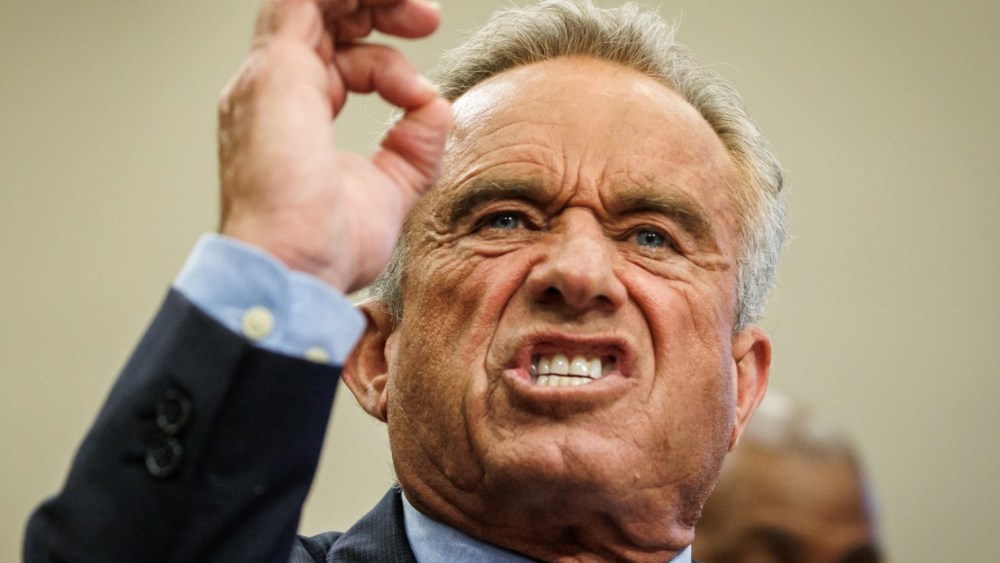
Say what you will about him, but President Donald Trump is a man who expects results. This includes carrying out his most outlandish demands, even when they clash with common sense of both the regular and political varieties. Health and Human Services Secretary Robert F. Kennedy Jr. is apparently learning this lesson the hard way. According to The Wall Street Journal, citing “people familiar with the matter,” Kennedy is facing his boss’ ire for not “doing more to probe the alleged connection between vaccines and autism.”
It’s a surprising accusation, given the centrality of vaccine skepticism to Kennedy’s political brand and the Make America Healthy Again movement he is spearheading. It also cuts against the advice that the White House itself reportedly delivered earlier this year, to have HHS downplay the focus on vaccines ahead of the midterm elections. But, per the Journal, Trump has his own ideas about what Kennedy needs to be focused on:
Chief among the president’s desires: Do more to reduce the number of shots that federal guidelines recommend for children, according to people familiar with the matter. They said the president hopes to then see autism rates drop, even if any such effect could take years.
The issue has been an ongoing point of tension between the two men. In a mid-June meeting in the Oval Office, the president vented to Kennedy that he wasn’t doing enough, people familiar with the matter said.
The president has made clear he thinks he has given Kennedy enough time and is disappointed the health secretary hasn’t accomplished more in the past year and a half, the people said.
While the White House and
by Norah Foley | Jul 29, 2026 | News, Science
A year before the Trump administration awarded Greenwater Services a $1.7 million no-bid contract to clean the algae-filled Reflecting Pool, it gave the company, owned by a Trump donor, a $2.4 million no-bid contract to test its “nanobubble” technology in California’s polluted Tijuana River. Critics have questioned the results of the pilot and whether the technology can deliver on its promise to address a sewage crisis that has exposed nearby communities to contaminated water and air for decades.
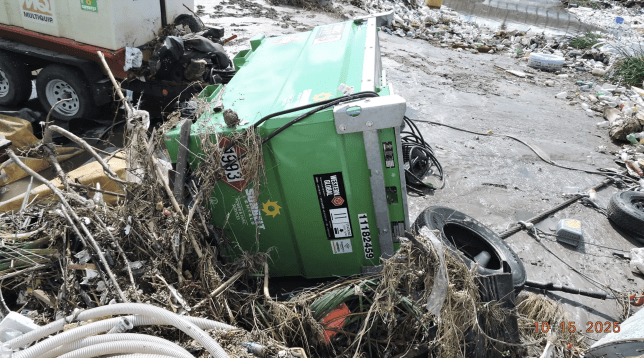
Greenwater’s project, as first reported by The Washington Post, was to test its nanobubble technology, which injects ozone into a body of water to kill bacteria and eliminate odors, in the Tijuana River sewage flows. Greenwater began the project on Sept. 9, 2025, but it was cut short on Oct. 14, 2025, when a storm flooded the river, washing away some of Greenwater’s equipment and spilling diesel fuel into the waterway.
Oscar Romo, executive director of the conservation nonprofit Alter Terra, has spent more than 40 years working to restore the polluted river. He told MS NOW that Greenwater’s project ultimately made his job harder.
“There was no improvement or satisfactory results,” Romo said. He added that while Greenwater’s pilot was operating, “the smell became even worse” and the water was “milky for a few minutes, and then back to black.”
Greenwater Services’ rental equipment and nanobubble system strewn across a trash boom after a storm swept through the Tijuana River on Oct. 15, 2025. Courtesy Oscar Romo
Romo shared photos that show Greenwater’s rental equipment scattered across a trash boom, that he installed and works on, after the storm. A trash boom is a floating barrier
by Joseph Cirincione | Jul 25, 2026 | Opinion, Science, White House, World
President Donald Trump says he believes nuclear technology is a grave threat in the hands of Iran’s ruling regime, arguing that the country would inevitably use it to create a weapon of mass destruction. And yet, in a new agreement signed Wednesday, Trump agreed to let Saudi Arabia enrich uranium and reprocess plutonium, the two ingredients used in nuclear bombs.
The Saudis promise this will be used only for peaceful purposes, but Saudi Crown Prince Mohammed bin Salman said as far back as 2018 that “without a doubt if Iran developed a nuclear bomb, we will follow suit as soon as possible.”
Trump’s generosity to Saudi Arabia — which has numerous lucrative deals in place with members of his family — could unleash a flood of new nuclear programs. If the Saudis get this technology, others will demand it too.
Nuclear is the most expensive way to produce electricity, and Saudi Arabia sits on an ocean of oil and is ideally suited for much cheaper solar and wind energy production.
Since the dawn of the Nuclear Age, U.S. policy has denied the ability to enrich uranium and reprocess plutonium to other nations because it is a shortcut to nuclear weapons. The huge and expensive facilities can be developed openly and legally until a government takes the quick jump from making fuel rods to making the cores of bombs. With this deal, Trump has effectively just green-lit a Saudi nuclear bomb program.
How did we get here?
In 2013, the Saudis unveiled a plan to build as many as 16 civilian nuclear reactors. Nuclear reactor companies salivated at the prospect of contracts worth hundreds of billions