by Steve Benen | Jun 16, 2026 | Maddowblog, News, Politics
When the Senate was still considering Markwayne Mullin’s nomination to head the Department of Homeland Security, there were plenty of reasons to pause before confirming the Oklahoma Republican. He was, after all, perhaps best known for threatening to get into a fistfight with the head of a labor union during a Capitol Hill hearing in late 2023. He also suggested that journalists would write fewer “false stories” if violence were used to handle disputes.
Nevertheless, Mullin was confirmed with relative ease in March — and he’s now facing a new controversy that has nothing to do with his temperament, and everything to do with ethics. The New York Times reported:
For years, federal health officials have warned about the risks associated with a supplement derived from the leaves of kratom trees that adherents say can kill pain or boost energy. Sold in gas stations across America, kratom has been linked to liver toxicity, seizures and thousands of deaths.
Powerful figures close to President Trump, including Homeland Security Secretary Markwayne Mullin, pushed to downplay those concerns.
The Times’ investigation, the details of which have not been independently verified by MS NOW, highlighted the kratom industry’s “sprawling influence campaign,” which has courted a variety of officials, including Health Secretary Robert F. Kennedy Jr. and Vice President JD Vance.
But it’s Mullin who stands out for a specific reason. During his tenure as a U.S. senator, he attended a Food and Drug Administration press conference and endorsed new federal restrictions on supplements that compete with kratom for shelf space. “In explaining his position,” the Times noted, “Mr. Mullin pointed to a history of addiction in his family, though
by Steve Benen | Jun 16, 2026 | Maddowblog, News, Politics
For the most part, the UFC event on the South Lawn of the White House was exactly what critics expected it to be: It was vulgar and obnoxious. It was violent and tacky. It was classless and unbecoming of a once-great institution. It even faced credible allegations of corruption.
For Donald Trump, who threw this ridiculous birthday party for himself, it was an expensive and needlessly self-indulgent circus. The New York Times’ Michelle Goldberg made a compelling case that the gathering was “a garish spectacle of American decline,” reminiscent of the 2006 satire “Idiocracy,” which “depicts a United States led by a professional wrestler whose middle name is Mountain Dew.”
But as the dust settles on the event, and the “claw” is dissembled, one element of this gathering continues to stand out.
In an opinion column for the Times, New York magazine’s Will Leitch noted, “In many ways, the sight of blood-spattered U.F.C. fighters kicking and punching each other was less jarring than seeing them do it while members of the military stood by and saluted the fighters.”
Sunday night’s gathering was not merely a UFC event; it was an event that intertwined the sport and the armed forces in ways that were tough to defend. Historian Heather Cox Richardson noted the trouble began the day before the fights. From her Substack column:
[On Saturday night], while workers were putting up scaffolding at the Kennedy Center, Ultimate Fighting Championship (UFC) fighters held a press conference at the Lincoln Memorial in advance of the UFC cage matches to be held at the White House on Trump’s 80th birthday on Sunday. Trump sent the United States Army
by Steve Benen | Jun 16, 2026 | Iran Tensions, Maddowblog, News, Politics
As this week got underway, and Donald Trump started making a series of claims about a purported agreement with Iran, among the initial problems was the unsettling fact that U.S. officials and Iranian officials issued contradictory statements on key aspects of the framework.
But in the hours that followed, as Monday unfolded, a related and parallel problem emerged: Not only were Trump administration officials contradicting Iran, but they were also contradicting Trump.
Senior U.S. officials told reporters on a background call, for example, that the still-hidden text of the U.S.-Iran memorandum of understanding would be made public in the next 24 to 48 hours, in the interest of “full transparency.” Shortly after, the American president, speaking to reporters during the G-7 summit in France, was asked when the public could expect to see the MOU.
“I would say sometime after Friday,” the Republican replied.
Q: When will the text of the MOU be released?TRUMP: I would say sometime after Friday. The strait is open now. But it opens completely.— Aaron Rupar (@atrupar.com) 2026-06-15T16:14:34.387Z
The White House has not yet explained in any meaningful way why the finished document is being kept from the public, but just as notably, U.S. officials also failed to explain why Trump and his own team offered entirely different timelines for disclosure.
If this were the only contradiction, it would be easy to overlook, but as the day progressed, a broader pattern emerged.
Trump, for example, boasted that maritime traffic through the Strait of Hormuz will return to normal by Friday, while Trump administration officials said it could actually take weeks.
JD Vance, meanwhile, has been making media rounds and was asked by CBS

by Zahara Hill | Jun 16, 2026 | Opinion, Politics, Sports
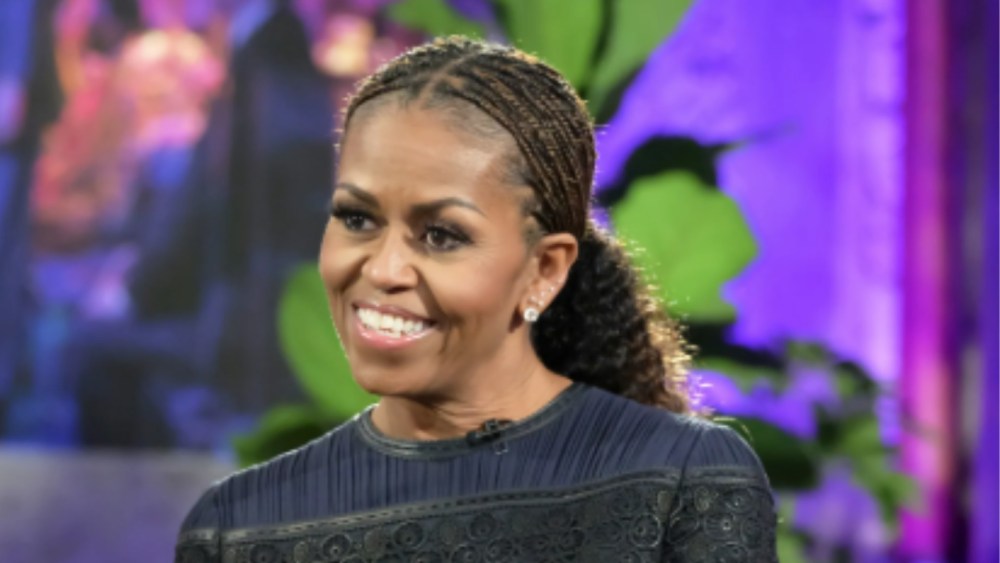
President Donald Trump celebrating his 80th birthday with UFC fights on the White House lawn was classless enough. Then Josh Hokit was given a microphone. After the UFC fighter won his cage match at Trump’s flamboyant celebration Sunday night, Hokit, who spoke mostly in disturbingly trite rhymes after his win, managed to further degrade the event. At the conclusion of his post-fight interview with announcer, podcaster and manosphere extraordinaire Joe Rogan, the athlete declared,“Michelle Obama is a man. Am I right, America?”
Many in the crowd of thousands of UFC fans ate it up, and expecting anything less would require an exceptional level of delusion. Misogynoir and transphobia have been lobbed against Obama at least since 2008, when America elected her husband, Barack Obama, president.
Misogynoir and transphobia have been lobbed against Obama at least since 2008, when America elected her husband, Barack Obama, president.
Misogynoir was coined by academic Moya Bailey in 2008 to describe the intertwining of racism and misogyny targeting Black women. As pervasive as misogynoir is, it took 15 years for Merriam-Webster to add the word to its dictionary. But even as I write this piece, each time I type misogynoir, spell-check suggests I have made a typo.
While it’s tempting to categorize Hokit’s remark as a random remark that came completely out of left field, the athlete was actually on brand. ESPN reported, “In his postfight interview at UFC 324 in January, Hokit called WNBA star Brittney Griner ‘a man.’” He’s a poster child for misogynoir.
Trump’s entire political persona is crafted in the mold of a strongman, an archetype that couldn’t exist without a heavy dose of toxic masculinity. And when he was elected to the
by Steve Benen | Jun 15, 2026 | Maddowblog, News, Politics
For months, Democratic officials have shared their widespread concern that the Trump administration may try to deploy federal troops to local voting precincts in the fall. Those fears were heightened last week when Republicans on the Senate Armed Services Committee blocked an effort to strengthen existing limits.
But it’s not just military personnel who may be deployed.
In recent months there has been related talk in conservative circles about sending immigration agents to polling places, which seemed ridiculous — right up until a variety of Republicans on Capitol Hill and conservative media outlets started endorsing the suggestion. The louder that conversation became on the right, the more important it became when administration officials refused to rule out the possibility.
As recently as last month, a reporter asked Donald Trump directly about possibly sending agents from Immigration and Customs Enforcement to voting locations. “You know what?” the president replied. “I’ll do anything necessary to make sure we have honest elections.”
That came on the heels of acting Attorney General Todd Blanche appearing at a conservative event and asking the rhetorical question, “Why is there objection to sending ICE officers to polling places? Illegals can’t vote.”
With 20 weeks to go before Election Day 2026, the administration’s position is still not inspiring confidence.
DHS Secretary Markwayne Mullin doesn’t rule out sending ICE to polling places in November— Aaron Rupar (@atrupar.com) 2026-06-14T13:25:03.741Z
On CNN’s “State of the Union,” Kasie Hunt asked Homeland Security Secretary Markwayne Mullin whether he was prepared to rule out the possible deployment of ICE agents to local polling stations.
“No,” the Oklahoma Republican replied. “Keep in mind, why would ICE be there? Because the only people who
by Steve Benen | Jun 15, 2026 | Maddowblog, News, Politics
The White House was eager for Congress to extend Section 702 of the Foreign Intelligence Surveillance Act, and a group of lawmakers had already crafted a bipartisan solution that appeared likely to advance ahead of last week’s deadline. There was no guarantee that the proposal would pass, but leaders from both parties seemed to agree the bill was on track.
All Donald Trump had to do was nothing. If the president simply focused his energies on his ballroom and his golf game, FISA would have remained intact, just as his administration wanted.
Doing nothing, however, proved too difficult for the Republican incumbent. MS NOW’s Mychael Schnell reported on the latest example of the president exasperating his ostensible GOP allies on Capitol Hill:
Earlier this month, Trump’s decision to install Bill Pulte as acting director of national intelligence triggered bipartisan backlash and helped sink an extension of Section 702 of the Foreign Intelligence Surveillance Act, producing the first expiration in the authority’s nearly 18-year history.
The implications of policymakers missing last week’s deadline are admittedly complicated. Although there have been overwrought warnings about the United States “going dark” on terror plots and related threats, The New York Times reported, “A legal quirk would most likely allow the program authorized by the law — Section 702 of the Foreign Intelligence Surveillance Act, or FISA — to continue operating well into next year, although technology companies that cooperate could resist doing so, potentially leading to some gaps in intelligence collection.”
While that debate advances, it’s worth appreciating the familiarity of the circumstances.
On the economy, all Trump had to do was nothing: Early last year, when he returned to