by Symone D. Sanders Townsend | Apr 24, 2026 | Opinion
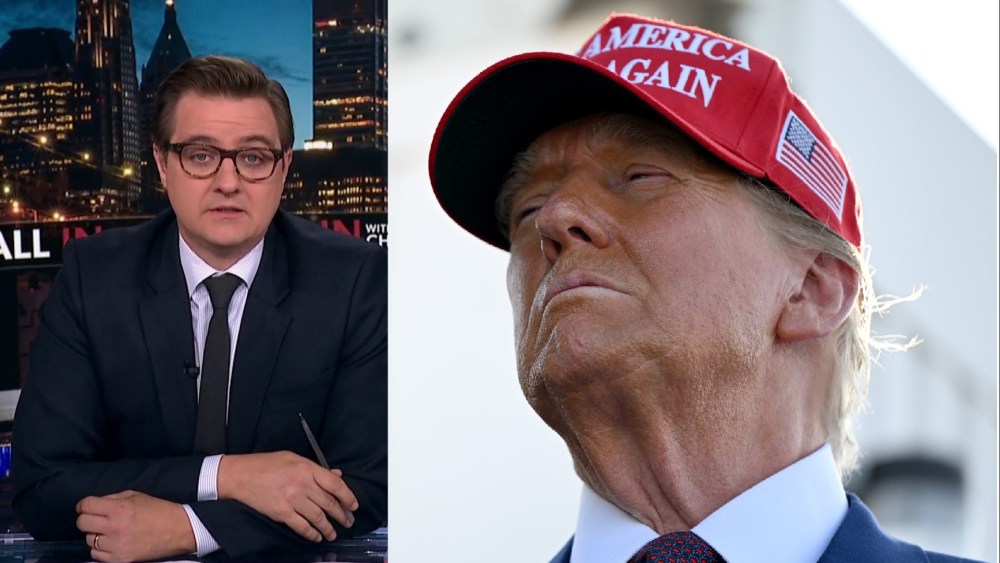
Is the president OK?
I asked that question on TV this week. Not as a throwaway line or a partisan jab, but as a serious question about the capacity of the person holding the most powerful office in the world.
Since Donald Trump announced his first campaign for the White House in 2015, critics have wondered about his frequent digressions, anecdotes that never happened and seemingly dwindling vocabulary.
But in his second term, especially over the past few weeks, Trump has seemed more erratic than ever, making bizarre claims and accusations about the Iran war on social media and ratcheting up his already inflammatory rhetoric.
Americans are noticing. Only about one-fourth of Americans said Trump was even-tempered in a recent Reuters/Ipsos poll. Fifty-eight percent said the words “mentally sharp” did not describe the president very well or at all, while roughly half said his mental sharpness has gotten worse over the past year.
This not a question about the president’s policies or even his character. It’s about his basic ability to do the job he holds.
The past few days were not an outlier. As I’ve noted, Trump has always been erratic. But what’s changed is the system around him.
For years,“sanewashing” has helped normalize Trump’s words and actions.
For years, there was a quiet practice in Washington and in the press of “sanewashing” that helped normalize Trump’s words and actions that were often anything but normal. That is how a meandering speech at a political rally becomes “unconventional,” while unhinged threats at his perceived enemies become “hard-line negotiating tactics.”
Privately, even some Republicans will acknowledge that the president’s behavior is not right. But publicly, they either deny having
by Jarvis DeBerry | Apr 23, 2026 | Opinion, Politics
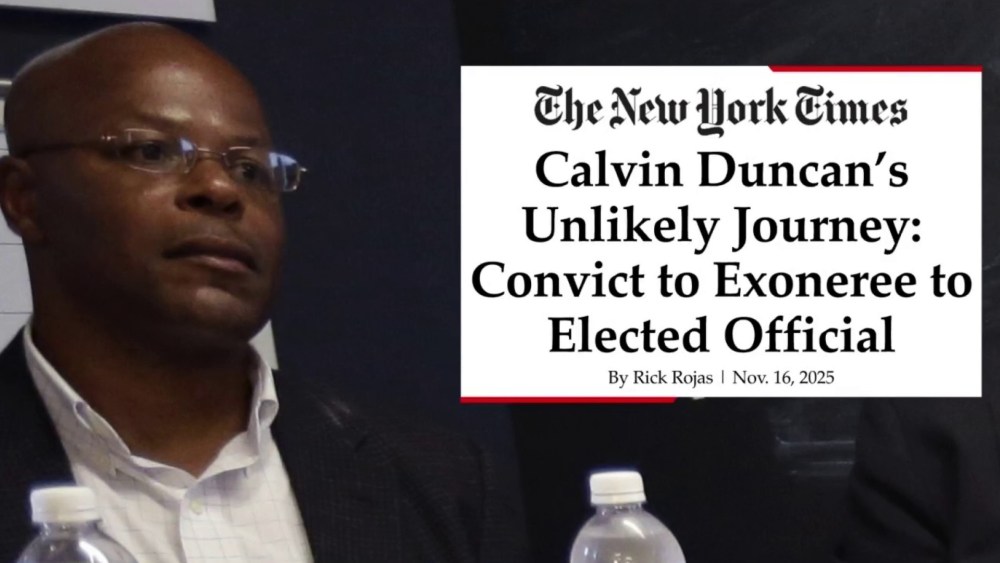
We’re awaiting the Supreme Court’s decision in Louisiana v. Callais, a case about how to draw congressional maps that may bring Chief Justice John Roberts’ final blow against a Voting Rights Act he already weakened. But in the meantime, the Louisiana Legislature has been engaged in an even more transparent attempt to diminish Black political strength. In November, 68% of voters in the majority-Black city of New Orleans chose as clerk of criminal district court Calvin Duncan, a jailhouse lawyer who was imprisoned for 28 years for a murder he didn’t commit. In what is the first legislative session since then, white lawmakers far removed from New Orleans (politically if not geographically) both chambers have now voted to eliminate the office that Duncan won before he can occupy it.
We can count on the state Senate approving some minor amendments to the bill — perhaps as early as Monday — and Gov. Jeff Landry has promised to sign the bill once it reaches his desk.
The Louisiana Legislature is making an even more transparent attempt to diminish Black political strength.
For the past two presidential cycles, many Democrats have argued that “democracy is on the ballot.” The implication was that Donald Trump represented a grave threat to the future of our republic. And Trump’s pardoning of Jan. 6 insurrectionists, his vote-throttling SAVE Act, his moves against birthright citizenship, his hypocritical stance against mail-in voting and his administration’s refusal to swear off sending immigration officers to the polls in November are all signs that he is hostile to full participation in democracy. And Roberts, who has had it in for the Voting Rights Act
by Zeeshan Aleem | Apr 23, 2026 | Opinion
Peace talks between Iran and the U.S. are proceeding neither quickly nor smoothly this week, in part because Iran’s government “has not yet decided” if it will participate in a second round of peace negotiations on how to end the war. One factor that explains the sluggishness is that Iran’s government is reportedly unable to settle on a clear counteroffer to the U.S.’ latest position on ending the war.
That may sound like a problem of Iranian dysfunction, but it’s also one for which President Donald Trump bears enormous responsibility — since he has killed so many of Iran’s leaders. Trump has sown the seeds for a drawn-out conclusion to a war he desperately wants to end.
One cannot pursue “regime change” and lighter-touch coercive diplomacy at the same time.
Iran’s power structure has become more decentralized, more factionalized and more reactionary in the wake of many of Iran’s political and military leaders being assassinated in U.S. and Israeli bombings.
Axios, citing three U.S. officials, reported that Iran’s government is riven by “warring factions” that cannot settle on a “coherent” position for the next round of talks with the U.S. “Supreme Leader Mojtaba Khamenei is barely communicating. The [Iran Revolutionary Guard] generals now in control of the country, and Iran’s civilian negotiators are openly at odds over strategy,” Axios reported.
With different centers of power that don’t appear to be communicating well, Iran’s ability to negotiate and hew to clear policy positions is compromised. We saw this play out last week. Hours after Iranian Foreign Minister Abbas Araghchi said the Strait of Hormuz was fully open following a ceasefire in Lebanon, the Islamic Revolutionary
by Hayes Brown | Apr 23, 2026 | Opinion
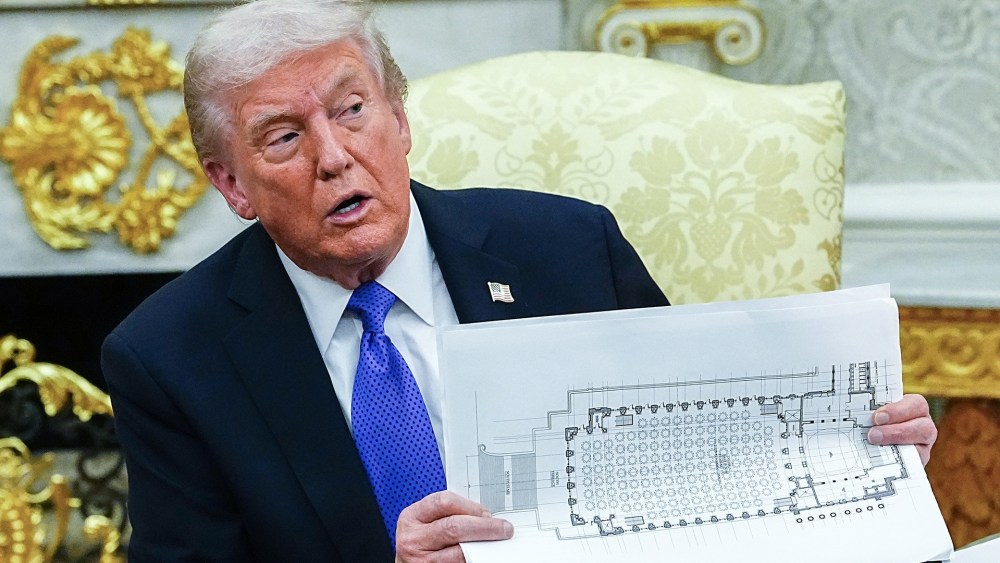
Months after President Donald Trump’s massive White House ballroom project began, we only know a handful of the donors funding it. There has never been a full list made available of exactly who’s helping to cover the estimated $400 million price tag and how much each donor has pledged. But a newly revealed contract explains why it has been so hard to pierce the veil of secrecy the White House has maintained.
At the risk of being blunt, the contract covering the ballroom donations is extremely shady
The donors forking over the cash for the ballroom, including corporate titans such as Amazon, Google and Comcast, are not giving that money directly to the federal government. Instead, they are contributing to a nonprofit group, the Trust for the National Mall, which is passing the hat on behalf of Trump and the National Parks Service. A Freedom of Information Act request from Public Citizen resulted in the nonprofit group obtaining a copy of the contract between the White House, NPS and the Trust for the National Mall, governing how the collaboration works. Public Citizen then provided the document to The Washington Post, which published it Tuesday.
At the risk of being blunt, the contract covering the ballroom donations is extremely shady. Like the rest of the project, the deal was signed quickly and quietly, less than two weeks before wrecking crews began tearing down the East Wing in October. And as the Post noted, there are details within the terms that jump out immediately as red flags:
“The contract resembles templates used by the Park Service for more routine fundraising partnerships — with several notable differences:
by Michael Edison Hayden | Apr 23, 2026 | Opinion
As one of the most high-profile employees of the Southern Poverty Law Center for five years — and as someone who has been outspokenly critical of the organization — I never once heard of the program that allegedly involved paying sources within the Ku Klux Klan, National Alliance and Aryan Nations until the Justice Department published its indictment this week.
What I did hear, frequently, was people in the MAGA movement saying we were some kind of criminal syndicate — part of a sustained propaganda effort to delegitimize the work we did tracking and labeling extremist groups.
Although I find the notion of paying extremists distasteful, even unethical, the indictment feels like the culmination of years of pro-Trump activists consuming and amplifying that kind of propaganda. And, the SPLC, for its part, has called these charges “false allegations.”
One quote from acting Attorney General Todd Blanche’s press conference about the charges against the SPLC stood out to me as particularly absurd:
“The SPLC is manufacturing racism to justify its existence,” he said on Tuesday afternoon.
Play
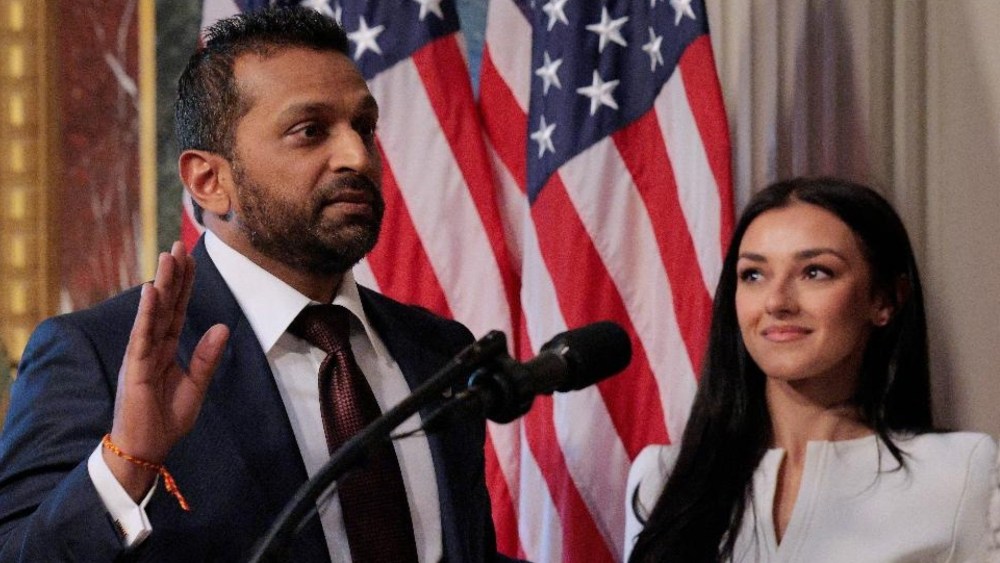
BREAKING: New York Times reports FBI INVESTIGATED journalist who wrote about Kash Patel’s girlfriend
April 22, 2026 / 09:48
Imagine, for a moment, believing the SPLC — or any other civil rights organization — needed to fraudulently manufacture racism to sell it in today’s America. Just two months ago, the president shared an artificial intelligence-generated video depicting his Black predecessor and his predecessor’s Black wife as primates. In early 2025, the Trump administration suspended refugee admissions from majority non-white countries while investing in a special program to fast-track white South African Afrikaners into the United States. Racism is not a rare commodity in
by Lyz Lenz | Apr 22, 2026 | Opinion
After decades of spreading false narratives about immigrants, depicting Black people as violent criminals and feminists as the root of all evil and helping to lay the ideological bedrock for this current administration, former Fox News host Tucker Carlson wants you to forgive him.
On his podcast, Carlson and his brother, Buckley, a former speechwriter for Trump in 2015, criticized the war in Iran. Buckley called Trump “out of control, megalomaniacal, destructive president.” And a subdued Tucker said he will be “tormented” by his support for Trump for a “long time,” apologizing to listeners for “misleading” them about the president.
But Carlson’s apology feels false after decades of profiting off racist, sexist and violent rhetoric. If he was truly sorry, he should say specifically what he’s sorry for. There’s plenty of material to work from. As the tide of public opinion shifts against Trump and his ill-conceived war, Carlson’s attempt at contrition isn’t really remorse. It’s just more of what Carlson has always done so well, carpetbagging the American flop era.
Play
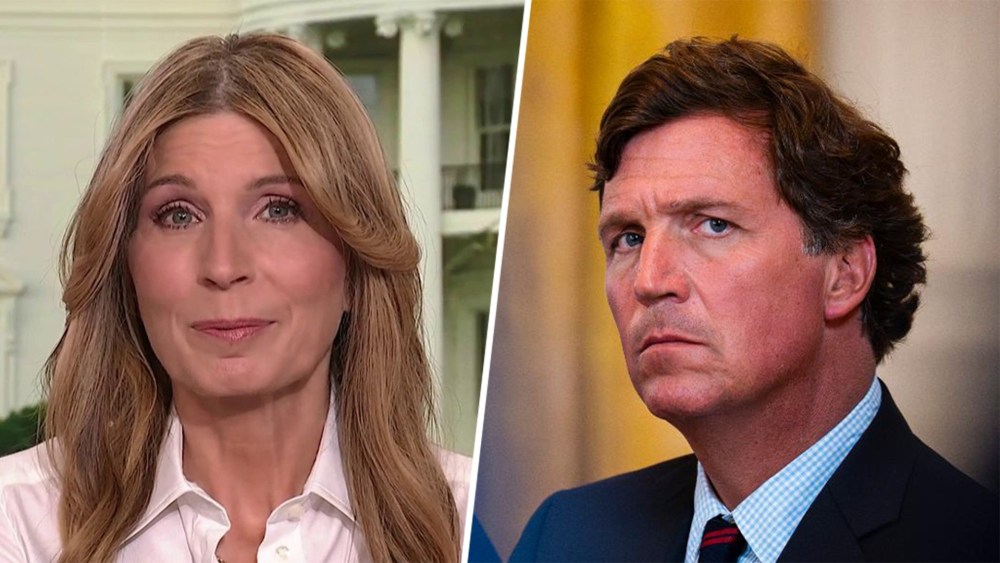
‘I don’t buy it’: Nicolle reacts to Tucker Carlson’s apology for helping to re-elect Trump
April 21, 2026 / 08:35
Carlson knows the effect of his words. He’s just never cared who they could hurt — not when he could make so much money.
In 2018, I profiled Carlson for the Columbia Journalism Review. At the time, I talked to more than 20 of his friends and colleagues — former colleagues from when he was a print journalist, when he was at CNN and then later at MSNBC, people who knew him from D.C. dinner parties, whose kids knew his kids from the expensive private