by Adam Johnson | Apr 30, 2026 | Article, Israel, Media Criticism, Opinion, Politics and Movements: US, The Cultural Front
The Atlantic, along with the New York Times, is the quintessence of elite liberal opinion. It is popular with Democrat-aligned readers who are high-income and high-status, and shapes the Acceptable Range of Discourse on the American left, such as it is. What it publishes matters, but—more importantly—it matters to people who matter. Thus, it’s useful to, on occasion, stop and highlight their editorial priorities.
In the past two weeks, the Atlantic has published five stories with substantive discussion of left-wing Twitch streamer Hasan Piker, adding to a broader media outrage over the streamer’s alleged taboo comments on Hamas and shoplifting:
Israel Moderates Are Losing the Democratic Party (April 16) by Jonathan Chait: “The Democrats’ establishment opposes terrorism and backs a two-state solution; Piker and his allies want to cast that position as de facto support for the status quo, which is a single state controlled by Israel.”
The Problem With Hasan Piker’s Einstein Story (April 18) by Yair Rosenberg: “Critics on the right and left highlighted his refusal to condemn Hamas.”
Something Is Happening to America’s Moral Code (April 24) by Graeme Wood: “Piker said he would steal cars, ‘if I could get away with it.’”
Theft Is Now Progressive Chic (April 24) by Thomas Chatterton Williams: “At a time of kleptocratic governance and corporate oligarchy, Tolentino and Piker resort to a game of jaded whataboutism.”
Calling Trump a Tyrant Is Not a Call to Violence (April 28) by Jonathan Chait: “The prominence of Hasan Piker, an apologist for terrorism and a proponent of authoritarian regimes, has revealed a much broader comfort on the left with illiberal ideas and violent methods.”
This broader media panic, it’s worth
by Ja'han Jones | Apr 30, 2026 | Opinion
Jim Crow lives.
Many Republicans are champing at the bit to dilute Black voters’ power after Wednesday’s Supreme Court decision in Callais v. Louisiana, in which the court’s conservative justices effectively allowed racist districts to exist unless a challenge to a district map can prove that its creators acted with racist intent.
Both before and after the ruling, Republicans — like anti-Black lawmakers in years past — showed their eagerness to use new maps to shore up conservatives’ political power. That’s particularly so in the South, where a majority of Black Americans live. There’s no credible moral justification for any of this, but that hasn’t stopped some folks from trying.
For example, Ohio state Rep. Josh Williams, a Black Republican who is running for Congress, touted the Supreme Court’s ruling on Wednesday as he denounced districts specially drawn to counter racist gerrymandering.
“I’m a black Republican who currently represents a majority-white district in the Ohio State House and is running to represent a majority-white district in Congress,” Williams wrote on X. “The idea that black Americans need special districts carved out just for them is complete nonsense. It’s a violation of the law and blatantly unconstitutional.”
I’m a black Republican who currently represents a majority-white district in the Ohio State House and is running to represent a majority-white district in Congress.The idea that black Americans need special districts carved out just for them is complete nonsense. It’s a… https://t.co/BQXXnzYXCo— Rep. Josh Williams (@JoshWilliamsOH) April 29, 2026
Some netizens and other observers noted in response that Williams represents an extremely gerrymandered district, drawn by Ohio Republicans.
Josh Williams’s district. https://t.co/0twbhaR7kB pic.twitter.com/kOTeil8hqG— Christopher Hale (@ChristopherHale) April 29, 2026
Williams’ claim,
by James Downie | Apr 30, 2026 | Opinion
Fifty-five percent of Americans said “their financial situation is getting worse,” according to a Gallup poll released this week. That’s a record for the 25-year-old survey. Americans are similarly pessimistic in other measures of economic sentiment — the Michigan consumer sentiment index, for instance, is near record lows — lower than during the Great Recession.
That dissatisfaction is evident in President Donald Trump’s poll ratings as well: A recent Fox News survey put Trump’s approval on the economy at just 34%, and other polls are similarly brutal. But it was not inevitable that voters would turn their discontent about the economy on the president. For that, Trump has only himself to blame.
To be clear, many Americans were already struggling despite low unemployment and inflation before and after the pandemic.
For decades, when large numbers of Americans expressed negative feelings about the economy, they were generally reacting to high unemployment, high year-over-year inflation or both. But even as inflation decreased in the latter half of former President Joe Biden’s term, the issue played a central role in Trump’s return to the White House. Since Biden, though, Americans’ views of the economy have been much more negative than typically associated with inflation around 3% and unemployment below 5%.
To be clear, many Americans were already struggling despite low unemployment and inflation before and after the pandemic. Frustration over a two-tiered economy was widespread years before Covid-19, powering the Occupy movement in 2011 and, later, Sen. Bernie Sanders’ first presidential campaign. As economist Mike Konczal noted, prices for essentials, such as food, electricity and motor vehicle insurance, have risen faster than inflation overall — a burden
by Stacey Abrams | Apr 30, 2026 | Opinion, Politics
The Supreme Court’s decision in Louisiana v. Callais is a direct hit to the heart of the Voting Rights Act and to the fragile promise that every American’s vote should carry equal weight. The VRA ended Jim Crow. Full stop. With this decision, it’s open season — once again — on Black and brown voters at the ballot box.
In 2023, the Supreme Court instructed Alabama to finally draw fair maps to create two majority-Black constitutional districts to allow Black citizens a shot at equal representation. Today, that same Supreme Court ruled that Louisiana’s two majority-Black congressional districts are unconstitutional — and in doing so, gutted Section 2 of the VRA, opening the door to racial gerrymanders across the South and Southwest.
It’s open season — once again — on Black and brown voters at the ballot box.
Let’s first understand what the VRA is. After the Civil War, the 13th Amendment banned slavery (mostly). The 14th Amendment granted birthright citizenship (for now). And the 15th Amendment barred the federal government and the states from denying the right to vote based on race, color and servitude (in theory). But until the fairly recent year of 1965, the 15th Amendment was routinely ignored by Southern states using the legal mechanism of Jim Crow.
Poll taxes, literacy tests and language restrictions were the most visible tools of voter suppression. However, Black voters who successfully navigated those hurdles still faced the ignominy of not having a real choice. Hostile political regimes drew the boundaries of voting lines and districts to make it impossible for Black and brown voters to elect anyone who represented their interests. Enter the
by Paul Farhi | Apr 29, 2026 | Opinion
The Federal Communications Commission chair seems determined to press ahead with harassing a media organization disfavored by his political patron, President Donald Trump. Fortunately for free speech and the rule of law, Brendan Carr’s latest regulatory action against a broadcaster likely will be ruled out of bounds by a court — someday.
On Tuesday, Carr took the highly unusual step of ordering an early license review for the eight broadcast TV stations owned by ABC and its parent company, Disney. This has happened rarely in the FCC’s nearly 100-year history, and it is the first review of its kind in decades. This is not the first FCC action related to ABC; it opened an investigation last year into ABC’s diversity and inclusion policies, as well as an investigation into “The View” over an appearance by then-Democratic Senate candidate James Talarico.
The first lady’s opinion is irrelevant as a matter of law, regulation, TV licenses and the First Amendment.
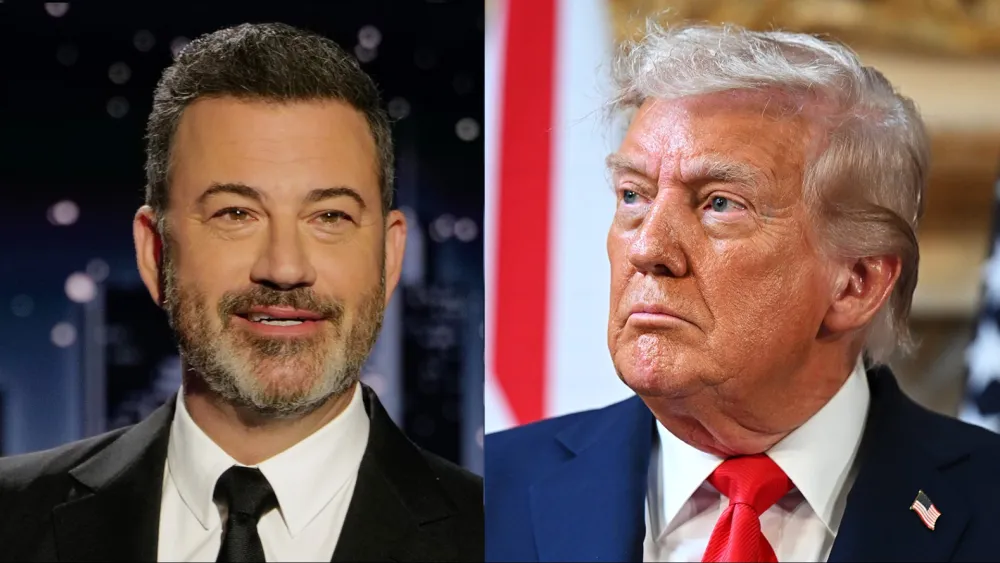
But Carr’s order came just 24 hours after first lady Melania Trump and her husband criticized ABC over Jimmy Kimmel’s comment in a late-night bit last week that she looked like an “expectant widow.” In light of the security breach at the White House Correspondents’ Association dinner, for which Cole Tomas Allen was charged with attempted assassination, the first lady suggested ABC “take a stand” and fire Kimmel.
The first lady has every right to take offense, though Kimmel has said his comment was about the president’s advanced years, not a call for his assassination. But the first lady’s opinion is irrelevant as a matter of law, regulation, TV licenses and the First Amendment. Kimmel and
by Ja'han Jones | Apr 29, 2026 | Opinion
Amid the Trump administration’s racist anti-immigrant crackdown, a reported surge in the arrests of Cubans isn’t merely a moral crisis — for Republicans, it could pose an electoral crisis as well.
A new study from the conservative-leaning Cato Institute found that due in part to a dramatic drop in the number of green card approvals, the Trump administration has overseen a massive spike in arrests. The report specifically found that “ending Cuban Adjustment Act green card approvals has certainly helped ICE to increase arrests of Cubans by 463 percent.”
This report aligns with President Donald Trump’s campaign vow to pursue the largest mass deportation effort in U.S. history and likely is welcome news to the conservatives who have complained that the administration hasn’t deported enough people. At the same time, the report arguably adds to ongoing questions about how the White House’s crackdown — which appears to be one of the reasons for Trump’s cratering poll numbers — will affect Republicans’ electoral hopes in the months, or even years, ahead.
The potential political fallout could be especially felt in Florida, where conservative Cubans have been seen as a key voting bloc for upholding GOP control. Even as Florida Gov. Ron DeSantis tries to impose gerrymandered districts that could potentially help Republicans gain several House seats in this year’s midterm elections, recent swings toward Democrats in the state’s elections — aided by Latino voters — raise the risk that the gerrymandering push could backfire by making some GOP-held seats more vulnerable.
Even before DeSantis presented the map, House Minority Leader Hakeem Jeffries denounced the governor’s gambit as brazenly in defiance of Florida’s laws against partisan