by Matthew Bartlett | May 4, 2026 | Opinion
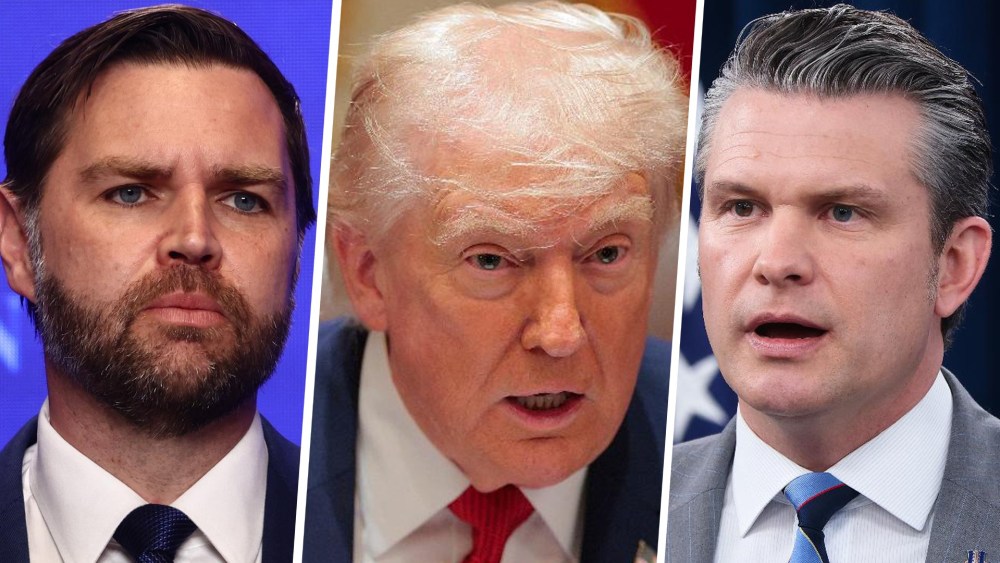
“JD Vance sucks.” I’ve heard that sentiment from Democrats ever since Donald Trump chose the junior senator from Ohio as his running mate in 2024. And it not surprising that Democrats still hold that judgment. What is surprising is that I now quietly hear the same sentiment coming from some MAGA and conservative circles.
To be clear, the vice president is so far ahead in polling for the GOP nomination in 2028 that the next most popular candidate, Secretary of State Marco Rubio, has publicly deferred his own possible run to Vance. If you ask the MAGA base, they will tell you without hesitating that Vance will be the 2028 nominee. Many MAGA voters are more interested in whom the current vice president will pick as his vice president than in hearing from any other prospective candidates for 2028.
But the quiet talk in Washington is much different and growing louder. Even Trump is reportedly asking friends and advisers about who would be better – Vance or Rubio. That question alone is a telling admission about the president’s thoughts about his own vice president.
Even some leading Republican and MAGA activists do not have close relationships with the vice president.
Just the other day Politico reported that “some of President Donald Trump’s closest confidantes increasingly see Marco Rubio as a serious 2028 contender.” Semafor subsequently published a story titled “Why it’s still JD Vance” – a headline that some people in Washington viewed as acknowledging the doubts and alarms.
There is griping, from prominent conservatives in Washington and state-based activists, that Vance is not effectively using his current perch at the Naval Observatory to his
by Jeff McCausland | May 3, 2026 | Opinion, Politics
Defense Secretary Pete Hegseth’s testimony to the House and Senate Armed Services committees this week was his first appearance before Congress since U.S. military action began against Iran.
So far, this conflict has resulted in the deaths of 14 American service members, including one whose death was not combat-related, and a reported cost of over $25 billion. These hearings were originally scheduled as a routine review of the administration’s proposed $1.45 trillion Pentagon budget for fiscal 2027 but ended up being the first opportunity lawmakers had to question Hegseth about the war.
The testimony was disturbing from the onset for his combative and argumentative style, as he immediately lashed out at lawmakers from both parties.
But this was not “routine” and was a critical moment for the nation’s security. The American people are threatened by an ongoing conflict that could easily escalate and is already having a dramatic effect on the global economy. The nation is potentially facing its greatest energy crisis in history, and Hegseth’s testimony cast doubt on his fitness for the position of secretary of defense. The testimony was disturbing from the onset for his combative and argumentative style, as he immediately lashed out at lawmakers from both parties. Hegseth began the hearing with a formal statement that argued “the biggest challenge, the biggest adversary we face at this point are the reckless, feckless, and defeatist words of congressional Democrats and some Republicans.” This was hardly a serious effort to demonstrate his understanding of defense economics or elicit support from members of Congress concerned that the proposed massive Pentagon budget — a 45% increase over 2026 — would have serious implications for the nation’s
by Rep. Bennie Thompson | May 3, 2026 | Opinion, Politics
Though President Donald Trump has not carried out his threat to eliminate the Federal Emergency Management Agency, his administration has systematically weakened it during his second term. He has hollowed out its workforce, pushed out experienced staff in favor of political lackeys, dismantled preparedness programs and undermined the agency’s ability to respond when Americans need it most. Last spring, the administration announced that it had canceled billions of dollars worth of key mitigation programs that helped communities become more resilient to the effects of floods, hurricanes and other disasters.
More than 5,000 employees have left or been pushed out of FEMA since the beginning of the second Trump administration.
The elimination of those mitigation projects shifted risk onto states and local governments that lack the resources to pay for them themselves. More than 5,000 employees have left or been pushed out of FEMA since the beginning of the second Trump administration, worsening an already severe staffing shortage. Now reports suggest the Trump administration is considering even deeper workforce cuts — a highly dangerous proposal with the start of hurricane season less than a month away.
But just as worrisome as qualified people being pushed out of FEMA is unqualified people being brought in. Gregg Phillips, whom Trump appointed associate administrator of the Office of Response and Recovery in December, holds one of the most powerful positions at FEMA. It’s his job to lead the federal government’s frontline response to hurricanes, tornadoes, floods, wildfires and other disasters. Because lives are on the line during such emergencies, the role ought to be filled by someone with relevant experience who has demonstrated a commitment to public safety,
by Zeeshan Aleem | May 3, 2026 | Opinion
The American right is mired in a civil war over Israel.
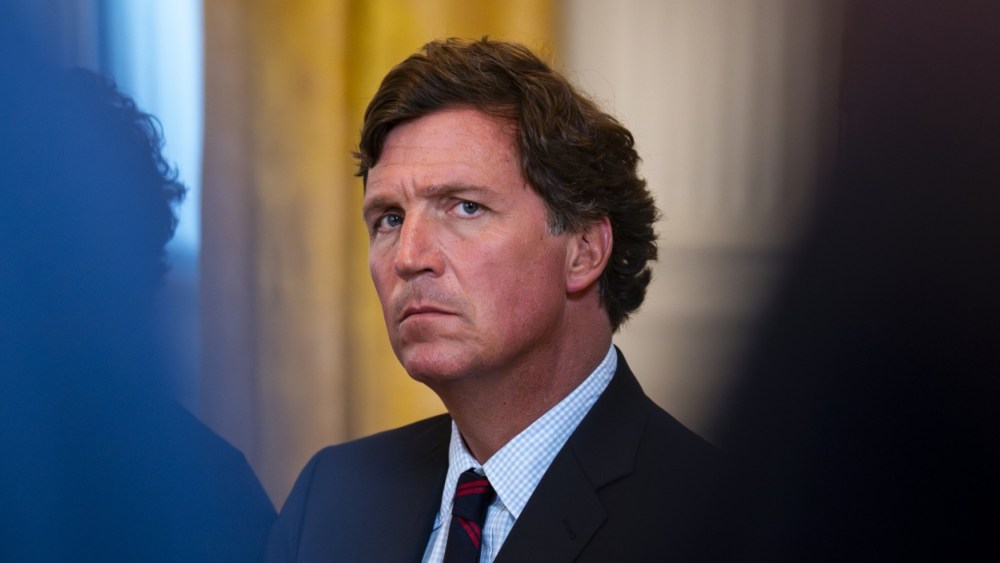
Over the past year, a number of prominent right-wing pundits and activists have broken from President Donald Trump over his support for Israel and condemned Israeli policy in Gaza as mass murder. This dispute is reaching new heights after the anti-Israel sector of the right — led by right-wing pundit Tucker Carlson and including former Republican congresswoman Marjorie Taylor Greene, right-wing podcaster and conspiracist Candace Owens, former National Counterterrorism Center Director Joe Kent, and white supremacist livestreamer Nick Fuentes — has accused Trump of betraying his own MAGA movement by, in their view, allowing Israel to drag the U.S. into the disastrous U.S.-Israeli war in Iran. “I hate this war and the direction that the U.S. government is taking,” Carlson said in an interview with the Wall Street Journal published last weekend, while accusing the administration of failing to “act on behalf of its own citizens.”
Much of the pro-Palestinian left is watching with curiosity and amazement. At the peak of its energy objecting to U.S. backing for Israel’s genocide in Gaza, the left-wing pro-Palestinian movement was overwhelmingly opposed by the right and sidelined by the Democratic Party, quashed by university administrators, and silenced by a shameful round of cancel culture within liberal institutions. Now it watches as the right is being riven by its own internal split over support for Israel, with the anti-Israel tendency spearheaded by the most powerful right-wing pundit in America and buoyed by widespread defection from a pro-Israel status quo among Republicans under 50.
Carlson’s intensifying criticism of Israel does not stem from some kind of
by Michael Latner | May 2, 2026 | Opinion
The day after the Supreme Court gutted Section 2 of the Voting Rights Act in Louisiana v. Callais, Louisiana Gov. Jeff Landry issued an executive order purporting to halt the state’s House primaries so that the elections would be conducted in redrawn districts. Already, legislatures in several southern states have begun planning to dismantle districts that have protected voters of color from racial voting discrimination for generations.
Democratic-controlled state legislatures face a question: protect voters of color and their incumbent representatives, or maximize partisan advantage with more counter-strike gerrymanders of their own?
Play
‘Demolition’: SCOTUS guts Voting Rights Act, undercuts minority power, fuels redistricting wars
April 29, 2026 / 11:18
There’s actually a clear option for voting rights policy that would guard against racial discrimination while preserving the hard-won gains of the Voting Rights Act: proportional representation.
By amending the Uniform Congressional District Act, Congress could neutralize the gerrymandering arms race and restore equality of opportunity to our democratic process. We suggest amending the law to make three fundamental changes to how members of the House of Representatives are elected.
By amending the Uniform Congressional District Act, Congress could neutralize the gerrymandering arms race and restore equality of opportunity to our democratic process.
First, states with more than one seat should elect members of Congress using multi-seat districts. Second, states should use some form of list ballot structure, where voters choose either a single candidate (as happens now) or a “party list” vote (like the straight-ticket voting used in six states). Third, states should allocate seats to party lists using a fair allocation formula to ensure that votes have equal weight in determining representation.
This type
by Hayes Brown | May 2, 2026 | Opinion
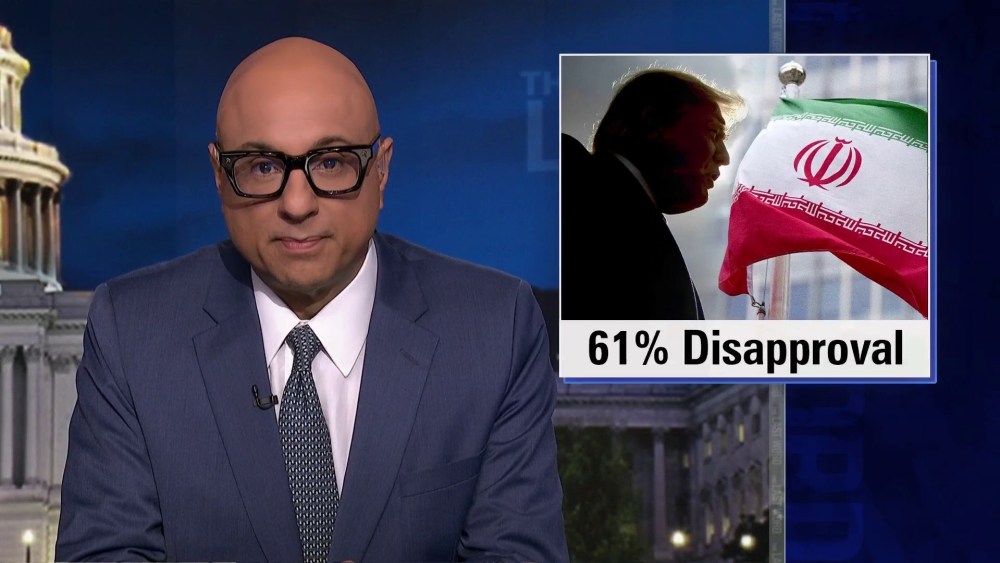
The Trump administration told Congress Thursday that the legislative branch doesn’t need to worry about authorizing the war with Iran that President Donald Trump launched two months ago. The War Powers Resolution says that a president only has 60 days after deploying U.S. military forces to either fully withdraw those forces or get formal approval from legislators for the campaign to continue. Despite hitting that deadline Friday, the White House is now saying that as far as it’s concerned, the hostilities that began two months ago are “terminated,” leaving no reason for Congress to act.
The result is a quantum-flux state of play regarding the Iran war that’s as absurd as it is illegal.
It’s a confounding sentiment given the U.S. warships still blockading Iranian ports and the possibility that Trump could launch a new round of strikes at any time. But time has clearly become flexible to the Trump administration and its allies. Depending on who you ask, and when, America’s war against Iran is simultaneously ongoing and doesn’t exist; it began 60 days ago but also 40 years ago. The war ended in early April, but our “warfighters” still need unconditional support to achieve victory.
The result is a quantum-flux state of play regarding the Iran war that’s as absurd as it is illegal. The conflicting arguments stretch the limits of credulity in hopes of avoiding laws meant to prevent America being dragged into a conflict with no end — and, in this case, seemingly no real beginning.
When Trump announced the joint U.S.-Israeli bombing against Iran, there was immediate concern that at no point had he tried to get authorization from