by Nicholas Mitchell | May 6, 2026 | Opinion, Politics
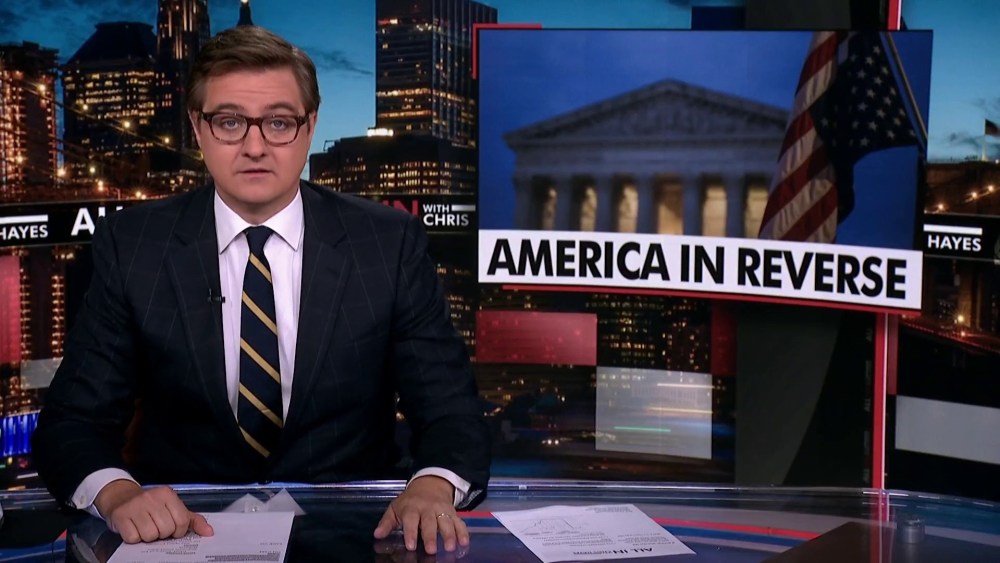
For Black Americans, the Supreme Court decision in Louisiana v. Callais is an especially poignant moment of outrage. There are millions of Black people who survived the full violent might of Jim Crow to secure the Voting Rights Act only to outlive the protections of the law that their friends and family were maimed and murdered to secure. Eddie Glaude succinctly described this rage when he told MS NOW’s Nicolle Wallace that “you get tired of people playing fast and loose with your dead.”
It is important to note that the Supreme Court did not rule that minority-dominant districts or Section 2 of the Voting Rights Act is unconstitutional per se. The 6-3 opinion written by Justice Samuel Alito changed the criteria for proving racial discrimination in drawing congressional districts. In brief, the ruling declared that any lawsuit claiming that a congressional district is racially discriminatory under Section 2 of the Voting Rights Act must be able to prove discriminatory intent from the people drawing the district; proving discriminatory effect would be insufficient.
There are millions of Black people who survived the full violent might of Jim Crow to secure the Voting Rights Act only to outlive the protections of the law.
It is that change that has led scholars, pundits, activists and Justice Elena Kagan herself to declare that the Voting Rights Act, which is one of the two laws that ended Jim Crow, is a dead letter.
While the damage to the Voting Rights Act was immediately apparent, and voters, candidates and political parties are grappling with its results, the logic introduced in Callais can just as wrongly be applied to the
by Ja'han Jones | May 5, 2026 | Opinion
At the epicenter of President Donald Trump and MAGA’s racist conspiracy theories about election fraud in 2020 lies Fulton County, Georgia, where such disinformation fueled Trump supporters’ threats to former election workers like Ruby Freeman and Shaye Moss.
Legal experts such as MS NOW contributor Adam Klasfeld have noted the racism undergirding Trump’s baseless allegations of widespread election fraud in largely Black areas, like Fulton County. Relatedly, I wrote about Freeman and her daughter testifying to the House Jan. 6 Committee about the harassment and death threats Trump’s election lies unleashed after his loss in 2020.
And that campaign of intimidation, which had historical similarities to the white supremacist lynch mobs of the Jim Crow era, looms over the Trump administration’s subpoena for the names and other personal information of county election workers from 2020, which Fulton County is trying to block.
On Thursday, Fulton County officially submitted a motion to quash the subpoena, saying the administration had “issued an unprecedented and harassing grand jury subpoena to the Fulton County Board of Registration and Elections (FBRE) seeking the disclosure of sensitive personal information of thousands of Fulton County election workers and volunteers who served in the 2020 general election in Fulton County.”
Here’s the crux of the county’s concern about the subpoena, according to the filing:
Its purpose is to target, harass, and punish the President’s perceived political opponents; it is grossly overbroad and untethered to any reasonable need; it cannot yield any evidence that could result in a criminal prosecution (because, among other things, the statutes of limitations have expired for any purported 2020 election crimes); it burdens the First Amendment rights of election
by Zeeshan Aleem | May 5, 2026 | Opinion
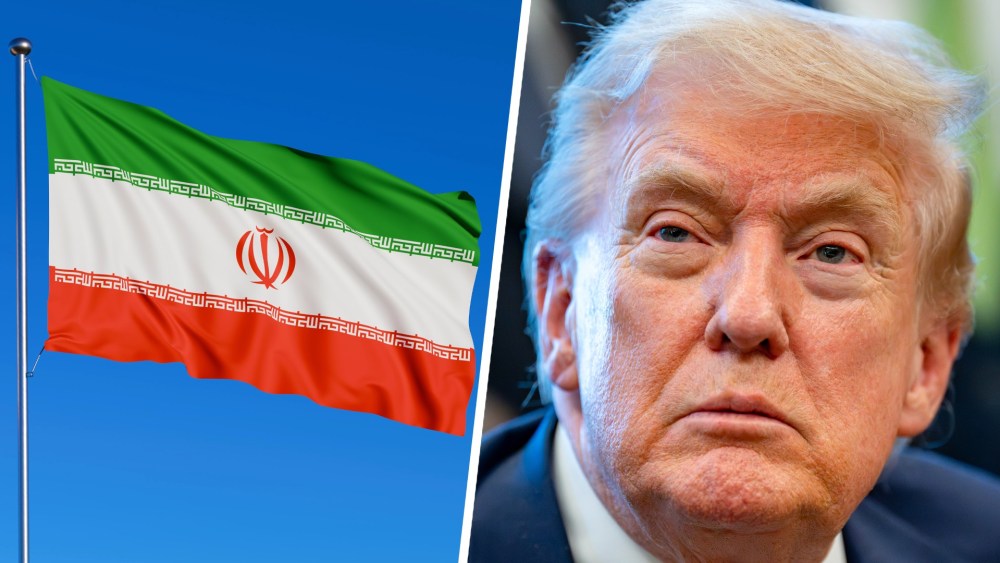
President Donald Trump announced on Sunday the launch of what he called “Project Freedom,” an effort to use the U.S. military to help “guide” ships that have been left stranded in the Strait of Hormuz by Iran’s effective closure of the waterway.
But, typical of Trump’s policy rollouts, this operation has been so slapdash that it has been difficult to assess whether the plan’s flaws are a sign of incompetence or darker motives. Either way, Iran’s attempted attacks on U.S. forces and merchant ships Monday were an immediate sign that Trump’s new plan could unravel the ceasefire and set the war in motion again.
Trump described his ship-guiding operation for vessels stuck in the Strait of Hormuz as a “humanitarian gesture” so that they can “freely and ably get on with their business.” He also warned that any “interference” would “have to be dealt with forcefully.” This is no small task. According to U.S. Central Command, the operation will involve the use of destroyers, more than 100 aircraft and about 15,000 service members.
“Project Freedom” could be seen as a way for the U.S. to try to build up a greater presence around the strait.
Iran responded by saying it would not allow U.S. forces or commercial ships to pass through the strait without its authorization, and Ali Abdollahi, an Iranian military commander, called for “all commercial ships and oil tankers to refrain from any attempt to transit without coordination with the armed forces.”
Iran tried to make good on that threat on Monday — the first day of Trump’s operation. According to CENTCOM, after U.S. destroyers passed through the strait with commercial ships following
by Hayes Brown | May 5, 2026 | Opinion
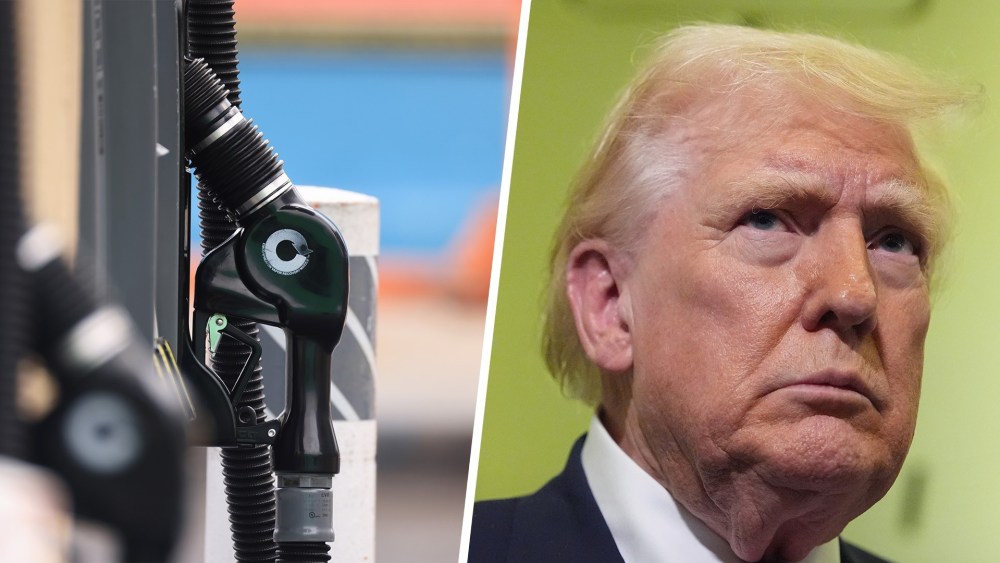
Since President Donald Trump began the war on Iran in February, gas prices in the United States have risen more than $1.40 a gallon, to a national average of $4.45, according to AAA. Even a temporary ceasefire hasn’t stopped the pain at gas stations across the country. Reports of drone and missile attacks Monday kept the world guessing, investors skittish and oil prices high, leaving little hope of relief soon.
Mind you, this is all the opposite of the “energy independence” that Trump promised in his re-election campaign. By prioritizing oil and natural gas, ensuring that the U.S. continues its reliance, this administration has made the country more vulnerable to the volatility that Trump’s war sparked. And by implementing policies that reverse the renewable energy revolution that had been underway, the Trump administration and its Republican allies have made it that much harder to wean ourselves off the fossil fuels holding the global economy hostage.
The Trump administration has made it that much harder to wean ourselves off the fossil fuels holding the global economy hostage.
In many ways, the U.S. has been fortunate. Over the past decade, the U.S. has recorded huge upticks in oil and natural gas production, largely driven by the development of shale oil fracking. The industries’ growth is such that America is a net exporter, with annual liquefied natural gas exports worth more than soybean or corn exports. That surge has helped the U.S. weather the energy crisis kick-started by Trump’s war better than many countries dependent on oil no longer flowing through the Strait of Hormuz.
Our geographic location also has upsides: Iran’s closure of the strait hasn’t
by Ja'han Jones | May 5, 2026 | Opinion
Once is an anomaly, twice is a trend — and whatever number we have hit in the running tally of MAGA activists charged with sex crimes certainly constitutes a disturbing pattern.
My colleague Steve Benen has done an excellent job of keeping track of Jan. 6 insurrectionists who have been charged or convicted of sex crimes after being pardoned by President Donald Trump last year as part of his authoritarian push to shield Jan. 6 participants from criminal accountability.
That list grew a tad longer Friday with the arrest in Florida of two Trump supporters among more than 250 others as part of a prostitution, human trafficking and child predator sting.
Polk County Sheriff Grady Judd identified one of the suspects as Ryan Yates, whose guilty plea to a felony charge of civil disorder was among the many convictions cleared by Trump’s pardon.
“We’re not giving him a blanket pardon,” Judd said during his Friday conference. “He [Yates] got away with it with a federal system. But not here,” Judd said. “He came here to violate the law. We arrested him.”
WTSP reports that Yates is out on bond for a charge of soliciting prostitution.
At the press conference, Judd also named Craig Long, whom he described as an influencer and pro-police activist. “He moves in big circles, even with the president,” the sheriff said, displaying a photograph of Long with Trump and Donald Trump Jr. at a UFC event last month. Long had posted the photograph to social media with the caption, “Haters RIP.”
Long was charged with soliciting prostitution and has pleaded not guilty, according to WFLA.
Haters RIP #ufc327 pic.twitter.com/sjEhAPzzxX— Craiglong45 (@craiglong45) April 13, 2026
Prior
by Mary Ziegler | May 4, 2026 | Opinion
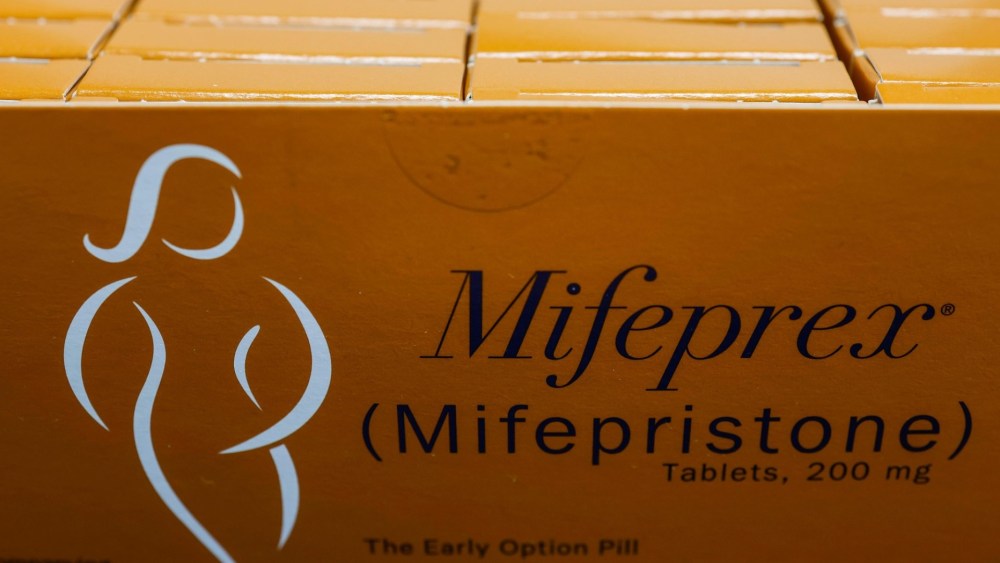
With six months to go until the 2026 midterms, abortion has not been a major issue in the campaign. But on Friday, the conservative 5th Circuit Court of Appeals temporarily blocked telehealth access to mifepristone, one of the drugs used in the standard protocol for medication abortion.
The three-judge panel sided with Louisiana’s request to halt telehealth access to the drug nationwide while its suit against the Food and Drug Administration is underway. Louisiana argues that the agency erred when, under the Biden administration, it allowed mifepristone to be obtained by mail. The order was temporarily stayed Monday by Supreme Court Justice Samuel Alito, but the high court’s final decision is still to come. However the justices rule, the case already has significant consequences both for patients seeking abortions and for national politics.
The total number of abortions didn’t significantly decline after the end of Roe, even in states that have criminalized abortion.
Almost four years after the Supreme Court overturned Roe v. Wade, the reality of a post-Roe America hasn’t set in for most Americans. Many live in states where abortion is legal. In other states, people who want abortions can still often get them. Those unable to travel can take advantage of telehealth providers in states with “shield laws,” which seek to protect doctors and other residents from out-of-state criminal and civil consequences for aiding in abortion.
The result has been a sort of uneasy equilibrium: Americans can still often access abortion early in pregnancy, and the total number of abortions didn’t significantly decline after the end of Roe, even in states that have criminalized abortion. The Society of Family Planning estimated