by Dr. Toyosi Onwuemene | Jun 30, 2026 | Opinion
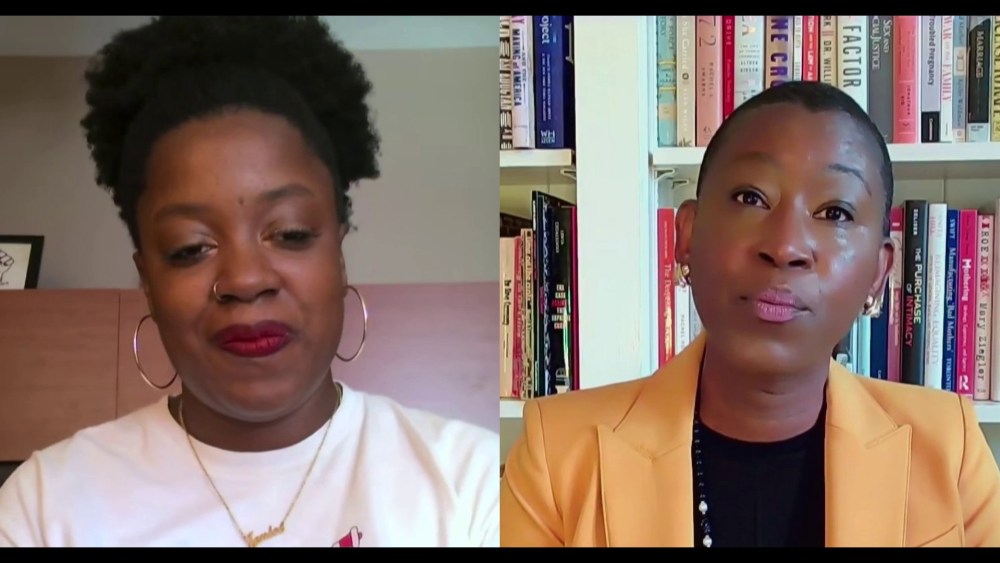
A young man named Daniel Cressy is the first person in Louisiana to successfully undergo gene therapy for sickle cell disease — and hopefully many others will soon be able to join him. At a press conference at Manning Family Children’s Hospital, Cressy described a two-year journey that culminated in him being declared functionally cured and how that has restored his dreams of becoming a pilot.
Being functionally cured means Cressy will now likely be freed of the excruciating pain and relentless, repeated internal organ damage that comes with the disease. He now has the potential to live a new life free of intense pain, repeat hospitalizations and social stigma. His story should be a beacon of hope for the approximately 100,000 individuals living with sickle cell disease in the United States. But for more people to have access to the same treatments as Cressy, there is much to be done.
Being functionally cured means Cressy will now likely be freed of the excruciating pain and relentless, repeated internal organ damage that comes with the disease.
According to the Centers for Disease Control and Prevention, more than 90% of people with sickle cell disease are non-Hispanic Black or African American. (An estimated 3%–9% are Hispanic or Latino.) For decades, most treatments were aimed at simply decreasing disease complications. Blood transfusions helped dilute the impact of sickled cells on vital organs. Penicillin protected young children from dying from sickle cell-related infections. Other treatments helped decrease pain crises. For those with a sibling donor, a bone marrow transplant was an option.
But the possibility of a functional cure for everyone did not come until the 2023
by Nick Akerman | Jun 30, 2026 | Opinion
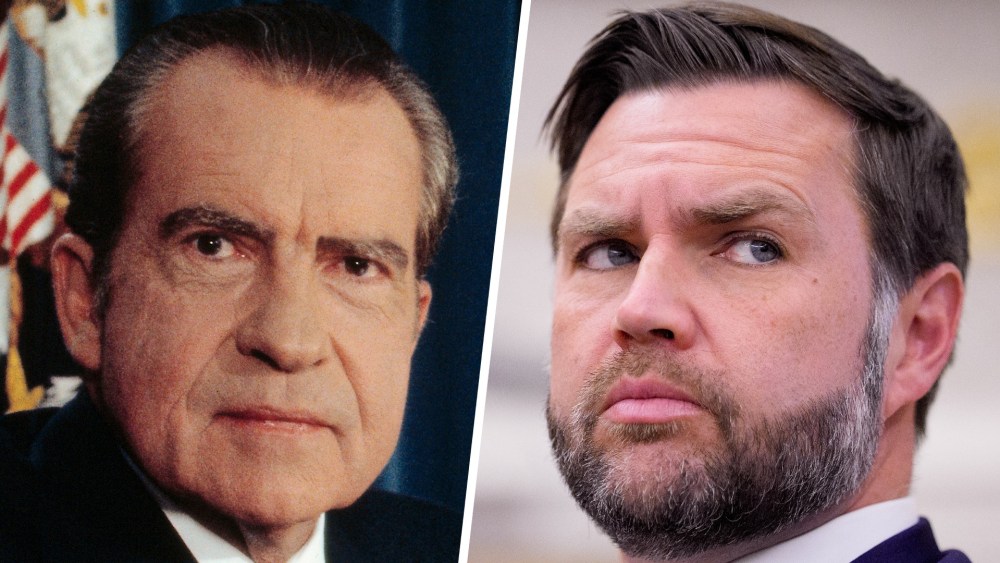
By now much has been said about Vice President JD Vance’s comments last week at the Nixon Library, where he attempted to rewrite the history of the Watergate scandal by musing that “if Watergate happened tomorrow, it would be like a 12-hour news story.”
He further stated, “If you look at the story of how the deep state took down Richard Nixon, it’s not all that different from what the same groups of people, the same institutions tried to do to Donald Trump in the first Trump administration.”
I am a former assistant Watergate special prosecutor. I was there. Vance’s description of the Watergate scandal was a fairy tale.
The June 1972 arrest of burglars at the Democratic National Committee may have been a 12-hour news story if the Nixon White House cover-up, which described the matter as a third-rate burglary, had been successful.
It was not.
While the cover-up held up through the 1972 presidential election in which Nixon won in a landslide victory, Nixon’s stonewalling began unraveling two months after he was inaugurated to his second term. On March 23, 1973, Judge John Sirica, a Republican appointee who presided over the criminal prosecution of the burglars, said he believed there was a wider conspiracy and planned to sentence the burglars to stiff sentences.
Nixon’s stonewalling began unraveling two months after he was inaugurated to his second term.
One of the Watergate burglars, former CIA operative James McCord, came forward and revealed to the judge that the burglars had been pressured to plead guilty and remain silent at the direction of others.
This breakthrough in the case was the beginning of the end for Nixon.
by Amy Peikoff | Jun 30, 2026 | Opinion, Supreme Court
The Supreme Court held today in Chatrie v. United States that the government conducted a search within the meaning of the Fourth Amendment when it acquired digital records about the cell phone location of a man accused of robbing a bank. This means that police generally need a warrant to obtain your location information from a service provider like Google. But what this means for other types of private information or media held digitally by countless service providers we rely upon daily is all but clear.At issue was whether law enforcement can use a “geofence warrant” to demand location information from Google about customers, here including Okello Chatrie, whose phones happened to be near a crime scene. The government’s answer: Yes, because once you share your location with Google, you have no Fourth Amendment interest in it and a warrant isn’t required anyway.
The Court leaves unasked the questions its own possessives raise: Whose records are these, and what follows from that ownership?
The Court disagreed. Privacy advocates are celebrating. But Justice Elena Kagan’s majority opinion missed the opportunity to declare that a person’s location data belongs to him, even if it is stored on the servers at a company like Google. The majority calls the records “his” freely, even likening them to Chatrie’s own emails and photos. What it refuses to do is let that ownership decide the case. And thus, the privacy test stays what it has been since 1967: whether “society” is prepared to recognize a person’s “expectation of privacy” as reasonable.
So the Court leaves unasked the questions its own possessives raise: Whose records are these, and what follows
by Ja'han Jones | Jun 29, 2026 | Opinion, White House
The Trump administration is looking to take a hacksaw to the constitutional separation of church and state, and there’s arguably no greater cheerleader for this illiberal gambit — no greater epitome of its derangement — than Scott Turner, the secretary of housing and urban development.
Turner made this abundantly clear Friday with a speech at the Faith & Freedom Coalition’s annual summit, which is basically where Christian nationalist zealots gather to bash liberals and tout their Trump-centered religiosity as the true expression of God’s will (despite all evidence to the contrary).
The speech came on the same day that Trump’s so-called Religious Liberty Commission issued a draft report calling for “building bridges” between church and state. And the remarks came from someone, in Turner, who has brazenly used his position to promote Christian nationalism.
At last year’s summit, Turner defended new work requirements for people to receive housing benefits — requirements that experts have said are unnecessarily burdensome, harmful to people in need of assistance and ultimately ineffective in growing the labor force.
So this was the housing secretary returning to familiar territory to rattle off his Christian nationalist schlock.
Turner’s speech last week was basically an anecdote- and falsehood-filled sermon in which he asserted that the government is no match for Christian charities in its ability to end homelessness, a crisis Trump himself has hardly lifted a finger to fix and has actively worsened. Turner, for example, has touted policy decisions that run the risk of increasing homelessness. And he has done this while using stereotypical arguments that effectively frame addiction and poor work ethic as root causes of homelessness.
In the speech, Turner falsely
by Susan Rinkunas | Jun 29, 2026 | Civil Rights, Opinion
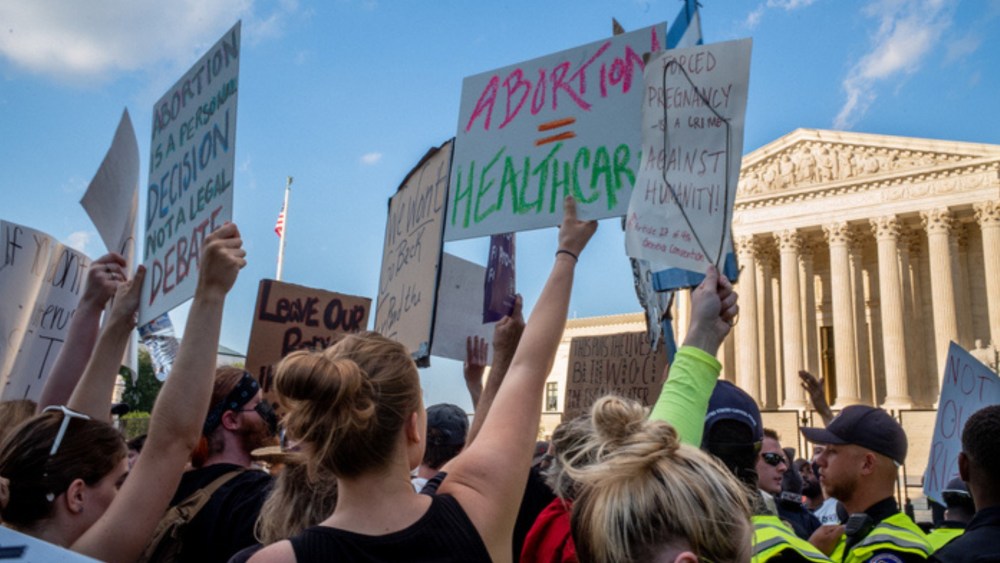
Four years after the Supreme Court overturned Roe v. Wade, some abortion opponents are unhappy. Though 19 states have abortion bans early in pregnancy, the number of abortions has actually increased since the Dobbs decision, due in part to the availability of medication abortion. Eight states passed so-called shield laws, which protect providers from criminal or civil investigations if they prescribe abortion pills to people in states with bans, and now nearly 15,000 medication abortions per month are provided under those laws.
A faction of the anti-abortion movement argues that criminal bans for abortion providers aren’t enough. The only way to actually stop abortions in states where they’re banned, these activists argue, is to prosecute women for homicide. This faction, though small, is vocal and gaining influence. On the anniversary of Roe’s fall, a group of more than 60 conservatives shared a resolution calling on lawmakers to “remove legal immunities” for women who have abortions. They said laws to protect life from the moment of fertilization would put fertilized eggs on the same legal plane as the person carrying them.
Prosecuting abortion seekers used to be a third rail in the anti-abortion movement.
But there’s a telling aspect to the list: Of the 24 signatories who lead anti-abortion organizations, just four are women. It appears that, to get more women signatories, they had to branch out to conservative influencers, including anti-transgender activist Riley Gaines and podcast host Allie Beth Stuckey. The gender dynamics at play cannot be ignored when under this framework, pregnant women could be prosecuted for ending their pregnancies or even having a miscarriage.
Prosecuting abortion seekers used to be a third rail
by Sheila Watson | Jun 28, 2026 | Opinion
Bigger is better or so the mantra goes. There’s an exception to be made though when it comes to the huge growth in SUVs. Expanding vehicle size is a part of a systematic push from auto manufacturers to sell their most profitable models — but the costs don’t end on the sales lot. Instead, the surge in both in size and quantity in pickup trucks and SUVs pose substantial risks to life, to the environment and to our wallets.
As reported by Bloomberg’s CityLab, while road deaths across high-income countries have been significantly falling over the past few decades, the United States has become a road safety anomaly. From its position as a road safety leader in the 1970s, now, only Saudi Arabia and the Bahamas have less safe roadways in the high-income group — and a Swedish road user is around seven times safer than an American.
The surge in both in size and quantity in pickup trucks and SUVs pose substantial risks to life, to the environment and to our wallets.
Pedestrian deaths in the U.S. have risen by 75% since 2009, according to the Insurance Institute for Highway Safety. A new analysis from the IISH and The New York Times found that pickup trucks and SUVs growing larger over that period are a significant contributor to that rise. Massive changes in vehicle shape, increases in weight and decreases in driver visibility are all also contributing factors to this worrying trend.
First, longer, higher hoods can extend blind spots to more than 14 feet, two to three times larger than the front blind zones of most sedans and compact cars. Stellantis’ Ram TRX