by Richard W. Painter | Jul 6, 2026 | Opinion, White House
As former White House ethics lawyers who served administrations of both parties, we upheld a clear bipartisan norm: presidents and senior officials must avoid even the appearance that official power could be entangled with personal gain. Presidents and senior officials were expected to divest conflicting assets, use blind trusts, or hold broadly diversified funds – all to avoid the mingling of their public office and their private interests.
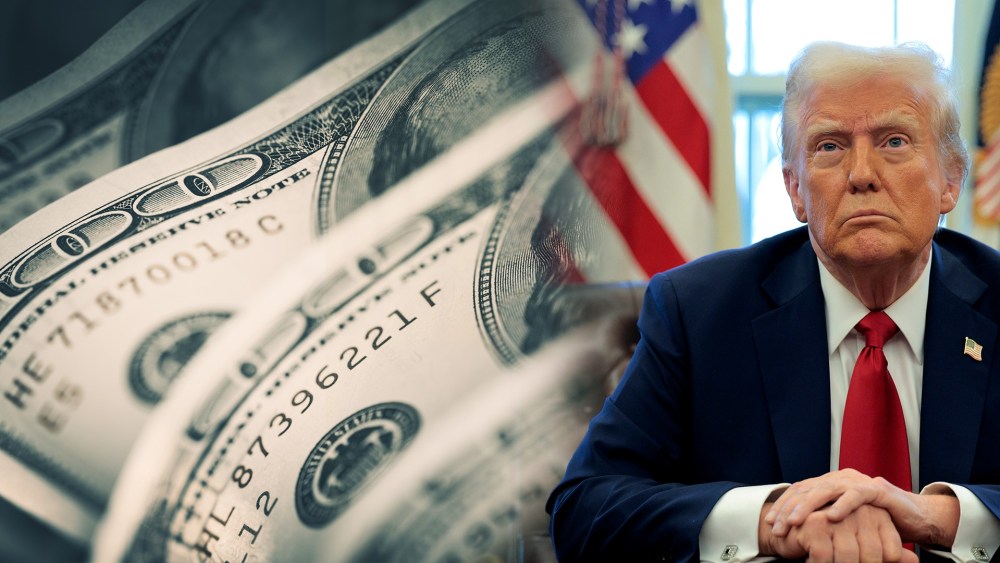
Donald Trump has shattered that principle. His most recent financial disclosure reveals an extraordinary $2.2 billion in gains during his first year in office. The sheer scale of the sums—$1.4 billion in crypto currency alone—is unparalleled. The issue is not simply how much money Trump made or that he made it at all; it is that the money comes from industries his administration regulates, foreign relationships his administration oversees, and markets that can rise or fall based on the policies, enforcement decisions, diplomatic relationships, and public signals of the office he holds.
Unlike Trump, most Americans cannot afford to hedge their bets through the buying and selling of oil company stocks.
Not surprisingly, the White House says there are no conflicts of interest, and Trump himself claims an independent firm handles his investments. But the truth is that Trump is financially capitalizing on the presidency in a way never before seen in American history.
The clearest example is cryptocurrency, where his personal financial interests overlap with his administration’s regulatory decisions, market signals, and foreign relationships. Since returning to office, Trump’s administration has moved toward a more permissive approach to digital assets. Meanwhile, Trump and his family maintain significant financial interests in that industry. His administration has
by Luke Russert | Jul 6, 2026 | Opinion
One of Donald Trump’s favorite selling points about his planned $600 million ballroom is its windows. According to the president, they’ll be “impenetrable,” with 5-inch-thick laminated glass.
That’s impressive, but nowhere near as fortified as the glass house Trump has built when it comes to corruption — a glass house that Republicans in Congress seem determined to let stand.
For decades, Trump and Republicans have pointed to the alleged corruption of Democratic lawmakers and their families.
But if corruption means using public office to enrich yourself, your family or your associates, then even the wildest Republican allegations about Democrats pale in comparison to what the president is doing openly today.
Let’s take one of their favorite targets: the Biden family.
Republicans have long accused Hunter Biden of influence peddling through his consulting work, board positions and even the sale of his artwork. Estimates suggest that businesses tied to Hunter Biden received roughly $11 million from 2013 through 2018. His art also sold for prices well above what most novice artists command. Objectively, not a great look.
Two years ago this month, Republicans on three House committees sent a letter to then-Attorney General Merrick Garland. Announcing an impeachment investigation into President Joe Biden, they wrote:
In total, since 2014, the Committees have accounted for over $35 million received by Biden family members, their companies, and business associates, which includes financial transactions described as loans. Despite much effort, the Committees have not identified legitimate services warranting such lucrative payments. The amount of money the Biden family has received from concerning companies and individuals is alarming.
The Bidens have repeatedly denied improperly using Joe Biden’s elected positions for personal enrichment, but
by Susan Del Percio | Jul 5, 2026 | Opinion, Supreme Court
Last week, the Supreme Court struck down President Donald Trump’s executive order to end birthright citizenship, an issue so important to the president that he attended oral arguments in person back in April.
Despite the court’s conservative majority, the ruling should not have surprised the president — not really. For one thing, his order had been rejected by every lower court that had considered it. Because, as many, many legal scholars had pointed out, it seemed to clearly run counter to the citizenship clause of the 14th Amendment.
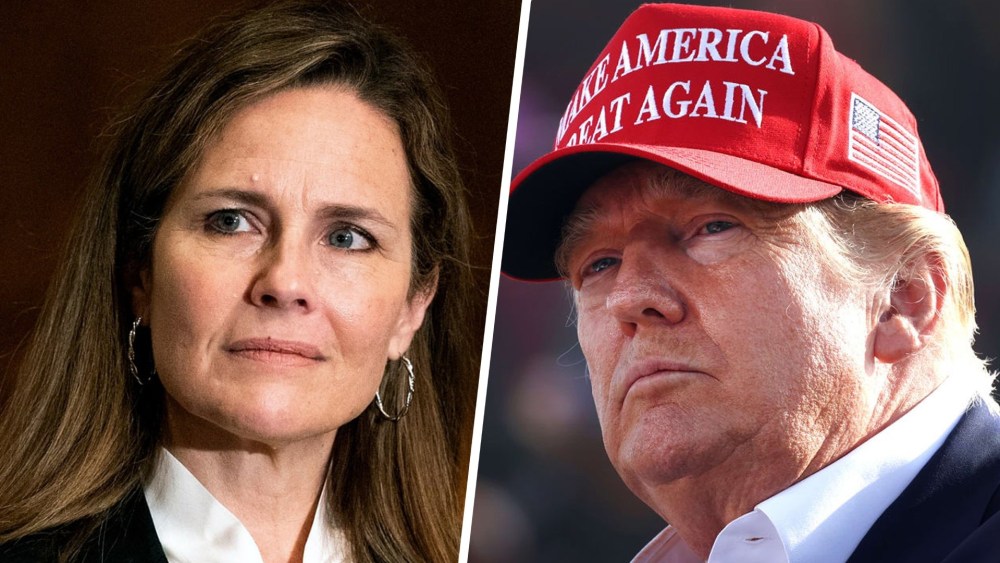
Following oral argument, the consensus among legal scholars was that a majority of justices did not buy the government’s argument. They were correct, as Chief Justice John Roberts’ majority opinion made clear. Roberts, appointed by President George W. Bush, in 2005, has remained a solidly conservative jurist. But it was Justice Amy Coney Barrett’s vote in favor of the majority which took some court watchers by surprise. And it was also Barrett’s vote which seems to have enraged conservatives in a specific, and perhaps specifically revealing, way.
It was also Barrett’s vote which seems to have enraged conservatives in a specific, and perhaps specifically revealing, way.
Following the ruling Trump called on Congress to take action on social media. “Congress should start TODAY to work on ending expensive and unfair to our Country, Birthright Citizenship.”
Right on cue, his sycophants picked up the chorus. Never mind the inconvenient reality that experts across the political spectrum widely believe the issue settled, or that changing the 14th Amendment would require a supermajority vote in both the House and Senate (or an even less likely constitutional convention), and ratification by
by Robyn Autry | Jul 5, 2026 | culture, Opinion, Politics
Victor Willis, a lead singer for the Village People who died Tuesday, insisted that the 1978 hit “YMCA,” the group’s most famous song, was not a gay anthem. Never mind its innuendo — its description of the YMCA as a place that has “everything for young men to enjoy/You can hang out with all the boys” and “do whatever you feel.”
Jacques Morali, the openly gay French music producer who helped create the group, said he did so after thinking to himself that “gay people have no group,” but Willis, who was the straight frontman dressed as a police officer surrounded by gay costumed bandmates, said “YMCA” was merely about young men having a place to clear their minds at the gym in the comfpany of other men. He said the songs “Macho Man” and “In the Navy” weren’t about gay life, either.
Willis said “YMCA” was merely about young men having a place to clear their minds at the gym.
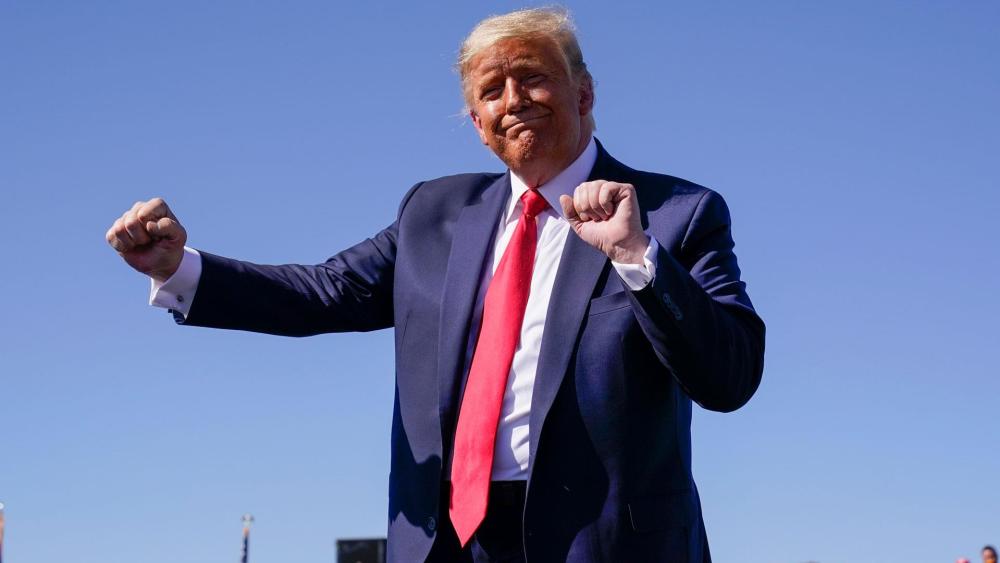
Maybe that’s what Willis needed to tell himself to justify becoming a closing act at MAGA rallies. Willis performed “YMCA” the night before President Donald Trump’s second inauguration alongside a new group of band members, as Trump twisted at the waist and pumped his fists instead of doing the simple hand motions fans created to spell out the letters. To many people, Willis aligning himself with MAGA, including his performance at the inauguration, felt like a betrayal, but Willis maintained the month before that performance that “YMCA” was for everyone and that after he decided to entertain MAGA “the financial benefits have been great.”
Willis was right about one thing. Like the cultural institution
by Hayes Brown | Jul 5, 2026 | Opinion
The Supreme Court ruled Tuesday that the 14th Amendment’s birthright citizenship clause does, in fact, apply to all people born in the United States. Only five justices reached that conclusion — a much closer decision than it should have been. (The sixth, Brett Kavanaugh, joined the majority on purely statutory grounds.) The primary dissent from Justice Clarence Thomas accused his colleagues of expanding the meaning of a clause narrowly tailored to help newly emancipated Black Americans.
The dissent was yet another bit of ahistorical storytelling from Thomas, which Justice Ketanji Brown Jackson was simply not willing to abide. Though Jackson joined Chief Justice John Robert’s majority opinion defending the constitutionality of universal birthright citizenship, she also filed her own concurring opinion on the case. In 20 pages, the most junior justice on the bench provided a tour de force of narrative history to counter her oldest colleague’s claims.
The dissent was yet another bit of ahistorical storytelling from Thomas, which Justice Ketanji Brown Jackson was simply not willing to abide.
Jackson has long used the history and context behind the drafting of the Constitution and its amendments as an intellectual counterweight to so-called “originalist” legal scholars. From their standpoint, laws must only be interpreted as their drafters intended.
Soon after her confirmation in 2022, Jackson explained during a hearing on a case involving the Voting Rights Act that, counter to her conservative colleagues’ claims, there was no justification for reading the Reconstruction Amendments, ratified after the Civil War, as being blind to race. As she explained at the time: “[W]hen I drilled down to that level of analysis, it became clear to me that
by Ryan Teague Beckwith | Jul 4, 2026 | Opinion
Washington, D.C., makes a great movie set: the imposing Lincoln Memorial, the instantly recognizable White House, the obligatory cutaway shot of the Potomac River.
That may be why President Donald Trump is so interested in using it as a backdrop to his increasingly grandiose spectacles.
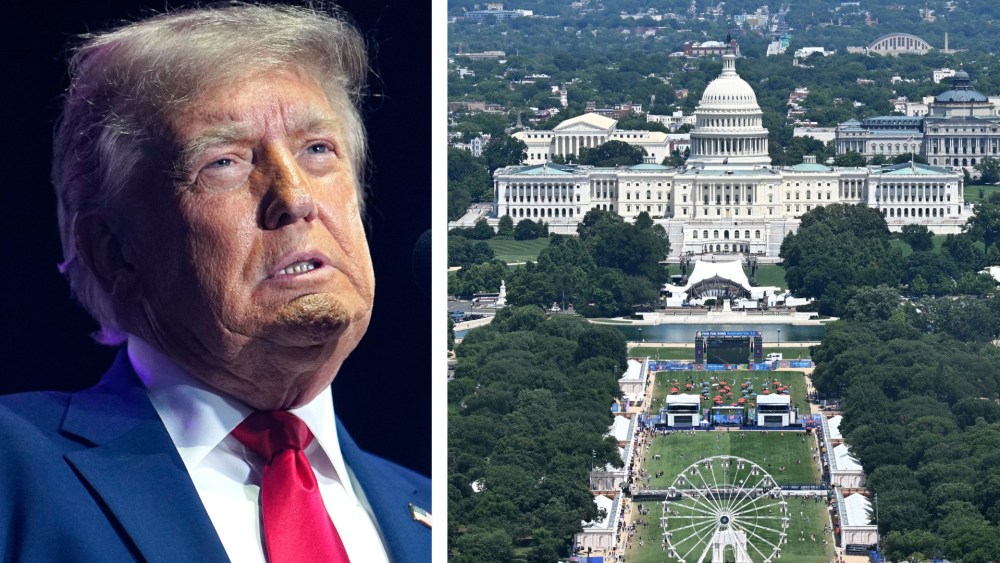
So far in his second term, he’s staged a military parade through its streets, hosted a UFC fight on the White House South Lawn, driven his motorcade across the drained Reflecting Pool, delivered a political speech at a Freedom 250 celebration on the National Mall and increased the frequency of military flyovers.
His latest stunt is an unprecedented 40-minute pyrotechnics show that aims to break the Guinness World Record.
His latest stunt is an unprecedented 40-minute pyrotechnics show that aims to break the Guinness World Record. Organizers aim to launch more than 850,000 fireworks — compared to the 7,000 at the 2025 show.
Look, I love fireworks, but this is excessive. Large pyrotechnic displays already leave behind air pollution, scatter debris through parks and waterways, stress pets and wildlife and trigger veterans with PTSD. Those costs are real but manageable. This display, however, magnifies them on a staggering scale — and it was announced at the last minute and is overseen by the administration that couldn’t even paint a pool blue.
I understand this is part of the trade-off of living in the nation’s capital. In the 18 years I have lived here, I have never complained when I got stuck in traffic thanks to a presidential motorcade or when the streets around my office were closed for an inauguration or State of the Union.
But Trump doesn’t just use D.C. as a