by Philip Bump | Jan 15, 2026 | Opinion
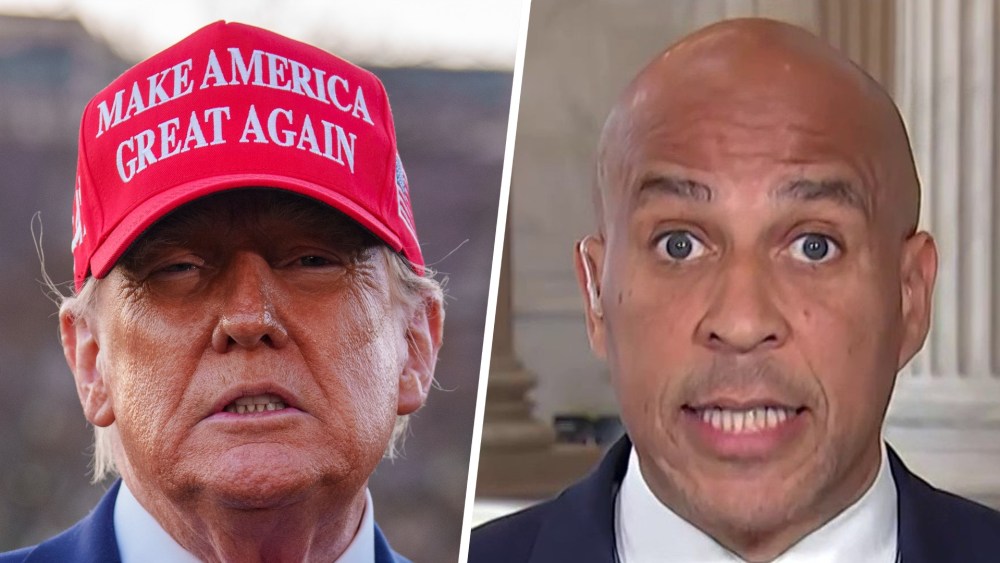
On Thursday morning, President Donald Trump suggested — not for the first time — that unrest in Minneapolis might prompt him to invoke the Insurrection Act, allowing him to deploy active-duty soldiers in order to combat protesters. The president’s musing about the Insurrection Act should not be understood as a reaction to what’s happening right now. It should instead be understood as the next link in a chain of events that Trump set in motion back in his first administration — and dramatically accelerated in his second.
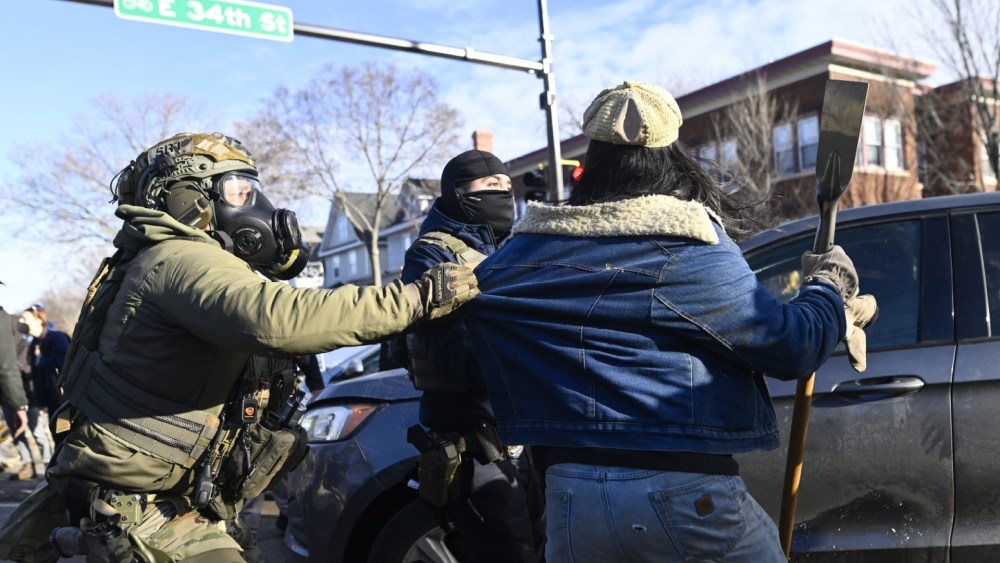
Trump seems to have lingering regrets over not doing some of the things he wanted to do back in 2020, when protests following the killing of George Floyd in Minneapolis spawned sporadic incidents of unrest across the country and outside the White House.
Since early in his second term, he’s seemed eager to show that, this time around, he won’t waste any time in using an iron fist against dissent.
When Trump was hurried to the bunker at the executive mansion one evening, it projected weakness. Members of his administration pushed back on his ambitions to unleash more forceful protest responses — such as deploying soldiers against protesters. This frustrated the president, contributing to his removal of Defense Secretary Mark Esper.
Trump returned to Washington last year even angrier at the establishment and his opponents, only now he’s well-versed in the levers of power and understands how flimsy the barriers to that power can be. Since early in his second term, he’s seemed eager to show that, this time around, he won’t waste any time in using an iron fist against dissent. And he’s staffed his Cabinet with
by U.S. Sen. Catherine Cortez Masto | Jan 15, 2026 | Opinion
The killing of Renee Good in Minneapolis and other recent tragedies are painful reminders that public safety demands professionalism, accountability and discipline. Victims and their families are owed more than political talking points or unchecked expansions of federal power. My colleagues and I owe them policies that work.
There is a hard truth that Congress needs to confront: The Trump administration’s decision to pour unprecedented amounts of money into federal immigration enforcement has failed to increase public safety. In fact, it has actively undermined it.
The One Big Beautiful Bill Act handed Immigration and Customs Enforcement an extraordinary windfall — $75 billion to dramatically expand its operations.
The One Big Beautiful Bill Act handed Immigration and Customs Enforcement an extraordinary windfall — $75 billion to dramatically expand its operations, hire 10,000 new agents and rapidly increase its detention capacity. Under the law, ICE is on track to become one of the largest federal law enforcement agencies.
Federal law enforcement plays an important role in finding and deporting violent criminals. But under the reckless leadership of Homeland Security Secretary Kristi Noem, agencies have strayed far from that mission. ICE has famously lowered its training and hiring standards, while almost 3 of every 4 arrests are of immigrants with no criminal conviction. And that’s in addition to the more than 170 American citizens ICE has detained in the past year.
Play
What are the rights for citizens and non-citizens detained by ICE?
January 15, 2026 / 03:44
As ICE’s budget balloons, communities across Nevada and the rest of the country are struggling to fill local police vacancies, keep officers on the job and invest in proven crime-reduction strategies. Those struggles
by Philip Bump | Jan 15, 2026 | Opinion
President Donald Trump continued his like-loathe relationship with The New York Times recently, sitting down for a two-hour interview and tour of the newly bedazzled White House. At one point, the newspaper’s David Sanger asked Trump if he thought the Civil Rights Movement had ultimately worked against white men. Trump said that it had.
“White people were very badly treated, where they did extremely well and they were not invited to go into a university or a college,” Trump said. “So I would say in that way, I think it was unfair in certain cases.” He later added that “it was a reverse discrimination.”
It is impossible to overstate how important this idea is to Donald Trump’s politics.
Trump did not inject this idea into Republican politics. If anything, he merely leveraged it.
It’s buried in his long-standing slogan, “Make America great again.” America was once great, but what changed? Well, one thing that changed is America got more diverse and welcomed immigrants from around the world, a change that corresponded with the massive baby boom generation (of which Trump is one of the earliest members) getting older.
But Trump did not inject this idea into Republican politics. If anything, he merely leveraged it.
Consider the tea party, the right-wing movement that emerged nearly two decades ago in the wake of the global recession and, more specifically, the election of Barack Obama as president. The movement was ostensibly predicated on frustration with being taxed (hence: tea party), but was rooted more firmly in cultural complaints.
In their 2011 book, “The Tea Party and the Remaking of Republican Conservatism,” political scientists Theda Skocpol and Vanessa Williamson explained what
by Cynthia Coe | Jan 15, 2026 | Opinion
Last January, as representatives of the U.S. Department of Justice, we signed an agreement with the City of Minneapolis to reform its police department. In the wake of George Floyd’s murder, the agreement addressed the systemic failures that made his death possible.
Now, another law enforcement officer has killed someone in broad daylight in Minneapolis. This time, the culprit was an officer of the U.S.
An ICE officer used deadly force against Renee Good, an unarmed mother who posed no danger, had not threatened officers and was already retreating.
We were career attorneys of the Civil Rights Division at the Department of Justice, and we resigned our positions in 2025. We specialized in investigating law enforcement agencies for possible civil rights violations, and evaluating police shootings was part of our job. To get it right, we consulted regularly with law enforcement experts — many of them current and former police chiefs. Many cases we reviewed involved lawful uses of force, close calls or simply poor tactical judgment, which is not illegal, even when it has tragic consequences.
This is not one of those cases.
An ICE officer used deadly force against Renee Good, an unarmed mother who posed no danger, had not threatened officers and was already retreating. Even after Ms. Good had clearly passed him, the officer kept shooting. As we see it, that is textbook excessive force.
The agreement with Minneapolis — scrapped by this administration over the city’s objection — was designed to prevent needless deaths like this one. It required officers to calibrate their use of force to the threat and the alleged crime; in other words, you don’t use a
by Michael Singh | Jan 14, 2026 | Opinion
For all the military weapons remaining in the Iranian regime’s arsenal, it has finally been deprived of the one that authoritarians rely upon most: fear.
For almost five decades, the Iranian regime has brutally repressed its own people while sowing mayhem in the Middle East and beyond. But the regime may have finally entered a strategic crisis from which it will not be able to escape.
To ensure its survival to this point, the regime in Tehran has sought to fend off what it perceived as its two greatest threats: Iran’s own relatively young, well-educated and politically engaged populace; and countries in the region and beyond, including especially the United States, that took umbrage with the Iranian regime’s nonstop threats to their interests and to regional stability.
There are clear signs that fear — and the regime strategy that depends on it — has been broken.
Fear has been the regime’s chief instrument: whether stoking Washington and others’ self-deterring fear that taking conflict with Iran too far would spark a regional war, or inspiring fear among the Iranian populace that protests would attract only regime reprisals rather than international support.
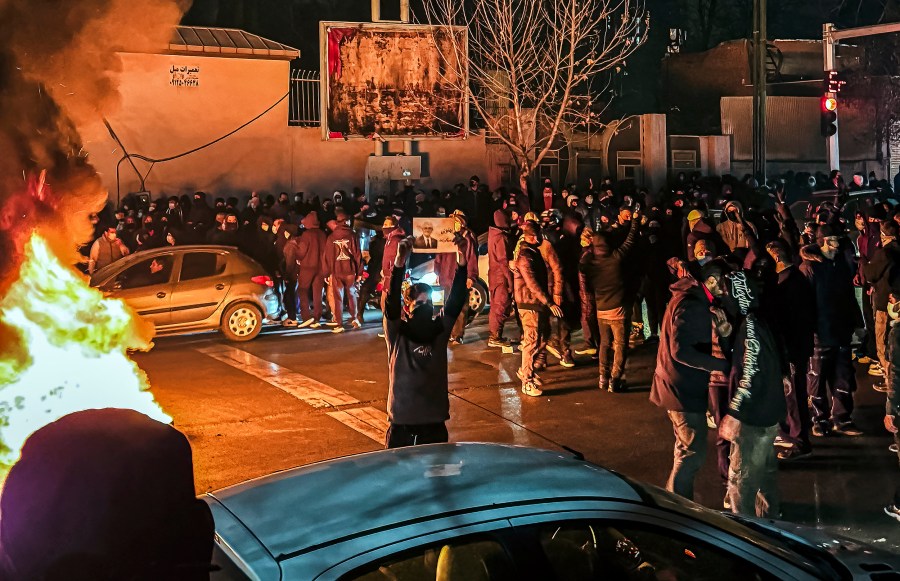
Iranians gather while blocking a street during a protest on Jan. 9, 2026 in Tehran. MAHSA / AFP via Getty Images
But there are clear signs that fear — and the regime strategy that depends on it — has been broken. The United States and Israel have overcome decades of hesitation to confront Iran directly and are threatening further strikes. Iranian protesters, buoyed in part perhaps by President Donald Trump’s promises of support, keep coming out to the streets despite the regime’s use of force. Whether Iranians
by Jason Johnson | Jan 14, 2026 | Opinion, Politics
Every Democratic candidate in 2026, from dog catcher to state senate to Congress, should make abolishing Immigration and Customs Enforcement, or ICE, a part of their platform.
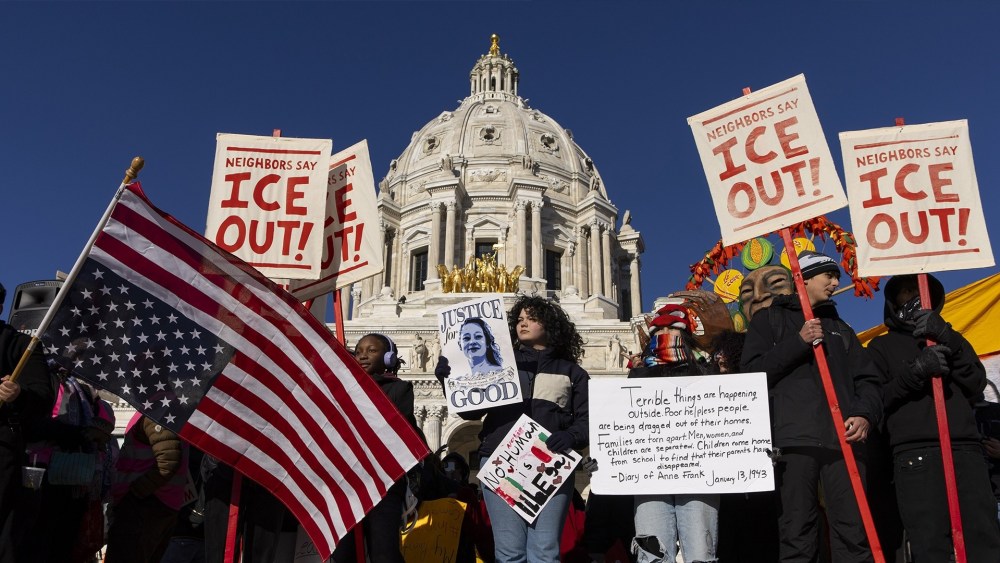
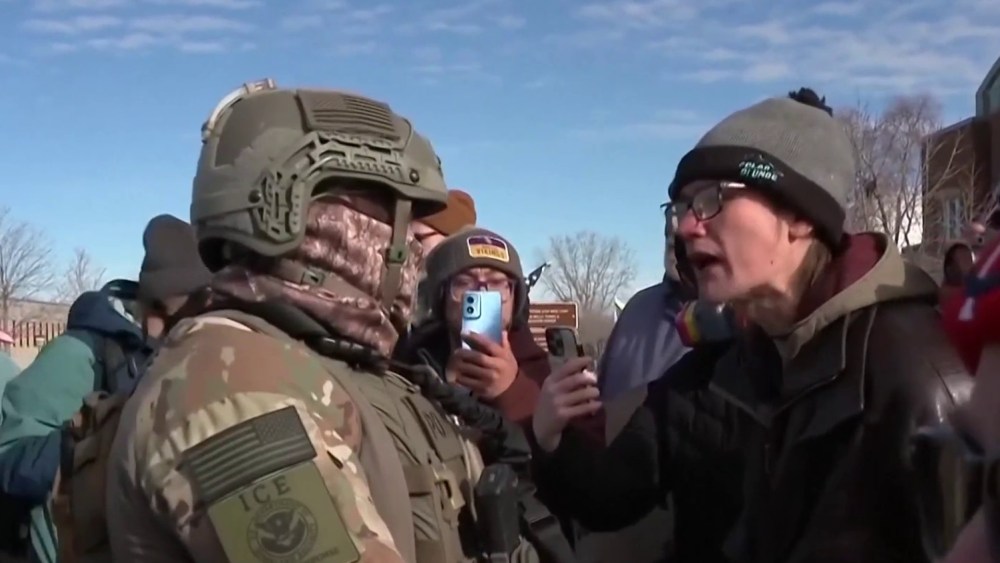
Masked ICE agents, who’ve been emboldened by President Donald Trump, have been rampaging through the streets of the United States: snatching people — including U.S. citizens — and harassing whole communities. And now we’ve recoiled in horror at the sight of ICE agent Jonathan Ross killing Minneapolis mother Renee Nicole Good. Her killing represents a seminal moment in American politics, and if Democrats can’t seize this moment politically and morally, then they shouldn’t even call themselves an opposition party.
The biggest swings during midterm elections happen when there is a clear message on where voters should focus their anger.
The biggest political swings during midterm elections happen when there is an obvious bad guy or at least a clear message on where voters should focus their anger. From Ken Starr’s witch hunt against President Bill Clinton to President George W. Bush’s “Mission Accomplished” stunt in Iraq to the 2010 “shellacking” that followed President Barack Obama’s poor rollout of the Affordable Care Act, voters are often driven by anger at a particular issue and the president responsible for it.
Trump isn’t popular, and it’s with his blessing that ICE is doing what it’s doing, providing Democrats the perfect combination of an unpopular president and a big government issue people hate.
A recent poll from The Economist/YouGov conducted between Jan. 9 and Jan. 12 shows 46% of Americans support abolishing ICE — not reforming ICE, not improving ICE but actually abolishing ICE. To put that in context: More Americans want to abolish