by Paul Waldman | Mar 15, 2026 | Opinion, Politics
Gas prices at the pump have have risen about 50 cents since Trump started his war against Iran, and with tanker traffic through the Strait of Hormuz all but shut down, they could keep rising.
“Get ready for oil to be $200 a barrel,” said an Iranian government spokesperson who, of course, has a reason to predict the price getting that high. The price for a barrel of Brent crude was about $73 before Trump attacked Iran. It was above $100 Friday, and The Associated Press reported that some analysts predict a prolonged closure of the strait could make oil $150 a barrel.
But you know which drivers don’t feel a wave of anxiety as they motor past gas stations with higher prices than the day before? Those in electric vehicles.
Because of Trump and congressional Republicans, there are fewer EV owners than there otherwise would be.
Unfortunately, because of Trump and congressional Republicans, there are fewer EV owners than there otherwise would be, and we’re falling behind other nations — especially China — in the race to create a secure, affordable energy future that produces less pollution.
When Trump came into office, he promised limitless energy abundance and “energy dominance” if only we would turn away from those prissy renewable sources of energy and back toward the kind you get when a bunch of manly men drill into the ground. It wasn’t just rhetoric; the One Big Beautiful Bill he signed last year was the most concerted attack on renewable energy we’ve ever seen.
The bill repealed a whole series of green tax credits, loans and incentives, starting with the $7,500 credit for buyers
by Sheree Renée Thomas | Mar 15, 2026 | culture, Opinion
“Sinners” is a hoodoo movie, deeply and unapologetically so. In making the film set in the 1930s Mississippi Delta, director Ryan Coogler and producer Zinzi Evans were intentional about displaying the real culture of this region I call home, and they leaned on scholars such as Yvonne Chireau to explore conjure as a sophisticated spiritual technology. For instance, we see the hoodoo in the sacred symmetry of twins Smoke and Stack, brilliantly played by Michael B. Jordan. Smoke and Stack mirror the Marassa, those divine twins in the Haitian Vodou and West African Yoruba Ife tradition who navigate the world as a singular, divided soul. They move with a grace older than the roads they travel, their every choice colored by myths finally given flesh, blood and consequence.
Here in the Black South, the speculative is more than a genre. To make a film that speaks of conjure or haints is to engage in a deep cultural reclamation.
This grounding brings a visceral magic to the screen. “Sinners,” for good reason, has been nominated for a record-breaking 16 Oscars, including for best picture.
Here in the Black South, the speculative is more than a genre. It is an inherited truth. To make a film that speaks of conjure or haints, as Coogler did, is to engage in a deep cultural reclamation. When “Sinners” embraces this, we see the ancient future in action: the understanding that ancestral knowledge is the key to navigating worlds yet to come. Coogler, who grew up in California, wrote “Sinners” to honor his Mississippi ancestors, including his uncle James, who loved the Delta blues and regaled the young Coogler with stories
by Anthony L. Fisher | Mar 15, 2026 | Opinion
“F1” is a perfectly fine, entertaining, disposable, summer, theatrical spectacle, popcorn flick. The blockbuster film, starring Brad Pitt, is the highest-grossing of the 62-year-old Oscar-winning actor’s career, and he plays a character competing at the highest levels of motorsport, where the average age of professional drivers is somewhere between 27 and 29. It is a silly, breezy and wildly successful movie. The kind of flick that puts bottoms in the seats at a time when fewer people are going to see movies in the theater.It is also an Academy Award nominee for best picture — and that is just ridiculous. The character development is kiddie pool-level deep, the dialogue is as wooden as any “Star Wars” movie and the satisfying conclusion never feels really in doubt. Just as the actual stars of “Top Gun” are fighter jets, racecars do much of the entertainment-lifting of “F1.” It’s standard Hollywood blockbuster fare, executed very well. Don’t get me wrong, I’m a movie geek who appreciates both the high and the lowbrow. I’m as averse to the academy’s historic snobbery against fun as anyone — but come on guys, “F1”?
Just as the actual stars of “Top Gun” are fighter jets, racecars do much of the entertainment-lifting of “F1.”
For much of the Oscars’ history, best picture nominees have been limited to five — as it was and is with pretty much every other Oscar category. From the late 1920s until 1943, the academy nominated between eight and 12 films for best picture. But from 1944-2008, there were just five nominees. A nice, accessible number, one that — if you were a fan of
by Ayman Mohyeldin | Mar 14, 2026 | Opinion
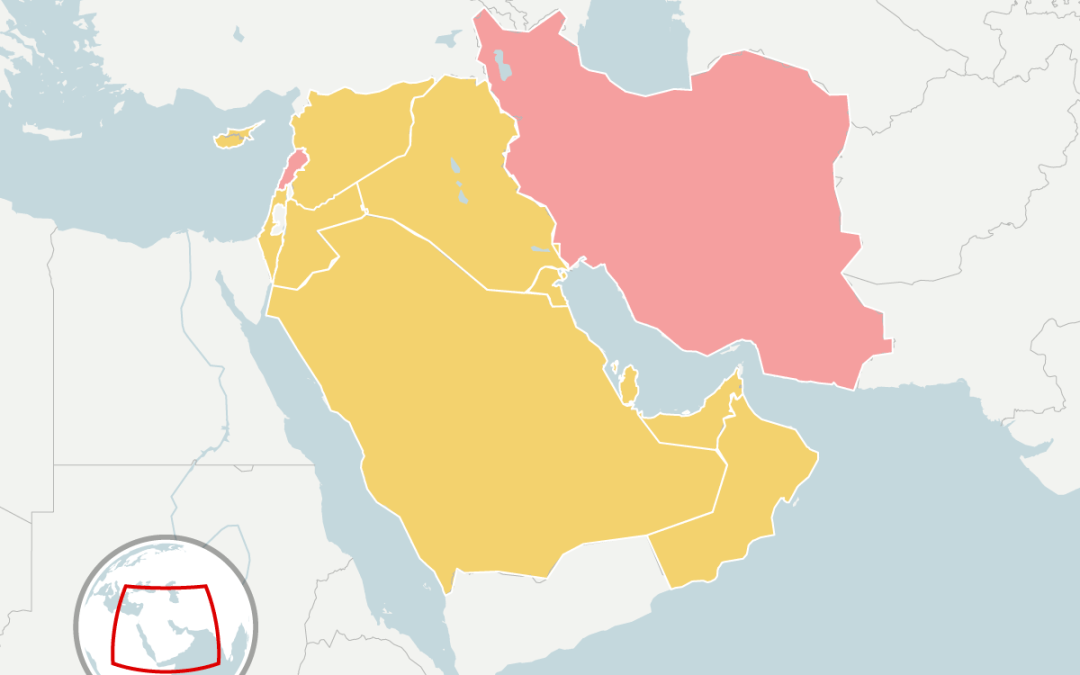
Two weeks into the widening conflict between the United States and Israel and Iran, it’s become harder to ignore one tragic reality: The countries paying some of the steepest prices are not the ones that started the war. Rather, they tried to prevent it.
Fourteen countries have been impacted by this war, seeming to indicate that the U.S. and Israel failed to anticipate — or perhaps even ignored — Iranian threats to retaliate if attacked.
What makes this moment particularly bitter for Gulf leaders is that many spent years trying to prevent precisely this scenario.
Those threats have turned into active strikes in the Gulf countries, where people have reported missile strikes in residential and commercial areas and where residents are frequently receiving mobile emergency alert notifications warning them to seek shelter in nearby garages. Gulf leaders in turn are trying to absorb the shock of a war they did not start.
Their choice is difficult: press Washington and Tel Aviv to end the war they began, as it spirals out of control? Or confront Tehran forcefully for targeting their countries in retaliation?
@media screen and (max-width: 430px) {
#g-260313-middleeast-2-cep-Artboard_1 p {
font-size: 9px !important;
line-height: 11px !important;
}
#g-260313-middleeast-2-cep-Artboard_1 .g-pstyle0 {
font-size: 13px !important;
line-height: 15px !important;
}
#g-260313-middleeast-2-cep-Artboard_1 .g-pstyle1 {
font-size: 8px !important;
line-height: 10px !important;
}
#g-260313-middleeast-2-cep-Artboard_1 .g-aiPointText p {
white-space: nowrap;
}
}
#g-260313-middleeast-2-cep-box,
#g-260313-middleeast-2-cep-box .g-artboard {
margin:0 auto;
}
#g-260313-middleeast-2-cep-box p {
margin:0;
}
#g-260313-middleeast-2-cep-box .g-aiAbs {
position:absolute;
}
#g-260313-middleeast-2-cep-box .g-aiImg {
position:absolute;
top:0;
display:block;
width:100% !important;
}
#g-260313-middleeast-2-cep-box .g-aiSymbol {
position:absolute;
box-sizing:border-box;
}
#g-260313-middleeast-2-cep-box .g-aiPointText p {
white-space:nowrap;
}
#g-260313-middleeast-2-cep-Artboard_1 {
position:relative;
overflow:hidden;
}
#g-260313-middleeast-2-cep-Artboard_1 p {
font-family:’Helvetica Now Display’, sans-serif;
font-weight:regular;
line-height:14px;
height:auto;
opacity:1;
letter-spacing:0em;
font-size:12px;
text-align:left;
text-transform:none;
color:rgb(0,0,0);
padding-bottom:0;
padding-top:0;
mix-blend-mode:normal;
font-style:normal;
position:static;
}
#g-260313-middleeast-2-cep-Artboard_1 .g-pstyle0 {
font-weight:700;
line-height:22px;
font-size:18px;
}
#g-260313-middleeast-2-cep-Artboard_1 .g-pstyle1 {
font-weight:700;
height:14px;
text-transform:uppercase;
}
Attacked by U.S./Israel
Attacked by Iran
syria
cyprus
lebanon
Iraq
Iran
israel
jordan
Bahrain
qatar
Saudi Arabia
uae
oman
Carson Elm-Picard / MS NOW; Data: Institute for the Study of War
Since the start of the war, the United
by Hayes Brown | Mar 14, 2026 | Opinion
It’s no secret that Defense Secretary Pete Hegseth doesn’t care much for the laws of war. In the opening days of the war against Iran, he proudly said the ongoing assault involved “no stupid rules of engagement, no nation-building quagmire, no democracy building exercise, no politically correct wars.” Standing before the press Friday morning, Hegseth again promised “no quarter, no mercy for our enemies.”
As isolated rhetoric it would be troubling to hear the civilian atop the military chain of command, just below the commander-in-chief, talk so disparagingly about the concept of restraint in times of war. But Hegseth seems determined to put his belief that war should be conducted free of any constraints or fetters into practice. In doing so, he is encouraging a return to the brutalities of total war that left millions of civilians dead in past wars — and threatens to place a new target on American servicemembers.
Hegseth seems determined to put his belief that war should be conducted free of any constraints or fetters into practice.
Long before President Donald Trump placed him in charge of the Pentagon, then-Fox News host Hegseth lobbied hard to obtain pardons for military service members accused or convicted of alleged war crimes. In a book released in 2024, he railed against “the folly of international law, and the crazy maze of rules of engagement” that govern how countries fight wars without a return to the wide-scale atrocities of World War II. And as ProPublica recently documented, since becoming defense secretary, Hegseth has overseen the dismantling of a plan to reduce civilian deaths during conflicts in favor of, as he put it
by Philip Bump | Mar 14, 2026 | Opinion
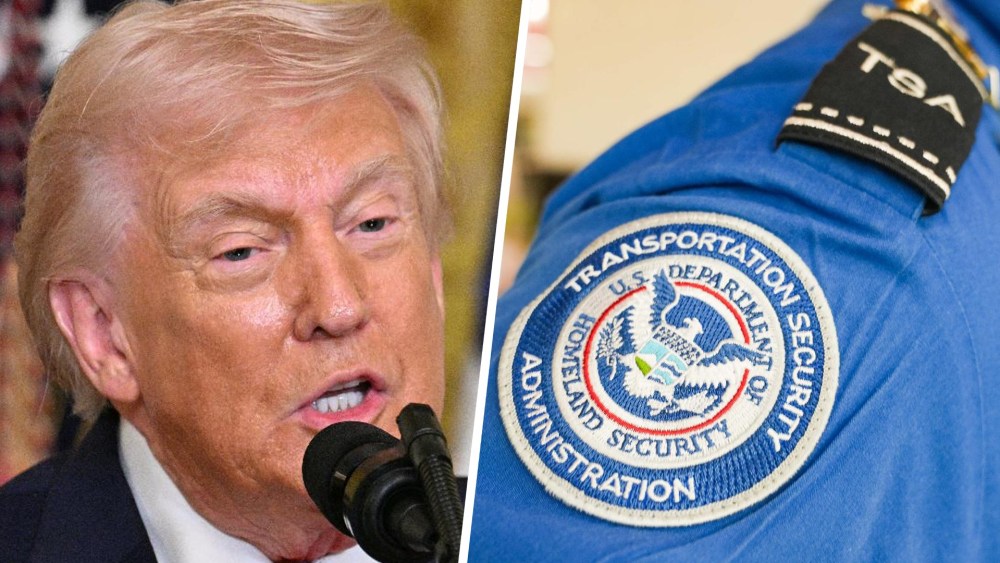
The bean-counters at the Department of Defense — admittedly not the best bean-counters in the federal government — have tallied up the cost of President Donald Trump’s unilateral military incursion into Iran.
The first week of the conflict, they estimate, ran up a bill for U.S. taxpayers of somewhere around $11 billion, though they admit this is more of a ballpark number than a hard-and-fast calculation. It is probably safe to assume that any error in their calculations is leading them to underestimate the cost rather than to overstate it.
Much of that cost was incurred in the form of munitions. The missiles and bombs that have been pounding Iran since the first attacks on Feb. 28 each carry substantial price tags. Add in the time of the pilots and operators carrying out the strikes — and then the costs of their support teams and vehicles — and it’s clear how quickly costs can add up.
Play
TSA officer: Don’t understand why we have money for foreign soil but not American workers
March 13, 2026 / 05:19
To the administration, of course, all of this is very much worth it. Trump and his Cabinet have been unable to present a consistent, clear explanation for why the war against Iran needed to be undertaken or why it needs to continue. But this lack of strategic vision is shoved into the shadows by the tactical success of the strikes (save the occasional obliteration of a school full of children). You may disagree with the president’s presentations about the necessity of attacking, but you can’t disagree that, at this point, the attacks themselves seem to be effective. Put another way: