by Brian Finucane | Mar 17, 2026 | Opinion
Secretary of Defense Pete Hegseth, during a televised press briefing at the Pentagon on the Iran war on March 13, vowed this about America’s response to Iran’s ruling regime: “We will keep pushing, keep advancing. No quarter, no mercy for our enemies.”
These words in themselves could be a violation of both U.S. and international law.
Hegseth’s declaration of “no quarter” implicates a foundational prohibition under the law of war. These are the binding rules agreed to by states that seek to mitigate the horrors and bloodshed of conflict through pragmatic balancing of humanitarian and military considerations. The prohibition of the denial of quarter is a paradigmatic illustration of the law of war advancing both sets of considerations.
The law of war prohibits military leaders from the speech act of announcing “no quarter” alone.
Dating back to at least the Civil War, the denial of quarter has been forbidden. As articulated in the 1863 Lieber Code (Instructions for the Government of Armies of the United States in the Field, General Order No. 100), “It is against the usage of modern war to resolve, in hatred and revenge, to give no quarter. No body of troops has the right to declare that it will not give, and therefore will not expect, quarter.” (emphasis added) This rule would subsequently be incorporated into treaties to which the United States is a party, including in the regulations annexed to the 1907 Hague Convention IV, and as customary law binding on all states. Importantly, this law of war rule applies to air, land and sea warfare.
As reflected in the Lieber Code (and the Department of Defense’s own Law of
by Ja'han Jones | Mar 17, 2026 | Opinion
President Donald Trump’s so-called Religious Liberty Commission, which is filled with right-wing zealots, appears to be coming apart at the seams.
Last week’s resignation of Sameerah Munshi, formerly the only Muslim woman selected as one of the commission’s advisers, underscores the religious divisions that are causing disarray for the panel and the conservative movement more broadly.
Munshi is a conservative activist who has advocated for allowing parents to opt out of lesson plans related to LGBTQ+ issues, a stance the White House has praised for its rejection of “radical gender ideology.” She said her resignation was due to two things: the commission’s expulsion of conservative activist Carrie Prejean Boller and the Trump administration’s war with Iran.
I recently wrote about how Boller’s removal, which followed a heated argument at a commission hearing over antisemitism, has fueled allegations of anti-Catholicism within the MAGA movement. Boller recently appeared on an episode of Tucker Carlson’s podcast for a chummy chat about her removal. And Rep. Thomas Massie, R-Ky., requested last week that the House Oversight and Judiciary committees review her ouster.
In addition to that, Trump’s Religious Liberty Commission is being sued over its lack of diversity. (The White House has said the panel is intended to reflect a “diversity of faith traditions, professional backgrounds and viewpoints.”)
So Munshi’s resignation is just the latest negative publicity for the commission.
“I resign in protest of two deeply troubling developments: the official removal of Carrie Prejean Boller for her deeply held beliefs about Palestine and the federal government’s illegal war against Iran, undertaken without clear constitutional or congressional authorization,” Munshi wrote on Substack.
“Ultimately, I will have to stand before God and
by Nicholas Grossman | Mar 17, 2026 | Opinion
The Iran war is exposing President Donald Trump’s unfitness for national leadership. The lie-filled bluster and escalation he relied on to succeed in business and domestic politics aren’t working, and the situation is out of his control. The world is interconnected and other people get a say, including oil companies and energy markets. But Trump never understood that, and since he has no other moves, he’s kept doubling down despite no plausible path to victory, making things worse.
With Venezuela, Trump said he attacked to take oil, equating his personal rapaciousness with national interest. After U.S. special operations forces ousted Venezuelan president Nicolas Maduro, Trump found the rest of the Venezuelan regime more pliable, including now-interim President Delcy Rodriguez, and told U.S. energy companies to go get Venezuela’s oil.
To address this crisis of his own making, Trump tried saying the war is almost over and the U.S. already won.
Except those companies didn’t want it. Which shouldn’t have been a surprise. Venezuela’s oil deposits are dirty, needing considerable refinement, and drilling isn’t profitable unless oil is priced higher than it was at the time. The infrastructure is poor, and U.S. companies would have to spend billions developing it. And the security situation was volatile after the U.S. military overthrew the national leader. Oil is flammable, and platforms would be a target if an insurgency develops.
But apparently it was a surprise to the White House. Trump berated energy executives, but that didn’t work. They won’t throw away money just because he told them to.
With the Iran war, Trump is trying to bully not only energy companies, but the entire global energy market.
by Paul Farhi | Mar 16, 2026 | Opinion
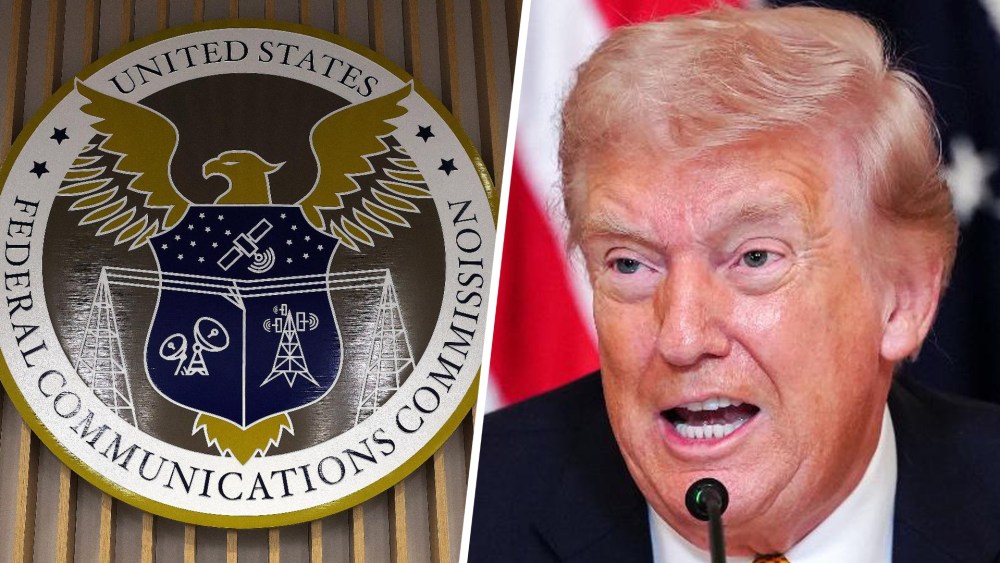
Brendan Carr, the Federal Communications Commission chair appointed by President Donald Trump, has threatened to take away TV licenses over news coverage he doesn’t like. Legally, he can’t do that.
But in the age of Trump, a threat can sometimes be as effective as the law — which is probably why Carr keeps jawboning media owners and reporters with statements unlikely to hold up under legal challenge.
In a presidency known for flouting norms, this is yet another way the Trump administration exercises power.
Play
FCC Commissioner criticizes FCC Chair and Trump: ‘There is no authority behind these threats’
March 16, 2026 / 07:03
The most recent incident occurred on Saturday. Reacting to Iran conflict coverage, Carr warned broadcasters that airing “hoaxes and news distortions” could lead to the loss of their federally granted licenses. Broadcasters are at risk, Carr posted on X, if they don’t “correct course before their license renewals come up.”
Carr wasn’t overly specific, but he didn’t have to be. As FCC chair, Carr has issued several warnings that echo his patron’s complaints about the three legacy broadcast TV networks: ABC, CBS and NBC. (The FCC grants licenses to individual broadcast stations, not national broadcast networks; cable networks such as MS NOW or CNN and streaming services including Netflix aren’t licensed at all.)
Indeed, Carr’s Saturday post quoted Trump’s own social media complaint that some news reports about the military action he initiated against Iran were “intentionally misleading.” Trump endorsed Carr’s threats Sunday in another Truth Social rant, this one suggesting that media outlets that report inaccurately during wartime should be tried for treason — a crime punishable by death.
Play
FCC chair threatens
by Zeeshan Aleem | Mar 16, 2026 | Opinion
President Donald Trump’s got a new problem. It seems hard to believe, but some of his own base thinks his administration hasn’t sufficiently cracked down hard enough on illegal immigration.
News emerged last week that the White House wanted to soften the president’s reputation on immigration enforcement by reportedly discouraging the party from talking about “mass deportations” and suggesting a rhetorical focus on removing violent criminals. Immediately, a group of pro-Trump immigration hawks began a lobbying effort to deter Trump from even pursuing his mostly cosmetic attempt to moderate on the issue. Inconveniently for the president, this group calls itself the “Mass Deportation Coalition.”
The president has a problem on his hands over an issue he was once most confident.
The infighting illuminates a striking phenomenon. For once, it is not the Democrats who appear to be torn up about immigration as a wedge issue that could weaken their coalition. Instead, it is the GOP for whom immigration is becoming a point of internal tension, and posing a dilemma to its leader. While there’s no reason to think Trump will ever become truly moderate on the issue, he will be vexed by questions of how to approach what was once one of his strongest policy issues ahead as the midterms near. And it also suggests there’s an opening for Democrats to go on offense.
According to Politico, the Mass Deportation Coalition includes “Mark Morgan, the former acting commissioner of Customs and Border Protection under Trump; Erik Prince, a Trump ally and former Blackwater CEO; as well as a number of conservative think-tanks and lobbying groups close to the Trump administration including the Heritage Foundation,
by Daniel R. DePetris | Mar 15, 2026 | Opinion
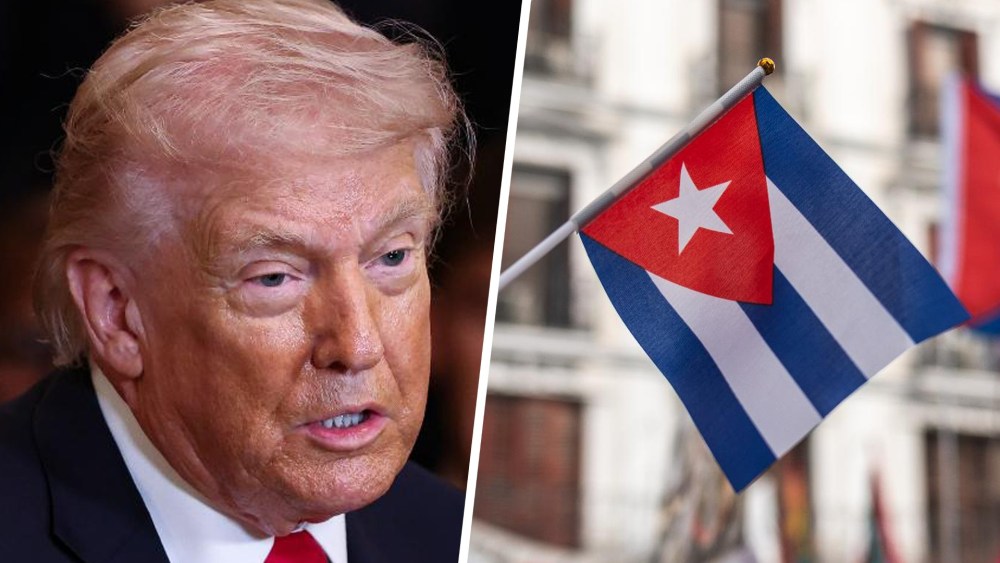
Even as the war in Iran remains in full swing, Trump is already eying his next target: Cuba.
Washington’s oldest adversary in the Western hemisphere is in the midst of an economic and social crisis the likes of which the Cuban Communist Party hasn’t confronted since the 1990s. That’s when the collapse of its former patron, the Soviet Union, forced the island to make do with a lot less. The Trump administration’s Cuba policy is only exacerbating those fissures.
The strategy is straightforward: place so much financial pressure on the Cuban government that it has no option but to meet Trump’s demands, like opening up the country to a multi-party democracy. Trump’s Jan. 29 executive order slapping any country that transports or exports fuel to Cuba with tariffs, combined with a new U.S. Justice Department initiative that seeks to indict senior Cuban officials, is meant to provide Trump with even more leverage in the ongoing talks with Havana.
If the White House is looking to emulate its success in Venezuela, it’s likely kicking on a locked door.
Trump seems confident he can do to Cuba what he did to Venezuela more than two months ago — decapitate the senior leadership, work with more pragmatic underlings and bring a former U.S. adversary into Washington’s orbit.
“As we achieve a historic transformation in Venezuela, we’re also looking forward to the great change that will soon be coming to Cuba,” Trump said at a White House event on March 7. His top diplomat in Cuba, Mike Hammer, even hinted there could be a Cuban-like equivalent to Delcy Rodríguez, who took over for former Venezuelan dictator NicolásMaduro after his capture by U.S. forces in Caracas and is