by Ja'han Jones | Apr 15, 2026 | Opinion
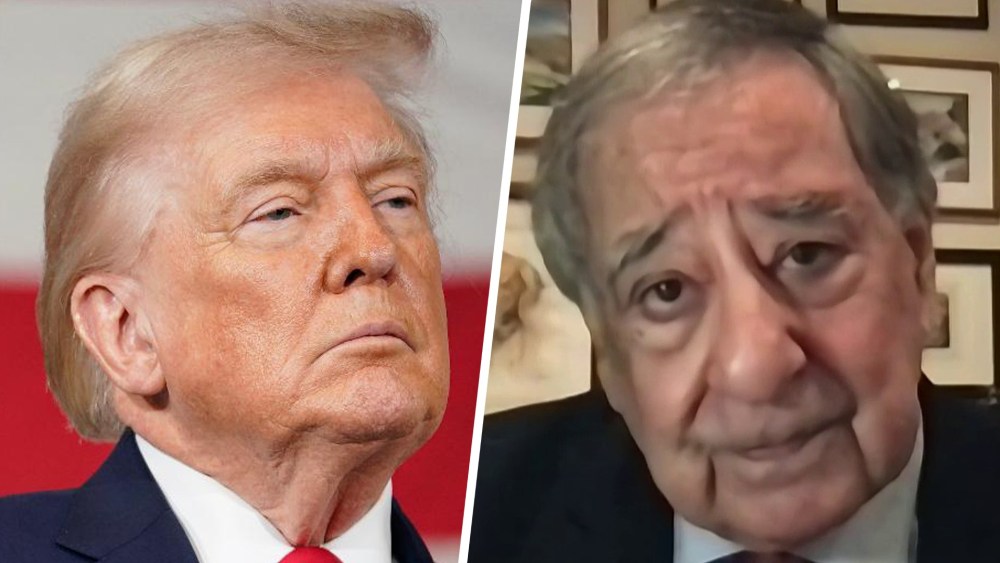
“In the Ferrari or Jaguar, switchin’ four lanes. With the top down screamin’ out, ‘money ain’t a thang.’” — I suspect that classic Jay-Z and Jermaine Dupri track offers an accurate summation of the vibes at Texas Democratic Senate nominee James Talarico’s headquarters these days, after his campaign announced its quarterly fundraising numbers on Wednesday.
Talarico’s camp reported raising $27 million in the first three months of the year, a whopping total that speaks to the high profile he has enjoyed as the Texas state senator’s progressive campaign for U.S. Senate has garnered national attention.
According to a press statement from Team Talarico:
Since launching in September, James’ campaign has now raised a total of over $40 million, receiving more than 970,000 donations from a staggering 540,000+ individual contributors — with donations from 246 of Texas’ 254 counties and zero dollars from corporate PACs. Since primary day, James has raised over $10 million.
Even if the news is promising, some context is in order. It is not uncommon for Texas Democratic candidates, especially those with large national profiles, to raise oodles of money. And fundraising, in and of itself, is no guarantee of victory. Just ask Beto O’Rourke, the Texas Democrat who notched a historic $38 million fundraising quarter in 2018 during his ultimately failed bid to oust GOP Sen. Ted Cruz.
Fundraising numbers like these can be an imprecise metric of a candidate’s viability, especially since we won’t know for a while how many of the donations came from people who live in other states. So having lots of money doesn’t always translate to victory, although it is essential for candidates who aspire to
by Kevin B. Blackistone | Apr 15, 2026 | Opinion, Politics, Sports
One of the first things President Donald Trump did after his second inauguration was invalidate an executive order from former President Joe Biden that prohibited discrimination against transgender people, especially those playing sports.
How did the major sports institutions react? They lined up behind Trump’s transphobia. In February 2025, the NCAA banned transgender athletes from women’s sports. Late last month, the Olympics followed suit.
Sports are not on the vanguard of social change, as we’re asked to believe every April 15 on Jackie Robison Day.
The disappointing responses from the NCAA and International Olympics Committee serve as yet more evidence that sports are not on the vanguard of social change, as we’re asked to believe every April 15 on Jackie Robison Day.
Historically, and much to our detriment, those who lead sports leagues and associations have been followers at best. The leaders of the NCAA and the IOC have showed us that.
But we in the media created a mythology that the games we love are the tip of the spear in social progress, and we’ve done that in large part by distorting Robinson’s arrival in Major League Baseball in 1947 after the league spent 80 years or so segregating itself for white men only. The MLB doesn’t deserve its reputation as a revolutionary social change agent in this country. To the contrary, much like leaders of the NCAA and the IOC have bended their knee this Trump era, it had a long, regrettable history of reactionary politics. Indeed, its embrace of segregation served as a model for other leagues that conformed to, and didn’t confront, a racially partitioned America.
Not long after the MLB’s first

by Samarth Gupta | Apr 15, 2026 | Opinion, Politics
Some of the basketball fans who watched the University of Michigan dominate last week’s NCAA men’s basketball tournament or saw UCLA win the women’s bracket may believe that those tournaments have always started with 68 (or at least 64) teams. But there used to be a lot fewer teams — and a lot fewer brackets — for those tournaments. The original men’s tournament, played in 1939, tipped off with only eight teams. As the sport spread and became more popular, more competitive and more stratified, we eventually got to a round of 64. And not only that: Four more teams play for the chance to get into that round.
From 1918 to 1921, the United States had 56 tax brackets. But today there are only seven.
As the basketball tournaments’ brackets have become more expansive, the U.S. tax code has essentially worked in the reverse. At its peak, from 1918 to 1921, the United States had 56 tax brackets. But today there are only seven. This quiet collapse in the number of tax brackets has come along with a new Gilded Age fueled by growing income inequality. While March Madness has come and gone, April 15 — Tax Day — is a good time to examine this madness in our tax code.
Let’s start with how we got here. Since the Clinton administration, every U.S. president has passed significant tax legislation, but the basics of the federal income tax have changed little: We’ve gone from five to seven tax brackets, and the top marginal tax rate has bounced between 35% and 39.6%. By historical standards, these are minor changes. From 1916 to 1986, on
by Nicholas Grossman | Apr 15, 2026 | Opinion
President Donald Trump has the United States stuck in a conflict with Iran, unable to win significant concessions and unwilling to back down in the face of obvious failure. It’s possible the two sides could strike a deal, but if so, the resulting agreement is unlikely to be favorable to the U.S. and could leave Iran in a stronger position than before the war. This problem is of Trump’s own making: In spending years demonstrating that he has no credibility, he has by extension trashed America’s credibility as well.
Credibility gives words power. For words to change others’ behavior, listeners have to believe them. Promises don’t work if the recipients think you’ll break them; threats don’t work if the targets think you won’t follow through.
Even if Iran is open to making concessions, it can’t be sure which ones will appease Trump.
Domestically, if someone breaks a contract, a counterparty can seek recourse in court and the government will enforce the results. That makes the contract more credible, which makes people more willing to enter into deals. But internationally, all countries have is their word, physical capabilities and patterns of behavior. Trump’s behavior has convinced the world that he cannot be trusted. His word is worthless.
Nowhere is that clearer than in relations between the U.S. and Iran. Trump has been trying to get the Iranians to capitulate or at least make concessions, especially on their nuclear program. At every step, though, he has undercut U.S. credibility.
To begin with, Trump hasn’t made a consistent ask. At various times he’s called for regime change, unconditional surrender, a total end to Iran’s nuclear program, curtailing Iran’s
by Zeeshan Aleem | Apr 15, 2026 | Opinion
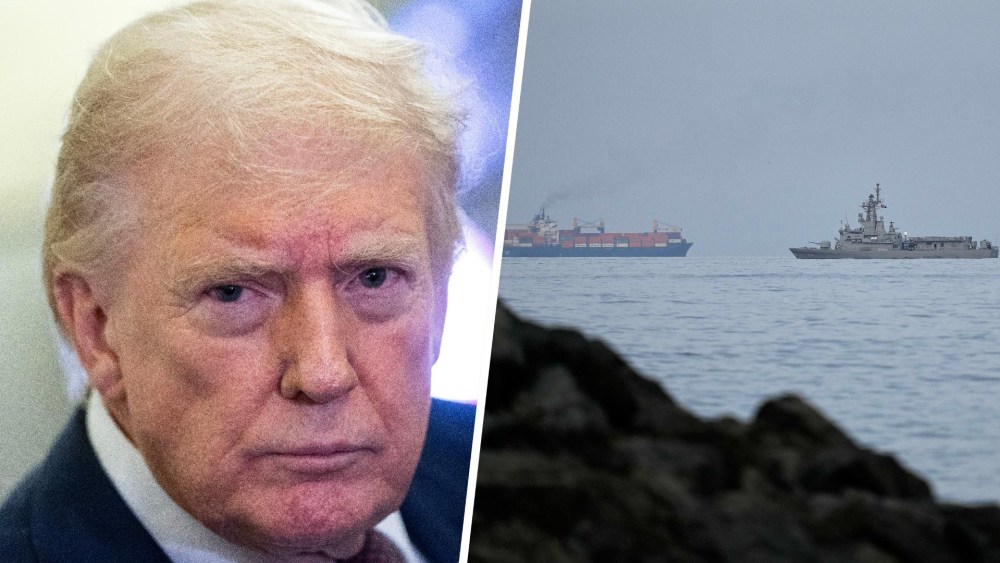
The United States’ launch of a naval blockade against Iran on Monday marked the roll out of a new pressure tactic after both countries failed to come to an agreement to end the war after weekend negotiations. And just like the U.S.’s strategically fruitless air campaign against Iran, the new operation carries little upside and potentially large downsides. The most troubling disadvantage: A blockade could inadvertently draw new countries into the war.
As with every other stage of President Donald Trump’s war of aggression against Iran, the blockade’s sloppy implementation raised questions about its purpose and scope. Trump initially described it as covering the entire Strait of Hormuz, but the U.S. Central Command subsequently said the blockade would be enforced only against vessels entering and departing Iranian ports and coastal areas — which is a narrower blockade, since Iran is not the only country that has ports in the strait.
If Trump thinks this action involves no trade-offs, he is delusional.
While Trump initially said “other countries” would join the blockade, NATO allies have refused to participate, and Saudi Arabia is reportedly lobbying Trump to end it. Even the blockade’s effectiveness is unclear: tracking data shows multiple ships that departed from Iran passed through the strait after the blockade took effect, according to The New York Times. (The Times noted: “It was not immediately known whether the ships that had departed from Iranian ports fell within a ‘grace period’ around the deadline, had gained permission to pass or had somehow bypassed the blockade.”)
The most peculiar thing about Trump’s blockade is that he’s rolling it out during a ceasefire, which is meant to
by Michael Steele | Apr 14, 2026 | Opinion
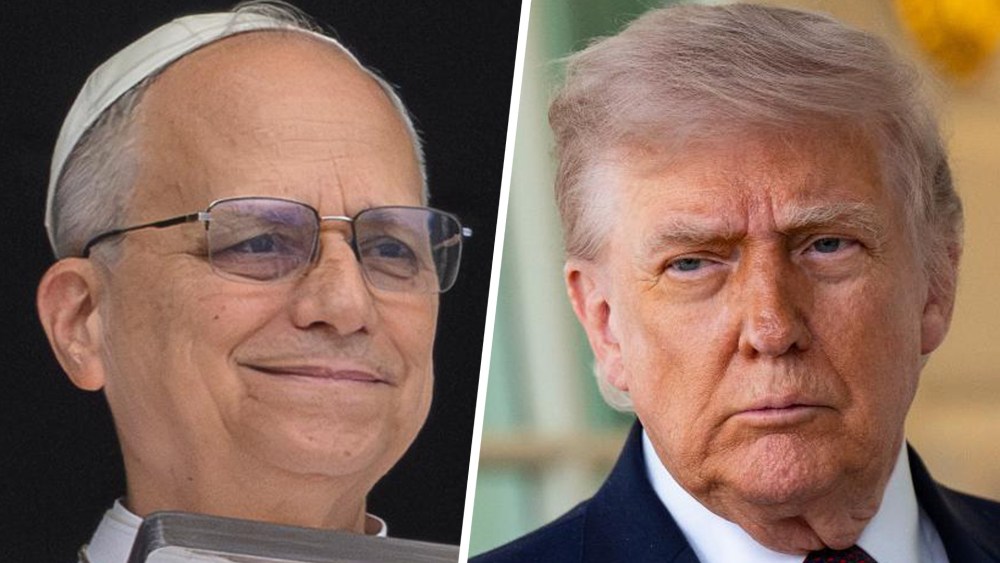
President Donald Trump’s feud with Pope Leo XIV has only escalated since the president posted an AI-generated image of himself Sunday night dressed like a Christlike healer, laying hands on the forehead of a sick man as light pours from his fingers. The image was removed after backlash, but the message seemed clear: In Trump’s imagination, he is not just president — he’s the savior.
Asked about it, Trump insisted he thought it showed him “as a doctor.” Right. Because apparently doctors now make house calls dressed like Jesus.
The Catholic Church does not exist to flatter political leaders. It exists to challenge them.
Let’s be serious for a moment. Trump’s feud with the pope is not just another political spat. On one side is a president who treats faith like a loyalty test. On the other is the spiritual leader of a two thousand year old moral tradition.
And it’s a tradition I know personally. Before I was lieutenant governor of Maryland or chair of the Republican National Committee, I was an Augustinian seminarian at Villanova, the same seminary Pope Leo attended. So I know something about the church Trump seems to think he can bully into silence.
The Catholic Church does not exist to flatter political leaders. It exists to challenge them. This has been particularly true since the papacies of Benedict XV who made moral appeals and efforts at mediation during WWI; or Pope Pius XII who pressed the Vatican’s neutrality during WWII while engaging in quiet diplomacy creating rescue networks across Europe. That role has not changed in the modern era as we have witnessed popes from John Paul II to