by Lily Becker | Jul 16, 2026 | News Analysis
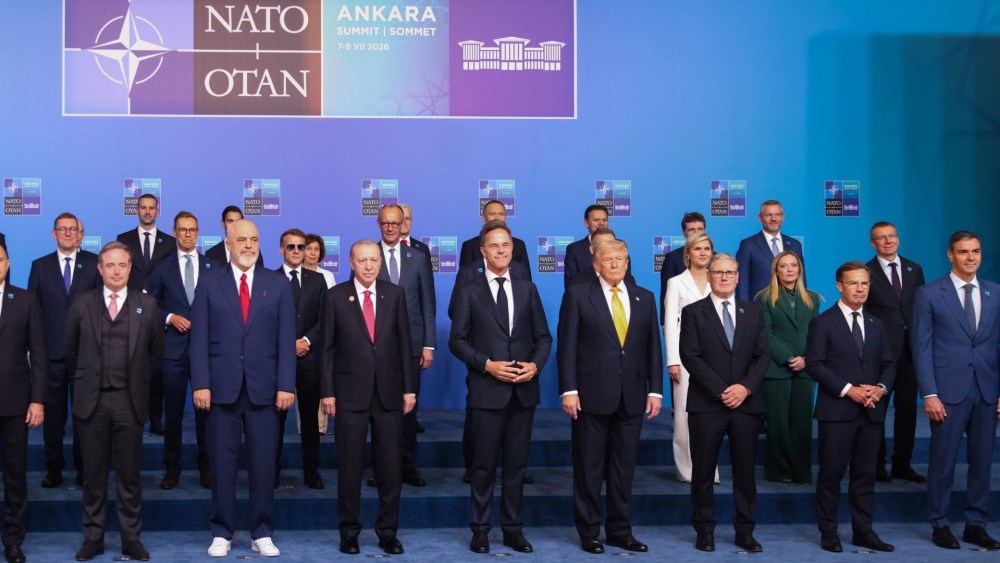
President Donald Trump spent years telling Europe it couldn’t keep relying on the United States to defend it.
Europe appears to have gotten the message.
Germany is doubling its defense budget over the next four years. NATO members have agreed to work toward spending 5% of gross domestic product on defense. And European governments are cooperating more closely on everything from missile defense to joint weapons procurement.
But Europe isn’t spending more to please Trump. It’s spending because it’s increasingly convinced that the U.S. may no longer be a dependable ally — and that may backfire on the U.S. for decades to come.
The euros are flowing — just not to American defense contractors.
The euros are flowing — just not to American defense contractors as much as they once did. As Europe builds its own defense industrial base, Trump’s push for it to shoulder more of its own defense may be undermining two other priorities: expanding American manufacturing and maintaining America’s military and international influence.
In many ways, his policies are helping unravel the post-World War II bargain under which the U.S. guaranteed Europe’s security while European allies bought American weapons, hosted U.S. troops and anchored an international alliance led by Washington.
The shift in spending is dramatic. Germany’s procurement plan lists 154 major purchases through 2026. Only 8% are going to U.S. suppliers, a dramatic reversal for one of Washington’s biggest defense customers.
The European Union has said it wants 55% of all military purchases to come from European factories by 2030, under a defense plan worth roughly $915 billion. The U.S. share of European arms imports has already fallen to 58% over the last five years,
by Adam Hudacek | Jul 16, 2026 | News, News Analysis
In 2003, Barbra Streisand sued a photographer for $50 million after an aerial photo of her cliffside Malibu mansion appeared online. The lawsuit was ineffectual; not only did Streisand lose, but the ensuing publicity drew hundreds of thousands of eyes to the image, which until then had only been viewed six times.
The press called it the “Streisand effect”: when attempts to censor information only bring it more attention. And today, President Donald Trump is grappling with the phenomenon, as his heavy-handed campaign to bury a meme — and his political opponents — has amplified the term “86 47” from a small bit of political speech to an international symbol of protest and defiance.
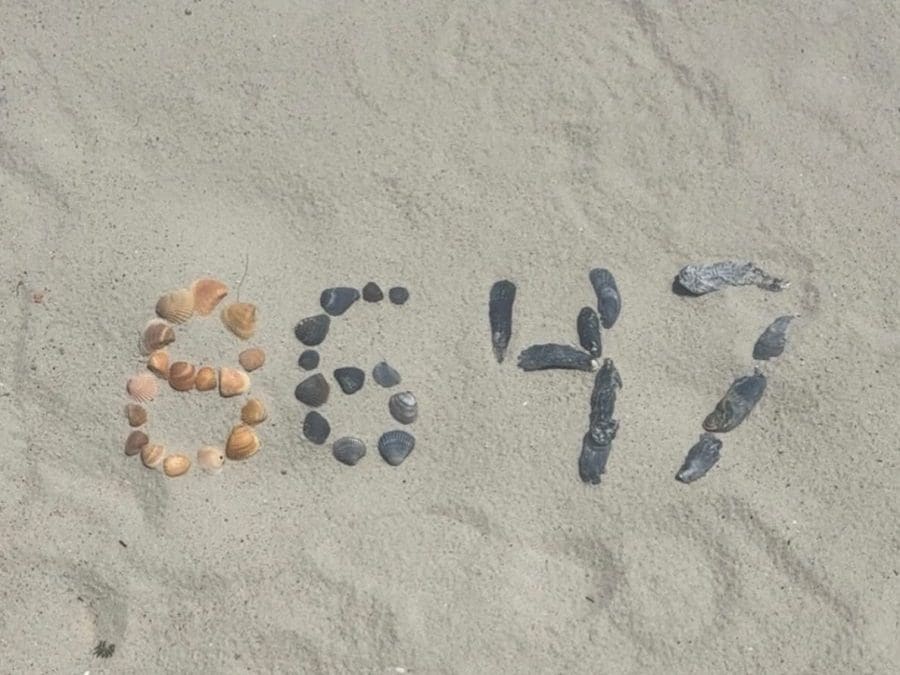
Last May, while strolling on a beach on the North Carolina shore, former FBI Director James Comey snapped a photo of seashells arranged in the sand that read “86 47,” and posted the shot to Instagram. The numerals represent an abbreviated Trump protest; “86” is restaurant jargon for an item that should be removed from service or nixed, and “47” refers to the 47th president.
James Comey’s now-deleted Instagram post. via Instagram
The Trump administration cast “86 47” as a threat to kill the president, and within hours, Comey’s post was the right-wing media’s cause célèbre. Tulsi Gabbard, then the director of national intelligence, said Comey should be “put behind bars.” Trump himself told Fox News that the post “meant assassination, and it says it loud and clear.” The Secret Service launched an investigation.
For his part, Comey deleted the post and issued a statement on May 15, saying, “I posted earlier a picture of some shells I saw today on
by David Rohde | Jul 16, 2026 | News Analysis
Jay Clayton, President Donald Trump’s nominee to be director of national intelligence, appeared to speak to an audience of one in his confirmation hearing on Capitol Hill on Wednesday. That person was not one of the Republican or Democratic senators who asked Clayton questions. It was, by all appearances, Trump.
In question after question, Clayton made his loyalty to the president clear. That approach appeared to unnerve Democrats, who predicted that Trump would ask Clayton to help him improperly sway, discredit or steal this fall’s midterm elections.
The fact that the hearing came a day before Trump is set to address the nation about his disproven contention that the 2020 election was stolen from him underscored the urgency in Democrats’ questions.
Clayton declined to answer repeated questions from Democrats about who won the 2020 election. He declined to answer why he recently signed off subpoenas that were delivered at night to the homes of New York Times reporters who wrote a story about the safety issues surrounding Trump’s new Air Force One. And he declined to criticize Trump’s pardon of a former president of Honduras, whom Clayton’s office had convicted of smuggling thousands of pounds of cocaine into the United States.
“The president’s pardon power is absolute,” Clayton told senators.
The most startling exchange came near the end of the hearing. Democrats asked Clayton a series of questions about the fact that Trump had instructed Clayton’s predecessor as director of national intelligence, Tulsi Gabbard, to attend an FBI raid where agents seized voting records in Fulton County, Georgia, earlier this year.
Local officials, including Republicans, said the raid was an illegal attempt by Trump to prove
by Danny Katch | Jul 15, 2026 | American Bar Association, Discrimination, Diversity, Heritage Foundation, law school, News Analysis, Project 2025, Racial Justice, Right Wing, Supreme Court, Trump Administration
Racial justice organizers in the legal profession are gearing up for an American Bar Association (ABA) House of Delegates meeting this August that will decide whether the ABA will officially drop its commitment to promoting diversity in law schools — and reversing the longstanding exclusion of women and people of color from the legal profession. “We’re trying to put pressure on the House of…
Source
by Lisa Rubin | Jul 15, 2026 | News Analysis
In January 2025, after President Donald Trump’s then-lead defense lawyer, Todd Blanche, was nominated to be deputy attorney general, a group of 116 lawyers sent a letter to Senate leaders.
The lawyers — each of whom served alongside Blanche in the U.S. Attorney’s Office for the Southern District of New York between 2006 and 2014 — described themselves as both diverse in their post-SDNY professional lives and in their leanings, politically, legally and intellectually. The list includes lawyers who, since their career Department of Justice service, have been appointed to senior Justice Department posts by both Republicans and Democrats.
This diverse group, united in their support, as they put it, called Blanche a “fundamentally good and decent man,” and told the senators who were voting on Blanche’s nomination that he embodied the DOJ’s values: “Independence, impartiality, honesty, integrity, respect, excellence, and a fierce dedication to fairness under the law.”
In an office with roughly 220 lawyers in both its civil and criminal divisions, getting more than 100 people who served with Blanche in the Southern District of New York’s criminal division to sign the 2025 letter was not only a labor of love, but somewhat of a feat, as one person who signed the letter explained.
But since Blanche, who has been acting attorney general since Pam Bondi’s firing in April, was officially nominated for the post last month, the SDNY community has been relatively silent. He faces the Senate Judiciary Committee this week in his bid to secure the job permanently.
MS NOW reached out to 80 of the 116 lawyers who signed the 2025 letter to ask whether they have been asked to
by Derek Seidman | Jul 12, 2026 | AI, Data Center, data centers, Dominion Energy, electricity, Energy, Florida, merger, mergers, News Analysis, NextEra Energy, North Carolina, Resistance, South Carolina, Trump Administration, utilities, Virginia, Wall Street
Millions of people across the U.S. are angry at their utilities. Electricity costs are rising while CEOs and Wall Street investors salivate over the booming energy demand from data centers. Now, we could be entering a new and ominous stage of utility power: the rise of the corporate mega-utility. On May 18, Florida-based NextEra Energy, owner of the largest electric utility in the U.S.
Source