by Ryan Teague Beckwith | Jul 23, 2026 | elections, Opinion
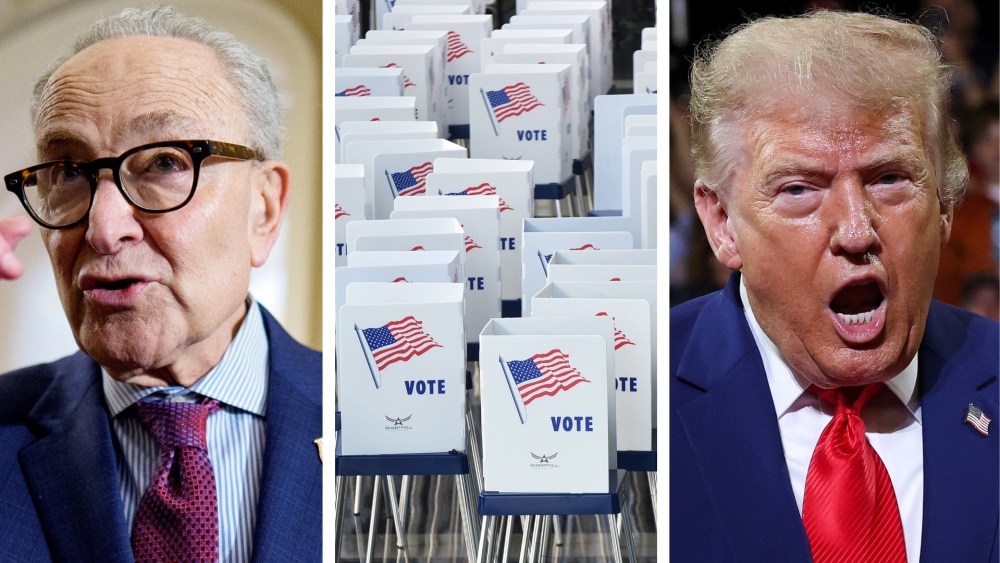
Since losing the 2020 election, President Donald Trump has put forward a lot of ideas to change how America votes.
Some, like hand-counting all ballots, are nonstarters. Others, like restricting mail voting, have proven a tough sell in states where it’s popular, including Republican-leaning ones. And a handful have become mainstream Republican positions, including imposing stricter voter ID and requiring proof of citizenship to register to vote.
Democrats have generally opposed those proposals, arguing that they would do more to make voting harder than to prevent the relatively rare cases of election fraud.
But one Trump proposal deserves a second look: speeding up election results.
Elections results often come in slowly because officials are verifying signatures on mail-in ballots, allowing more time for mail ballots sent by Election Day to arrive and giving voters whose ballots were initially rejected opportunities to fix the issue and have them counted. Those are important safeguards for both access and accuracy. But there are other ways to get faster results that don’t have those trade-offs.
Dismissing the goal of faster results carries its own risks. Polls show overwhelming support for faster election night results among both Democrats and Republicans. Research indicates that unexpectedly slow vote counts can undermine trust in the results. And there are ways to speed up results considerably without making it harder for people to cast their ballots and get them counted.
Trump demonstrated why faster counting matters.
Ironically, Trump himself demonstrated why faster counting matters.
Just hours after polls closed in 2020, he began casting doubt on incomplete returns, pointing to the normal shifts that occur as large batches of ballots are reported from different jurisdictions as supposed
by Hunter Woodall | Jul 22, 2026 | elections, News
Arizona Republicans nominated a slate of 2020 election deniers for the three offices that will oversee the state’s vote in 2028 — a result that turns a set of primaries few were watching into a general election that could matter enormously.
Arizona hasn’t quite drawn the national attention this cycle that states with marquee Senate races have — its primaries were comparatively sleepy. But its general election will be closely watched. Two toss-up House seats give Democrats a real chance at flipping GOP districts, an opportunity sharpened by President Donald Trump’s absence from the top of the ticket.
Democrats are also eager to run up their margins statewide, wary of who might capture the governor’s office and the seats for attorney general and secretary of state — all three pivotal to how future elections in Arizona are run.
What happened in the primaries last night highlights the importance of Arizona to both parties. Here are three key takeaways:
Republican primary voters sided with election deniers
In a trio of important races, 2020 election deniers carried the primary day for Republicans. Rep. Andy Biggs, who won a contested primary for governor against a fellow House member, was among the prominent election deniers on Trump’s side after he lost the 2020 presidential contest.
In the GOP primary for attorney general, state Senate President Warren Petersen advanced. He, too, gave oxygen to Trump’s election falsehoods back in 2020. Downballot in the secretary of state’s race, Alexander Kolodin, a state representative and attorney who was deeply involved in trying to overturn Trump’s loss in Arizona, won the GOP primary. He becomes one of the most prominent election deniers on any
by Laura Barrón-López | Jul 22, 2026 | Donald Trump, elections, News
President Trump says he’s worried about foreign interference in U.S. elections. That was the reason he gave when he released declassified intelligence documents last week which ended up undercutting his own baseless claims about “rigged” elections.
In his primetime address on July 16, Trump said the U.S. “must take urgent action” to protect voting infrastructure against foreign actors. But shortly after taking office last year, Trump gutted a key agency designed to protect America’s elections from exactly that.
It’s called the Cybersecurity and Infrastructure Security Agency — an agency created during Trump’s first term. CISA is one of the main federal partners for states on election security, sharing intelligence on potential threats to voting infrastructure and providing quick, regional support.
After Trump returned to office, the cyber agency housed under the Department of Homeland Security took a major hit. Elon Musk’s DOGE fired more than 100 workers, including election security advisers. More than 600 others were placed on administrative leave, were reassigned or took buy-outs.
Now, the Trump administration is telling states that they will only receive resources if they hand over voter rolls to be screened through a new federal database that a judge recently deemed unlawful in its current form.
That database is known as the Systematic Alien Verification for Entitlements (SAVE), which experts and a federal judge are concerned has a high error rate that could disenfranchise voters.
Department of Homeland Security Secretary Markwayne Mullin said CISA will release an “election infrastructure plan” in the next 30 days — barely three months out from the midterms that will determine which party controls Congress.
“If they participate in the SAVE program, we’ll provide the
by Will McDuffie | Jul 21, 2026 | elections, News
This week was supposed to decide Maine’s Democratic Senate nominee. Instead, after former state Sen. Troy Jackson all but cleared the field over the weekend, it has become the unofficial start of the general election against Republican Sen. Susan Collins.
Over a two-day marathon of county meetings, Democratic voters chose the roughly 500 delegates who will select the nominee at a hastily arranged convention this weekend. The vast majority were Jackson supporters, drawn from a slate of delegate candidates his campaign had published last week.
The overwhelming result prompted Jackson’s leading opponents to withdraw by Sunday night, upending a process the Maine Democratic Party had scrambled to build in the three weeks since primary winner Graham Platner dropped out amid scandal.
Political observers in Maine credited Jackson’s organizing power — aided in part by supporters of Platner. Democrats in the state are betting that grassroots enthusiasm can carry Jackson, a logger from the northern part of the state who ran unsuccessfully for governor this year, past Collins in a contest national party leaders see as a prime pickup opportunity in their drive for a Senate majority.
“I think [Jackson’s win] speaks to the organization of the Platner campaign,” said Marcia Myers, chairwoman of the Democratic Party in Hancock County. “They had people together, they identified who they wanted” as delegates.
Andrew Rudalevige, a political science professor at Bowdoin College, told MS NOW that Jackson took advantage of a delegate selection system that allowed the campaigns to identify their hard-core supporters and promote them as potential delegates — even though all delegates remained nominally unpledged.
“There were some folks in the party who said we’ll elect folks who
by Zeeshan Aleem | Jul 21, 2026 | Congress, elections, Opinion
Establishment Democrats have been panicking that an uptick in democratic socialist candidates within their party could make it easier for Republicans to win by painting the entire party as extreme. But a new poll showing that MAGA ideology is less popular than democratic socialism should help allay fears that the Democrats’ left wing is a toxic liability in the upcoming midterm elections.
According to the CNBC All-America Economic Survey released Friday, which polled 1,000 registered voters from July 8 to 12, American voters are more likely to support a democratic socialist candidate than a candidate who identifies as part of the MAGA movement or is endorsed by President Donald Trump.
Democratic socialism isn’t particularly popular in mainstream America, but it is less unpopular than MAGA politics. The survey found that if a candidate self identifies as a democratic socialist, 32% of voters say they are more likely to vote for that candidate, while 50% are less likely. If a candidate is endorsed by Trump, 29% of voters are more likely to vote for them, and 52% are less likely. And if a candidate self-describes as MAGA, then 27% of voters are more likely to vote for them, while 57% are less likely to vote for them.
The far left is somewhat more acceptable to a broader swath of the public than Trump and his movement.
Taken together, the results suggest the far left is somewhat more acceptable to a broader swath of the public than Trump and his movement. Neither side commands a majority. But democratic socialists appear to excite roughly a third of the electorate, while MAGA affiliation excites closer to a quarter. Both
by Hunter Woodall | Jul 18, 2026 | 2026 election, elections, News, White House
RAPID CITY, S.D. — On the night President Donald Trump walked into the East Room of the White House and once more undermined faith in elections, many of the people responsible for running those contests were standing at Mount Rushmore, waiting for four famous faces to light up against the dark.
Few offices in the Trump era have proved as consequential, or as politically exposed, as that of a state’s chief election official. And it was by chance that most of the nation’s secretaries of state were in South Dakota for a long-planned conference on the same day Trump spoke — trading notes on their work, then scrambling to navigate the latest turn from the man who has fundamentally remade it.
Faces of former presidents offered them a brief distraction in granite, after the current one threatened to upend their work all over again.
“There’s a disconnect between the White House’s obsession with old grievances and the real facts and reality on the ground among those who actually oversee elections,” said Steve Simon, Minnesota’s Democratic secretary of state. “That’s the bottom line to me. There’s a real disconnect. It’s unfortunate. It’s ugly. It’s political.”
In a naked political sense, whatever Trump had said would be derided by Democrats and navigated with differing amounts of unease and acquiescence within Republican circles.
Election officials don’t have that luxury. Once the rhetoric comes down from on high, they are the ones left trying to convince voters that their ballots still count — a case each of them is eager to make in their own state, about their own system.
“There’s no third world country that has elections like we