by James Downie | Aug 3, 2026 | Congress, elections, Opinion, White House
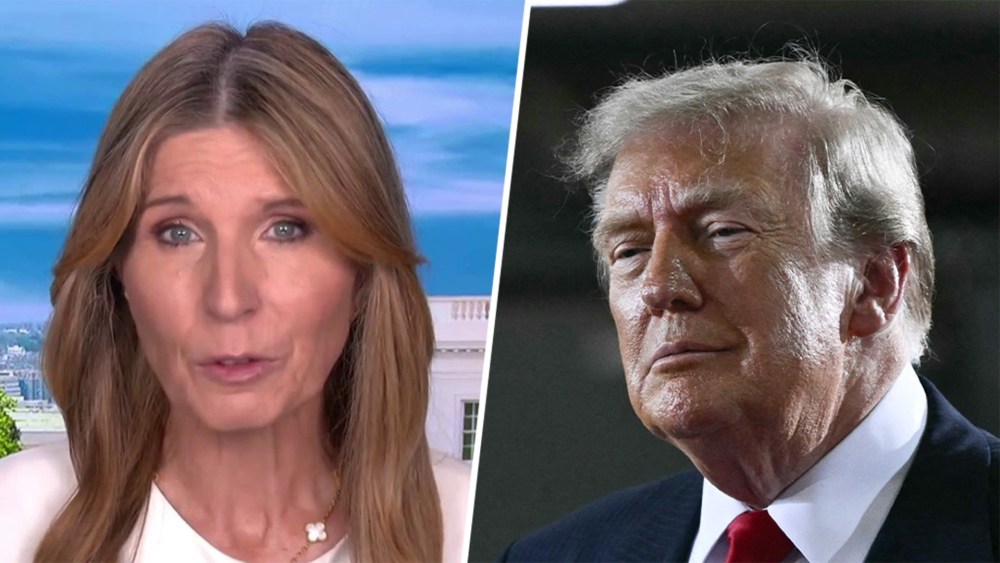
“One thing has never changed,” Trump spokeswoman Danielle Alvarez told The Wall Street Journal last week. “President Trump can’t be bought.”
Alvarez’s comment was included in a Journal report with considerable evidence to the contrary.
“Interviews with dozens of donors, executives, lobbyists, Trump advisers and others indicate a staggering fundraising and influence operation,” the Journal reported, “with Trump at the center of it all.”
Even under far cleaner administrations, investigating corruption can be a powerful weapon for legislators from the opposition.
The president reportedly keeps close track of which companies contribute to his presidential library, ballroom, political action committees and other entities. Apple, Microsoft and Meta all have donated at least $10 million.
“Several top Washington lobbyists have been asked to raise $50 million or more, including from their clients, for Trump projects,” the Journal said.
This “Trump Transaction Tax,” as one Wall Street analyst called it, as well as his crypto profiteering, his plane from Qatar, the “anti-weaponization fund” and the many other money-grabbing acts of his second term make his corruption an obvious target for Democrats this fall and beyond. Even under far cleaner administrations, investigating corruption can be a powerful weapon for legislators from the opposition party. But in this case, Democrats can contrast what Trump promised to what he’s done. As former Trump staffer Marc Short told the Journal, “One of the things that most rallied his crowds in 2016 was draining the swamp. The crowds would go wild.”
Play
‘The boss wants his money’: Bombshell report unmasks Trump’s corrupt multimillion-dollar operation
July 31, 2026 / 10:25
Now the president has abandoned even the pretense of ridding Washington of corruption. Meanwhile, Democratic candidates, like Sen. Jon Ossof of
by Ann Keller | Aug 2, 2026 | Congress, Opinion, Science
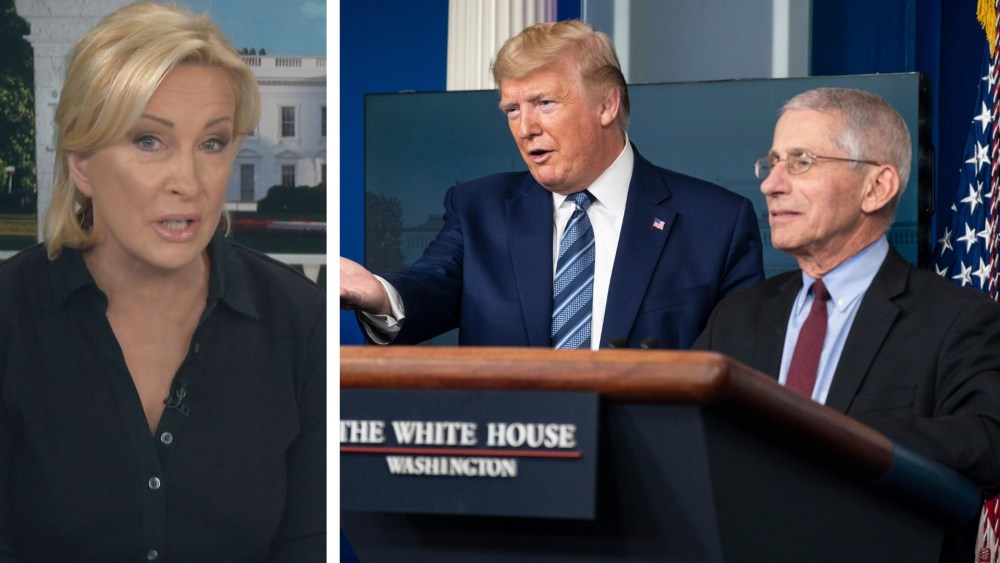
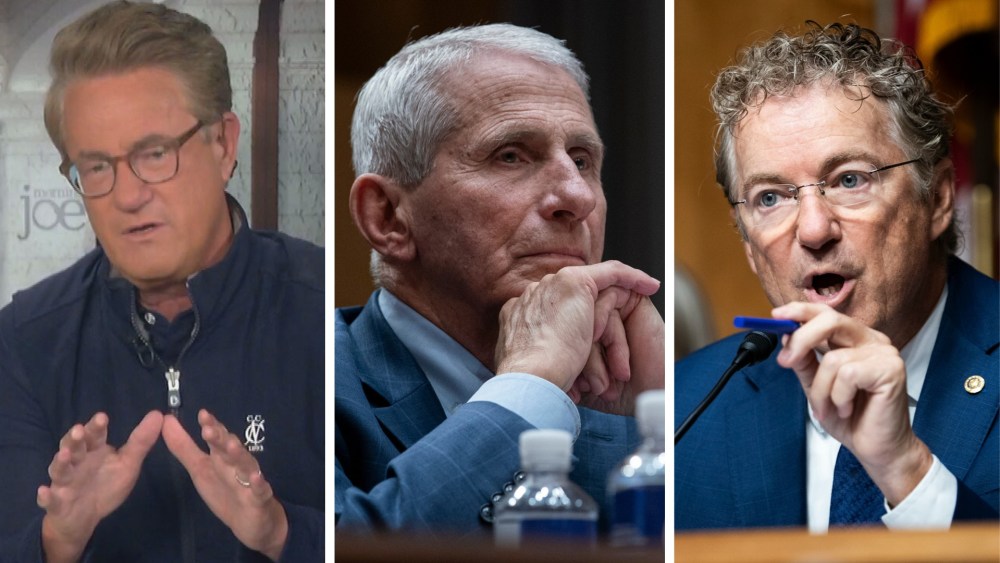
I was not surprised to see Republican senators try to take down Dr. Anthony Fauci last week. But I am disappointed.
When the first cases of Covid-19 were discovered in a hospital in Wuhan, China, I had already studied the U.S. public health response to seven epidemics and pandemics. The political theater and shoot-the-messenger tactics deployed in Wednesday’s hearing are nothing new. But the current focus on public health officials’ errors during a time of crisis and ever-shifting information isn’t about improving readiness for the next pandemic. It’s about assigning blame in a black-and-white binary, and that’s a mistake.
Skepticism is essential in the process of separating fact from fiction. We have more confidence in results that have survived such pressure testing.
Imagine if, when the next novel infectious disease threatens our health, we celebrate learning instead of punishing it? If we anticipate learning and are ready for it, that could go a long way toward improving our experiences in the next pandemic. But for this to happen, we need to come to terms with the messy reality of learning in the sciences. One can hope that scientists, as they gather data during a pandemic driven by a novel infectious disease, will be able to reduce uncertainties in a linear and predictable fashion. But that is not the norm.
I am a social scientist. When I discover something new and present my findings to my colleagues, the most likely result is that they will tell me all the ways they think I might be wrong. Skepticism is essential in the process of separating fact from fiction. We have more confidence in results that have
by Duncan Levin | Aug 1, 2026 | Congress, Criminal Justice, Opinion
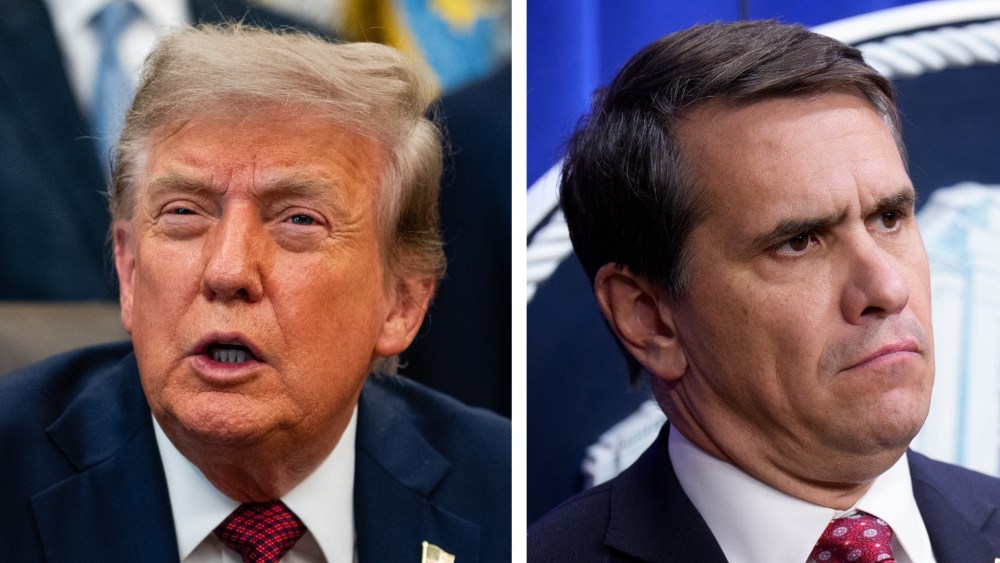
President Donald Trump’s threat to withdraw Todd Blanche’s nomination as attorney general permanently and renominate him again after recalcitrant Republican Sens. John Cornyn and Thom Tillis are out of the Senate underscores what this confirmation process is really about.
It is not about who will run the Justice Department but whether the Senate will endorse what Blanche has already done there.
Rejecting the nomination would not immediately remove Blanche from the department’s leadership.
Blanche, the acting attorney general since April, was previously the Senate-confirmed deputy attorney general, overseeing the department’s criminal and national security work. If Trump withdraws the nomination, Blanche could remain in control — potentially well into 2027 — under federal statutes governing succession and acting appointments. Rejecting the nomination would not immediately remove Blanche from the department’s leadership.
Set aside, for a moment, that the Republican opposition publicly blocking Blanche’s confirmation currently consists of two senators — both acting only after their political futures were settled. The context leading up to this week’s confirmation standoff is important.
Play
Trump may wait out GOP holdouts on Blanche nomination
July 31, 2026 / 09:31
Blanche was Trump’s personal criminal defense lawyer from 2023 through 2024. As a former federal prosecutor, Blanche gave legal vocabulary and professional credibility to Trump’s grievances about investigative “witch hunts” and “corrupt” prosecutors. Blanche helped turn Trump’s belief that prosecution is political warfare into a theory of law enforcement.
Then Trump placed him in charge of law enforcement, and the defense theory became the governing philosophy.
Consider the record: Under Blanche, the DOJ has repeatedly pursued people Trump publicly identified as enemies. Cases against former FBI Director James Comey and New York Attorney General
by Lauren Harper | Aug 1, 2026 | Congress, Opinion
Dr. Anthony Fauci’s refusal to answer questions during this week’s hearing on the origins of the Covid-19 pandemic dominated headlines. But an underappreciated irony of the controversial hearing is that we are only capable of debating Fauci’s accounting for his pandemic performance because he preserved his records in the first place.
This same level of public scrutiny is rapidly becoming impossible across the rest of the federal government. Rather than engaging in genuine transparency, the Trump administration is selectively releasing records that align with its political priorities while actively shredding its own paper trail.
This week’s hearing focused on over a thousand pages of diary entries written by Fauci between 2019 and 2022 — which Fauci argued were personal — that were obtained by Sen. Rand Paul, R-Ky., from Health and Human Services Secretary Robert F. Kennedy, Jr., and published online days before the hearing.
While the administration publishes Fauci’s unredacted diaries, it is simultaneously proposing a government-wide nondisclosure agreement to muzzle federal workers from sharing the very kinds of information Paul released.
Fauci condemned the release as an invasion of his privacy, and while it’s true that the government should never release information without proper vetting, the preservation of Fauci’s records on government servers complicates claims that the records were purely personal. It’s also worth noting that some entries were already memorialized in Fauci’s 2024 memoir, or reiterated in media interviews, making them fair game for disclosure and demonstrating genuine public interest in the records.
A far better way to balance privacy rights and public interest in the records would have been through the Freedom of Information Act, where career professionals could redact sensitive
by Anthony Coley | Jul 31, 2026 | Congress, Criminal Justice, Opinion
Acting Attorney General Todd Blanche would have us believe the story ended when he declared President Donald Trump’s proposed $1.8 billion “anti-weaponization” fund dead. It didn’t. Recent news this week shows the administration may not need that fund at all.
Two days before the Senate Judiciary Committee was set to vote Blanche’s nomination to be attorney general, the Justice Department announced a seven-figure payout to Paul Vaughn, an anti-abortion activist whom Blanche has described as a victim of Biden-era weaponization. Vaughn is not a Capitol rioter, and his case is not theirs. But The New York Times reported the settlement for what it is: proof that this DOJ is willing to use an existing federal statute — the Federal Tort Claims Act, or FTCA — to compensate people it believes were victims of political prosecution.
The DOJ doesn’t need a new commission or a special compensation fund to if it chooses to compensate Jan. 6 defendants.
No commission. No $1.8 billion fund. No press conference about “victims of lawfare” seeking redress. Just a settlement, quietly reached, through the same legal machinery that hundreds of Jan. 6 defendants are now lined up to use.
That machinery didn’t appear this week. It was there before there was a fund, and it will be there long after Blanche has finished talking about the fund as though it were the whole story.
Congress enacted the FTCA to compensate people harmed by government negligence or misconduct. It has been used to resolve claims involving everything from medical malpractice at Veterans Affairs hospitals to the FBI’s failures preceding the massacre at Mother Emanuel AME Church. It was designed to compensate victims
by Steve Benen | Jul 31, 2026 | Congress, Justice Department, Maddowblog, News, Politics
The Republican plan to quickly confirm Todd Blanche’s attorney general nomination has clearly unraveled, though the process is still unfolding. MS NOW reported that Republican Sen. John Cornyn of Texas, one of a small handful of GOP senators who have withheld support and delayed the process, met behind closed doors on Thursday with the nominee in the hopes of finding a resolution. As things stand, they remain at an impasse.
It’s against this backdrop that Donald Trump tried to give his former defense attorney a boost with a new statement published to his social media platform. It read in part:
John Cornyn never had a problem with the so called “Fund,” which will not benefit me, but rather the great American Patriots who were hunted down like dogs and whose lives were unfairly and illegally destroyed by the Crooked Joe Biden Administration, until after I decided to Endorse and Support his Republican Primary opponent in Texas, who easily won the Nomination for the United States Senate. Perhaps there has never been a group of people treated so badly in our Nation’s history. They are suffering still, many ruined, and I felt that they should be given compensation for what has been done to them. […]
I will always feel that these victims of government abuse should be paid back for what they were forced to endure, their lives have been ruined!
The president may not fully appreciate why this is the wrong argument, at the wrong time, from the wrong person. In fact, by trying to help Blanche, Trump issued a statement that’s likely to hurt his own nominee.
At the heart of the problem