by Inzamam Rashid | Jul 11, 2026 | Donald Trump, Iran, News
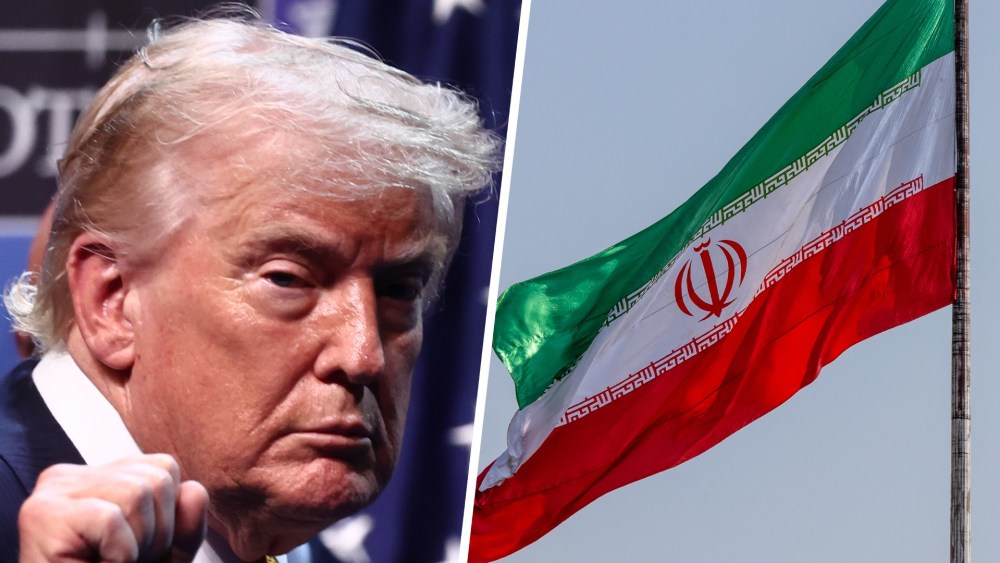
After another broken ceasefire, Iran on Saturday engaged with Mideast regional leaders seeking to resolve Iran’s standoff wth the U.S., its Gulf neighbors — and the rest of the world that relies on oil — over passage through the Strait of Hormuz.
Following two days of conflict between the United States and Iran — and even as Iran’s supreme leader and President Donald Trump traded threats — a new round of diplomacy centered on reopening the strait took place in the Omani capital, Muscat, on Saturday. A delegation from Iran led by Foreign Minister Abbas Araghchi visited Muscat, the capital, for further talks, a day after Qatari-mediated discussions in Tehran.
A senior Middle East diplomat with direct knowledge of the talks told MS NOW that France and Britain are studying proposals drafted by Oman that may allow the charging of navigational fees in the strait with the support of the United Nation’s International Maritime Organization, which oversees shipping routes.
Qatari mediators also held what an Iranian official described as “positive” de-escalation talks in Tehran on Friday.
Qatar and Pakistan are mounting a new diplomatic effort to bring the U.S. and Iran back to the negotiating table after renewed strikes this week threatened to plunge the region into another prolonged round of fighting, regional officials told MS NOW.
Play
Israel tells U.S. that Iran cooked up new plan to assassinate Trump
July 10, 2026 / 09:17
Two regional government officials familiar with the talks said a Qatari delegation traveled to Tehran as part of a coordinated effort with Pakistan aimed at de-escalating the conflict and facilitate a new round of U.S.-Iran talks in Doha or Islamabad in the coming
by Evan Simon | Jul 11, 2026 | AI, data centers, News, Pollution, Texas
Omaira Garcia didn’t realize life on her small ranch in Abilene, Texas, was about to change forever until clouds of dust — kicked up by a mysterious project next door — began to engulf her home. The Air Force veteran said she found out about OpenAI’s plans to build its flagship Stargate data center directly beside her property only after construction began in the summer of 2024. Today…
Source
by Brett Wilkins | Jul 11, 2026 | affordability, New York, New York City, News, Zohran Mamdani
In a move proponents say will save constituents up to $162.5 million annually, Mayor Zohran Mamdani and other New York City officials on Friday unveiled a “click-to-cancel” rule aimed at ensuring people can end online subscriptions as easily as they start them. Days after entering office in January, Mamdani signed a pair of executive orders, “Combating Hidden Junk Fees” and “Fighting…
Source
by Michael Steele | Jul 11, 2026 | Opinion
It should have been an occasion for a great patriotic speech.
Instead, the short address said America faced “enemies from within,” casting routine political disagreements as an existential crisis of Christianity against communism and calling for the “twisted warped thinkers” of the opposition to be swept from the national scene.
The year was 1950. The politician was Sen. Joe McCarthy. And the occasion was a dinner marking Abraham Lincoln’s birthday.
That speech has become infamous for helping launch the Red Scare, long considered a stain on American history. But as President Donald Trump stood at Mount Rushmore on the eve of the nation’s 250th anniversary, he matched it beat for beat in remarks that preyed on his base’s religious devotion to falsely paint Democrats as communists:
These are not mere political disagreements, like differences over taxes or regulations. Communism is a mortal threat to American liberty. … The godless communist morality states that anything is justified to bring about inhuman visions. … They don’t want good, they don’t love God, and they don’t want God.
Trump’s speech comes at a very different time than McCarthy’s, however. The West won the Cold War decades ago; the remaining communist countries, such as China and Vietnam, have mixed economies, and even Cuba has adopted some market reforms. The “communists” Trump is attacking are democratic socialists who want to do things like expand Medicare and start city-run grocery stores in needy areas, not seize the means of production.
The times are also different. The month before McCarthy delivered that 1950 speech, personal income was $6.5 billion higher than the year before. The prior decade saw homeownership grow by a
by Roey Hadar | Jul 11, 2026 | Opinion, Sports
The quarterfinals of the FIFA Men’s World Cup are underway. And the tournament’s most consequential actor has not been a star player, like Argentina’s Lionel Messi, or even President Donald Trump. No, the most important figure has been the post of video assistant referee, or VAR.
The premise is simple: Should the referee on the field make a “clear and obvious error,” or if there is a “serious missed incident,” another referee sitting off-site in a room with myriad camera feeds can help the in-stadium ref review and correct the mistake.
Nowadays, nearly every burst of joy from a goal is tempered for several minutes by a lengthy wait, either for referees to decide whether they will review it or by the review itself.
It’s a great idea on paper. But the perfect has become the enemy of the good. Instead, even as VAR has been increasingly used in soccer over the past decade, it has become a byword for long reviews and questionable officiating. And its use at this World Cup has felt arbitrary, at best a minimal improvement over human judgment.
At least three dramatic moments in this tournament were altered by VAR.
Croatia’s dramatic last-second equalizer in its round of 32 match against Portugal was called back after VAR used sound-wave technology inside the ball to decide that the goal scorer was offside due to a nearly invisible touch of the ball from a teammate.
The day before, in the round of 32 game between the U.S. and Bosnia and Herzegovina, VAR’s input led to the on-field referee showing U.S. player Folarin Balogun a red card, resulting in an automatic ban. The fallout was