by James Downie | Jul 12, 2026 | Economy, Opinion, White House
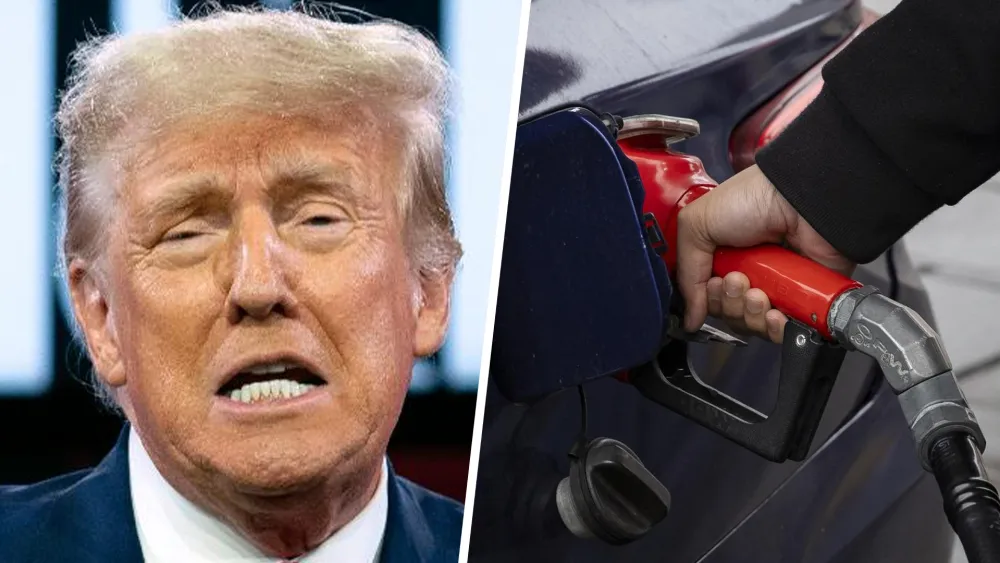
“FREEDOM FUEL HAS ARRIVED,” the White House’s X account announced this week. The post touted the first “Freedom Fuel Network” gas station, “lowering the price at the pump to $3.47 for our 47th President.” The White House’s announcement provided few details, leaving the reader — and the viewer of the accompanying video — the impression that the administration, whether through subsidy or takeover, was directly intervening to lower gas prices.
Freedom Fuel, however, is not stealth Marxism from a president fearmongering about “communist” Democrats. “A VERY smart Retailer, located throughout the Northeast, is stepping up,” Trump announced on social media before the July 4 weekend. “They are doing this because they love the U.S.A.” It is not clear who runs the Freedom Fuel Network, with 25 stations in Pennsylvania and southern New Jersey. The Delaware Department of State lists a filing for Freedom Fuel Network LLC from June 23, but no other information.
But whoever is behind Freedom Fuel, Trump’s praise is emblematic of his second year back in the White House: a half-hearted, poorly thought-out stunt.
The administration later clarified that its support is strictly promotional.
Though the White House post on X said, “President Trump is leading the charge to lower gas prices this summer,” the administration later clarified that its support is strictly promotional. “The administration is not involved in the company, nor has the administration given the company any funding. There is no other entity or person subsidizing the lower gasoline costs,” a White House spokesperson told CNN.
Trump is apparently hoping for copycats. For days, he has complained that gas prices are not as low as they were before he
by The Associated Press | Jul 12, 2026 | News
DUBAI, United Arab Emirates (AP) — The United States attacked Iran early Sunday morning over an Iranian strike on a vessel in the Strait of Hormuz that set the container ship ablaze and forced its crew to abandon it. Iran responded with attacks targeting several countries in the Middle East, including Bahrain, Kuwait, Qatar, Oman and Jordan.
The burst of fighting raised new questions about efforts to reach a permanent end to a war that began on Feb. 28. The strait, a key transit route for oil and natural gas, has become the key sticking point in negotiations, and repeated fighting over the past week has left negotiations in danger of collapse.
The U.S. military’s Central Command said it hit some 140 targets in Sunday’s strikes and went after missile and drone launch sites, ammunition dumps, communication equipment and other sites. It said the attacks, heavier than previous attacks in recent days, would weaken Iran’s ability to threaten civilian shipping.
“Iran made a poor choice. Now they pay,” U.S. Defense Secretary Pete Hegseth wrote online.
Semiofficial Iranian news agencies reported that a navy officer was killed by the early morning attack. Iran retaliated by attacking nations in the region hosting U.S. military forces, while insisting it alone must control the strait and potentially charge vessels for traveling through it.
“The era of one-sided deals is OVER,” Mohammad Bagher Qalibaf, the speaker of Iran’s parliament and a main negotiator, wrote Sunday. “We told you: keep your word or pay the price. Reality is knocking.”
Iran and the U.S. agreed to an interim ceasefire on June 17, beginning a 60-day period aimed at reaching a permanent end to the
by Emma Freer | Jul 12, 2026 | News
When Congress passed a spending package earlier this year, few industries were more disappointed than pharmacy benefit managers. PBMs are middlemen who liaise between insurers, drug manufacturers and pharmacies to determine which drugs are covered at what price. Their job, as the New York Times reported in 2024, “is to reduce drug costs. Instead, they frequently do the opposite. They steer patients toward pricier drugs, charge steep markups on what would otherwise be inexpensive medicines and extract billions of dollars in hidden fees.”
The spending bill’s provisions limited some common PBM practices, and the industry declared itself sufficiently regulated. But policymakers are rightly refusing to move on. They are now proposing even more aggressive legislation that would extend not just to PBMs but to other “Big Medicine” middlemen — such as insurance conglomerates and wholesale drug distributors — that drive healthcare costs up and independent providers out of business.
Americans receive middling healthcare yet face the highest medical costs in the world. Meanwhile, six of the country’s 15 most valuable companies are Big Medicine conglomerates, more than from any other sector, including Big Tech. Together, these six generated nearly $34 billion in profits last year alone, according to annual reports.
Big Pharma abuses patents to keep drug costs high and block competition from more affordable generics. But that doesn’t let Big Medicine off the hook.
PBMs demonstrate, in microcosm, the Big Medicine problem. The “big three” PBMs — CVS Caremark, Cigna’s Express Scripts and UnitedHealth Group’s Optum Rx — not only control 80% of U.S. prescriptions but also are each vertically integrated with a major insurance conglomerate and a major pharmacy. There is overwhelming evidence that these
by Lauren Harper | Jul 12, 2026 | Opinion, Trump Administration
The Department of Government Efficiency, which carried out the most transformative restructuring of the federal government in a generation, has formally ended — with no public accounting of its actions. Despite touting itself as the most transparent administration in history, the Trump White House is working to ensure that no DOGE records ever see the light of day.
This is a dangerous antidemocratic precedent, especially since DOGE took direction from Elon Musk, who was famously not a regular government employee. By handing over essential government functions to members of the ultrawealthy who happen to be friends with the president, while systematically dismantling America’s transparency infrastructure, the administration is effectively hiding that public policy is being dictated at an oligarch’s request. The threat is the privatization of government power, with no chance of oversight or public input.
Play
Former Sen. Boxer slams impact of Musk’s DOGE: ‘So authoritarian and un-American’
July 7, 2026 / 07:54
If the DOGE model succeeds, there’s no telling how many shadow agencies may follow — and how many government decisions taxpayers could be locked out of.
To date, what little the public knows about DOGE has mostly come from whistleblowers. The mechanics behind this information blackout are twofold.
Almost from its inception, the Trump administration argued that DOGE was not an agency with independent authority and therefore was not subject to the real-time scrutiny of Freedom of Information Act (or FOIA) requests. Rather, the administration said that DOGE’s sole legal function was to advise and assist the president, and that political appointees at federal agencies — not DOGE personnel — held the ultimate authority to implement its recommended mass firings and agency liquidations.
If the DOGE
by Kevin Frey | Jul 12, 2026 | News
PORTLAND, Maine — After a week of political chaos, Maine voters are now left grappling with what comes next — with control of the U.S. Senate on the line.
“To be kind of let down like that, it feels like I almost got ripped off, you know?” Steve Arsenault, a voter from Rockland, Maine, told MS NOW.
On Wednesday, Democrat Graham Platner — a populist outsider who won his party’s nomination for U.S. Senate just last month despite many controversies, including an old tattoo of Nazi symbolism — announced he would suspend his campaign.
Earlier in the week, Platner — who has been mired in a variety of scandals since launching his campaign in 2025 — was accused of rape by an ex-girlfriend in a new story published by Politico. Platner denied the allegations.
With the party now racing to find his replacement in a process set to play out over the next two weeks, many Democratic voters told MS NOW they’d love to see the new candidate espouse Platner’s anti-establishment, populist and at times pugilistic style. But minus the scandal.
Play
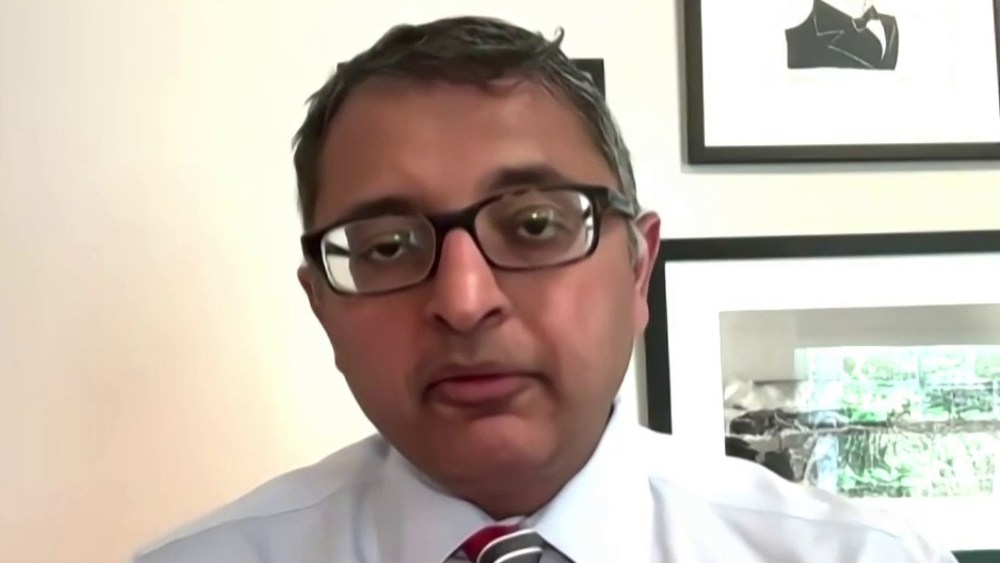
Maine Democratic candidate Dr. Shah shares his pitch to voters on why he should replace Platner
July 10, 2026 / 07:43
And in a race that is a cornerstone of the Democratic Party’s ambitions to win back control of the Senate in the fall’s midterm elections, those voters want the new candidate to be a change agent
“I saw Platner as an opportunity to shake things up, to introduce new voices to the party — particularly younger voices,” Francis Weld of Portland told MS NOW. “I hope that we can find someone who continues that.”
“We want change,” Weld continued. “We need to