by Steve Benen | Jul 22, 2026 | 2026 election, Maddowblog, News, Politics
Texas Attorney General Ken Paxton had already earned a reputation as the most scandal-plagued U.S. Senate candidate in recent memory, though the Republican’s troubles have managed to take a turn for the worse.
Just over the last couple of weeks, Paxton has been accused of using an address where he did not live while voting in recent elections and faced allegations that he and his estranged wife declared three separate homes as their primary residence in mortgage documents — a practice that his party has, in other situations, characterized as an outrageous abuse.
Complicating matters, property records now suggest the state attorney general, either in his personal capacity or through his trusts, now owns at least 15 properties worth roughly $9 million.
The good news is, Paxton finally held a press conference Tuesday — a “rare” occurrence for a politician who doesn’t seem to care for questions — offering journalists an opportunity to ask the Texan about his many controversies. The bad news is, Paxton didn’t want to answer any questions about his many controversies, and he then abruptly abandoned his own event when reporters treated him like a Senate candidate.
Wow — Ken Paxton and his team abruptly shut down a news conference and bail after journalists try to ask him about his various scandals— Aaron Rupar (@atrupar.com) 2026-07-21T18:41:31.642Z
“General, I wanted to give you a chance to respond to [Democratic state Rep. James Talarico] and his campaign,” one reporter said. “They’ve made a lot about the reports that have come out, one in The New York Times about you acquiring properties worth—”
At that point, Paxton, surrounded by 22 local sheriffs who support his
by Laura Barrón-López | Jul 22, 2026 | Donald Trump, elections, News
President Trump says he’s worried about foreign interference in U.S. elections. That was the reason he gave when he released declassified intelligence documents last week which ended up undercutting his own baseless claims about “rigged” elections.
In his primetime address on July 16, Trump said the U.S. “must take urgent action” to protect voting infrastructure against foreign actors. But shortly after taking office last year, Trump gutted a key agency designed to protect America’s elections from exactly that.
It’s called the Cybersecurity and Infrastructure Security Agency — an agency created during Trump’s first term. CISA is one of the main federal partners for states on election security, sharing intelligence on potential threats to voting infrastructure and providing quick, regional support.
After Trump returned to office, the cyber agency housed under the Department of Homeland Security took a major hit. Elon Musk’s DOGE fired more than 100 workers, including election security advisers. More than 600 others were placed on administrative leave, were reassigned or took buy-outs.
Now, the Trump administration is telling states that they will only receive resources if they hand over voter rolls to be screened through a new federal database that a judge recently deemed unlawful in its current form.
That database is known as the Systematic Alien Verification for Entitlements (SAVE), which experts and a federal judge are concerned has a high error rate that could disenfranchise voters.
Department of Homeland Security Secretary Markwayne Mullin said CISA will release an “election infrastructure plan” in the next 30 days — barely three months out from the midterms that will determine which party controls Congress.
“If they participate in the SAVE program, we’ll provide the

by Zeeshan Aleem | Jul 22, 2026 | Opinion, White House, World
The resumption of hostilities between the United States and Iran has caused an uptick in U.S. casualties. Last week, CENTCOM confirmed the deaths of three more U.S. service members killed in action, and the total number of troops killed during the war currently stands at 18. Meanwhile nearly 100 troops have been injured over the past two weeks as Iran escalates attacks on U.S. bases across the Middle East.
President Donald Trump continues to try to cast the war as an operation of total U.S. domination against a defanged regime, but Iran is striking back, with American lives at stake, making justifications for continuing the unpopular war even harder for Trump. And with the president signaling an openness to escalating the conflict even further in the coming weeks, the human toll is likely to increase. (Iranian casualties are far worse, with at least 1,700 Iranian civilians killed, according to estimates from the U.S.-based Human Rights Activists News Agency.)
It will be nearly impossible for the Trump administration to ward off the reality that casualties make wars less popular.
Already lacking in meaningful transparency, the Trump administration appears to be growing more cagey about releasing information about casualties. But efforts to delay or obscure the information are unlikely to prevent the inevitable — the war will become even more widely despised as more people die.
CNN reported on Monday that the Pentagon has been “slow to disclose injuries to U.S. troops during the ongoing war with Iran, avoiding publicly confirming the fallout from Iranian attacks and mostly reserving totals to a military website that lags events by several days or even weeks.” And its mode
by Julia Rosenberg | Jul 22, 2026 | Know Your Value
When University of Pennsylvania classics professor Emily Wilson’s translation of “The Odyssey” was published in 2017, it introduced countless readers to Homer’s masterpiece through vivid, contemporary language and a poetic style that felt both approachable and true to the original.
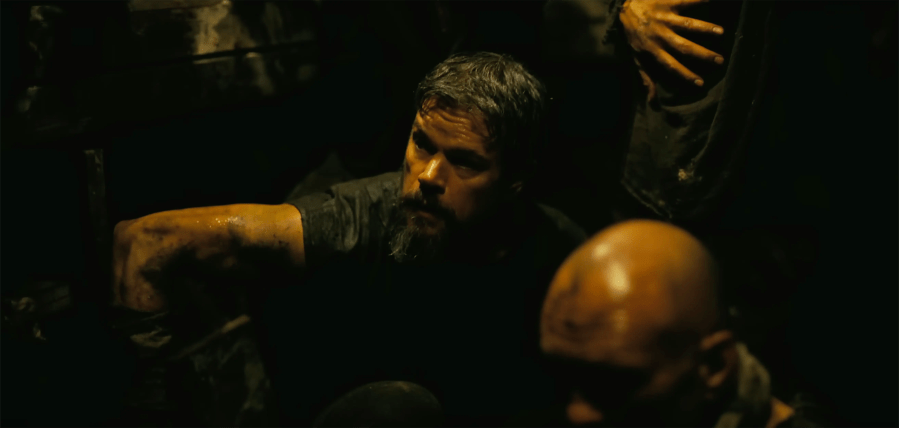
Among those captivated was Academy Award-winning director Christopher Nolan, whose own adaptation of “The Odyssey” arrived in theaters this weekend. While Nolan and Wilson did not collaborate on the film, he has cited her translation as an influence on his approach to adapting the ancient poem for the screen, particularly in shaping his understanding of its legendary hero, Odysseus, played by actor Matt Damon.
Matt Damon as Odysseus in “The Odyssey”. Universal Pictures via YouTube
The film earned an estimated $124.5 million at the domestic box office during its opening weekend, and the excitement surrounding it has driven a surge of interest in Wilson’s translation. According to publishing house W.W. Norton, more than one million copies of her edition have been sold this year.
Wilson’s achievement, however, has not come without challenges. Her translation of “The Odyssey” was the first by a woman to be published in English, and much of the conversation surrounding her work has focused less on its literary accomplishments than on her gender. Rather than simply being recognized as a masterful translator, Wilson has often found herself navigating questions and criticism rooted in the novelty of being “the first.”
Cover of “The Odyssey” by Homer. W.W. Norton & Company
Know Your Value recently spoke with Wilson about the blockbuster film that’s putting the ancient epic on the world stage, why she believes the latest adaptation doesn’t surpass the original poem, the challenges of being defined as
by Lt. Col. Rachel E. VanLandingham (ret.) | Jul 22, 2026 | Opinion, Politics, White House
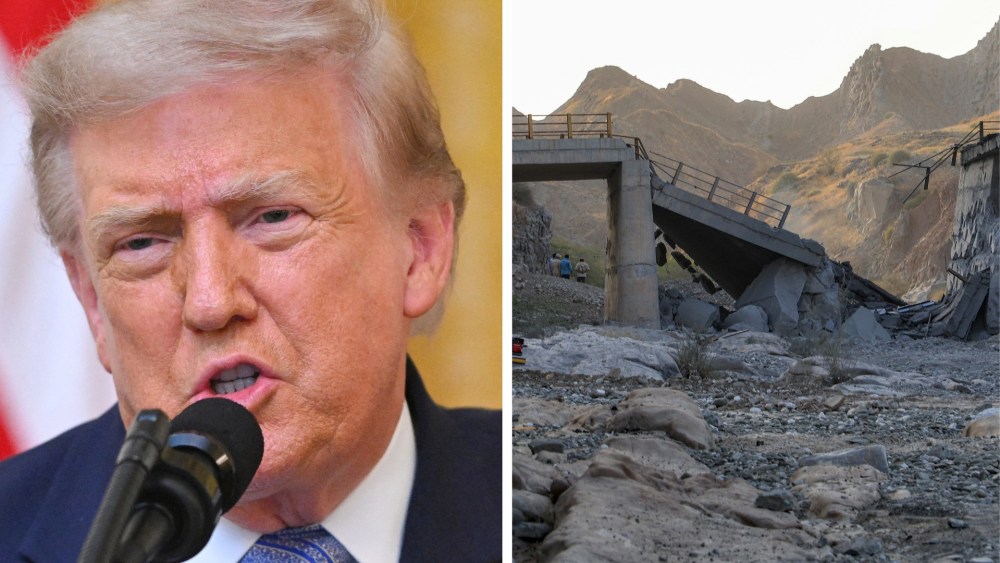
In its recent strikes in Iran, the United States widened its targeting aperture to bomb sites directly serving the Iranian population, such as electrical power plants, bridges, railway stations and roads. By doing so, the U.S. deliberately chose to inflict greater suffering on Iranian civilians. Over 500 Iranians have reportedly been injured this month, and more than 50 people, including children, have been killed. And those numbers don’t capture the full harm, such as sheer terror, caused by the destruction of items and resources vital to daily civilian life.
Attacking facilities and places that contribute to Iranian military action or are expected to do so in the future, and whose destruction provides the attacker military advantage, can be lawful — even if on a day-to-day basis such facilities and places serve ordinary civilians. That is, strikes are lawful if U.S. commanders reasonably assess that such targeted infrastructure meet the law of war’s “effective contribution to military action” test and that expected harm to civilians isn’t excessive.
Regardless of legality, the U.S. targeting Iranian infrastructure used by civilians is likely to cause far more civilian deaths than those caused by targeting purely military objects.
According to the law of war, “military action” is quite broad and can be indirect, such as a war-supporting activities and, for the U.S, even so-called war-sustaining activities. Power plants can be considered lawful military objectives even if they don’t directly serve a military base, because, according to the Department of Defense’s Law of War manual, they “are generally recognized to be of sufficient importance to a State’s capacity to meet its wartime needs of communication, transport, and industry so