by Finley Williams | Nov 7, 2026 | AI, big tech, Chicago Teachers Union, education, equity, News, Race, Schools, Technology in classrooms
When high school librarian Tara Donnelly talks to her classes about how AI has changed online search, she always starts with one question: “What is Google’s main goal?” Students generally reply, “give you information,” or “tell you the answers to things” — until someone hits the nail on the head and ventures, “Make money.” Donnelly, a member of the AI working group in the Chicago…
Source

by Mary Ziegler | Nov 7, 2026 | Civil Rights, elections, Opinion
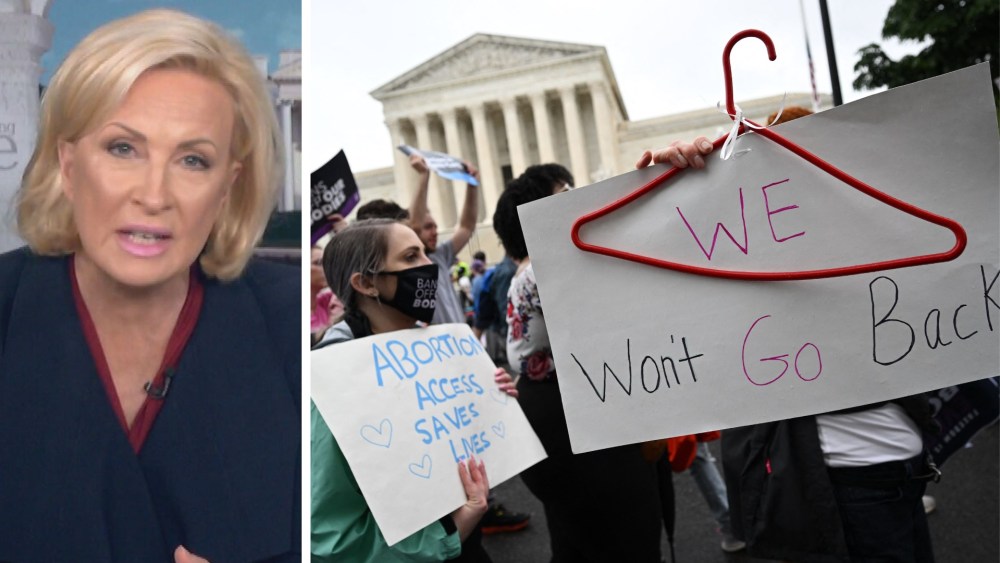
The midterm was not just a triumph for Democrats broadly; it was specifically a good night for reproductive rights. Not only did Democrats flip the House and Senate, but 3 of the 4 ballot measures on the subject passed. Congressional Democrats can block judges sympathetic to the anti-abortion movement and dare President Donald Trump to veto new protections. Nevertheless, there are warning signs for abortion-rights supporters for the remainder of Trump’s time in the White House.
Although it may seem counterintuitive, social conservatives will use these results to try to reassert their influence over the Republican Party. The argument, in short, is that Republicans would have fared better had abortion been a more important issue in the campaign. The ballot measures that protected abortion access can be chalked up to the blue wave that swept so many Republicans out of Congress. And in Idaho, voters in the middle of a blue wave comfortably rejected a proposal enshrining abortion rights.
There is no question that abortion was not as visible an issue in this midterm election, especially compared with 2022 or 2024. It is possible to attribute this trend to voters losing interest in the issue, or simply prioritizing more pressing concerns, like the cost of living or corruption.
Trump and his team had used the election as an excuse to postpone action on abortion. But that excuse is gone, and the clock is winding down on this presidency.
Already, social conservatives are arguing that a lack of focus on abortion depressed GOP turnout. “With Republicans not bringing the issue to the forefront, it has been difficult to mobilize pro-life voters,” Kelsey Pritchard, communications director
by Charles F. Coleman Jr. | Nov 7, 2026 | Civil Rights, Opinion, Politics, White House
It will be hard to fix what Assistant Attorney General Harmeet Dhillon broke as the head of the Department of Justice’s Civil Rights Division. A conservative culture warrior who as a private attorney represented Donald Trump during the House committee’s Jan. 6 investigation, she quickly delivered on the administration’s goals to roll back civil rights protections and reversed many the hard-fought gains of Kristen Clarke, her predecessor at the Civil Rights Division.
Donald Trump, Stephen Miller and Heritage Foundation figures like Russell Vought, Brendan Carr and Kevin Roberts all connected MAGA culture war with efforts to roll back civil rights, making the leader of the DOJ’s civil rights unit of paramount importance. Dhillon delivered what MAGA wanted.
It will be hard to fix what Assistant Attorney General Harmeet Dhillon broke as the head of the Department of Justice’s Civil Rights Division.
Though the departure of a civil rights chief who fixated on imaginary discrimination against white men might seem like a step in the right direction, we won’t know that until we know who Trump will replace her with.
But in the meantime, we can point out just how bad Dhillon was for civil rights. Take, for example, allegations of discriminatory policing. The DOJ’s Civil Rights Division has historically investigated allegations of mistreatment of Black people and other marginalized groups by law enforcement officers. When police civil rights violations required federal intervention, the division led that effort and entered into consent decrees with law enforcement agencies to grant injunctive relief, often mandating additional training and accountability measures.
There were examples of such consent decrees in cities across the country before Trump became president in 2017,
by Joseph Zeballos-Roig | Nov 7, 2026 | Economy, Opinion, White House
President Donald Trump has long had a bone to pick with the Federal Reserve. Earlier this year, the Justice Department launched a criminal probe against then-Fed Chair Jerome Powell that was intended to force him out. Even after Powell was succeeded as chair by Kevin Warsh, the president has never let up in his quest to bludgeon the central bank into lowering interest rates.
“I’m a smart voice and should be listened to,” Trump told The Wall Street Journal late last year.
Warsh is about to enter the sixth month of his tenure helming the Fed. Both during and since his confirmation, he has faced scrutiny over his independence from the executive branch, but so far he has demonstrated he’s serious about fighting inflation. Now the Fed can count on new armor against Trump’s temper: A Democratic-controlled Senate.
GOP control of the Senate meant senators had to accede to Trump’s demands on nominees.
Though the inflation rate is well above the Fed’s 2% target, Trump has long argued the Fed should lower interest rates. As recently as September, after the Fed raised rates to a range of 3.75%-4.00%, the president said rates should be at 1% “or less.” With at least 54 seats after this week’s midterm elections, Senate Democrats are poised to deal a blow to the president’s goal.
Interest rates influence the cost of personal loans, auto loans and mortgages for American families. It also affects how much interest the U.S. government pays on its towering national debt. They are set by the Federal Open Market Committee — and of the FOMC’s 12 members, seven are also members of the Fed’s Board of
by Steve Benen | Nov 7, 2026 | Maddowblog
Today’s edition of quick hits.
* That he chose not to speak to the Ukrainian representative who was already in the White House says a great deal: “President Trump said he met with a senior Russian official in Washington on Thursday and promised a Ukraine peace deal that ‘might involve all of Europe,’ a sign that the president remains involved in talks to end the war even after his party was trounced in the midterm elections.”
* Arch on ice, for now: “A federal judge temporarily blocked the Trump administration late Thursday from beginning construction on President Donald Trump’s 250-foot arch, which a planning commission had approved hours earlier after a contentious online meeting.”
* All eyes on Mississippi: “An unlikely battle in Mississippi’s Senate race remained tight on Friday, after the latest tranche of votes reported showed Scott Colom, a Democratic prosecutor, leading Senator Cindy Hyde-Smith, the Republican incumbent, by just over 2,000 votes. Mr. Colom netted an additional 100 votes over Ms. Hyde Smith from a report at 3:59 p.m. Eastern from Pike County, bringing his statewide lead to 2,129 votes, according to The Associated Press.”
* Elections continue to have consequences in Texas: “Mayor John Whitmire of Houston said he was directing city police officers on Friday to limit their cooperation with Immigration and Customs Enforcement during traffic stops, bucking a policy imposed on Texas’s largest city by Gov. Greg Abbott. Under an executive order from the mayor, Houston police officers will no longer alert ICE agents when they encounter an unauthorized migrant during routine traffic stops or in connection with other low-level infractions.”
* I wonder why an administration would pay