by Hunter Woodall | Jul 25, 2026 | News
Maine Democrats on Saturday are poised to swap out a scandal-ridden candidate in a critical Senate race for a replacement that gives them a chance to win in November.
That’s the easy part.
This fall’s midterm elections will give Democrats potentially their best window yet at unseating Republican Sen. Susan Collins, a moderate lawmaker who defied expectations six years ago when she won her seat once again. Now whether or not Democrats can defeat her could be the difference between the party having a chance taking back the Senate for the final two years of Donald Trump’s presidency, or struggling to make a dent in his agenda.
Concerns about Graham Platner, the man Maine Democrat primary voters had picked to run against Collins, were apparent even before a woman accused him of sexual assault earlier this month. While Platner issued a denial, he soon left the race which led to a frantic and hastily assembled campaign to find a replacement.
That alternative is former state Senate President Troy Jackson, who appeared to have won over the necessary support needed to become the party’s chosen candidate ahead of Saturday’s party event.
Work to keep Collins in office however, has been underway for months, leaving Democrats with an element of catching-up to do.
“I don’t think they have enough time to put together a coherent campaign. I really don’t. And the candidate who now is in that driver’s seat is maybe not as flawed, but has many flaws,” said Jim Deyermond, chairman of the Maine GOP.
Play
As GOP celebrates Platner chaos, Collins can still lose
July 9, 2026 / 07:05
Collins is something of an enigma in her party. She’s the
by Luke Russert | Jul 25, 2026 | Opinion
The State Department recently convened a high-level diplomatic meeting with representatives from 66 nations to discuss the resurgence of what they term political terrorism. But some Trump administration officials who spoke at the event employed the same kinds of dehumanizing and inflammatory rhetoric that experts say can fuel the political violence the conference was meant to address.
White House Deputy Chief of Staff Stephen Miller’s speech at the event could have served as a case study in the very kind of rhetoric the conference should have been discouraging.
“It’s not a coincidence that when you look at these violent antifa demonstrations and you see any photograph of those who were assembled — to be blunt, not one of the people that is demonstrating looks like a normal person,” he said. “Not one looks normal. They’re all deformed in some way — in their appearance, in their dress, in their mannerism.”
At other points, he described protesters against the administration’s immigration sweeps as “radical leftists,” “political terrorists” and a “cancer” on civilization (three times); argued that “left-wing terrorism” would lead to gulags, “mass imprisonment of political enemies” and “the stripping of their rights and freedoms”; and said the protesters had “scarred their body and their appearance” to the point that “in many different ways, to the point in which “their outer appearance becomes a manifestation of their inner hatred.”
In just a few minutes, Miller’s speech employed many of the rhetorical patterns that scholars of political violence and authoritarianism have long identified as warning signs: portraying opponents as an existential threat, equating dissent with terrorism, using dehumanizing and disease-based language, making apocalyptic predictions and suggesting
by Joseph Cirincione | Jul 25, 2026 | Opinion, Science, White House, World
President Donald Trump says he believes nuclear technology is a grave threat in the hands of Iran’s ruling regime, arguing that the country would inevitably use it to create a weapon of mass destruction. And yet, in a new agreement signed Wednesday, Trump agreed to let Saudi Arabia enrich uranium and reprocess plutonium, the two ingredients used in nuclear bombs.
The Saudis promise this will be used only for peaceful purposes, but Saudi Crown Prince Mohammed bin Salman said as far back as 2018 that “without a doubt if Iran developed a nuclear bomb, we will follow suit as soon as possible.”
Trump’s generosity to Saudi Arabia — which has numerous lucrative deals in place with members of his family — could unleash a flood of new nuclear programs. If the Saudis get this technology, others will demand it too.
Nuclear is the most expensive way to produce electricity, and Saudi Arabia sits on an ocean of oil and is ideally suited for much cheaper solar and wind energy production.
Since the dawn of the Nuclear Age, U.S. policy has denied the ability to enrich uranium and reprocess plutonium to other nations because it is a shortcut to nuclear weapons. The huge and expensive facilities can be developed openly and legally until a government takes the quick jump from making fuel rods to making the cores of bombs. With this deal, Trump has effectively just green-lit a Saudi nuclear bomb program.
How did we get here?
In 2013, the Saudis unveiled a plan to build as many as 16 civilian nuclear reactors. Nuclear reactor companies salivated at the prospect of contracts worth hundreds of billions
by The Associated Press | Jul 25, 2026 | News
Skydance-owned Paramount on Friday agreed to delay closing its $81 billion buyout of Warner Bros. Discovery well into next year, as a judge continues to consider a challenge from 12 states seeking to block the deal altogether.
In a court filing, Paramount said it wouldn’t close the merger until either a court ruling is made on the merits of the states’ lawsuit or June 1, 2027. The move arrives just days after U.S. District Judge Araceli Martínez-Olguín granted a temporary restraining order to freeze the transaction for several weeks, ruling that the states had raised some “serious questions” and a strong case about the merger’s potential to “substantially lessen competition.”
Paramount called Friday’s agreement a “significant win because the result is exactly what we have sought from the outset: a direct path to a trial based on the evidence.”
The company, which was bought by Skydance just last year, added that this was the “fastest and clearest way” to prove its merger was good for competition and the wider industry.
Twelve states, led by California, sued to block Paramount’s pending buyout of Warner last month — alleging that such a combination would instead “extinguish competition” in Hollywood and lead to fewer choices for consumers, particularly moviegoers and cable customers.
“From the workers and artists who bring stories to life to the families who buy tickets at the box office, Paramount’s illegal takeover of Warner Bros. is a bad deal for all those who count on a competitive entertainment industry,” New York Attorney General Letitia James, who is among those suing to block the merger, said Friday.3
The post Paramount agrees to delay Warner Bros buyout closing
by Shawna Thomas | Jul 25, 2026 | News Analysis
As the rescheduled White House Correspondents’ Dinner approached Friday night, there was continued annoyance in some quarters about journalists sitting down with President Donald Trump as tensions between his administration and the media have dominated headlines.
So why hold the dinner at all?
Some question the point of of attending the White House Correspondents’ Dinner, after the April gala was cut short when a gunman breached a security checkpoint.
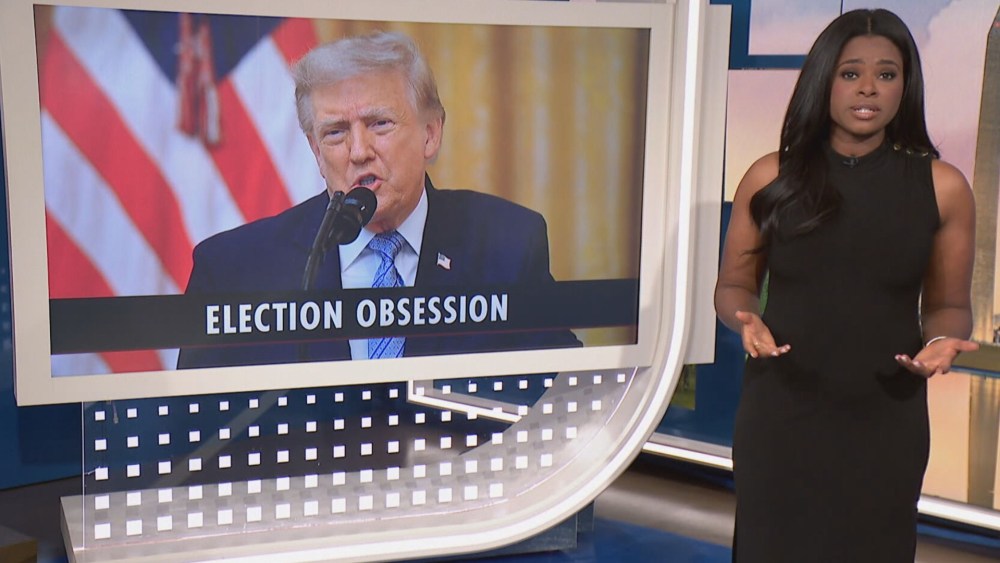
Yes, the Trump team’s hostility toward journalists and journalism has been on display. The administration has withdrawn its subpoenas of New York Times reporters (and some of their loved ones), but just last week Trump used a primetime speech on (debunked) 2020 election interference to criticize ABC News and NBC News for making an independent editorial decision to not air his remarks live.
“In a rare move, NBC and ABC fake news have both said that they would not cover this speech,” Trump said. “They knew what it was about; because of the fact that they don’t like the topic, because they know how corrupt our system is, and they don’t want to reveal it. They and others in the media are part of a plot.” He soon added: “Fraud like this should mean a revocation of their licenses.”
Play
Fact-checking Trump’s primetime speech election claims
July 17, 2026 / 03:04
To be clear, there is no evidence of fraud or a larger media plot. But that has not stopped Trump from repeating such accusations or from being harshly disparaging of journalists, particularly women. Some of his low blows over the past year include scolding, “Quiet, quiet, piggy” when a Bloomberg reporter asked about the Epstein files. He