by Steve Benen | Jul 31, 2026 | Congress, Justice Department, Maddowblog, News, Politics
The Republican plan to quickly confirm Todd Blanche’s attorney general nomination has clearly unraveled, though the process is still unfolding. MS NOW reported that Republican Sen. John Cornyn of Texas, one of a small handful of GOP senators who have withheld support and delayed the process, met behind closed doors on Thursday with the nominee in the hopes of finding a resolution. As things stand, they remain at an impasse.
It’s against this backdrop that Donald Trump tried to give his former defense attorney a boost with a new statement published to his social media platform. It read in part:
John Cornyn never had a problem with the so called “Fund,” which will not benefit me, but rather the great American Patriots who were hunted down like dogs and whose lives were unfairly and illegally destroyed by the Crooked Joe Biden Administration, until after I decided to Endorse and Support his Republican Primary opponent in Texas, who easily won the Nomination for the United States Senate. Perhaps there has never been a group of people treated so badly in our Nation’s history. They are suffering still, many ruined, and I felt that they should be given compensation for what has been done to them. […]
I will always feel that these victims of government abuse should be paid back for what they were forced to endure, their lives have been ruined!
The president may not fully appreciate why this is the wrong argument, at the wrong time, from the wrong person. In fact, by trying to help Blanche, Trump issued a statement that’s likely to hurt his own nominee.
At the heart of the problem

by Zeeshan Aleem | Jul 31, 2026 | Congress, elections, Opinion
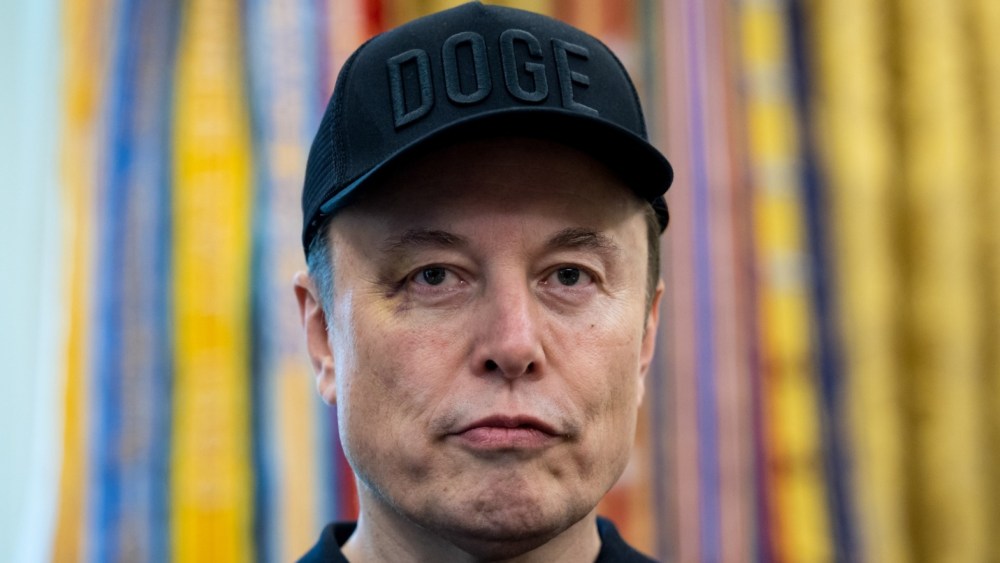
Reflecting on his time taking a wrecking ball to the government last year, Tesla CEO Elon Musk recently confessed to The Economist that he believes he “got a little too involved in politics, got carried away, frankly.” But not so carried away, apparently, so as to deter him from trying again.
Axios, citing sources with knowledge of the plan, reported that Musk is “jumping into the midterms with a huge investment in a plan to boost Republican voter turnout.” He’s doing that by “resuscitating his dormant super PAC, America PAC, which spent more than $260 million to help get President Trump elected in 2024.” (An America PAC spokesperson told Axios that “we’re excited to again be part of the team.”) Musk’s backing of the operation gave him the plutocratic distinction of being the single-biggest political donor in a political cycle in American history.
Even as Musk seeks to boost the fortunes of the GOP, he also comes with potential political costs.
But that doesn’t mean his money will be as effective this time around. Musk has revealed himself since then to be erratic and frequently self-defeating in his political maneuvering. And given that his favorability has tanked and is underwater, he provides Democrats with a ready-made villain in the election cycle.
So far, Musk has reportedly authorized America PAC to spend $100 million to $120 million. But it cannot be assumed that the commitment is rock solid, nor should we expect that it will necessarily rise to match the amount he committed in 2024. He has shown himself to be a fickle friend, and he might not be as invested in the outcome as
by Julia Jester | Jul 31, 2026 | News
As President Donald Trump huddles with his top advisers at Camp David on Friday, his to-do list from the last Cabinet meeting in May has hit hard realities.
The war with Iran that Trump said would end in “weeks” is expanding with no endgame in sight. There has been little progress in stopping Iran from threatening ships and slowing traffic in the Strait of Hormuz.
U.S. economic growth has slowed. Inflation is still stuck above the Federal Reserve’s target rate of 2% and prices remain high.
That leaves Trump and his team facing a daunting challenge: figure out how to resolve the conflict it started with Israel before the ripple effects wreak more havoc in the Gulf region and on the U.S. economy, all while the president’s approval rating hits a record low 32%, according to the latest Quinnipiac poll.
No answers came out of two days of meetings between Trump’s top officials and Israeli Prime Minister Benjamin Netanyahu, who left Washington this week with no clear shared path forward on Iran, according to a senior Israeli official granted anonymity to describe the closed-door talks.
Now Trump must decide whether to continue pursuing diplomacy, put increased economic pressure on the regime or take major military action to force Iran to make concessions.
In the meantime, the Iran conflict keeps widening.
On Tuesday, the U.S. intercepted a new round of Iranian ballistic-missile attacks in Jordan, ending a short-lived respite in fighting.
On Wednesday, a once-reluctant Saudi Arabia directly entered the war by conducting airstrikes against Iran-backed militias in Iraq that it accused of attacking its oil facilities. Saudi Arabia’s defense minister also met privately with Trump.
The next day, the
by Ja'han Jones | Jul 31, 2026 | Opinion
Officials around the world are looking to curb the scourge of artificial intelligence-generated porn and sexually explicit images online, some of which has been shown to be disturbingly childlike. And many have run into a common obstacle: Elon Musk.
Musk, whose brand of internet humor includes volunteering to “give” Taylor Swift a child and cracking jokes about a sexual misconduct allegation against him, has never really seemed serious about stemming creepy sexual behavior on his social media platform, X. And he has come under fire after X launched a tool that allowed users to generate nonconsensual sexually explicit imagery through the platform’s AI chatbot, Grok.
Despite pressure from the Trump administration on Musk’s behalf, the backlash over that tool led to several countries launching investigations. And in Minnesota, lawmakers overwhelmingly passed a law designed to stop AI from being used to stop what’s called “nudification” technology. As CBS Minnesota reported in May:
The bill “prohibits the access, download, or use of nudification technology, except when the website, app, or software requires the substantial application of technological or artistic skill by a human creator directing and controlling the output,” according to the House. It targets programs that use AI to fabricate a nude photo or pornographic video from someone’s image.
Now, Musk’s company xAI is suing to kill the law before it goes into effect in August. Musk and President Donald Trump — both of whom have personally invested in AI companies — have tried to prevent states from regulating them.
As The Associated Press reported:
In the 38-page lawsuit, xAI – whose AI model chatbot and image generator Grok is available on the social media platform
by Ja'han Jones | Jul 31, 2026 | Congress, Opinion, Sports
Sen. Ted Cruz, R-Texas, is attempting a high-wire act as he tries to rally support for the Protect College Sports Act. And the window of opportunity appears to be closing.
Cruz and Sen. Maria Cantwell, D-Wash., have jointly backed the legislation, which is intended in part to address player compensation and name, image and likeness issues, or NIL. It also would limit transfers and establish a five-year window of eligibility.
The bill has been promoted by ultraconservative megadonor Cody Campbell, while Athletes.org, a players association, has said it “vehemently opposes” the legislation over concerns that it could move college athletes closer to the pre-NIL era, which was rife with exploitation. The bill has also been opposed by the Big Ten and the Southeastern Conference, which include several powerhouse programs.
Yahoo Sports’ Ross Dellenger reported that the legislation was in trouble after the two conferences blew past a deadline to weigh in on revisions.
The Protect College Sports Act is in a dire position.As Wednesday night arrived, the SEC and Big Ten continued to oppose the bill – despite days of negotiations with lawmakers, specifically over closing a cap circumvention loophole.Time is running out.https://t.co/vu3igm809K— Ross Dellenger (@RossDellenger) July 29, 2026
Cruz and Cantwell are attempting to bring the legislation to the floor of the Senate for a vote next week — the final week that senators are in session before a monthlong recess. The legislation faces longer odds of passage if it does not reach the floor before the recess.
On Thursday, the Senate adjourned for the week without the backing of the conferences.
“The bill’s chances of a vote next week are slim now,” Dellenger wrote on