by Clarissa-Jan Lim | Sep 26, 2026 | elections, News, White House
President Donald Trump launched a fresh attack on the press on Saturday morning, a day after escalating his standoff with news outlets by banning CNN from traveling with him on Air Force One.
“Why should perpetrators of FAKE NEWS, like CNN and MSDNC, be allowed access to a very sacred place, the White House?” he wrote on Truth Social. “Despite my big Election Win, almost 100% of ‘TRUMP’ coverage is negative, and has been for years!”
In brief remarks to reporters later on Saturday morning, the president denied that he only wanted news outlets that support him in the press pool, telling MS NOW’s Akayla Gardner, “I want real news, not fake news — like you.” He added, “I love an open, free press. I don’t like the fake press.”
Trump’s latest affront to legitimate news outlets follows a week of attempts to bend the media to his will. Unhappy about straightforward coverage of his administration, his sagging approval rating — and its drag on his party — and the impact of his policies, he has tried to freeze out news outlets that don’t deliver the coverage he wants, upending the traditional role of the White House press corps at a pivotal moment, with just over five weeks to go before the midterm elections.
Republicans have said privately they are bracing for defeat on Election Day.
The president first announced that he would ban MS NOW, CNN and Politico last week, and the outlets’ journalists were denied access to White House grounds Saturday. In the days that followed, the three outlets sued Trump and several officials in his administration and the TV network

by Stephanie V. McKee-Anderson | Sep 26, 2026 | Opinion
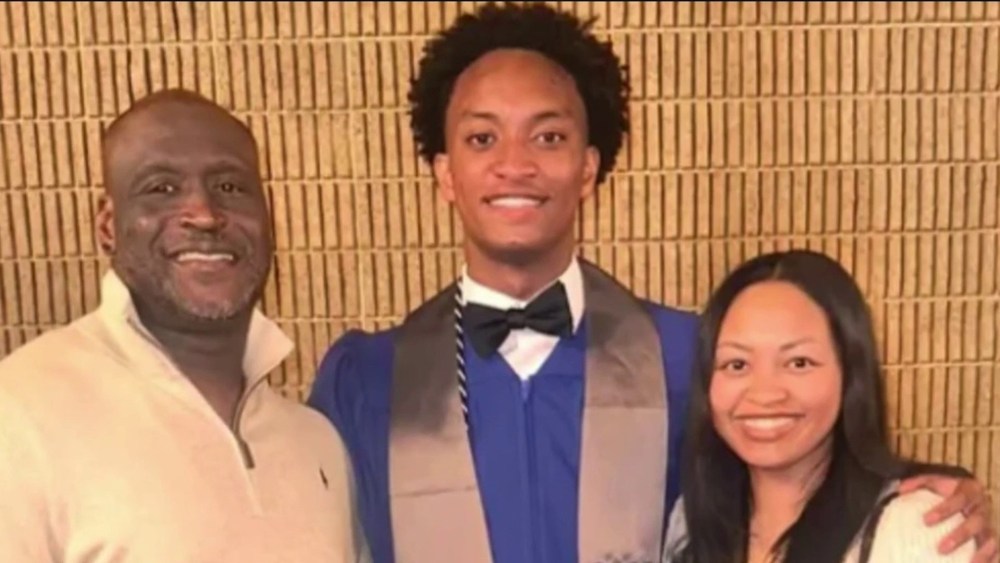
I have been sitting with the news about Nolan Wells, a Black teenager from the Mississippi Gulf Coast who went to party on a barrier island with a group of mostly white friends on July 4, never returned home and was later found dead. On Monday the district attorney in Jackson County, Mississippi, said the 23 members of a grand jury had unanimously voted against charging anyone with a crime in Wells’ death.
The cause of the teen’s death remains categorized as “undetermined,” and the grand jury found that his death was “consistent with drowning.” His family has long rejected the idea that he simply drowned, because he was a good swimmer and athletic.
How can a jury come to the conclusion of drowning, despite knowing that there was trauma to his body, and despite hearing many inconsistencies?”CHRISTINE WONSLEY, NOLAN WELLS’ MOTHER
At a Tuesday news conference, Wells’ mother, Christine Wonsley, asked, “How can a jury come to the conclusion of drowning, despite knowing that there was trauma to his body, and despite hearing many inconsistencies?”
An independent autopsy conducted by Wells’ family that was released in July also found that the cause and manner of his death were “undetermined,” pending further investigation.
The state’s official autopsy report determined that Wells’ airways and stomach were empty. “What this means is that there is no water in the stomach, there is no water in the lungs, and there is no water in the throat,” Liza Park, an attorney for Wells’ family said Thursday.
The more I process the news of no charges being filed in Wells’ death, the more I think about the difference between a justice
by Mike Ludwig | Sep 26, 2026 | Abolish ICE, Abolition, Alex Pretti, Amnesty International, Delia Ramirez, Department of Homeland Security, DHS, ICE, immigration, immigration jails, News, Organizing, Reimagining Safety Act, Renee Nicole Good
Echoing activists across the country, the global human rights watchdog Amnesty International has called on the United States government to abolish Immigrations and Customs Enforcement (ICE). Emerging from the #Not1More campaign organized by undocumented activists and groups like Puente and Juntos in 2014, and gaining momentum with concerted organizing by grassroots groups such as Mijente…
Source
by Charlie Herman | Sep 26, 2026 | Opinion
President Donald Trump has never been a typical politician. In his first campaign, he whiffed an easy question about nuclear weapons at a debate, failed to understand the need for a presidential transition and regularly expressed surprise that subjects like healthcare policy were complex.
But if there was one subject he was supposed to be an expert in, it was real estate. Trump built his reputation around it, from the towers and golf clubs that bear his name to “The Apprentice,” where he role-played a decisive mogul who knew how to make a deal.
Now, in his second term, Trump has undermined that reputation with his handling of the housing market. His policies have made it more expensive to build homes, more difficult for potential buyers to afford them and less likely that developers will build more.
Trump’s tariffs have raised the price of lumber, steel, appliances and other building materials, adding an estimated $10,900 to the cost of a typical new home. His immigration crackdown has worsened a construction-worker shortage, while his war with Iran has helped push up energy prices, inflation and mortgage rates. At the same time, his administration has cut Department of Housing and Urban Development staff and housing grants and proposed deep cuts to programs that help communities finance affordable homes.
The result is a housing policy that seems to have been designed by someone who knows the price of a penthouse but not the economics of building a single-family home.
White House tour
It was a visit featuring flattery over real conversations about serious issues confronting the U.S. and China: the Iran war, artificial intelligence, trade and tariffs, Taiwan and
by Jordan Rubin | Sep 26, 2026 | Deadline: Legal Blog, elections, Supreme Court, White House
When the Supreme Court’s GOP-appointed majority on Friday granted the Trump administration’s emergency request to use a citizenship database ahead of the midterm elections, the court noted a limitation on the ruling: the National Voter Registration Act, or NVRA, which bars states from systematically purging voters 90 days before federal elections.
Likewise, in her dissent for the court’s three Democratic appointees, Justice Ketanji Brown Jackson said the “bright side” of the ruling is its “minimal short-term impact,” because states can only conduct individualized voter roll maintenance ahead of November.
But in a footnote to Friday’s ruling that discussed the NVRA’s limitation on states ahead of federal elections, the majority recalled that the court will consider the scope of that provision in a case this coming term, Republican National Committee v. Mi Familia Vota.
One of the issues in that case is whether the law bars states from implementing programs within 90 days of federal elections to cancel the voting registrations of noncitizens.
“The parties in this case do not ask us to address that question and have not briefed it, and we do not need to decide it here,” the court said in the footnote Friday in the database case, Department of Homeland Security v. League of Women Voters.
So whatever impact the database ruling will have (or not have) for the midterms, it highlights that the broader issue isn’t going away in the months and years ahead.
RNC v. Mi Familia Vota is scheduled for oral argument in December, with a decision expected by July. The justices agreed to review the Republican-backed appeal in that case over opposition from Democrats and voting rights groups. It