by Jennifer Bouek | Jan 7, 2026 | Opinion, Politics
While the U.S. economy was half asleep over the holidays, many parents still had to work and, thus, many child care centers were still open. Now, low-income families and the child care centers that provide care and education for their children have another stressor on their plate: the threat of funding cuts.
On Dec. 26, 23-year-old YouTuber Nick Shirley and conservative lobbyist David Hoch posted a video to YouTube claiming to surface evidence of a $100 million fraud scandal involving subsidized child care centers in Minnesota. The duo’s video eventually resulted in President Donald Trump’s administration announcing a freezing of $10 billion in social services funds for five states led by Democrats, including Minnesota. And Minnesota Gov. Tim Walz, the former Democratic vice presidential candidate running for a third term as governor, announced Monday that he was abandoning that effort because of long-running scandals over fraud in the state’s social services, including child care, some of which have resulted in convictions.
Shirley’s video could lead to center closures and thousands of families across Minnesota losing access to child care.
The authors of this piece take fraud seriously. Still, because we study the limited amount of affordable quality child care nationwide, we know that the ripple effects of Shirley’s video could lead to center closures and thousands of families across Minnesota losing access to child care.
When Deputy Secretary of Health and Human Services Jim O’Neill posted to X last week that he had “turned off the money spigot,” he was referring to the federal funding Minnesota uses to offer child care subsidies for low-income and moderate-income families. This “spigot” is more like a rusty
by Jessica Levinson | Jan 7, 2026 | Opinion, Politics
The Supreme Court’s July 1, 2024, Trump v. United States decision, in which the court held that presidents enjoy immunity from criminal prosecution for official acts, was widely viewed as an enormous win for then-candidate Donald Trump, who was facing multiple criminal cases. That momentous decision arguably cleared the way for his reelection. But now that same decision has the potential to hand the Trump administration a great defeat in court — because it offers ousted Venezuelan President Nicolás Maduro a good defense in the case against him.
The 2024 Supreme Court decision could lead to a dismissal of charges against Maduro who is facing federal criminal charges.
Indeed, the 2024 Supreme Court decision could lead to a dismissal of charges against Maduro, who is facing federal criminal charges for, among other things, narco-terrorism conspiracy.
The Department of Justice alleges that Maduro used his official position and “leveraged government power to protect and promote illegal activity, including drug trafficking.” Based on the allegations in the indictment, at least some of Maduro’s purported criminal conduct could be seen as official acts, thus allowing Maduro to argue that he should enjoy the same protection afforded to Trump and any other president by the Supreme Court’s immunity decision.
In Trump v. United States, the court concluded that U.S. presidents must enjoy immunity from criminal liability for official acts — that is, actions taken while exercising core executive authority — to protect the independence of the presidency, give breathing room for presidential decision-making and guard against political retaliation and prosecutorial overreach. The decision drew a distinction between official acts, those taken pursuant to constitutional or statutory authority, and
by Steve Benen | Jan 6, 2026 | Maddowblog, Politics
It would be an overstatement to suggest that Minnesota’s aid fraud story is baseless. It’s not. Several years ago, federal prosecutors in the Biden Justice Department uncovered evidence of wrongdoing, and dozens of suspects, including some Somali Americans, were charged.
It was not, however, much of a national story. Minnesotans learned of the controversy ahead of the 2022 elections; Democrats, including Gov. Tim Walz, fared well anyway; and when Republicans tried to generate interest in the controversy when the governor was nominated for vice president, it went largely overlooked.
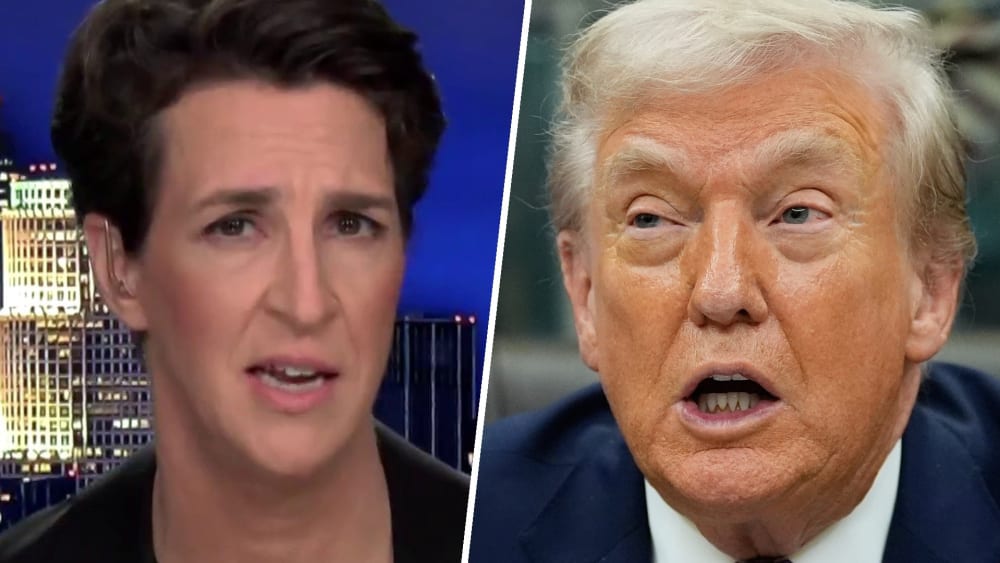
In recent months, however, the right breathed new light into the story — Paul Waldman recently made the case in an MS NOW piece that it fit nicely into Donald Trump’s desire “to foment racist and anti-immigrant hatred” — and the right’s propaganda machine turned up the volume to an astonishing degree, telling conservative voters that this 2022 controversy was a pressing and ongoing national scandal.
The drumbeat grew so loud that Walz, who was well on his way to winning a third term in the fall, announced that he’s no longer running for re-election.
Soon after the governor announced his decision, the president celebrated the news online — while suggesting that Walz’s exit wouldn’t be sufficient. Trump’s missive read:
Minnesota’s Corrupt Governor will possibly leave office before his Term is up but, in any event, will not be running again because he was caught, REDHANDED, along with Ilhan Omar, and others of his Somali friends, stealing Tens of Billions of Taxpayer Dollars. I feel certain the facts will come out, and they will reveal a seriously unscrupulous, and rich, group of ‘SLIMEBALLS.’ Governor Walz has
by Steve Benen | Jan 6, 2026 | Maddowblog, Politics
A couple of months into Donald Trump’s second term, the White House dispatched an uninvited delegation to Greenland as part of an apparent charm offensive. Vice President JD Vance, his wife and his colleagues hoped their visit to the island — which president had said he was determined to acquire — would make a good opening impression with locals.
That did not work, and officials in Greenland (and much of the public) made a series of efforts to demonstrate they did not want the U.S. delegation there. Trump nevertheless declared soon after, “We’ll get Greenland. Yeah, 100%.”
The Republican added that there was a “good possibility that we could do it without military force,” but Trump went on to say that he wasn’t going to “take anything off the table.”
Nearly a year later, the administration continues to insist on its radical vision. The New York Times reported:
Stephen Miller, a top aide to President Trump, asserted on Monday that Greenland rightfully belonged to the United States and that the Trump administration could seize the semiautonomous Danish territory if it wanted.
‘Nobody’s going to fight the United States militarily over the future of Greenland,’ Mr. Miller told Jake Tapper, the CNN host, after being asked repeatedly whether he would rule out using military force.
According to CNN’s transcript, the full context of Miller’s quote was, “The United States should have Greenland as part of the United States. There’s no need to even think or talk about this in the context that you’re asking, of a military operation. Nobody’s going to fight the United States militarily over the future of Greenland.”
In the same interview, Miller (sounding a
by Dr. Esther Choo | Jan 6, 2026 | Opinion, Politics
I didn’t really expect much from 2026, but it’s still discouraging that it’s only the first week of January, and I am feeling compelled to say that you shouldn’t quadruple the recommended dose of a medication.
In a Wall Street Journal interview published Jan. 1, President Donald Trump’s physician confirmed that Trump is taking a full dose of aspirin, 325 mg daily, for “cardiac prevention.” Trump told the newspaper, “They say aspirin is good for thinning out the blood, and I don’t want thick blood pouring through my heart. I want nice, thin blood pouring through my heart. Does that make sense?”
I don’t want thick blood pouring through my heart. I want nice, thin blood pouring through my heart.President Donald Trump
Aspirin doesn’t thin the blood — it is a platelet inhibitor that keeps clots from forming and blocking blood vessels. And a low-dose aspirin, — that is 81 mg — is recommended for some people to prevent a first heart attack or stroke. But Trump is taking four times that amount. “They’d rather have me take the smaller one,” he said. “I take the larger one, but I’ve done it for years, and what it does do is it causes bruising.”
For people’s Trump age, the harms of even a low-dose aspirin, including gastrointestinal bleeding, generally outweigh the benefits. So its routine use is generally not recommended by the U.S. Preventive Services Task Force (USPSTF) or the American College of Cardiology/American Heart Association (ACC/AHA) Task Force on Clinical Practice Guidelines.
There might be individual situations, including high risk for cardiovascular disease, that cause a physician to recommend 81 mg of aspirin daily
by Steve Benen | Jan 2, 2026 | Maddowblog, Politics
Two weeks ago, after Donald Trump’s handpicked allies claimed they had renamed The John F. Kennedy Memorial Center for the Performing Arts to include the incumbent president’s name, White House press secretary Karoline Leavitt pushed a curious boast: She insisted that the center’s board, stacked with Trump loyalists, had “voted unanimously” to make the change.
It wasn’t long before the claim was called into question. By law, a handful of congressional lawmakers from both parties sit on the Kennedy Center’s board, including Democratic Rep. Joyce Beatty of Ohio, who serves as an ex officio member, and who tried to participate in the meeting and voice her opposition.
When she tried to object to the process, the congresswoman found that she had been placed on mute. Beatty filed a federal lawsuit last week.
With this in mind, was Leavitt simply lying in her statement? As it turns out, it depends on what one means by “unanimous.” The Washington Post reported:
The Kennedy Center adopted bylaws earlier this year that limited voting to presidentially appointed trustees, a move that preceded a unanimous decision this month by board members installed by President Donald Trump to add his name to the center.
The current bylaws, obtained by The Washington Post, were revised in May to specify that board members designated by Congress — known as ex officio members — could not vote or count toward a quorum. Legal experts say the move may conflict with the institution’s charter.
In other words, after the president seized control over the cultural institution early last year, he chose loyalists to serve on its traditionally bipartisan board. Those board members then decided that their