by Jessica Levinson | Feb 22, 2026 | Opinion, Politics
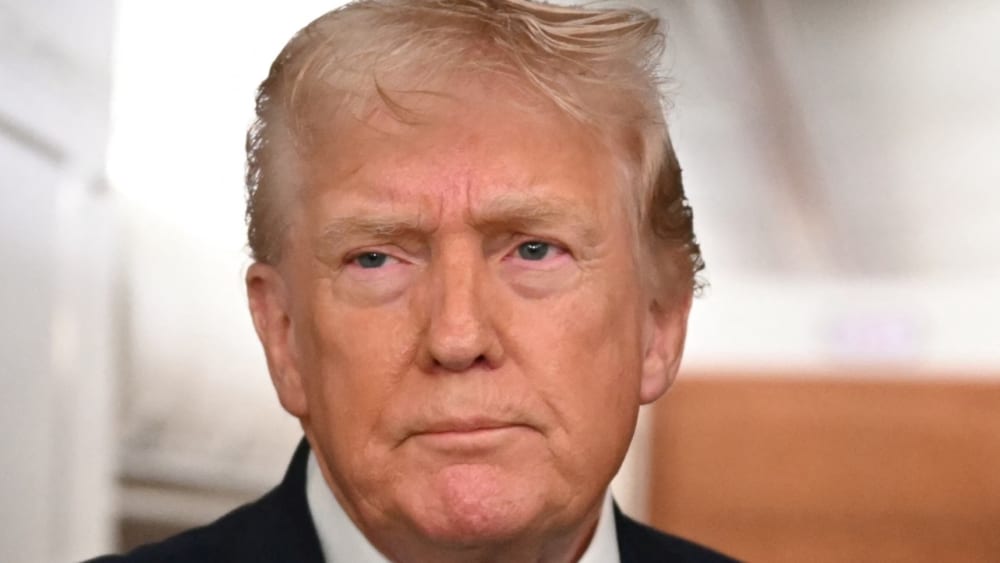
The Supreme Court’s 6-3 decision Friday invalidating President Donald Trump’s sweeping and so-called “reciprocal tariffs” is, on one level, a classic separation-of-powers ruling. The Constitution gives Congress, not the president, the power to impose taxes and regulate commerce. Congress can certainly give some of this power away, but it needs to be clear when it does. The court held that when Congress enacted the International Emergency Economic Powers Act, the statute that Trump relied on to impose these tariffs, lawmakers did not, in fact, empower any president to impose tariffs.
The ink on the Supreme Court’s ruling was barely dry when Trump announced that he plans to impose a 10% global tariff on all of the United States’ trading partners.
But as much as the ruling angered Trump — he called the justices who ruled against him “a disgrace to our nation,” “fools” and “lap dogs” — the decision is perhaps merely Act II in the long play called “Trump’s tariff project.” After all, the ink on the Supreme Court’s ruling was barely dry when Trump announced that he plans to impose a 10% global tariff on all of the United States’ trading partners under Section 122 of the Trade Act of 1974. Saturday, he announced that global tariff would be an even higher 15%.
The court’s conclusion is legally and economically significant, but perhaps structurally narrow. The court did not say Trump or any other president can never impose tariffs. It said a president cannot impose tariffs via the International Emergency Economic Powers Act. And despite his finding that Trump could use the IEEP, Justice Brett Kavanaugh’s dissent reads like a roadmap
by Natalia Mehlman Petrzela | Feb 22, 2026 | Opinion, Politics
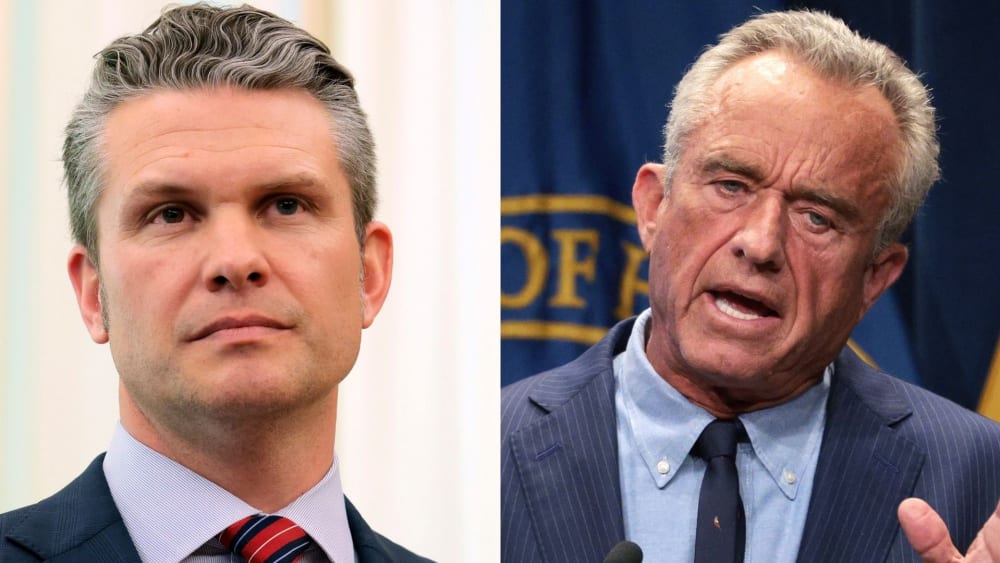
The Trump administration’s latest public health announcement features Secretary of Health and Human Services Robert F. Kennedy Jr. and bad-boy musician Kid Rock participating in various wellness activities — including the sauna, pickleball, cold plunge and fan bike — at moments, curiously, wearing jeans and guzzling tall glasses of whole milk. Much of the subsequent commentary has emphasized how revolting and ridiculous the spectacle is by mocking their push-ups, disdaining Kid Rock’s deconditioned “skinny fat” physique, imagining the bacterial buildup in sweaty denim and noting the unintentionally homoerotic “Heated Rivalry” energy of their intimate escapade, set primarily in a wood-paneled spa and a blue-lit grotto.
Much of the subsequent commentary has emphasized how revolting and ridiculous the spectacle is.
All jokes aside, the sobering fact is that the RFK Jr.-Kid Rock video isn’t just another example of questionable online fitness content, but an official message from our federal government, paid for with our tax dollars, which advises us to “work out and eat real food” even as it cuts science funding and SNAP benefits and generally undermines other bedrocks of our public health establishment.
This stunt is more than just a disgusting distraction; it signals the dark reality of what MAHA — Make America Healthy Again — now unapologetically embraces, rather than what it might have been. Rather than promising a wholesome, if highly idealized, world in which individual fitness and diet choices offer all Americans who are willing to work for it a path to civic and moral salvation, this video makes clear that to Kid Rock, RFK Jr. and the administration behind them, fitness and food are primarily props for alpha-male preening, entirely
by Steve Benen | Feb 20, 2026 | Maddowblog, Politics
For a president obsessed with self-aggrandizement and self-glorification, Donald Trump has reason to be pleased with recent developments. Indeed, it has been challenging to keep up with the many things the Republican and his allies have applied his name to in recent months.
They’ve added Trump’s name to the Kennedy Center and the Institute of Peace, announced the construction of “Trump-class” battleships, unveiled a commemorative legal-tender coin that will feature his face on both sides and launched “Trump Gold Cards,” “Trump Accounts” and “TrumpRx” (the government’s new drug-pricing website). By some accounts, the president expects the forthcoming White House ballroom to bear his name, too.
But wait, there’s more. Trump wants a football stadium in Washington, D.C., to be named after him, the nation’s next-generation fighter jet will have an “F-47” designation in honor of him (he is the nation’s 47th president) and training for incoming Immigration and Customs Enforcement agents was reduced from 50 days to 47 days for the same reason.
The Republican also recently said it’s “not too late” to change the name of the Gulf of Mexico (which he has attempted to rename once already) to the “Gulf of Trump.”
And now, Politico reported on the latest addition to the growing list:
Florida lawmakers gave final approval Thursday to legislation that would rename Palm Beach International Airport after President Donald Trump.
The proposal will now arrive on Gov. Ron DeSantis’ desk, as the Legislature works out how much it wants to spend — possibly upward of $5.5 million — on a massive rebranding at the airport mere minutes away from Mar-a-Lago.
It’s worth emphasizing for context that Trump apparently wanted to change the
by Steve Benen | Feb 19, 2026 | Maddowblog, Politics
When Robert F. Kennedy Jr. was on the campaign trail last year, the conspiracy theorist delivered a promise to voters: If he joined President Donald Trump’s team, he would “ban the worst agricultural chemicals.”
About a year later, in November 2025, the Republican administration advanced a plan to approve agricultural pesticides containing “forever chemicals” as an active ingredient, despite concerns raised by some scientists and environmental activists. Kennedy, in his capacity as Trump’s health and human services secretary, bit his tongue.
This year, the underlying dynamic has reached a new level. The New York Times reported:
President Trump issued an executive order late Wednesday aimed at spurring the domestic production of glyphosate, a widely used weedkiller that has figured in health lawsuits.
The move immediately set off alarms among supporters of Health Secretary Robert F. Kennedy Jr.’s ‘Make America Healthy Again’ movement, and appeared to put Mr. Kennedy in an awkward position.
As the report explains, glyphosate is the active ingredient in Roundup, which has been the target of tens of thousands of lawsuits that claim it causes non-Hodgkin lymphoma.
Kennedy is aware of this: Years before joining Trump’s team, he was an environmental lawyer who, among other things, sued the company that makes Roundup. In fact, Kennedy helped win a $289 million jury verdict against the company.
That was in 2018. In 2026, the man who leads the Department of Health and Human Services endorsed Trump’s latest executive order.
If the circumstances sound familiar, it’s not your imagination. In September, Kennedy, who vowed to “ban the worst agricultural chemicals,” unveiled a long-awaited “Make America Healthy Again” report that largely ignored pesticides.
“To many scientists — and some of
by Steve Benen | Feb 19, 2026 | Maddowblog, Politics
The latest revelations from the files related to Jeffrey Epstein have done far more than just alter the American political discourse. Public disclosures have also led to resignations and investigations spanning from boardrooms to academia to governmental offices abroad.
But by any fair measure, the most dramatic development to date is the arrest of Andrew Mountbatten-Windsor, better known as the United Kingdom’s former Prince Andrew. The Thames Valley Police took the former royal into custody on Thursday morning on suspicion of misconduct in public office. While the specific details of the criminal allegations are not yet known, BBC News reported that the arrest “comes after Thames Valley Police said they were assessing a complaint over the alleged sharing of confidential material by the former prince” with the late sex offender.
Time will tell what becomes of the criminal case and its potential implications, though Mountbatten-Windsor’s arrest renewed a larger conversation about accountability, and who’s held responsible for alleged wrongdoing and who is not.
Indeed, right around the time the world was learning of the former prince’s arrest, the public also learned that former South Korean President Yoon Suk Yeol was sentenced to life imprisonment, having been convicted of overseeing a 2024 insurrection attempt that sparked a constitutional crisis in the country.
One week earlier, former Norwegian Prime Minister Thorbjørn Jagland was charged with “gross corruption” over his Epstein ties.
Three months earlier, former Brazilian President Jair Bolsonaro, having been convicted of plotting what was effectively a coup, began a 27-year prison sentence.
A month before that, former French President Nicolas Sarkozy began a five-year sentence, having been found guilty of criminal association for attempting to use
by Steve Benen | Feb 17, 2026 | Maddowblog, Politics
Rep. Randy Fine’s track record of peddling Islamophobic rhetoric was already well established, so few were surprised when the Florida Republican declared online on Sunday, “If they force us to choose, the choice between dogs and Muslims is not a difficult one.”
The comments sparked a fresh round of calls for the far-right congressman’s resignation (which he’ll ignore), and that follow related bigotry from Republican Sen. Tommy Tuberville of Alabama, who recently called for the U.S. to deport Muslims because of their religion.
This dovetailed with an abrupt GOP reprise of anti-Muslim nonsense from 12 years ago with proposals to ban sharia law.
Then last week The New York Times reported:
Republican officials and candidates in Texas have shifted their rhetorical attack lines from the border fears that dominated recent elections to the state’s growing Muslim population, with language that echoes the aftermath of the terror attacks of Sept. 11, 2001.
The rise of anti-Muslim rhetoric has unnerved many in the state’s Islamic community while sending signals to Republicans outside Texas who might be searching for rhetorical targets now that the nation’s southwestern border has grown quiet.
As recently as November 2024, Republicans made gains with Arab and Muslim voters. The party doesn’t seem especially eager to return the favor.
To the contrary, GOP officials appear to be sending an unmistakable signal: In the contemporary Republican Party, anti-Muslim attitudes are, at a minimum, tolerated, if not encouraged.
There’s a reason the organization that used to be Arab Americans for Trump decided to change its name.
The Bulwark’s Joe Perticone recently wrote, “Almost a decade removed from President Donald Trump’s attempt to ban Muslims from entering the country during his