by Anthony Coley | Mar 5, 2026 | Opinion, Politics
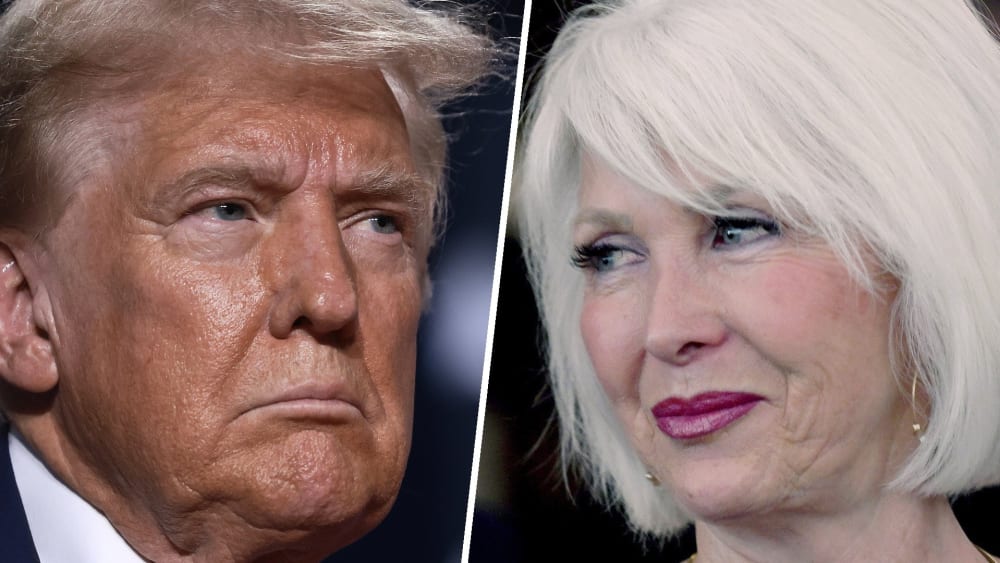
Mercy should follow genuine remorse. Genuine remorse means taking responsibility for your actions. Yet, after her conviction for allowing the breach of election equipment she was sworn to protect, Tina Peters, a former Mesa County election clerk, chose defiance. The day after her conviction, Peters appeared on Trump adviser Steve Bannon’s “War Room” podcast and promised to keep fighting, doubling down on her claims about foreign vote-flipping software tied to Serbia. Months later, at the hearing where she was sentenced to nine years in prison, a Colorado state judge said he was convinced she’d do it all over again.
But Colorado Gov. Jared Polis, a Democrat, has said he’s considering a clemency petition from Peters — not because she is repentant, and not because the merits of her case demand that he take a second look. He’s looking at her case only because of political pressure applied by President Donald Trump — even if he says his concern is that the nine-year sentence the 70-year-old is serving is too “harsh.”
In a past version of America, people have gone to jail for that. Isn’t that something people should go to jail for? JARED POLIS IN SEPTEMBER, SPEAKING OF TINA PETERS
In September, Polis didn’t hedge when asked about Peters’ sentence. “In a past version of America, people have gone to jail for that,” he said. “Isn’t that something people should go to jail for?” That was the right answer. That was a governor who understood what was at stake.
Then Trump turned up the heat. He withheld disaster funding, attempted to cancel more than $100 million in transportation grants and vetoed legislation that would
by Steve Benen | Mar 4, 2026 | Iran Tensions, Maddowblog, Politics
During an Oval Office event with German Chancellor Friedrich Merz on Tuesday, Donald Trump did something he hadn’t done since launching the war in Iran a few days earlier: The president fielded some questions from reporters in public.
The first line of inquiry was a notable one: “Mr. President, what’s the worst-case scenario that you have planned for in Iran?” a reporter asked.
By all appearances, it wasn’t a question he’d previously considered in any meaningful detail.
“I guess the worst case would be we do this and then somebody takes over who’s as bad as the previous person, right? That could happen.”President Trump responds to a question on potential consequences of Iran War.— MS NOW (@ms.now) 2026-03-03T17:23:46.140Z
The Republican’s response meandered for a while, though Trump ultimately arrived at an answer: “I guess the worst case would be we do this and then somebody takes over who’s as bad as the previous person, right? That could happen. We don’t want that to happen. That would probably be the worst. You go through this and then in five years, you realize you put somebody in who is no better. … I would say that would be about the worst.”
Part of what made the president’s comments notable was the fact that he publicly acknowledged, for the first time, that failure is a distinct possibility. In fact, just days into the deadly military conflict, Trump can apparently envision a near future in which the entire operation is in vain, and from the United States’ perspective, we’re no better off in five years than we were last week.
But there’s another element to this that’s even more important:
by Steve Benen | Mar 4, 2026 | 2026 election, Maddowblog, Politics
There were all kinds of closely watched elections this week in Texas, Arkansas and North Carolina, up and down the ballot, but there was only one race in which one party lost a seat to the other. That contest was in Arkansas, and it delivered another round of good news for Democrats. The Hill reported:
Democrat Alex Holladay is projected to win the special election to represent Arkansas’s House District 70, edging out Republican Bo Renshaw, according to Decision Desk HQ. […]
Holladay’s victory does not change control of the state’s lower legislative chamber, where Republicans have held a 80-19 majority. But the Democratic pickup could matter for appropriations bills, which require a 75-percent supermajority vote from both chambers.
Arkansas is clearly one of the nation’s more reliably red states, but Holladay was running in a politically quirky area: According to calculations from The Downballot, Donald Trump carried this district by 4 points in 2020, but Kamala Harris won the same district by 2 points in the 2024 cycle.
As the dust settled on this week’s special election, Holladay overperformed, winning by double digits.
This has been happening a lot lately. Indeed, for Democrats, 2026 is off to a very encouraging start: Two of the party’s candidates won lopsided victories in two special elections in Minnesota, the first two contests of the year, restoring the state House to an even partisan split.
Soon after, in Texas, Republicans invested a considerable amount of resources to keep a state Senate seat in the suburbs of Fort Worth. They failed: Democrat Taylor Rehmet, a union leader and an Air Force veteran, won a double-digit victory in a district Trump
by Anthony Coley | Mar 3, 2026 | Opinion, Politics
After American and Israeli forces bombed its nuclear facilities, Iran launched retaliatory missile and drone strikes against U.S. military assets across the Gulf — targeting bases in Qatar, Bahrain, Kuwait and the United Arab Emirates — and has vowed there are more to come. The question isn’t whether Tehran will act again — it’s whether we are prepared to stop an attack, especially in the homeland.
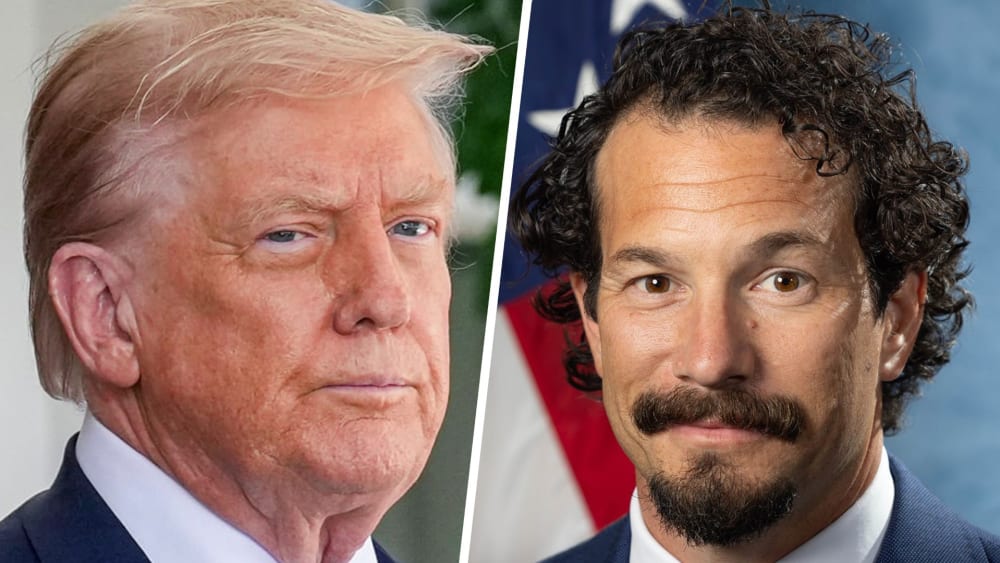
When Charlie Kirk was assassinated in September, I spoke with a former national security official — someone who handled the most serious threats this country faces — about how President Joe Biden’s Justice Department would have responded operationally. That former official’s answer was immediate: Call Steve Jensen and Brian Driscoll, two FBI leaders with decades of domestic terrorism experience and critical incident expertise between them.
The question isn’t whether Tehran will act again — it’s whether we are prepared to stop an attack, especially in the homeland.
But by that point, Driscoll, a former acting FBI director, and Jensen, who was leading the Washington, D.C., field, had already been among the senior FBI agents and national security officials that Kash Patel’s FBI had fired — not for cause or misconduct, but for failing the only test that matters in Trump’s Washington: blind loyalty to Trump. MS NOW reported in August that according to a dozen current and former FBI officials who declined to be named for fear of retaliation, Driscoll and Jensen were dismissed for refusing to fire a subordinate who had been targeted for political reasons.
And if those two firings affected an investigation into a crime the government now alleges was committed by a lone gunman,
by Steve Benen | Mar 2, 2026 | Iran Tensions, Maddowblog, Politics
About a week ago, when there was still some question about whether Donald Trump would launch a military offensive in Iran, The New York Times reported, “President Trump said Friday he might use them in a limited strike to pressure Iran to end its nuclear program. Trump badly wants that deal, which his predecessors chased — and never realized.”
Strictly speaking, that wasn’t quite right. One of the Republican’s recent predecessors, Barack Obama, also chased an agreement with Iran over its nuclear program, and unlike Trump (the self-professed world-class dealmaker), the Democrat actually succeeded.
Indeed, that historic breakthrough — to my mind, the greatest feat of international diplomacy since the end of the Cold War — is relevant anew given the ongoing military offensive in Iran.
It wasn’t one of the centerpiece issues of the 2024 presidential race, but then-candidate Trump spent much of the 2024 election cycle claiming he’d nearly completed a nuclear agreement with Iran but ran out of time before leaving the White House in early 2021. Those claims were difficult to believe, but just as notably, they overlooked a key detail: Iran had already reached a nuclear agreement with the U.S. It was called the Joint Comprehensive Plan of Action (JCPOA); it was one of Obama’s most impressive foreign policy accomplishments; and it came to be known as the Iran nuclear deal.
The international agreement with Iran did exactly what it set out to do: The policy dramatically curtailed Tehran’s nuclear ambitions and established a rigorous system of monitoring and verification. Once the policy took effect, each of the parties agreed that the participants were holding up their end of
by Diane Goldstein | Mar 2, 2026 | Opinion, Politics
There are things that stay with you after you’ve investigated sex crimes. Even decades after leaving policing, I often think of the disturbing evidence that shook my faith in humanity, the chilling interviews with survivors and witnesses, and the deep, shared trauma these cases left behind. What has always haunted me most, though, is the inescapable knowledge that accountability for these violations remains the exception rather than the rule.
Accountability for these violations remains the exception rather than the rule.
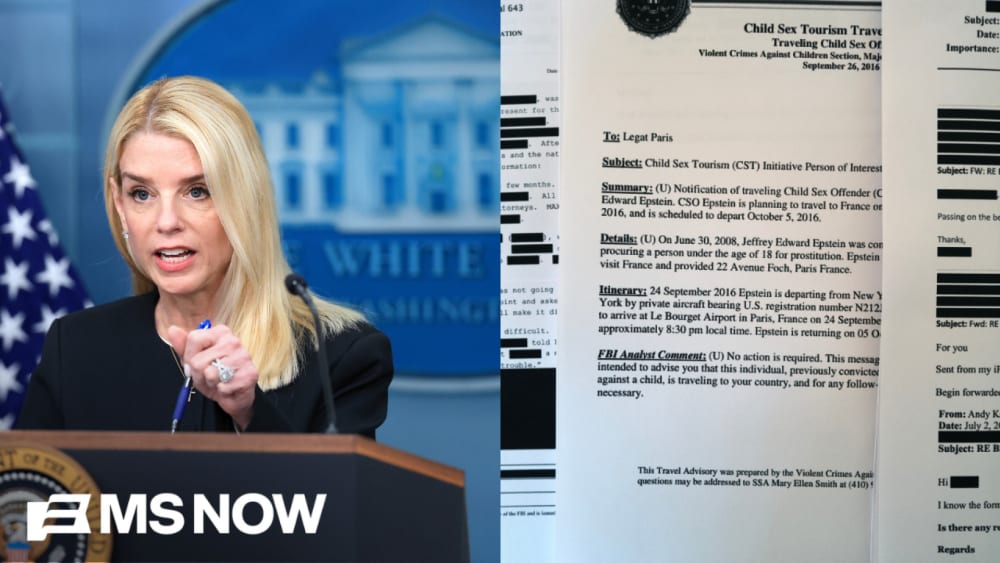
The Department of Justice’s recent release of documents tied to the late Jeffrey Epstein, who was a convicted sex offender, has again forced me to confront that painful reality. Cynicism about the justice system’s treatment of sex crimes is not new. But the government’s handling of the Epstein case — including the way it has exposed the identities of some victims and redacted the names of some of Epstein’s alleged co-conspirators — threatens to push this critique into something far more corrosive and to reinforce the already prevalent belief that the system is fundamentally aligned to shield the powerful while further harming victims.
This conspicuous inversion of the justice system’s stated mission helps explain why many victims of sex crimes hesitate to come forward at all. When deciding whether to report, survivors must weigh a process that can expose them to shame, public scrutiny and lasting collateral consequences. And for those who do report, there is little reason to be confident such reporting will lead to accountability. Clearance rates for sex crimes have declined sharply since 1980. In some U.S. cities, less than 4% of reported rapes, sexual assaults and child sex abuse