by Austin Sarat | Apr 28, 2026 | Opinion, Politics
After the Justice Department released a report Friday to “Restore and Strengthen the Federal Death Penalty,” the national and international public rightly focused on the DOJ’s recommendation to bring back the firing squad as an execution method. The firing squad is a particularly brutal way to put someone to death. Unlike lethal injection, which seeks to mask the horror it inflicts on the executed, the firing squad turns execution into a spectacle of cruelty for those who witness it.
The firing squad is a particularly brutal way to put someone to death.
But the first mention of a firing squad appears on page 30 of Acting Attorney General Todd Blanche’s 52-page document. The parts of the report that precede and follow the first mention of that execution method are even more troubling. There, we find the DOJ whitewashing the racism and arbitrariness that have long characterized the federal death penalty and laying out a plan to dramatically curtail the rights of people held on death row.
As much as death penalty opponents are right to call out Blanche and the DOJ for embracing the barbarity of the firing squad, they need to also highlight the department’s seeming eagerness to kill people, its dismissal of evidence that the death penalty is unfairly applied and its complete disdain for the previous administration’s capital punishment record.
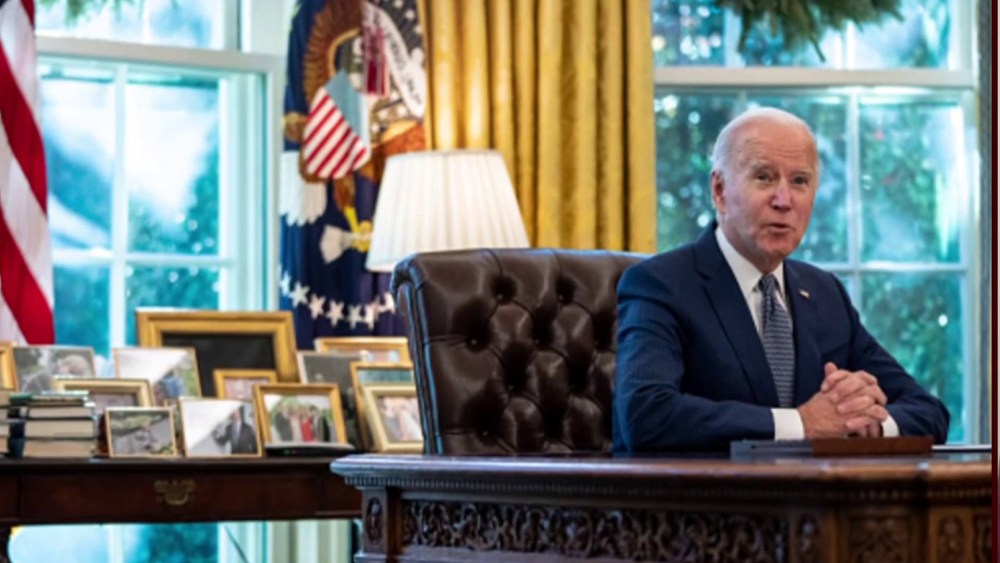
Indeed, the report is mostly a political hit job on former President Joe Biden from a White House that remains fixated on trying to discredit him and his administration. While seeking to revive federal executions, it devotes page after page to attacking the former president and former Attorney General Merrick
by Hussein Ibish | Apr 27, 2026 | Opinion
The killing of veteran Lebanese journalist Amal Khalil last Wednesday represents among the worst elements of the renewed fighting between Israel and Hezbollah, particularly the dangers to civilians posed by Israel’s new “buffer zone.” And if Israeli military officials are to be believed, the goal may be to create a huge area under permanent Israeli control.
On March 1, Hezbollah launched a salvo of projectiles, after which Israel demanded all civilians leave all of southern Lebanon that lies south of the Litani River. Over a million people left their homes and flooded into Beirut. While working as a journalist within that zone, Khalil was killed by IDF troops (and a colleague of hers was severely injured).
Khalil’s employer, Lebanese government officials and rights groups said Khalil’s car was clearly marked and rescue workers were prevented from reaching her for hours as she slowly died under rubble. Israeli officials said they were in a car that left a Hezbollah-linked building driving toward the “yellow line” delineation of a new “buffer zone” in southern Lebanon.
The overwhelming backlash I witnessed created political space for a clear repudiation of Hezbollah’s militia status and authorization for the Lebanese Armed Forces to disarm the group.
Israel has cast Khalil as a Hezbollah operative and, thus, a legitimate target. She worked for Al Akhbar, a newspaper with pro-Hezbollah sympathies, but there is no evidence Khalil was anything other than a reporter. It cannot go unnoticed that Israel has a long history of killing troublesome journalists such as Shireen Abu Akhleh, a Palestinian American Al Jazeera reporter who was shot to death in 2022 while wearing a clearly marked blue vest labeled
by Robert D’Amico | Apr 27, 2026 | Opinion
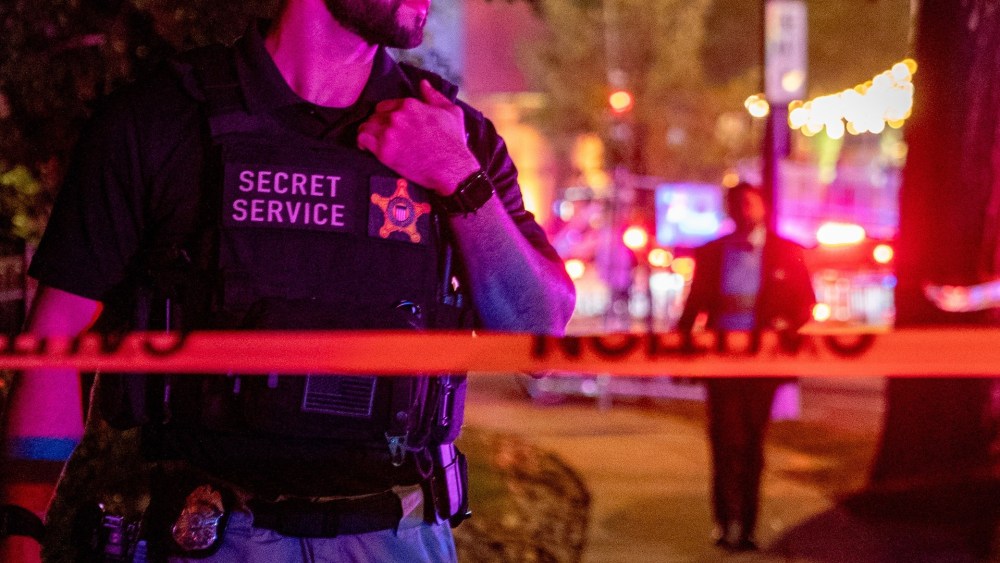
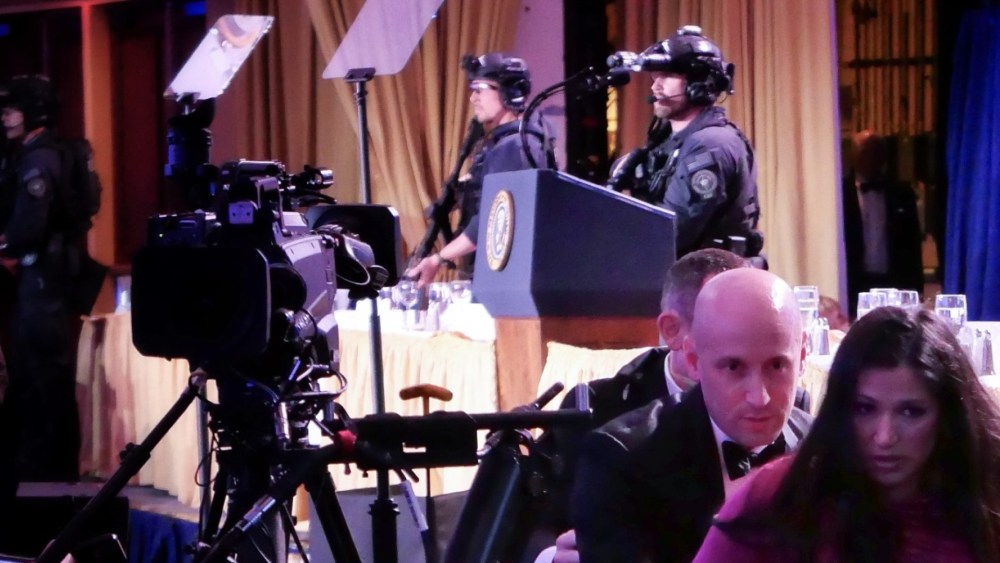
Watch the surveillance footage from Saturday night’s breach at the White House Correspondents’ Dinner and you’ll see that the gunman doesn’t slip through a gap or show any sophisticated exploitation of a missed security vulnerability. He runs straight through a checkpoint in plain sight past officers who fail to block his path in time. That, in itself, is the essence of what went wrong.
Acting Attorney General Todd Blanche called it “a massive security success story” during a Sunday appearance on CNN and President Donald Trump praised the Secret Service in a press conference following the event. But although the gunman was ultimately apprehended, he also breached the perimeter of an event attended by the president, the vice president, the secretary of defense, the acting attorney general, the FBI director and dozens of members of Congress. An officer was shot. It’s fair to ask what “success” means in that context.
In the video, the gunman had a clear runway and a running start. The officers never had a chance.
I spent more than 35 years as an FBI agent and U.S. Marine, before retiring from government service to work as a security consultant. I’ve spent a career in environments where security decisions carry consequences. What happened Saturday night reflects completely avoidable failures.
Start with the checkpoint. It was set in a straight line, with no obstacles, no serpentine (think of the lines that snake from side to side in an airport check-in queue) — nothing to slow a person down.
That’s not an appropriate control point to protect anyone, let alone the president. A proper approach forces movement, buys time, creates friction. In the video,
by Zeeshan Aleem | Apr 26, 2026 | Opinion
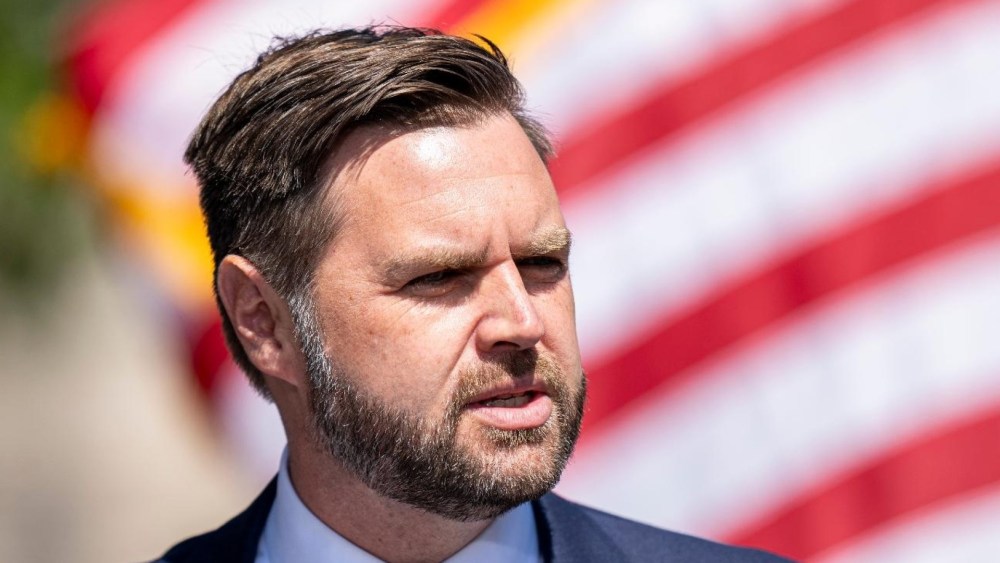
Sarah Longwell, the publisher of The Bulwark, runs weekly focus groups of Trump voters to see how their views are changing over time. She has recently noticed a surprising trend: When she asks voters about whom they’d like to see as a future president, Secretary of State Marco Rubio is garnering what she describes as a “strange new respect” from participants. Simultaneously, Vice President JD Vance is receiving more and more criticism.
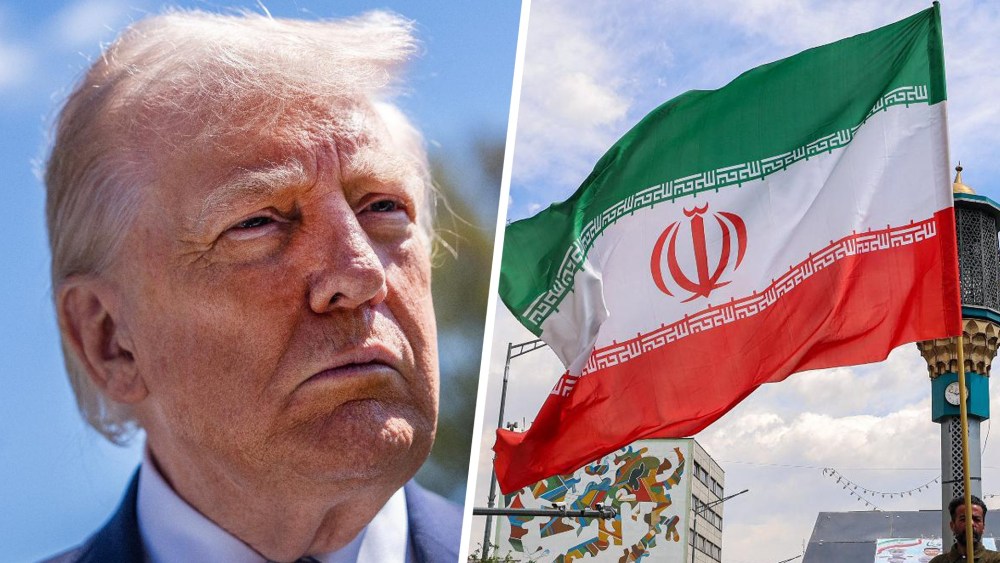
That doesn’t necessarily mean Rubio has a good shot in a potential future presidential run, or that Vance will lose his lead in 2028 polling. But it does tell us something about how Trump supporters see the current moment. It seems likely that, at a time when President Donald Trump is increasingly over his head with an unpopular war and rising energy prices, many are craving what Rubio symbolizes as a competent pre-Trump-era Republican.
Rubio’s growing popularity plausibly represents a growing appetite for normie politics.
As Longwell explained in an article this week for The Atlantic, Trump voter focus group participants are increasingly describing Rubio as a “stabilizing” force with impressive capabilities. She quotes a focus group participant — Boris from Texas — praising Rubio as “a real statesman.” Andrea from Georgia says Rubio has been “killing it from an international policy perspective.” Dave from West Virginia says he believes Rubio is “doing a good job” and “speaks well” while “wearing multiple hats” — a reference to Rubio also holding the title of national security adviser. (He was also previously acting USAID administrator and acting archivist.)
The common theme is that Rubio’s star is rising based on the perception that he’s
by Anthony L. Fisher | Apr 26, 2026 | Opinion
In 1604, King James I of England wrote one of history’s most fervent anti-smoking tracts in response to the rising popularity of tobacco imported from the New World. Smoking, he concluded, was a “custome lothsome to the eye, hatefull to the Nose, harmefull to the braine, dangerous to the Lungs, and in the blacke stinking fume thereof, neerest resembling the horrible Stigian smoke of the pit that is bottomelesse.” [sic]
King James would have loved the new law set to be approved by King Charles III establishing a new generation in the United Kingdom that will be forbidden from purchasing tobacco for their entire lives. Specifically, the law makes it an offense to sell cigarettes, cigars, pipe or chewing tobacco, as well as various other forms of tobacco leaf, to anyone born after Jan. 1, 2009. This, its proponents say, will eventually lead to a smoke-free society, as the legal age for buying cigarettes rises inexorably until the last living smoker in the U.K. joins the choir invisible.
Australia provided a case study in how this could get out of control.
It’s not hard to imagine how this neat solution may falter. While no one is against banning the sale of cigarettes to teenagers, the situation will become increasingly absurd as today’s 17-year-olds age into maturity, creating a permanent division between adults allowed to buy tobacco and those who are prohibited. Supposedly, the day will come when a 50-year-old can buy a cigar from the tobacconist, but their 49-year-old friend must be turned away. Can one really expect this prohibition to be durably respected?
The U.K.’s new law takes an ultimately infantilizing view of
by Jonathan Capehart | Apr 26, 2026 | Opinion
Before Saturday, the routine at the many White House Correspondents’ Association dinners I’ve attended since 2000 has been the same. It’s “nerd prom” weekend in D.C. Before the dinner itself, journalists attend pre-parties wearing black tie. Then we file into the ballroom and chit-chat with friends, colleagues and others as we all find our tables.
Inside the Hilton ballroom, there’s the announcement of the vice president. Then, most years, there’s the announcement of the president of the United States and the first lady. With President Donald Trump in attendance Saturday night, this was how everything began. Like normal.
Until it wasn’t.
Before Saturday, I had never personally experienced a shooting event like this. Yet I intuitively knew what to do. Drop to the floor. Get under the table.
After the president and vice president entered, there was the trooping of the colors by members of the armed services with their flags and battle banners to the dais. The national anthem was sung and the colors were trooped out of the room.
A few remarks and then the dinner was underway. I was seated next to my MS NOW colleague Carol Leonnig. And then … POP, POP, POP, POP.
All of us dove for the floor. I don’t recall any screaming. How much of the silence in that room was learned behavior? This nation has endured hundreds of mass shootings just in the 20-plus years I’ve been attending this dinner — from politically or racially motivated events to other horrific slayings, like the deaths of eight children in Louisiana just last weekend. But I had never personally experienced a shooting event like this. Yet I intuitively knew