by Paul Waldman | May 24, 2026 | Opinion
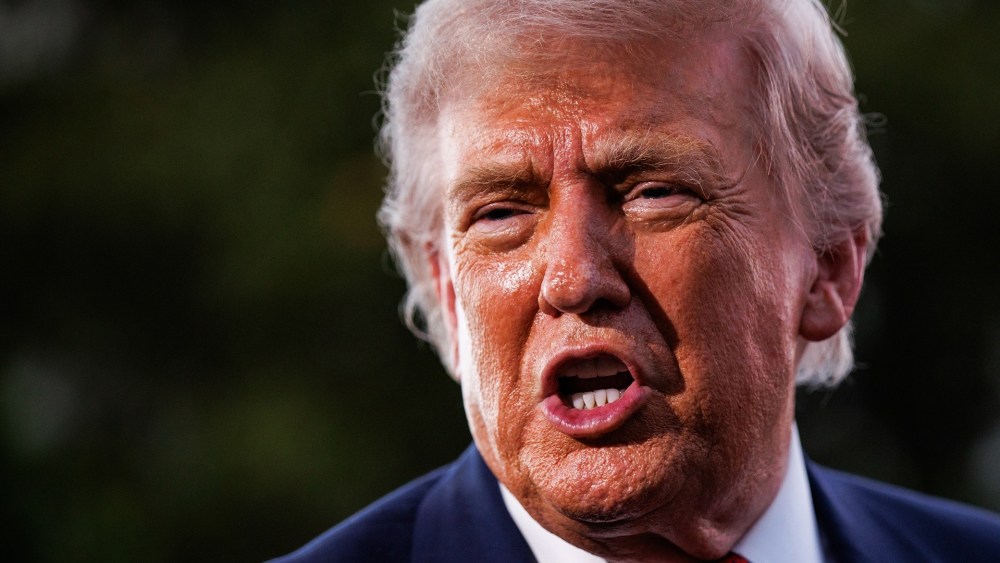
On the surface, it might appear that President Donald Trump is obsessed with being popular. He insists that his poll numbers are fantastic and rages against any poll showing otherwise. He likes to claim that his actions and statements are supported by all. (“When people hear me say it, everybody agrees.”) After a lifetime spent in endless pursuit of attention and validation, he must surely desire popularity above almost anything.
If that was once true, it no longer is the case. In fact, it’s hard to think of a president who cared as little about being popular as Donald Trump does now.
Congressional Republicans are feeling that Trump is hanging them out to dry.
Other presidents have taken political risks, but they thought they were serving a higher cause — saving lives, solving deep-rooted problems or safeguarding America’s interests. Today, Trump is making himself less popular on an almost daily basis, for the pettiest of reasons. His approval rating has plunged into the 30s, and he doesn’t seem to care. Americans think the economy is terrible, and Trump seems indifferent. Instead, he’s putting his time and attention into a series of projects that could not be better designed to make him look corrupt and out of touch.
First among them is his gold-plated ballroom, which two-thirds of the public opposes. Then there’s the gargantuan arch he wants to build in Virginia. Now, Trump’s Justice Department has announced the creation of a $1.8 billion slush fund for supporters of his who say the government was mean to them — including those who rampaged through the Capitol on Jan. 6, 2021.
That last item was too
by Ryan Teague Beckwith | May 24, 2026 | Opinion, White House
Solar power is the cheapest form of electricity to set up in most parts of the world. Tariffs are paid by U.S. importers, who pass along the costs to consumers. And noncitizen voting is extraordinarily rare.
These three statements are facts. You can verify them by looking at scientific research, listening to experts or just reading reliable news outlets.
Recent polls, however, show that substantial numbers of Republican voters simply don’t believe these statements. That’s bad for the country, because it’s harder for us to solve problems and decide how to move ahead when we can’t agree on the facts. It’s also bad for Republican politicians — and they have only themselves to blame.
Led by President Donald Trump, many members of the GOP in recent years have made their case by attacking the underlying facts, making baseless claims and undermining the credibility of independent experts who could contradict them. The result is a party that is increasingly out of touch with voters outside its ideological bubble and unable to come up with good arguments or practical solutions.
Just look at the numbers:
In a January poll by Morning Consult, 51% of Republicans said tariffs are a “fee foreigners pay for selling products to the United States,” while 38% more accurately said they are “a tax on foreign products that Americans buy.”
In a March poll by the Pew Research Center, 43% of Republicans said that solar power is more expensive to consumers than most other energy sources, while only 24% said that it’s cheaper.
In an April poll by Ipsos, 82% of Republicans said that large numbers of noncitizens cast fraudulent ballots in U.S. elections, compared
by Duncan Levin | May 24, 2026 | Opinion
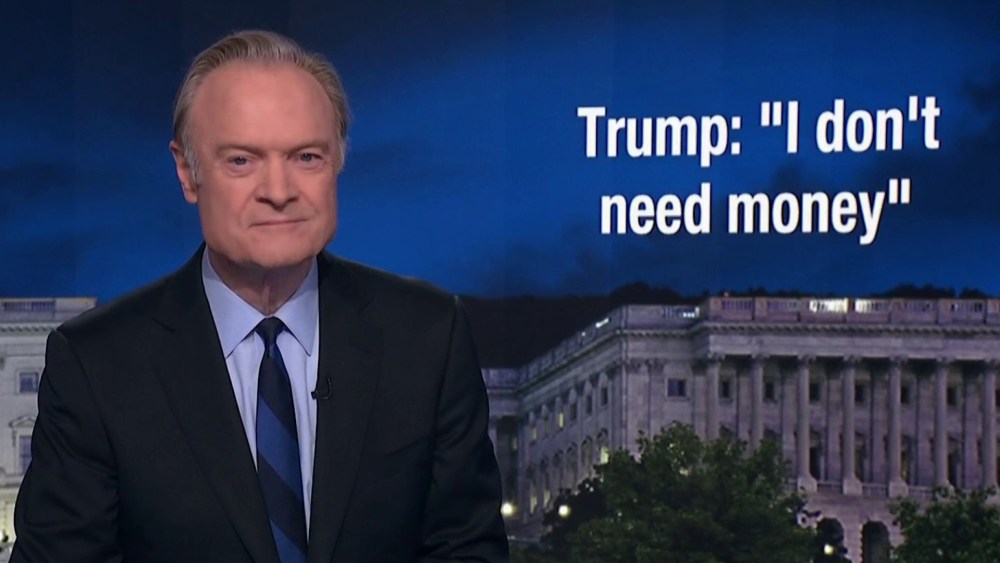
Acting Attorney General Todd Blanche went before Congress for a budget hearing. His testimony became a portrait of institutional collapse.
Blanche’s appearance on Tuesday touched off a political storm over the nearly $1.8 billion fund that could benefit President Donald Trump’s political allies — a controversy serious enough that Blanche returned to the Hill on Thursday to privately brief Republican senators. Even as the political battle rages, however, the fight over the fund should not obscure the larger issue Blanche’s testimony exposed: what the Department of Justice now appears to stand for.
Play
GOP senators scrap vote on Trump budget bill after meeting with Todd Blanche
May 21, 2026 / 02:09
Blanche did little to quell concerns that the Justice Department is no longer an independent law enforcement agency charged with serving the public interest but, increasingly, a legal apparatus organized around Trump’s grievances, allies and personal history.
The most revealing issue — the one that has been roiling Washington this week — was the nearly $1.8 billion “Anti-Weaponization Fund,” created as part of a settlement related to Trump’s lawsuit over leaked tax records. The fund is supposed to compensate people who say they were politically targeted by prior Justice Departments. But under questioning from lawmakers, Blanche declined to rule out payments to people who had been convicted of assaulting police officers at the U.S. Capitol on Jan. 6, 2021. He also declined to say that Trump campaign donors would be excluded from accessing the fund, which will be administered by a five-member commission appointed by Blanche.
It was enough to make Republican Sen. Mitch McConnell, the former longtime majority leader, declare: “So the nation’s top law
by Robert W. Cross | May 24, 2026 | Opinion
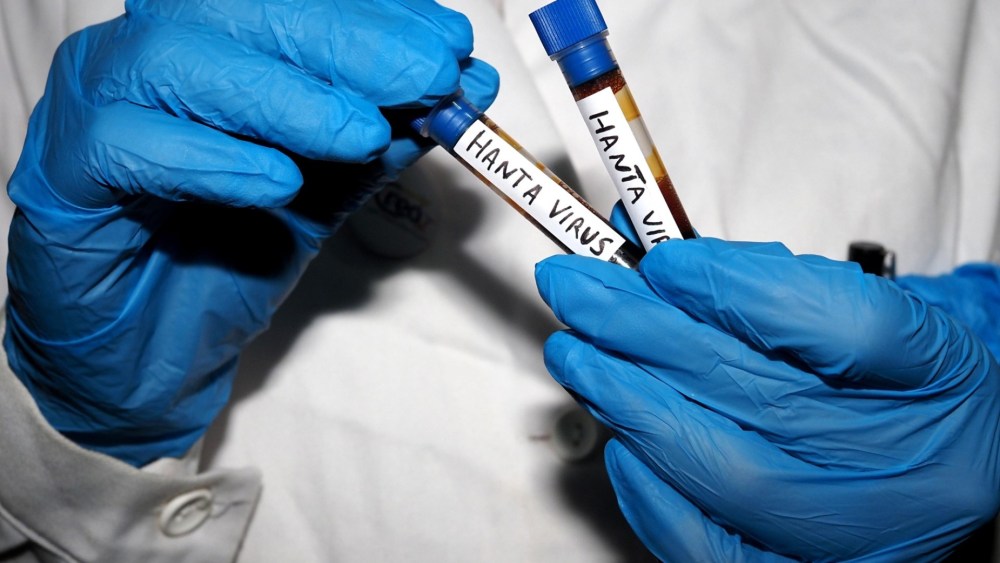
I am a virologist. I have spent much of my career studying high-consequence microbes such as the Ebola virus, Lassa fever virus and hantaviruses, including the Andes species confirmed in the recent outbreak. My goal has always been to understand how such viruses make us sick and to use that information to develop treatments or, ideally, to prevent infections altogether.
In this type of work, governmental support for research is critical. The potential threat of outbreaks is clear in recent headlines about the Ebola virus outbreak in the Democratic Republic of Congo and Uganda, and, closer to home, one of the American cruise ship passengers potentially exposed to the hantavirus outbreak being ordered to remain in quarantine facilities in Nebraska.
Although much remains to be learned about hantaviruses, there are some things we know.
In 2020, a group of colleagues and I studying hantaviruses were approved for five years of funding through the National Institutes of Health/National Institute of Allergy and Infectious Diseases’ Centers for Research in Emerging Infectious Diseases program. We closely collaborated with Argentine scientists on a newly emerged hantavirus closely related to the Andes virus found in rodents that had already caused disease in humans. Unfortunately, as priorities shifted at NIH, the program was not renewed last year.
Although much remains to be learned about hantaviruses, there are some things we know:
Play
Hantavirus outbreak from cruise ship hits 11 cases, 18 Americans in quarantine
May 14, 2026 / 04:51
Typically, hantavirus infections are the result of direct or airborne contact with rodents or their excrement; the outbreak traced to the MV Hondius cruise ship is associated with one of the more severe species, the
by Hayes Brown | May 23, 2026 | Opinion
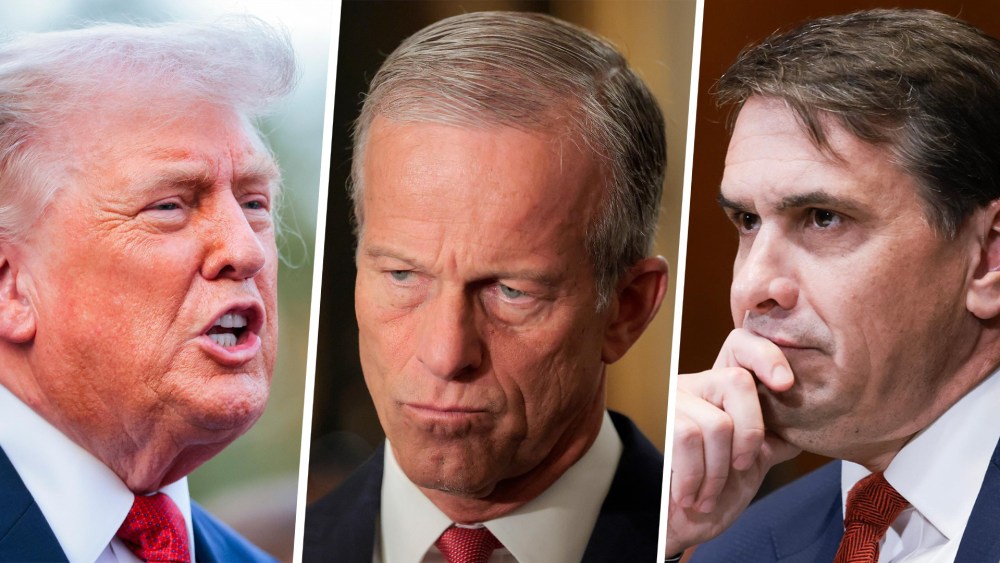
President Donald Trump sure is making it hard to be his friend. Despite having more members firmly in the MAGA camp, House Republicans have spent most of his second term squabbling among themselves. Instead, it has been GOP senators who have been his most surprising ride or dies, helping advance Trump’s agenda at a pace that belies the body’s usual slow crawl.
As Speaker Mike Johnson, R-La., has struggled to wrangle his caucus, Senate Majority Leader John Thune, R-S.D., by contrast has been tenaciously driving the White House’s agenda forward. It was always bound to be a thankless task for Thune to keep the famously distractible president on the best route. But the past month has seen Trump throw roadblock after roadblock directly in Thune’s path, making it almost impossible to avoid this week’s major collision.
The last month has seen Trump throw roadblock after roadblock directly in Thune’s path, making it almost impossible to avoid this week’s major collision.
Budget reconciliation bills, like the one Republicans are currently shepherding through the Senate, are never easy. It’s meant to fund the ongoing mass deportation campaign, one of Trump’s key priorities. The bill is a workaround after the Democrats’ successful filibuster earlier this year saw money for immigration enforcement stripped from the Department of Homeland Security’s annual budget.
The urge to pile on other potential GOP priorities ahead of the midterms was sharp, but Thune signed off on a plan to keep the reconciliation bill narrowly focused on providing new cash to Immigration and Customs Enforcement and the Border Patrol — on top of the money thrown their way in last year’s One Big
by Symone D. Sanders Townsend | May 23, 2026 | Opinion
As Republicans seek to systematically dismantle Black political power, the pushback is extending far beyond the courtrooms and statehouses where these fights typically occur.
This week, it reached the arenas and stadiums where college sports are played.
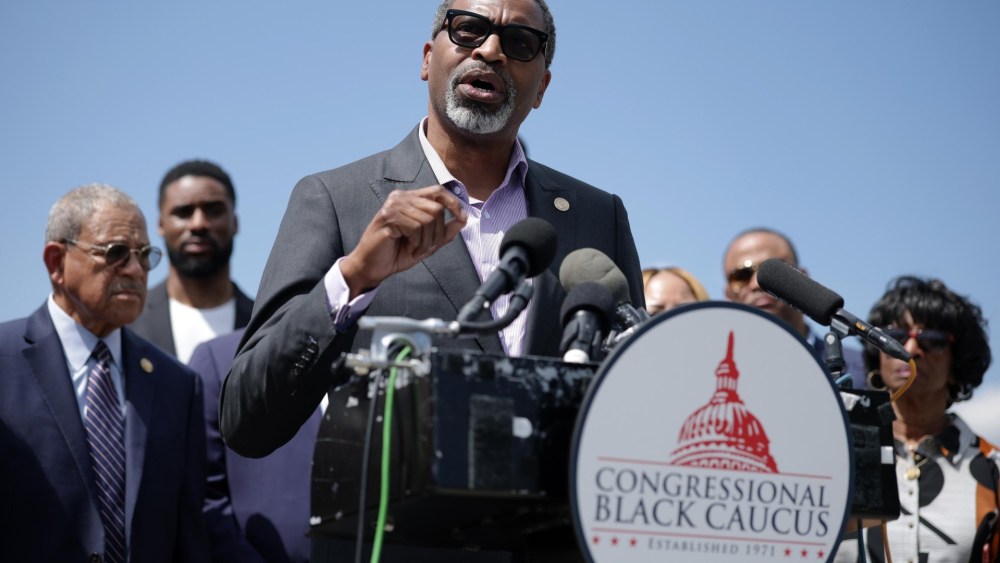
First, the Congressional Black Caucus announced its unanimous opposition to the SCORE Act, a major reform to college athletics backed by university and conference leaders for the NCAA, the SEC and the ACC.
In a statement, members argued they could not support athletic institutions that “remain silent” in the face of Republican moves to eliminate majority-Black congressional districts. According to recent reports, the NCAA, SEC and ACC do not appear to have publicly responded to the redistricting controversy, a silence that has become central to criticism from the Congressional Black Caucus and NAACP.
Then, the NAACP launched its “Out of Bounds” campaign, calling on Black athletes, potential recruits, families and fans to reconsider supporting universities in states aggressively moving to weaken Black political representation after the Supreme Court’s decision in Louisiana v. Callais.
Taken together, the moves signal something larger than frustration. They reflect a growing consensus among Black leaders that neutrality from powerful institutions is not acceptable when democracy itself is under attack.
Play
NAACP urges Black student athletes to boycott southern college sports programs over redistricting
May 20, 2026 / 04:42
Conservatives predictably attacked the moves, casting student athletes as pawns in a political game, arguing that athletes would rather get a paycheck than stand in solidarity or just mocking the idea of playing somewhere other than a big southern college.
But young people have always been central to movements for democratic change in this country.
During the civil rights movement, students