by Ja'han Jones | May 27, 2026 | Opinion
President Donald Trump’s racist policy of welcoming white South Africans while excluding refugees from other countries is back in the spotlight after his administration raised its refugee ceiling — to bring in more white people.
According to Reuters:
Trump increased the refugee admissions ceiling by 10,000 for this year to allow more white South Africans to come into the country, a signed presidential determination reviewed by Reuters showed.
The document, dated May 21, said white South Africans of Afrikaner ethnicity face an emergency situation due to the “incitement of racially motivated violence” by the government and political parties in the majority-Black country.
The document, found here, cites an “unforeseen emergency refugee situation” that doesn’t actually exist. Trump and his allies have pushed false claims that a “white genocide” is occurring, but South Africa’s government — and even advocacy groups representing the country’s white Afrikaner minority — have rejected the claim.
Reuters reported that the increased refugee limit is now 17,500 — and that only three non-South African refugees have been admitted into the U.S. this fiscal year. Reuters previously reported that the administration wanted to bring in 4,500 white South Africans immigrants per month, a number that I noted mirrors the number of white German refugees the Ku Klux Klan wanted to welcome to the United States a century ago — when its members were popularizing xenophobic slogans like “America First” and launching campaigns of racist terror against people of color.
It’s noteworthy here that white supremacists have latched on to racist conspiracy theories, such as the “replacement theory,” saying that there is some kind of plot to replace white Americans with nonwhite people, particularly foreigners.

by Hayes Brown | May 27, 2026 | Opinion
The Justice Department’s lawyers were once considered the gold standard for prosecutors, with an appointment as U.S. attorney considered a pinnacle of many careers. But over the past year and a half, the bar has been dropping considerably. With an unprecedented spate of grand jury rejections and judicial admonishments, the DOJ’s credibility has eroded to the point that courts should no longer trust the men and women who are meant to speak on behalf of the United States at trials.
We’re witnessing a downward spiral precipitated by the Trump administration prioritizing loyalty to the MAGA agenda over hiring and retaining qualified legal candidates. Many of the lawyers who are now serving under acting Attorney General Todd Blanche have little to no courtroom experience under their belts. As a result, even what is normally considered the easiest part of a criminal case has become a minefield of uncertainty and hotbed of misconduct.
It’s the kind of basic foolishness that even an attorney in their first year out of law school should know to avoid.
Federal prosecutors hoping to convince a jury to convict must provide proof beyond a reasonable doubt that the defendant is guilty. Obtaining an indictment from a grand jury, on the other hand, merely requires convincing a panel of citizens that there’s enough evidence for a prosecution to proceed to trial. While President Donald Trump has pushed for more politicized prosecutions from the DOJ, a growing number of grand juries have refused to accept the charges presented to them — and some federal lawyers are now willing to do whatever it takes to move their prosecutions forward.
Last week, a federal judge
by Paul Waldman | May 27, 2026 | Opinion
Just as some Democrats around the country fervently hoped, Texas Attorney General Ken Paxton defeated incumbent Sen. John Cornyn in Tuesday’s GOP primary runoff. Had Cornyn prevailed, he likely would have easily won re-election against Democratic nominee James Talarico. But with Paxton on the ballot, Democrats have at least a chance at nabbing the seat. This election is about more than control of the Senate, as important as that is. It also spotlights the issue of corruption, which Democrats can run on not just in Texas, but across the country.
Though for years Democrats have hoped that the right combination of circumstances could turn Texas blue, the state remains consistently red. Democrats have not won any statewide race since 1994. Cornyn was re-elected to his seat by nearly 10% in 2020 and Donald Trump won the state by 12% in 2024.
On one hand you have the state’s existing Republican tilt, and on the other you have the corruption issue.
Paxton’s record, however, gives Democrats new hope. Much like Trump, it’s hard to list the Texas attorney general’s scandals because there are so many of them. Some are relatively petty: In 2013, Paxton nabbed himself a $1,000 Montblanc pen someone had left in the basket at a courthouse metal detector, only returning it a year later after security footage revealed the pen pilferage (Paxton claimed he took the pen accidentally).
Others are far more sweeping: In 2015, Paxton was indicted for securities fraud; the case dragged on for nine years, and was finally resolved when he agreed to pay nearly $300,000 in restitution and perform community service and “legal ethics education.” In 2020, attorneys
by Daniel R. DePetris | May 27, 2026 | Opinion
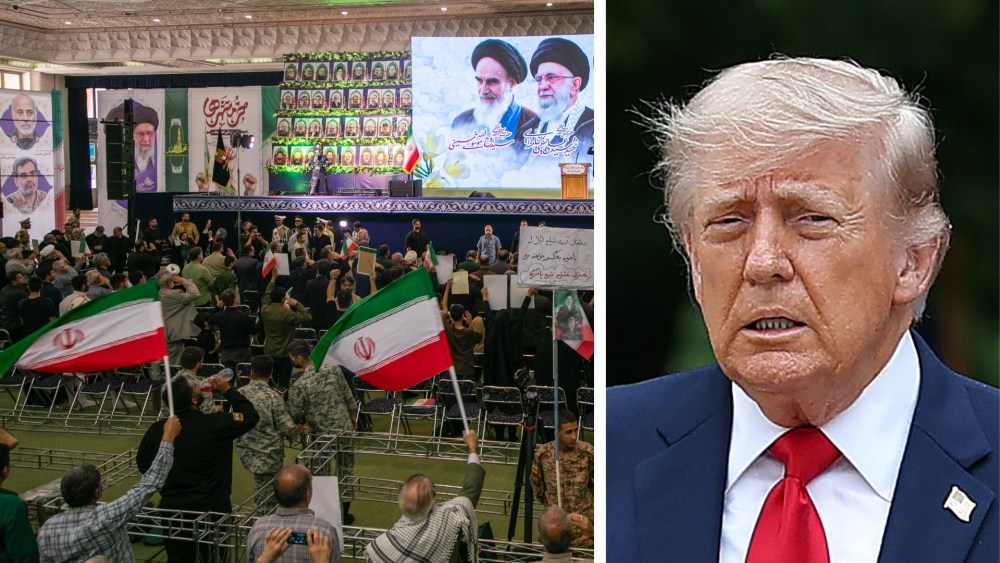
For President Trump, negotiating an end to the war with Iran has proven to be the most difficult endeavor of his second term. U.S. and Iranian officials continue to work to clinch an agreement that would trade a reopening of the Strait of Hormuz for an end to the U.S. blockade on Iranian ports and a suspension of the war over a 60-day time period, during which detailed talks on Tehran’s nuclear program could be hashed out.
While the overall concept of a framework agreement is sound, the details, including how much of Iran’s frozen assets will be unblocked and when they will be released, remain sources of contention. The U.S. defensive strikes against Iranian boats and missile batteries — in what the Trump administration has called retaliation for the Islamic Revolutionary Guard Corps’ attempted mining of the strategic chokepoint — have only added to the complications.
Trump, however, is keen to make the entire diplomatic process even more laborious. He wants a more historic outcome: ending the conflict, severely constraining Iran’s nuclear capabilities and expanding the Abraham Accords, his first-term project that normalized relations between Israel and several Arab states. In a May 25 Truth Social post, Trump made those ambitions clear. After speaking with the leaders of the Gulf States, Egypt, Jordan, Turkey and Pakistan, Trump wrote, “It should be mandatory” for all these countries to sign on to an updated version of the accords.
Play
Why Trump ‘would be lucky’ to secure Iran nuclear deal like Obama’s
May 26, 2026 / 11:37
When Trump brought up the idea during his conference call, an uncomfortable silence lingered in the air. Saudi Arabia reaffirmed its position that normalization with Israel was impossible until the Palestinians were offered an “irreversible pathway” to statehood. The Pakistanis were even more empathic in their resistance to the proposal. Qatar, which
by Anthea Butler | May 26, 2026 | Opinion
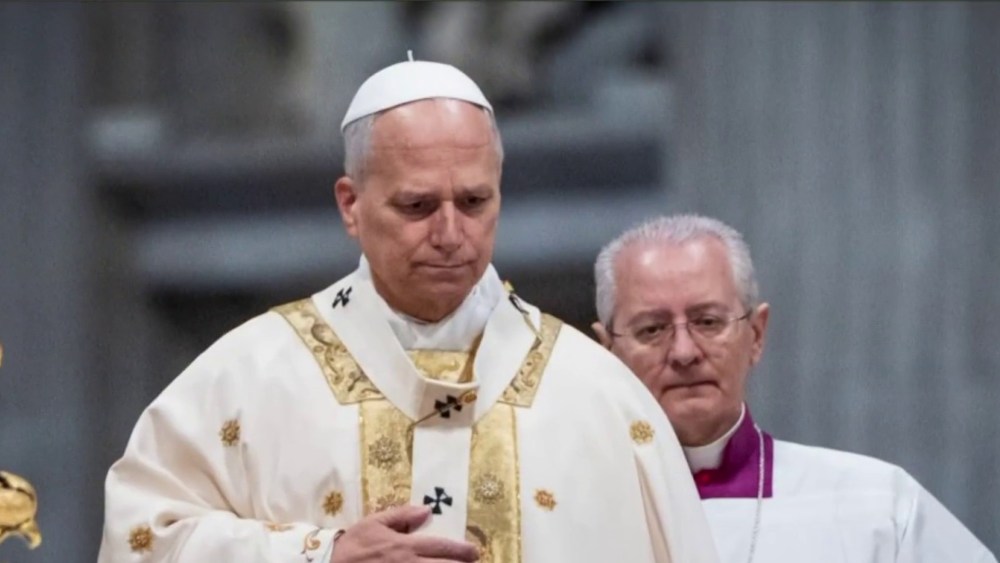
It may seem strange that Pope Leo XIV apologized for the church’s role in slavery within his first encyclical, Magnifica Humanitas (Magnificent Humanity), in which he said artificial intelligence is dangerous and must be disarmed. “It is impossible not to feel deep sorrow when contemplating the immense suffering and humiliation endured by so many in stark contrast to their immeasurable dignity as persons infinitely loved by the Lord,” he wrote in the letter to the church that was made public Monday. “For this, in the name of the Church, I sincerely ask for pardon.”
But Leo addressing slavery and this emergent technology in the same document is not strange at all. The encyclical in its entirety addresses the question of humanity: who can be regarded as human, and the problem with AI using human labor, experiences and cultures to empower machines to replace humans. It was important to the pope to acknowledge the failure of the church to see the humanity of enslaved persons. The church was perfectly fine with saving souls while allowing institutions and governments to enslave other people, especially Africans. It was even fine with the enslavement of those who converted.
Leo addressing slavery and this emergent technology in the same document is not strange at all.
In the present day, Leo argues that AI is helping to create a new form of colonialism that appropriates data and transforms personal lives into exploitable information. Moreover, he says in the encyclical that “new forms of slavery are fueled by economic chains and digital infrastructures.” Leo calling AI one of the “new forms of enslavement” would have rung hollow, if not hypocritical, had he
by Hayes Brown | May 26, 2026 | Opinion
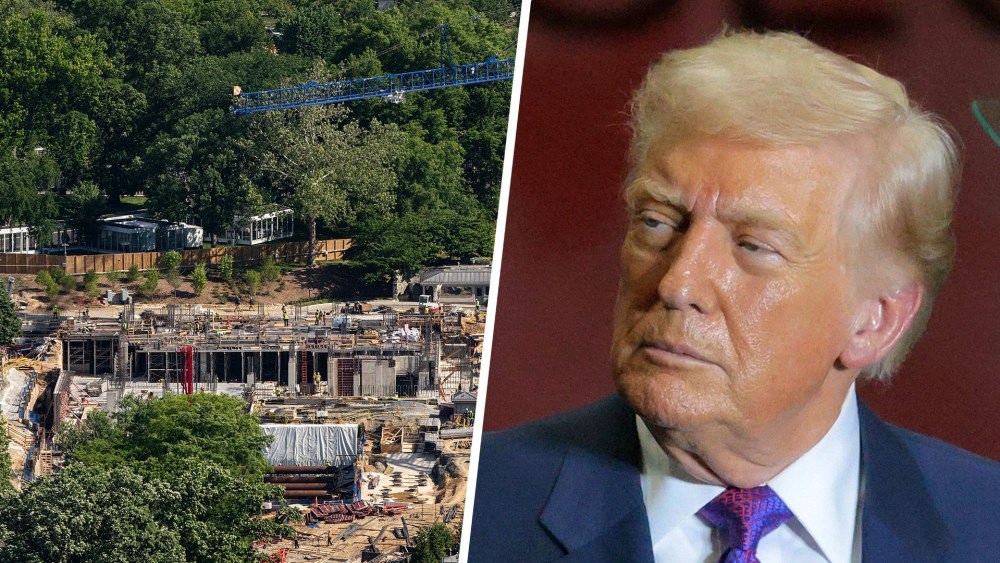
There are few things President Donald Trump hates to hear more than “no.” So imagine his outrage when he learned that Senate Republicans’ long-awaited budget bill would no longer include money for his White House ballroom project. The $1 billion in Secret Service funding, including $200 million specifically for the ballroom, had to be removed after a ruling that it failed to comply with Senate rules.
The ruling on the funding didn’t come from Senate Majority Leader John Thune, R-S.D., or any other elected member of Congress. It came from Elizabeth MacDonough, the Senate parliamentarian. Trump has demanded that Thune fire MacDonough for standing in his way — but her job isn’t at risk. For the moment, at least, MacDonough may be the most powerful bureaucrat in Washington that Trump can’t touch.
For the moment, at least, MacDonough may be the most powerful bureaucrat in Washington that Trump can’t touch.
After weeks of internal debate, Senate Republicans decided to keep the budget reconciliation bill narrowly focused on funding for Immigration and Customs Enforcement and Border Patrol. The money would backfill a gap left in this year’s Department of Homeland Security appropriations bill to appease Democrats opposed to Trump’s anti-immigrant crackdown.
Reconciliation bills have the benefit of not being subject to the filibuster or the associated 60-vote threshold. But because of how much reconciliation bills short-circuit the normal legislative process, the Senate has written guidelines into the budget law governing them. In short, anything packed inside must deal with federal spending, adjusting the amount of money the government takes in as revenue or spends as outlays. There are also provisions ensuring that spending bills match