by Symone D. Sanders Townsend | Jun 13, 2026 | Opinion
President Donald Trump got two reminders this week about the limits of his influence.
Despite serving two terms in the White House, remaking the Republican Party in his image and wielding powers that many of his predecessors never enjoyed, Trump encountered setbacks in his efforts to extend that dominance into the cultural sphere.
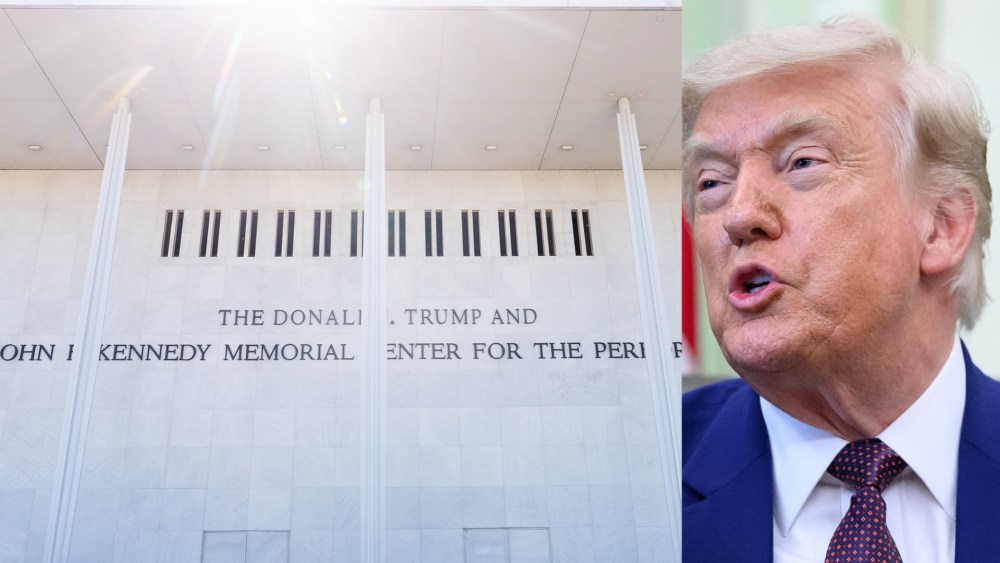
The most visible moment came at Madison Square Garden, where the president was met with loud boos while attending Game 3 of the NBA Finals. Less dramatic but perhaps equally symbolic was a federal judge’s decision to reverse an effort to add Trump’s name to the Kennedy Center, forcing the institution to remove it from its branding.
The two episodes represented Trump’s attempts to influence both ends of the cultural spectrum — from the sporting event watched across the country to one of the nation’s premier cultural institutions in Washington.
A lot of people see these as distractions, an attempt to get voters riled up about a side issue while the real fights happen out of sight.
I don’t. I’ve said for years that the culture wars aren’t a distraction; they are the playbook.
Play
Kennedy Center staff begins removing references to President Trump’s name
June 5, 2026 / 06:55
Culture shapes identity. It shapes belonging. It shapes what people view as normal, acceptable and true. Long before elections are won or lost, culture helps shape the lens through which people understand politics itself.
Long before he got into politics, Trump sought that cultural legitimacy, making cameos in TV and movies, starring in pizza ads and whining when he didn’t win an Emmy.
When he first became president, it sometimes seemed like he was more excited about the
by James Downie | Jun 13, 2026 | Opinion
“On July 17, 2025, at around 6 o’clock in the evening, President Trump’s top officials filed into the White House Situation Room.” Thus begins the latest article based on New York Times correspondents Maggie Haberman’s and Jonathan Swan’s upcoming book about the Trump White House. The officials, according to the Times’ reporting, did not use the Situation Room to discuss a terrorist threat or a looming war, but “a very different kind of crisis threatening to engulf the presidency: the Epstein files.” Haberman and Swan chronicle how many senior Trump officials thought the issue would blow over with his MAGA base, only for Trump to reluctantly sign a bill ordering the files’ release.
The same day the Times published Haberman and Swan’s article, Rep. Nancy Mace, one of just a few Republicans who forced a vote on that bill, finished fifth in the South Carolina gubernatorial primary. Republican voters may have convinced the White House last year that they wanted to see some accountability regarding Epstein, but their actions since have shown considerably less interest in justice.
A new Reuters/Ipsos poll found 66% of Republicans agreed that “the federal government is hiding information about the clients of accused sex trafficker Jeffrey Epstein.”
Drawing from hundreds of interviews conducted for the book, Haberman and Swan report that “senior officials, including [White House chief of staff Susie] Wiles and [then-deputy chief of staff James] Blair, were initially unconvinced about the reach of the Epstein crisis.” They believed the story was “amplified by noisy online influencers who didn’t represent a meaningful bloc of voters.” Others, like Vice President JD Vance and FBI Director Kash Patel, insisted
by Christian Schneider | Jun 13, 2026 | Opinion
The Tea Party movement in the early 2010s was, at its core, a lot of things — some noble, some embarrassing, and some that involved people dressed as colonial militia members in an Applebee’s parking lot shouting about the Federal Reserve. But beneath the tricorn hats and misspelled protest signs was a genuine constitutional anxiety: that President Barack Obama was accumulating executive power in ways that should frighten anyone who had read past the preamble.
When Obama left office, The New York Times noted he had “sought to reshape the nation with a sweeping assertion of executive authority and a canon of regulations that have inserted the United States government more deeply into American life.”
The authors observed Obama had resorted to “bureaucratic bulldozing,” and “once Mr. Obama got the taste for it, he pursued his executive power without apology, and in ways that will shape the presidency for decades to come.”
Play
Trump nominates Jay Clayton as DNI
June 11, 2026 / 11:44
Now we have “No Kings,” and the wheel has turned. The same energy that had conservatives dressing up as founding fathers 16 years ago is now manifesting as progressive protesters holding signs with crowns crossed out in red. And, again, there is a real constitutional anxiety underneath it — there is no doubt President Donald Trump’s behavior is genuinely more lawless, more contemptuous of institutional constraints, and more brazenly self-interested than what Obama or Biden were doing. But it also has deep roots in the administrations of Democratic presidents of yore.
So both sides are right about the problem. They are just selectively right about it.
Obama’s use of executive action to, for example,
by Julio Ricardo Varela | Jun 13, 2026 | Opinion
As a fan of the United States men’s soccer team since the 1980s, I have always kept my expectations about the team’s World Cup prospects pretty low.
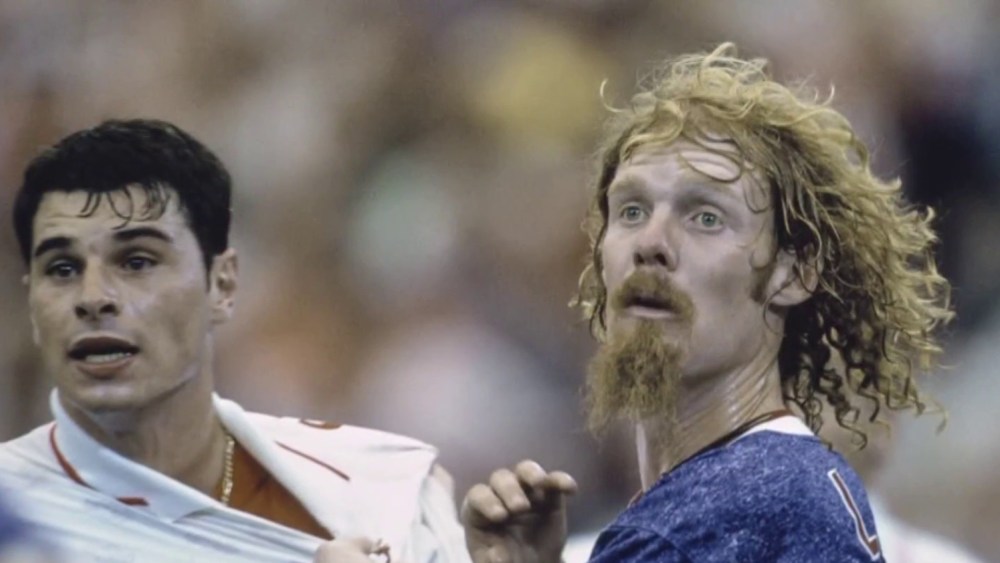
Back in 1990, the U.S. qualified for the first time in 40 years. The Americans lost all three games, but I was just happy the team made it and even scored — twice!
Four years later, the U.S. hosted the global tournament and advanced from its group. In the first knockout round, the Americans lost to Brazil, but the 1-0 score was respectable and the crowds were record-breaking. American fans’ dream that the U.S. would become a perennial powerhouse was real.
The men’s team is approaching a quarter century of disappointing results, including missing the tournament entirely in 2018.
The first hiccup came in France in 1998 when the Americans didn’t win any of their group matches. But in 2002, the U.S. upset pre-tournament favorites Portugal, squeaked into the knockout round of 16 and comprehensively beat rivals Mexico “dos a cero.” In the quarterfinals against perennial power Germany, the U.S. outshot and outpossessed its opponent but lost narrowly after a handball on the goal line went uncalled. Young stars like Landon Donovan seemed poised to take the team even further. From minnows to the final eight — and nearly the final four — in just 12 years, glory seemed like a matter of when, not if.
Since then, all that promise has been almost entirely for naught. Sure, there have been moments, like Donovan’s last-gasp goal to win the group in 2010 or what players like Clint Dempsey and Tim Howard gave to the team, but the victory
by Don Bell | Jun 12, 2026 | Opinion
Bipartisan agreement on the Hill is all too rare. But over the past week, unlikely allies on both sides of the aisle came together to oppose the appointment of Bill Pulte to lead our nation’s intelligence community as acting Director of National Intelligence and refused to vote for an extension of Section 702 of the Foreign Intelligence Surveillance Act, a controversial law which essentially allows the government to gather Americans’ private calls, texts and emails without a warrant.
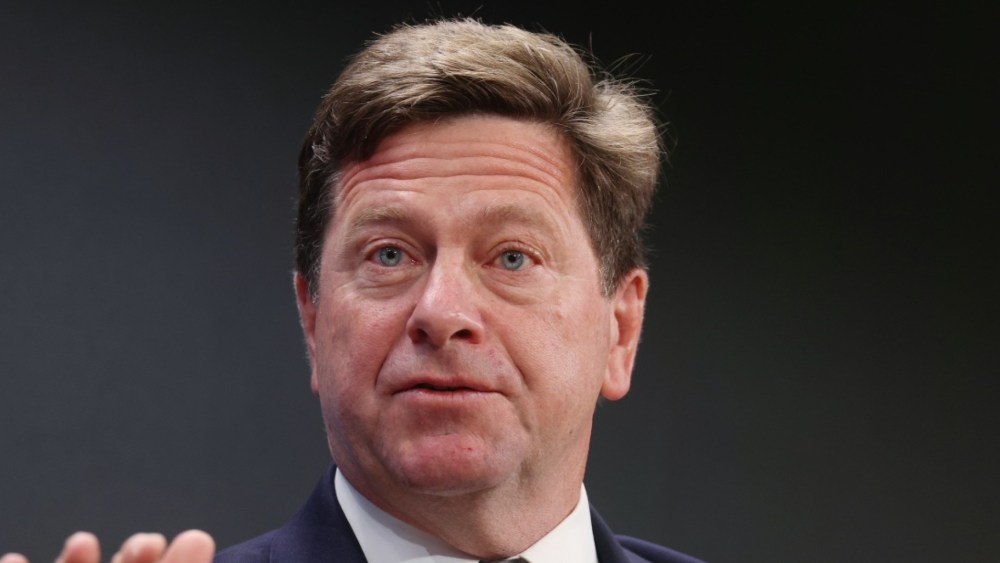
The pushback was so intense that President Donald Trump announced a new nominee, U.S. attorney for the Southern District of New York Jay Clayton, who has publicly supported several recent controversial Trump statements and initiatives, to permanently lead the office. Notably, Trump moved up Pulte’s installation as well. He will still serve as acting DNI until a permanent leader is confirmed. While Pulte is a uniquely unqualified and dangerous pick, nominating a replacement doesn’t change the fact that extending FISA in its current form, amid the rapidly expanding use of domestic surveillance, threatens all of us.
While Pulte is a uniquely unqualified and dangerous pick, nominating a replacement doesn’t change the fact that extending FISA in its current form threatens all of us.
Pulte is a symptom — not the cause — of an already gargantuan and dangerously broken surveillance system. Regardless of who is leading the Office of the Director of National Intelligence, lawmakers who care about protecting Americans’ constitutional rights and security should continue to reject any extension of FISA that does not meaningfully protect our data from government misuse.
The debate around FISA is about protecting Americans’ private data from warrantless surveillance. Normally,
by Ja'han Jones | Jun 12, 2026 | Opinion
The State Department is deepening the federal government’s official ties to the Ultimate Fighting Championship, effectively vowing to globally promote a company in which President Donald Trump has a financial interest.
Secretary of State Marco Rubio held an event Thursday to sign a memorandum of understanding that authorizes what the State Department is calling “a new public-private partnership to enhance sports diplomacy initiatives and collaborate on the global growth of mixed martial arts.”
Rubio hosted the event with UFC President Dana White, a close Trump ally. And the arrangement reeks of possible corruption.
Financial disclosure forms recently showed that Trump purchased thousands of dollars of stock in TKO, the UFC’s parent company, at the same time he was promoting this weekend’s UFC fights at the White House. The purchases are just one of the reasons plaintiffs suing to stop the event have called it a “volcano of corruption,” as my colleague Jordan Rubin explained.
The White House has called the lawsuit meritless. The case is pending in U.S. District Court.
But the same issue exists with the State Department’s arrangement as well, to say nothing of the labor crisis surrounding the union-busting UFC. I would argue this is ample reason to question this partnership — the fact that Trump holds TKO stock means his administration’s promotion of the UFC could ultimately line his pockets.
It’s one of several brazenly unethical ways Trump and his allies have helped enrich himself and his family during his presidency. And the fact that the State Department is rolling out this latest enrichment effort as Trump’s economy wreaks havoc on Americans’ wallets makes it all the more grotesque.
The post State