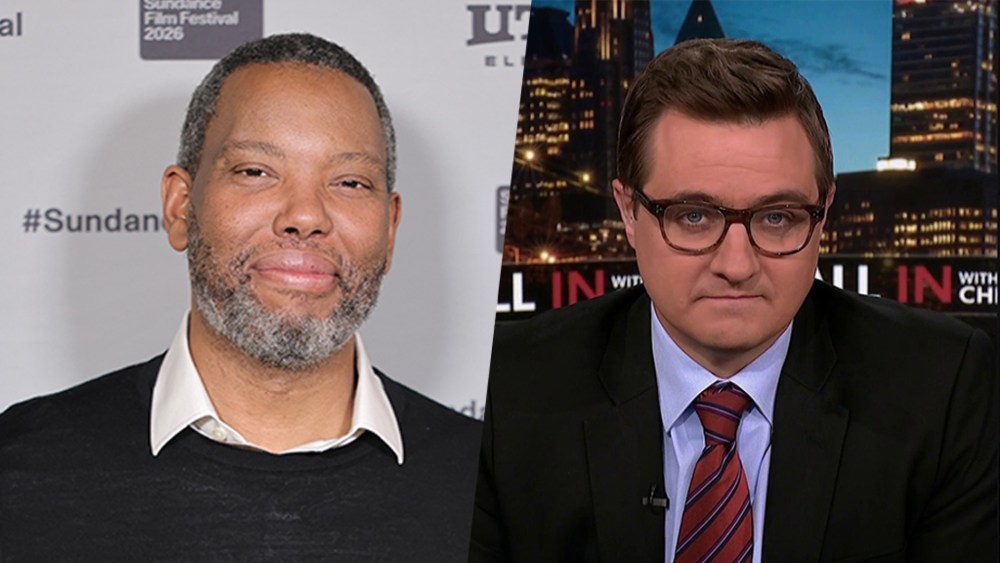
by Michele Norris | Jun 19, 2026 | Opinion, Politics
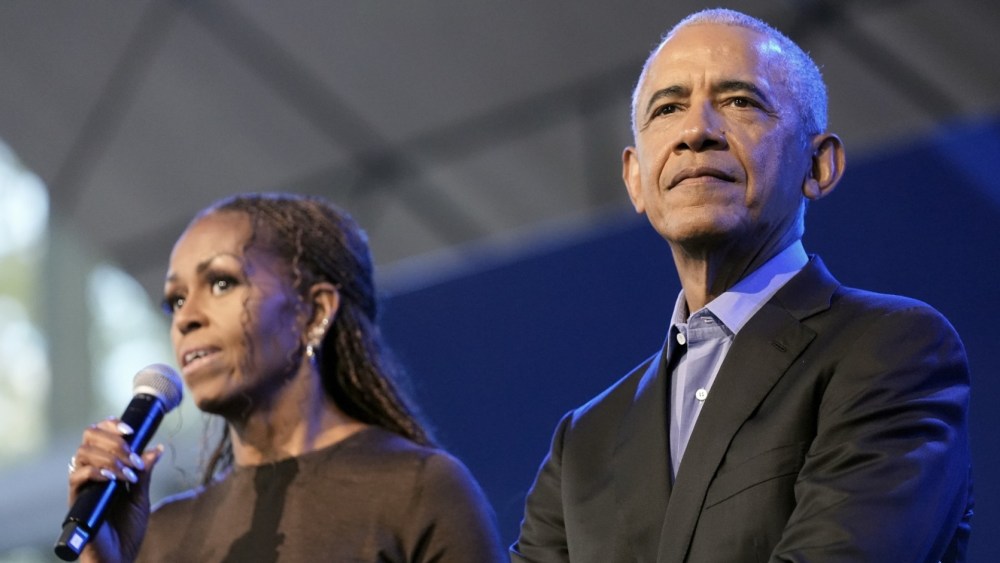
Few presidents have walked a more improbable path to the American presidency than Barack Obama. So it’s fitting that, much like the president it’s named for, nothing about the Obama Presidential Center is traditional. Not its Juneteenth opening. Not its location on the South Side of Chicago. Not its design, not its sprawling campus that includes a basketball court and outdoor grills, and not the exhibits that not only showcase what the 44th president accomplished but also highlight what he did not get done.
Michelle Obama’s story is also woven throughout the main narrative. There’s a teaching kitchen and a sledding hill. And, in a break with tradition, the $850 million campus does not include the president’s physical archives. The Obamas’ physical papers are in separate facility maintained by the National Archives and Records Administration, and that federal agency is managing his fully digital library.
Watch MS NOW’s exclusive interviews with Barack and Michelle Obama as part of “Hope Comes Home: Inside the Obama Presidential Center,” airing Friday, June 19, from 9 p.m. to 11 p.m. ET.
The unconventional approach begins with the name. It’s the Obama Presidential Center. Not a library. That distinction was deliberate and signals an orientation toward everyday people, rather than scholars and history buffs. But the center does include a branch of the Chicago Public Library serving as an invitation to the surrounding community — and especially to the students at the high school directly across the street.
Traditional presidential libraries are usually shrines that zero in on a single man. However, the permanent exhibit in the museum space doesn’t even open with Obama’s childhood in Hawaii, Indonesia or Kansas or his early
by Eric Garcia | Jun 19, 2026 | Opinion
Earlier this week the Department of Education announced a series of “partnerships” with other U.S. government agencies, as the Trump administration attempts to effectively dismantle the department. Among the many changes, the Education Department announced a plan to shift away the responsibilities of the Office of Special Education and Rehabilitative Services.
OSERS helps people with disabilities achieve competitive integrated employment, which is to say jobs that pay at least minimum wage with the same benefits as those for nondisabled employees, and allows them to work with nondisabled employees. Under the Education Department’s plan, its core functions would shift to the Department of Health and Human Services.
Though the announcement didn’t come out of the blue, it nevertheless alarmed many disability rights advocates.
This should not be surprising. The Trump administration — and Republicans writ large, going back to Ronald Reagan — have called for the abolition of the Department of Education, arguing that education should be determined at the state level. And during last year’s government shutdown, the Trump administration fired almost all OSERS employees.
Though the announcement didn’t come out of the blue, it nevertheless alarmed many disability rights advocates. Katy Neas, the CEO of disability rights group the Arc of the United States and a former acting assistant secretary at OSERS, warned in a statement: “A student who is denied services, disciplined for disability-related needs, or blocked from an accessible classroom needs one federal education system that can see the whole picture and act.”
Even the proposal’s legality is dubious. The Individuals with Disabilities Education Act’s most recent reauthorization — signed by President George W. Bush in 2004 — says the office must exist
by Anthea Butler | Jun 19, 2026 | Opinion
Vice President JD Vance’s new book, “Communion,” is not only his story of his conversion to Catholicism in 2019, it’s also his pitch to Republicans, especially religious ones, about why he has the mettle to be the party’s 2028 presidential candidate. Writing a book has become a prerequisite for a presidential run, but as a professor who has read some awful writing, I find that Vance’s new book ranks among the worst things I’ve read. As has been reported, there’s a United Methodist Church on the cover of this book about converting to Catholicism, and that choice of illustration serves as a metaphor for the ignorance and inauthenticity found within.
According to the Pew Research Center’s Religious Landscape Study, 35% of American adults were raised in a different religious tradition than the one they practice.
Vance’s account of his conversion from evangelism to atheism and then to Catholicism is familiar to those of us who study religious switching in America. According to the Pew Research Center’s 2023-24 Religious Landscape Study, 35% of American adults were raised in a different religious tradition than the one they practice.
But on his promotional book tour, Vance is proving himself to be woefully inept about his faith. For example, on his Tuesday appearance on ABC’s “The View,” he couldn’t answer questions about how he squares his recently found faith with the Trump administration’s policies. He seems confused about what Catholicism is and doesn’t seem to understand that Christian beliefs aren’t the same as a list of conservative talking points.
Thus, in “Communion” we get his disjointed story about how he was attracted to the Catholic Church despite his
by Nicholas Mitchell | Jun 19, 2026 | Opinion
It’s fair to say this Juneteenth that Black America is suffering Black fatigue. Mary-Frances Winters, who coined the term “Black fatigue,” calls it the personal and collective exhaustion of navigating widespread anti-Black racism. In 2026, such fatigue follows opponents of the Civil Rights Movement scoring a major victory at the Supreme Court in their long war against the Voting Rights Act of 1965. While it is dispiriting that Black people were better off last Juneteenth than this one, we shouldn’t despair that we have inevitably entered another nadir of Black life. Despair would betray the spirit of Juneteenth and be an abandonment of this country that Black culture helped shape.
Of all the things Black people have contributed to America and its culture — from inoculation against disease to Blues and rock ‘n’ roll and the modern blood bank — the most consequential is liberal multiracial democracy.
A slave state cannot be a democracy.
Though some may argue America has always been a liberal democracy, the founders, after a shameful compromise, created a slave state, and a slave state cannot be a democracy. The following century, the political parties’ compromise to end Reconstruction created an apartheid state, and an apartheid state can’t be a liberal democracy either.
Nikole Hannah-Jones’ “1619 Project” reminds us that Black Americans never limited their vision of democracy to Black people. They pushed for birthright citizenship to be enshrined in the 14th Amendment. Later, during a civil rights revolution that culminated in the 1960s, Black Americans brought about a multiracial democracy with a series of landmark legislation. The Civil Rights Act of 1964 protected everyone from racist discrimination; the
by Ja'han Jones | Jun 19, 2026 | Opinion
The grotesque display of corruption and bigotry hosted on the White House grounds this past weekend was a reminder of the ways combat sports have been used throughout American history as a vehicle for propaganda.
The politics of paid punching have not always been what they are today. In fact, as hard as it may be to imagine with President Donald Trump in the Oval Office, there was a time when America’s president glommed onto the fight game and its surrounding machismo as a means to fight — rather than fuel — global fascism.
That’s the crux of a new History Channel documentary on iconic boxer Joe Louis called “The Clash of Nations,” which may come as a bit of a palate cleanser in the aftermath of Trump’s UFC event. The film documents the story of Louis, the Black American known as the “Brown Bomber” who garnered support from President Franklin D. Roosevelt, and his two bouts against German boxer Max Schmeling, whom Adolf Hitler and the Nazis saw as the epitome of Aryan dominance. It also chronicles the personal bond the two established years after their iconic fights.
The two fights, held at Yankee Stadium, unfolded in as cinematic a fashion as one can imagine. Schmeling won the first via knockout, giving Hitler a propaganda victory so great that he mandated German theaters show footage of the fight. The loss also devastated many Americans, particularly Black Americans, who had viewed Louis as an avatar for democracy and a symbol of American dominance over Nazism. Louis’ son, Joe Louis Barrow Jr., is featured in the film and told me the loss and the feeling
by Zeeshan Aleem | Jun 19, 2026 | Opinion
The Trump administration brokered a ceasefire between Israel and Hamas in October 2025. Since then Israeli military operations have killed over 1,000 Palestinians in the Gaza Strip, the Gaza health ministry announced on Wednesday. The grim milestone illustrates how meaningless the term “ceasefire” has been for people living in the territory, and the failure of President Donald Trump’s “Board of Peace” to achieve its purported goal of peace and reconstruction.
It’s also a disheartening reminder that although people in Gaza are no longer receiving the level of media coverage we saw during the height of Israel’s bombing and military attacks, the situation on the ground continues to be dire.
Gaza no longer commands the world’s attention as it previously did.
Even though Israel and Hamas are technically participating in a ceasefire, life in Gaza is still defined by brutal warfare, and both parties have accused the other of violating the ceasefire. According to The Associated Press, there are “near-daily strikes” in Gaza, and “shelling and gunfire along the boundary that divides Gaza into Israeli and Palestinian-controlled zones” continues in the enclave. According to families at Nasser Hospital, an Israeli strike on Wednesday targeted people near the beach in a tent camp for hundreds of thousands of displaced Gazans, the AP reported. The Israeli military said its target was a “terrorist.”
Gaza’s health ministry does not distinguish between civilians and militants in its casualty count, but it is reasonable to estimate that a significant proportion of the people killed since the ceasefire began have been civilians. The Guardian, the Israeli-Palestinian publication +972 Magazine and the Hebrew-language outlet Local Call published an investigation in 2025, drawing