by Ryan Teague Beckwith | Jun 23, 2026 | Opinion
Few professions capture the technocratic spirit of the Obama-era Democratic Party better than urban planning.
So it was hardly surprising that Brad Lander — who has a master’s degree in the subject and worked in nonprofit housing before entering politics — ran for New York City Council during the Obama presidency in the careful, measured language of policy wonks.
At the time, Lander’s “Issues” page described affordable housing as “the greatest challenge confronting our city” and proposed preserving affordable units, strengthening rent laws and improving mass transit. The problem was a policy challenge; the solutions were better planning and thoughtful governance.
That was then.
The Brad Lander challenging a Democratic incumbent for a U.S. House seat on Tuesday sounds like a very different politician. His current campaign’s “Issues” page starts with the header “Fight, Don’t Fold” and goes on to use the word “fight” almost three dozen times as it rails against the “MAGA Supreme Court,” “lawless Trump officials,” “Wall Street, crypto, and AIPAC,” “AI oligarchs” and billionaires, among other targets.
Play
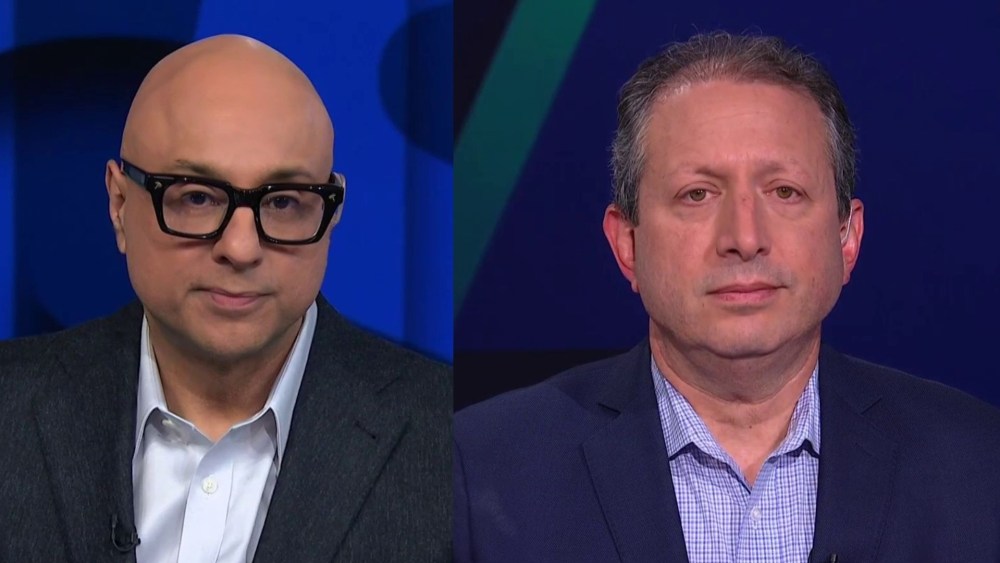
NYC Comptroller: Trump helped ICE turn Manhattan courthouse into an ‘abduction trap’
November 9, 2025 / 10:20
Lander isn’t an outlier, either. A growing number of Democrats have moved away from the Obama-era language of pragmatic problem-solving toward a more combative style that echoes independent Vermont senator Bernie Sanders’ attacks on the “billionaire class.”
But Sanders is only part of the story. Democrats are also responding to the political realities of the Trump era: an increasingly confrontational Republican Party, an aggressively conservative Supreme Court, the failed presidential campaigns of Hillary Clinton and Kamala Harris and years of stubborn inflation. Voters are frustrated, skeptical and angry.
Inflation may be
by James Downie | Jun 23, 2026 | Opinion
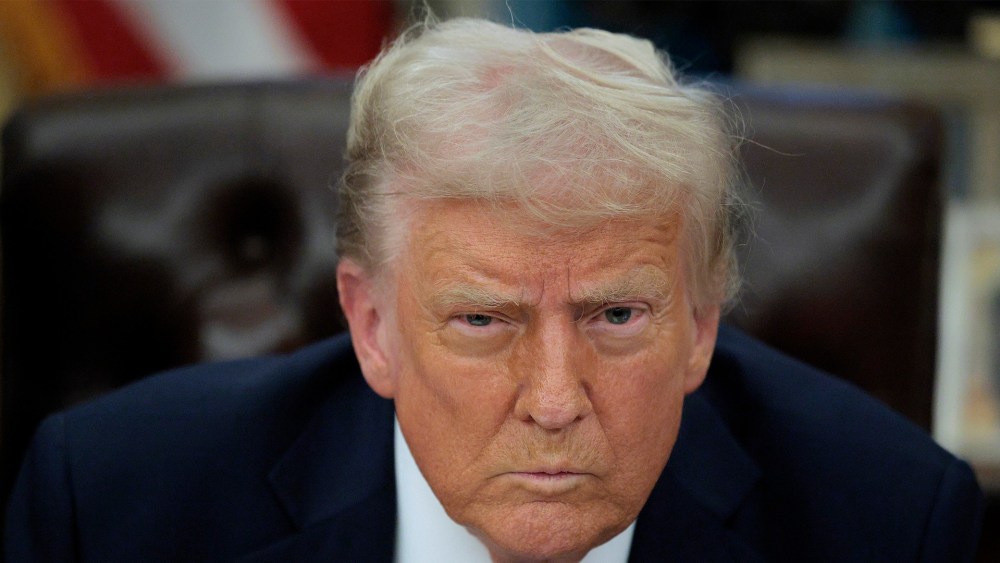
Exactly two months ago, President Donald Trump proudly announced the renovation of the Lincoln Memorial Reflecting Pool. “You’re going to end up with a beautiful, beautiful reflecting pool, the way it’s supposed to be,” he told reporters gathered in the Oval Office. Instead, the project quickly became a laughing stock: missed deadlines, no-bid contracts, algae outbreaks and peeling paint. The symbolism of Trump creating a real-life swamp was almost too perfect.
Over the weekend, however, this farcical story took a more serious turn. As Trump blamed “vandalism” by “radical left lunatics,” The Washington Post reported that “five people had been arrested and accused of vandalism, according to an administration official.” U.S. Attorney Jeanine Pirro told Fox News that “anyone who is in a position of vandalizing or attempting to vandalize the pool will face the criminal justice system in D.C.”
The rush to tout the charges recalls other flimsy cases previously brought by Pirro’s office.
Until the past few days, the botched renovation resembled a common Trump narrative: hubris and corruption combining to leave things worse than when he started. Now, it is another story typical of the Trump era: the abuse of state prosecutorial power.
The circumstances under which most of these arrests took place remains unclear. But one of the people arrested, David Hearn, denies the charges. He told The Washington Post that he merely put his hand in the water and touched a piece of the pool liner that was already peeling. And neither Trump nor his administration has provided evidence of vandalism (never mind the many videos of paint that peeled all by itself).
The rush to tout the charges recalls other
by Nicholas Grossman | Jun 23, 2026 | Opinion
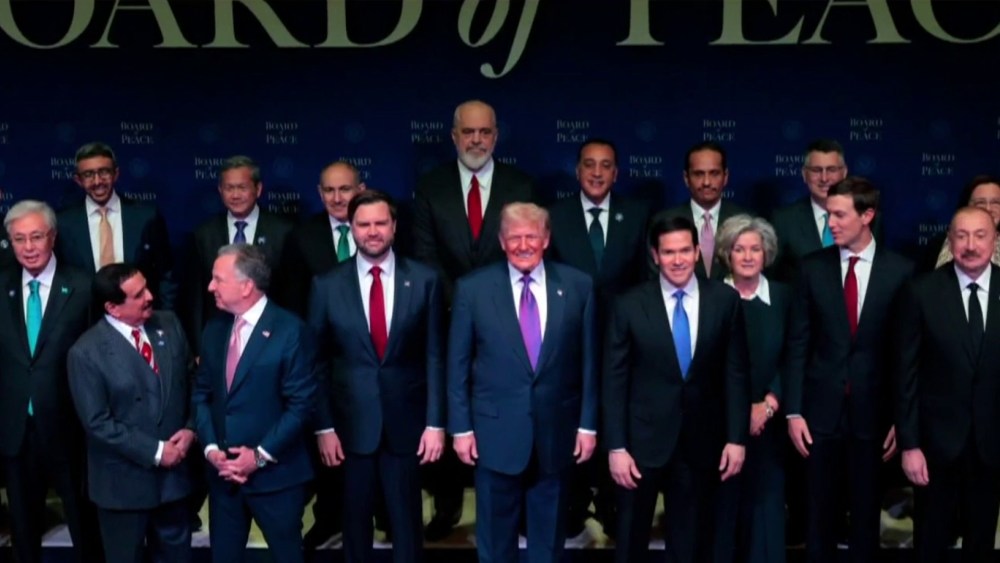
Only a few days after the United States and Iran signed a memorandum of understanding, Iran announced that the Strait of Hormuz was closed again. But it wasn’t American forces that drew the sharp response from Tehran. Instead, the Iranians said Israeli operations against Hezbollah in Lebanon meant America violated the deal. Neither Israel nor Hezbollah are party to the MOU, but the “immediate and permanent termination” of their conflict in Lebanon is listed as a condition in the document’s first article.
Professional diplomats would have insisted on more specificity about what that language meant. It’s unlikely seasoned American negotiators would have agreed without getting Israeli buy-in first, but the Trump regime disdains that sort of expertise. This disregard for detail fits President Donald Trump’s consistent approach to conflict diplomacy: seek the minimum that can be called a “peace deal,” punting on core issues and excluding conflict participants as needed. Produce something that’s more vision than plan and proclaim peace. Public praise and positive press will follow. Actual follow-through will not.
A closer examination of the MOU shows how predictable it was that Lebanon would become a sticking point.
A closer examination of the MOU shows how predictable it was that Lebanon would become a sticking point. A ceasefire usually means combatants freeze in place and negotiate more permanent arrangements, but the somewhat ambiguous language in the MOU “ensuring the territorial integrity and sovereignty of Lebanon” arguably demands Israeli withdrawal to prewar lines.
But neither Israel nor Hezbollah are a party to the MOU or participated in the talks leading up to deal nor its hasty signing, so neither feels bound by
by Jacques Berlinerblau | Jun 22, 2026 | Opinion
On Friday the United States men’s national soccer team thumped Australia 2-0, thereby advancing to the next stage of the World Cup. Long-suffering American fans, who over the past two decades have endured round-of-16 eliminations (2010, 2014, 2022), a group stage crashout (2006) and even a failure to qualify for the tournament altogether (2018), were ecstatic.
Apparently, so was the Department of Homeland Security. After the victory, DHS posted an artificial intelligence sloplike image of the U.S.’s starting 11. (Notice the artless insertion of Ricardo Pepi, who played for injured star Christian Pulisic.) The image showed our lads standing in front of a soccer net situated behind a border wall — you know, the wall Mexico paid for. The amateurish tableau read: “Built the Wall.” I don’t know what that means. Maybe DHS didn’t, either, because the message has since been deleted.
Team USA offers a full-spectrum representation of the many types of people in this country President Donald Trump and his administration have exhaustively penalized and attacked in one form or another.
Ninety minutes before kickoff, DHS had posted: “OUR SOIL. Defend the Homeland: One Nation, One Homeland, One Team.” On Saturday, it shared a picture of reserve defender Mark McKenzie leading an after-game prayer with the caption “Psalm 150:6,” a verse often invoked by evangelical athletic ministries.
What were the communications professionals at the scandal-plagued agency up to? Maybe DHS is just owning the libs. Soccer fans in the United States tend to skew young, multicultural, female and generally liberal. The squad has dual nationals, immigrants, the child of a Liberian president and even a birthright citizen (Folarin Balogun, who was Man
by Donald K. Sherman | Jun 21, 2026 | Opinion
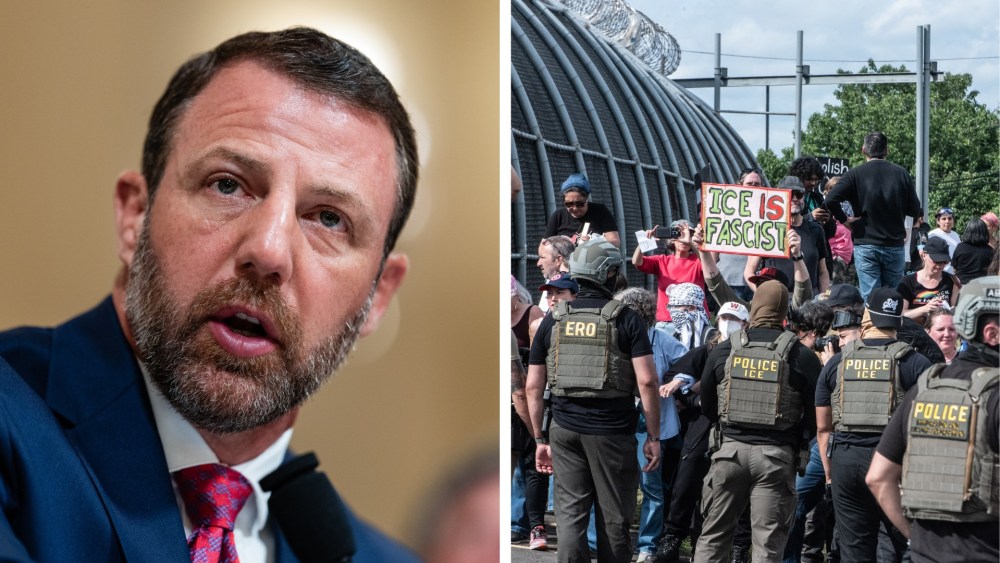
What do gas station drugs, conflicts of interest and the Trump administration have in common? Homeland Security Secretary Markwayne Mullin.
A New York Times report earlier this week revealed the significant role Mullin has played in an influence campaign advocating for kratom, a supplement commonly sold at gas stations that allegedly relieves pain or boosts energy, but is linked to risk of liver toxicity, seizures and substance use disorder. Kratom has also been found in the system of thousands of people who died of drug overdoses.
As a senator from Oklahoma, Mullin endorsed proposed federal restrictions on kratom’s more potent competitors. He also reportedly urged officials in the Department of Health and Human Services to remove language from the Food and Drug Administration website about the possible dangers of using kratom, both as a senator and as DHS secretary. It is unclear why the homeland security secretary would be involved in such decisions. (Mullin hasn’t commented on the Times’ reporting, but DHS said in a statement that the secretary “follows all ethics and conflict of interest standards and has not lobbied for any individual or company.”)
Mullin has apparently gone out of his way to advocate for a supplement that is not regulated by the FDA and whose effects on the body are not well understood.
What we just learned from Mullin’s financial disclosure paperwork is that the secretary owns an investment worth as much as $1 million in a kratom company, Botanic Tonics. It’s not clear when he acquired this stake, but he has not filed paperwork to say he divested from it. Mullin has said in March that he would divest from
by Hayes Brown | Jun 21, 2026 | Opinion
After President Donald Trump was inaugurated in January 2025, he signed a series of executive orders designed to reshape America’s political landscape. The waves of action from the White House deluged the press, put elected Democrats off balance and left liberal groups scrambling to respond. “When you’re winning, it’s like blitzkrieg,” longtime Trump adviser Steve Bannon crowed to The Washington Post early last year. The president’s opponents, Bannon said, were “surrendering without a fight.”
By blowing up so many norms and taking on so many battles at once, the Trump administration created the very shrapnel that has slowed its efforts.
A year and a half later, what seemed like a relentless flood from the White House has weakened to a trickle. New reporting from The New York Times’ Maggie Haberman and Jonathan Swan shows that fears of overreach expressed inside the administration proved prescient; the multifront assault has proved vulnerable to counterattack — and in many ways it has been abandoned by the commander in chief. By blowing up so many norms and taking on so many battles at once, the Trump administration created the very shrapnel that has slowed its efforts. The “blitzkrieg” has stalled out.
According to Haberman and Swan, at least one senior staffer worried about a White House strategy reminiscent of Silicon Valley’s “move fast and break things” ethos. Will Scharf, the White House staff secretary and an archconservative lawyer, reportedly had misgivings about efforts within the administration to flex its muscles to further its anti-immigration agenda. Last spring, White House deputy chief of staff Stephen Miller publicly suggested that Trump could suspend habeas corpus for migrants seeking hearings challenging