by Christian Schneider | Jul 4, 2026 | Opinion
This piece is part of “America in the balance: the fight for our history and future,” a special series from MS NOW that explores where we are as a nation as we commemorate the 250th anniversary of the signing of the Declaration of Independence.
The one thing at which the government truly excels is convincing the public of its own importance. It builds monuments to former presidents. It slaps the name of government officials on buildings across America, adds photos of current presidents to passports and names legislation after members of Congress.
In fact, the U.S. mint rarely adorns any currency with a portrait of an American who didn’t serve in some governmental or military capacity (congratulations to Samuel Morse and Chief Running Antelope for being among the brief exceptions). Not artists. Not scientists who cured diseases or built industries. Politicians. We’ve decided that the highest honor a nation can bestow on its currency is the face of someone who spent his career extracting money from people and deciding how to spend it.
The things we actually do together — the real American accomplishments — happen in the spaces that the spindly finger of the government hasn’t yet colonized.
Progressives like to use a quote commonly attributed to the recently departed Rep. Barney Frank, D-Mass.: “Government is simply the name we give to the things we choose to do together.”
But as America celebrates its 250th birthday, it is important to recognize that our nation’s greatness isn’t the result of legislative or executive action. “Government” is actually the things government does for itself, largely in service of its own perpetuation. The things we actually do together —
by Deborah N. Archer | Jul 3, 2026 | Opinion, Politics
This piece is part of “America in the balance: The fight for our history and future,” a special series from MS NOW that explores where we are as a nation as we commemorate the 250th anniversary of the signing of the Declaration of Independence.
The Declaration of Independence promised liberty to people it enslaved, and at the 250th anniversary of that signing, Americans are confronted with uncomfortable questions, among them, why the civil rights framework we built to enforce our founding document’s promise of liberty continues to fall short.
The answer is in our civil rights architecture. We built a jurisprudence that, by identifying violations and punishing wrongdoers, mostly seeks to bring a halt to discrimination after it occurs. To be sure, that architecture has produced indispensable gains, but our country declared racism illegal while leaving in place the infrastructure that produces racial inequality: the land use decisions that segregate neighborhoods, the transportation systems that isolate communities from opportunity, the housing and lending policies that concentrate wealth and poverty, the schools that reflect those patterns of exclusion and the public institutions that distribute resources unevenly across race and place.
The civil rights framework we built to enforce our founding document’s promise of liberty continues to fall short.
As long as those systems continue to shape where people live, learn, work, travel and access opportunity, discrimination will continue to be reproduced, even when individual acts of bias are prohibited.
The evidence is clear that by itself, prohibiting discrimination cannot fulfill our founding promises. Racial inequality, which persists in 2026, was built from the ground up, so the system of racial justice to combat it must be built from the ground up, too.
by Anthony L. Fisher | Jul 3, 2026 | Opinion
This piece is part of “America in the balance: the fight for our history and future,” a special series from MS NOW that explores where we are as a nation as we commemorate the 250th anniversary of the signing of the Declaration of Independence.
One of my first fond memories was watching a patriotic pageant on TV, celebrating a major American anniversary, led by a president who, as a candidate, promised to “Make America Great Again.”
It was July 4, 1986, and the Statue of Liberty was turning 100.
Two years earlier President Ronald Reagan had appointed Chrysler Chairman Lee Iacocca to helm a foundation that would raise private funds, in coordination with the National Park Service, to restore Lady Liberty in time for its centennial. France’s fantastic gift of a few hundred tons of copper, granite and steel had been looking the worse for wear after a century of weathering the elements in New York Harbor — and “Liberty Weekend” was a ubiquitous, nationally televised four-day event featuring A-list performers and tall ships parading through the harbor, culminating in a massive fireworks display.
It wasn’t just because I was so young that the moment resonated. This was a pervasive American happening, celebrated by millions no matter their party.
I was just a little kid, and I hadn’t yet formed a political identity. Given a few more years to read up on the topic, I’m sure I would have had strong opinions about Reagan and the divisive politics of his movement, to say nothing of the jingoistic, late-Cold War era style of rah-rah American patriotism.
But it wasn’t just because I was so young that the moment resonated.
by Ja'han Jones | Jul 3, 2026 | Civil Rights, Opinion, White House
New York City Mayor Zohran Mamdani’s speech to commemorate the country’s 250th anniversary laid waste to the MAGA movement’s bigoted worldview.
It was a speech very reminiscent of Barack Obama and Frederick Douglass, in that Mamdani expressed pride in the nation’s founding principles — as laid out in America’s founding documents, at least — but also frustration over the prejudice that has been, and continues to be, promoted by people in power.
Flanked on Friday by newly naturalized American citizens, and from behind a desk used by George Washington, Mamdani rebuked the hypocrisy of immigrants being demonized in a nation built by immigrants and enslaved people: “As we mark 250 years, what do we see? We see a city of contradictions within a nation of contradictions.”
Mamdani denounced what he framed as influential oligarchs and the federal immigration agents involved in President Donald Trump’s racist anti-immigrant crackdown:
We see the wealthiest country in the history of the world — one where children go to sleep hungry while the world’s first trillionaire hungers for more. We see monopolies that dominate every industry and oligarchs who buy elections. We see masked agents terrorizing our streets, eating food cooked by our undocumented neighbors before spiriting them away in unmarked vans. We see a nation whose immense wealth has been built by those with calloused, dirt-streaked hands — those who toil on factory floors and chisel into stone. And we see a nation that has allowed so much of that wealth to be held instead in the soft hands of a precious few.
Mamdani said immigrants to the United States — including Jewish people escaping pogroms, Italians fleeing poverty
by Paul Waldman | Jul 3, 2026 | Opinion
Despite our differences, as Americans, we can all join together in the hope that when an enormous fireworks display happens at Mount Rushmore on Friday, it doesn’t spark a wildfire in the Black Hills National Forest. As in 2020, when the Trump administration suspended an 11-year ban on fireworks at the memorial, the show is being staged amid cautions about fire risk. The threat of catastrophe for a presidential photo op — indeed, the show appears to be largely for Trump’s benefit, as he will be in attendance — is par for the course in Trump’s Fourth of July celebrations.
Let’s start with Graft Force One. Trump is scheduled to fly to South Dakota on the $400 million jet gifted by the government of Qatar, just one high-profile part of the grubbiest presidential cash grab in 250 years of American history.
Play
‘Shameless’: Trump slammed for ‘cashing in’ on the presidency
July 2, 2026 / 11:43
According to the Constitution’s foreign emoluments clause, presidents aren’t supposed to accept gifts, certainly not ones worth mid-nine-figures. But since the terms of the deal say the plane is in the temporary possession of the U.S. government until Trump leaves office, when it becomes the property of his “library” — i.e., he can do whatever he wants with it — it’s not supposed to count.
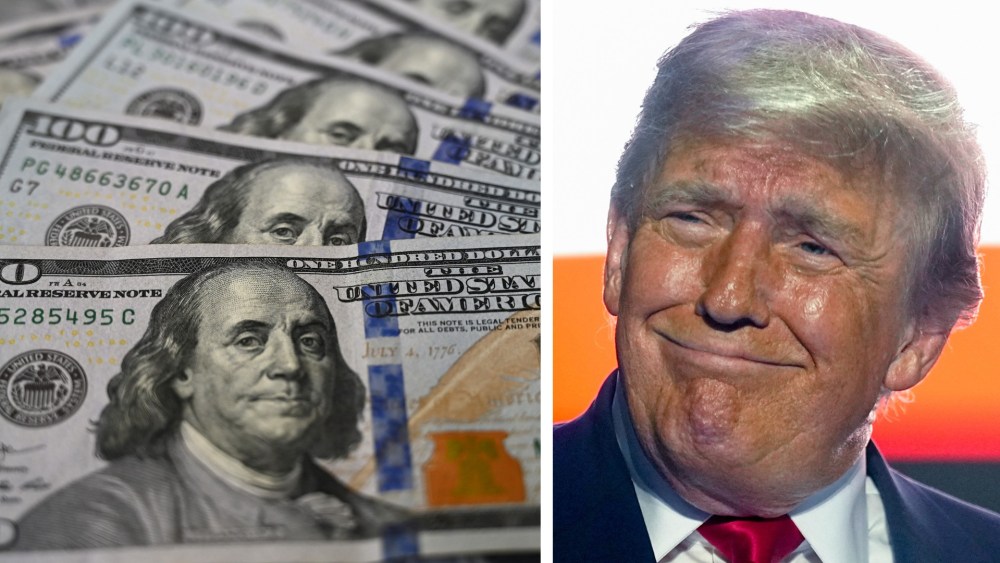
As mind-boggling as the size of that gift was when it was announced, it turns out that pales in comparison to the ways Trump has increased his personal wealth since returning to office. Trump made more than $2 billion last year, mostly through crypto schemes, according to a mandatory government financial disclosure report released Tuesday. Crypto appears to have provided an easy path to influence.
by Jacques Berlinerblau | Jul 3, 2026 | Opinion
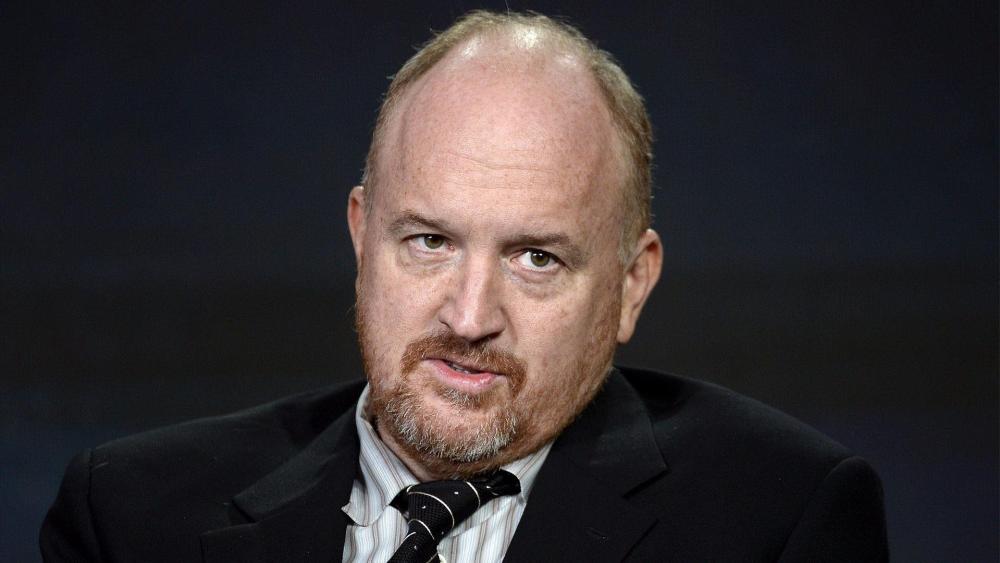
In order to make sense of Louis C.K.’s new Netflix special, “Ridiculous,” I find it’s helpful to consider how the controversial and once-“canceled” comedian looks. When I watch him move on stage, it seems he moves slowly. The camera trains on his face, weighed down by eye bags that cast shadows on his cheeks. His balding dome is potted with a few wisps of disobedient hairs sprouting this way and that. From a very specific angle, it appears two curved lines are indented on each side of his forehead, forming a set of parentheses around his mind. Within those parentheses he seems to be thinking: “I no longer give a f—!”
Fans of C.K.’s brand of absurdist nihilistic humor will love the show. He opens by mentioning that he contracted AIDS by having intercourse with a rat.
Fans of C.K.’s brand of absurdist nihilistic humor will love the show. He opens by mentioning that he contracted AIDS by having intercourse with a rat. He tells us he dreamt that he urinated on a baby (after sharing this with his shrink, he says, his course of therapy was promptly terminated). He appraises his mother’s genitals. He thanks his father for never having sexually abused him — though he concedes there’s still time for that to happen.
For me, the best bits were the ones that had little to do with his customary themes of pedophilia, incest, rape, sexism and casual racism, the abject staples of the C.K. canon. Rather, it was a series of more observational riffs that I found to be quite good. Reminding us how deft a physical comedian he is, C.K.