by Ja'han Jones | Feb 22, 2026 | Opinion
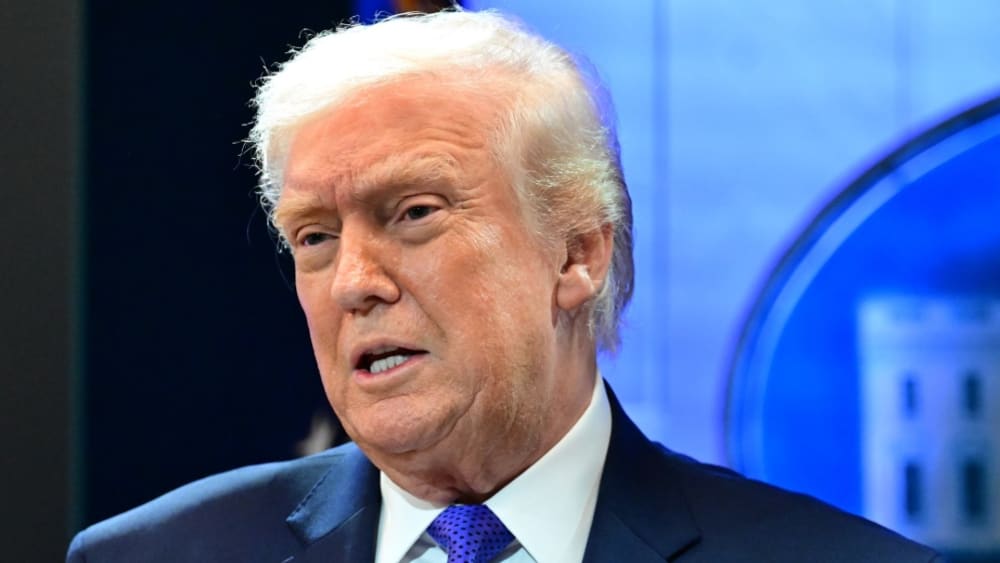
In the primary for a newly gerrymandered Texas congressional district, Donald Trump and a bunch of Big Tech oligarchs are backing a Republican candidate who’s been unapologetic about his bigoted opinions.
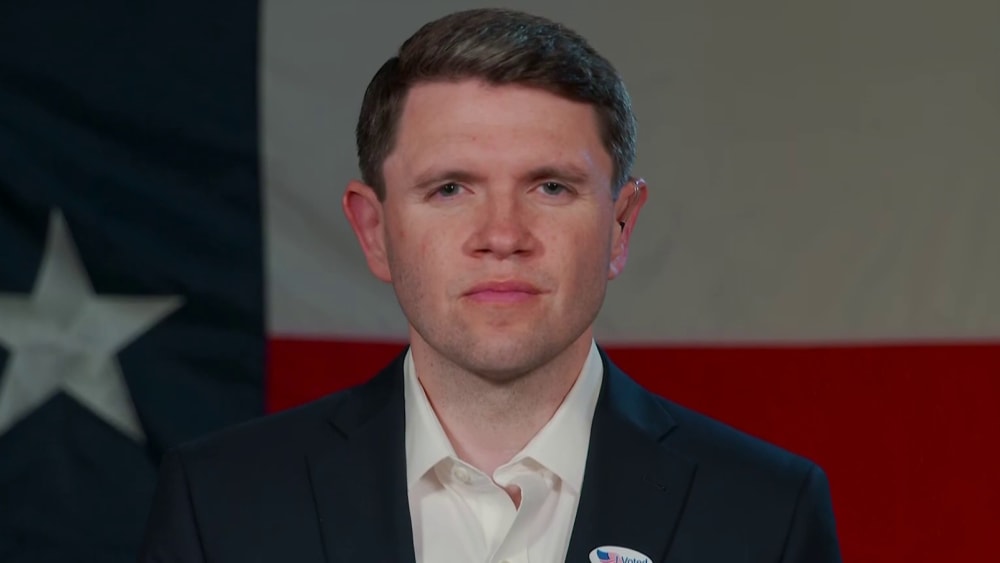
Jace Yarbrough — a conservative lawyer running in the primary for Texas’ 32nd Congressional District with the endorsement of the president and the financial backing of conservative tech executives like Peter Thiel — is a perfect example of how racist gerrymandering can give rise to racist lawmakers.
Trump pushed for Texas (among other states) to gerrymander its districts to help Republicans ahead of this year’s midterm elections. In Texas, this was largely achieved by diluting the voting power of Black and Latino communities in a number of districts, making Texas’ 32nd District what the Texas Tribune called “the safest bet for Republicans out of the five Democratic seats targeted by the GOP’s new congressional gerrymander.”
The Guardian listed some of the bigoted viewpoints that Yarbrough espoused at a candidate forum just last week:
On immigrants, he said: ‘We no longer share common values with people that we see in the grocery store or at our public schools, people that are at the local mall. Because we’re not from the same place, we don’t have the same formation.’ He also called for repealing the Hart-Celler Act, the 1965 law that ended race-based immigration quotas – a longtime white nationalist policy demand that has increasingly been voiced in organs of the Maga movement.
But wait, there’s more:
On Islam, Yarbrough said: ‘Our first introduction, for most of us, was 9/11. And then what happens? Then we see hordes of Islamic immigrants coming and attempting to set up Sharia law here

by Jared Bernstein | Feb 22, 2026 | Opinion
President Donald Trump had a bad day Friday — and the rest of us had a good one.
The Supreme Court’s 6-3 ruling striking down the Trump administration’s so-called “reciprocal tariffs,” a sweeping set of taxes on imports that took U.S. tariff rates up to levels not seen for a century, couldn’t have been clearer that the administration’s legal logic was fatally flawed.
Had the high court not struck down such egregious presidential overreach, it would have been a terrible day for democracy.
As an economist, I have closely tracked Trump’s disruptions to international trade since his first term. But my immediate reaction to the court’s ruling was not about the economics of trade. It was about the rule of law. Had the high court not struck down such egregious presidential overreach, it would have been a terrible day for democracy. Instead, in contrast to Trump’s announcement last April, Friday was the real-deal “Liberation Day.”
OK, onto the economics:
Early analysis from the Yale Budget Lab found that the tariff rate should fall by about half, from around 17% to around 9%, if the Trump tariffs are removed as the high court ordered. That’s still a historically high rate, but it would be important relief for businesses and consumers — if it materializes.
Play
Reaction to Trump’s criticism of Supreme Court: ‘Language of autocracy not democracy’
February 20, 2026 / 09:55
Such relief, of course, might not be forthcoming if Trump is able to quickly replace the tariffs that were struck down. In his announcement Friday, Trump leaned into Section 122 of the 1974 Trade Act, which gives the president the authority to quickly and broadly impose
by Max Burns | Feb 22, 2026 | Opinion
For a few hours on Friday, the Supreme Court’s 6-3 decision that President Donald Trump’s global tariffs are an illegal and unprecedented abuse of emergency wartime powers looked poised to leave Trump’s second-term legacy in tatters and the future of his presidency in doubt.
And then Trump hit back with characteristic defiance. Arguing that the court gave him the “unquestioned right” to impose tariffs, Trump announced he would sign an executive order imposing a global 10% tariff while pursuing his trade policies along other legal avenues. He did so Friday night, all but guaranteeing the White House will end up back in federal court while markets, businesses and consumers endure uncertainty over Trump’s ever-shifting approach to trade. Then, on Saturday morning, Trump said he would actually be raising the global tariff to 15%.
In short, it’s more Trumpian chaos-as-usual.
Play
Ari Melber breaks down Supreme Court’s tariff ruling: ‘The law held’
February 20, 2026 / 10:51
Global tariffs have been a centerpiece of Trump’s presidency, both as economic policy and as a potent political weapon to browbeat foreign nations into signing trade deals favorable to the United States. They have also generated a mountain of revenue — more than $289 billion last year — on the backs of American importers and consumers. Now, Trump faces the humiliating prospect of repaying over $175 billion in tariff fees to injured parties, according to a Penn-Wharton Budget Model analysis.
The Trump administration spent most of last year (and millions of taxpayer dollars) fighting multiple federal court battles over the legality of the tariffs Trump imposed in the spring. When cases reached the Supreme Court in November, the justices expressed skepticism during
by Hussein Ibish | Feb 22, 2026 | Opinion
The inaugural meeting of the President Donald Trump-led “Board of Peace” on Thursday was fittingly described as a “show” in the White House readout circulated to the press. It was indeed merely a show. And while it is supposed to address post-war reconstruction in Gaza, there is no mechanism for connecting it to anything that could happen in reality.
The initial impulse for creating this board was the resolution of the war in Gaza and the reconstruction of the almost totally demolished living areas for the 2.2 million Palestinian civilians there, almost all now huddling in makeshift tents waiting for the next box of food aid. But the board’s remit recently expanded to ending multiple conflicts, including the war in Ukraine.
Neither Israel nor Hamas appear inclined to cooperate in preparing for any meaningful reconstruction project.
Notably, there are no Ukrainians or Palestinians on the board, although such champions of peace as Russian President Vladimir Putin, Belarus President Boris Lukashenko and Israeli Prime Minister Benjamin Netanyahu agreed to join. The governments joining this board don’t include any of the United States’ Western allies.
Canadian Prime Minister Mark Carney was specifically disinvited — not that he ever showed any inclination to participate — after he criticized Trump’s attitude toward traditional U.S. partners. It is a self-selected group, in some cases, pledging a $1 billion permanent membership fee. The press release announcing the “run of show” of the board’s inaugural meeting was also replete with errors, including misstating the United Arab Emirate’s representative’s title and the name of the Saudi minister of state for foreign affairs. Such simplistic errors regarding major leaders of long-standing and key
by Ayman Mohyeldin | Feb 21, 2026 | Opinion
In the run-up to the Texas primaries, the issue taking center stage in the Lone Star State is not affordability, inflation or the border. It’s religion. Specifically, Islam.
What began as a crowded field of Republican hopefuls jockeying for attention has devolved into a campaign of bigotry.
This isn’t fringe language. It’s now part of the mainstream GOP campaigning strategy.
This isn’t fringe language. It’s now part of the mainstream GOP campaigning strategy.
“The Muslim community is the boogeyman for this cycle,” Texas GOP consultant Vinny Minchillo told Politico with disturbing candor. “One hundred percent this message works — there’s no question about it.”
For Republican candidates, the most effective lever they can pull to draw attention increasingly is fear, not facts.
Play
James Talarico: Backlash to Trump is why he’s ‘worried we’re going to flip Texas’
February 17, 2026 / 07:28
One GOP candidate for Texas attorney general has ads asserting that politicians have “imported millions of Muslims into our country.” Without citing evidence, the ad links them to crime, terrorism and even claims that Muslims want “illegal cities” in order to “impose Sharia law.”
Another candidate publicly withdrew from a community event at a mosque, saying his security advised him against attending, and later bemoaned “how much more dangerous the Islamization of Texas has made our state.”
Another Republican candidate burned a Quran and declared that “your daughters will be raped and your sons beheaded unless we stop Islam once and for all.”
In state and federal primaries across Texas, Republican candidates are speaking about a Muslim invasion into their communities to impose Sharia law. Many are vowing to “fight radical Islam.”
Even Sen. John Cornyn and his most prominent challenger, state Attorney
by Ja'han Jones | Feb 19, 2026 | Opinion
Meta launched what’s set to be the largest push to back political candidates in its history, a move that just so happens to come as the social media company faces a wave of negative press and arguably its most precarious legal fights to date.
The New York Times reported that Meta kicked off a $65 million effort ahead of this year’s midterm elections to “boost state politicians who are friendly to the artificial intelligence industry, beginning this week in Texas and Illinois.”
The Times noted that “the sum is the biggest election investment by Meta, which owns Facebook, Instagram and WhatsApp” and reported that company representatives said the investment is “driven by concerns over the regulatory threat to the artificial intelligence industry as it aims to beat back legislation in states that it fears could inhibit A.I. development.”
The report says Meta will back Democrats and Republicans alike, using two different super PACs:
One group, Forge the Future Project, is backing Republicans. Another, Making Our Tomorrow, is backing Democrats. The new PACs join two others already started by Meta, one of which is focused on California while the other is an umbrella organization that finances the company’s spending in other states.
Meta and its CEO, Mark Zuckerberg, have basically spent years bending the knee to President Donald Trump, who in return has pushed to ban states from regulating companies that invest in artificial intelligence tools. So, on some level, what Meta is doing with this new spending spree is akin to the brazenly oligarchic behavior we’ve seen out of other tech bros who are using their money to influence the midterms and the political system