by Michael A. Cohen | Feb 28, 2026 | Opinion
Nearly 24 years ago, four months after the 9/11 attacks, former President George W. Bush delivered a State of the Union address that laid the groundwork for the war in Iraq. Over the next 14 months, Bush administration officials traveled the country, testified to Congress and made a case to Americans for war.
They did so in exaggerated, misleading terms that often relied on scare tactics — and, by most any objective measure, the war was a strategic disaster for the United States. But Bush’s effort to rally public opinion, no matter how dishonest, stands in sharp contrast to President Donald Trump’s efforts to prepare the country for war with Iran.
Over the past several weeks, the U.S. moved two carrier groups into the Middle East, along with hundreds of bombers and fighter planes. It is the largest presence of U.S. military forces in the region since the 2003 invasion of Iraq. On Saturday morning, the U.S. launched attacks on Iran, in coordination with Israel.
And yet, despite the eight-minute Truth Social video posted early Saturday morning, Trump made almost no effort to prepare the country for war or explain his actions.
Trump has shown complete indifference to getting buy-in from Congress or Americans for a military conflict that even his military advisers, in news media leaks, said could put a significant number of American troops in harm’s way and has a limited chance at success.
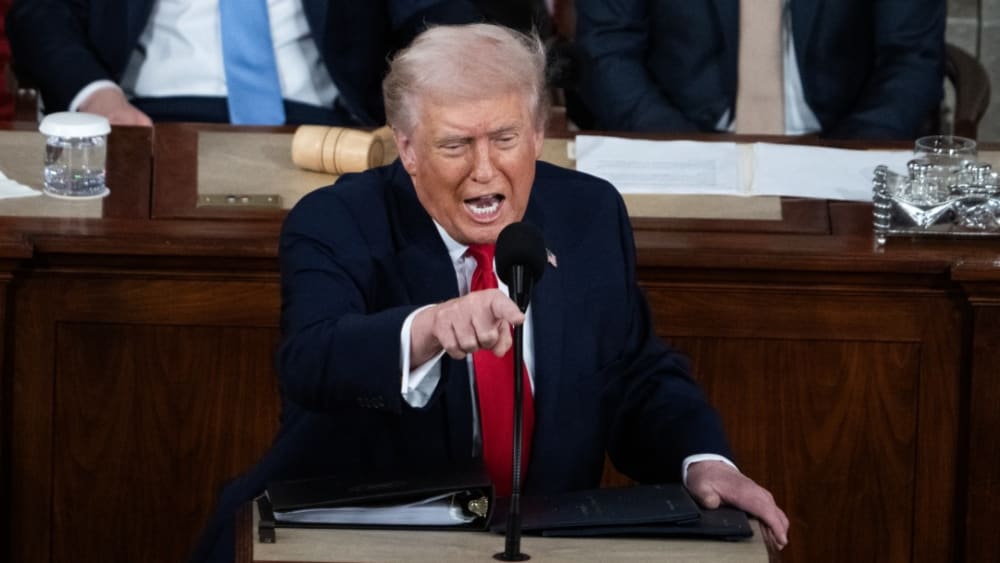
Indeed, Trump had the same opportunity as Bush did to make the case for war at the State of the Union this week — and he refused to take it.
Play
White House ‘isn’t saying much’ about U.S.-Iran nuclear talks: Hillyard
February 26,
by Hayes Brown | Feb 28, 2026 | Opinion
A battle of wills between Anthropic and Defense Secretary Pete Hegseth concluded Friday with the AI company effectively banned from all federal government systems. It was something of a deus ex machina, courtesy of President Donald Trump, to a moral standoff over how the Pentagon could use Anthropic model, Claude. Hegseth’s hardline stance — and Trump’s dudgeon over being challenged — showcase how right CEO Dario Amodei was to try to put (some) limits on the way his company’s technology was deployed.
As with almost every major technological leap, America’s laws are deeply lagging when it comes to policing the rapid growth of AI.
Anthropic first won a major $200 million contract with the Defense Department last year, granting access to the company’s AI models and allowing them to be deployed on work involving classified material. But Anthropic, which was founded over concerns about the lack of safeguards at other AI startups like OpenAI, is one of the few companies in the AI space calling for more federal regulation over the emerging technology. It’s telling then that OpenAI swooped in soon after Anthropic’s unceremonious dumping to fill the vacuum, despite pledging to (somehow) prevent the Pentagon from abusing its technology.
Amodei soon found himself defending his company from claims that it is building “woke AI,” as White House AI czar David Sacks put it last year, and at odds with an executive order demanding that AI models used by the federal government be “free from ideological bias.” But the tensions between the Pentagon and Anthropic really exploded after Amodei published an essay in January listing his concerns about how AI could be used by
by Paul Waldman | Feb 28, 2026 | Opinion
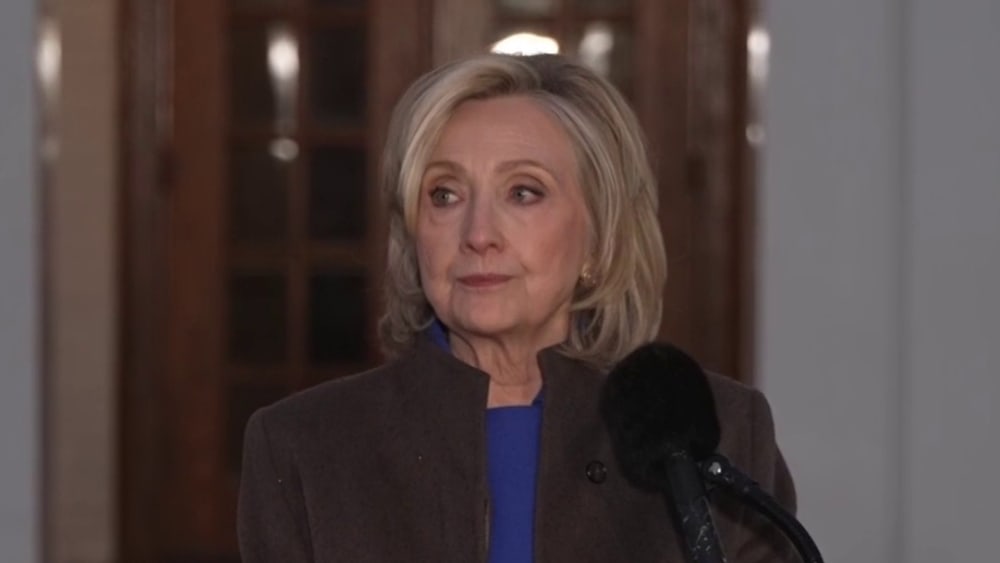
Republicans clearly hoped this week that by hauling both Clintons in front of the House Oversight Committee for questioning about Jeffrey Epstein, they could, at minimum, embarrass Democrats. But this gang only ended up embarrassing themselves. The former secretary of state handily turned what Republicans presumed would be a humiliating moment into her own political win — and showcased Republicans’ woefully unserious handling of the Epstein scandal in the process.
Any reasonable person might have wondered what the heck the House Oversight Committee, the panel that is supposed to be Congress’ watchdog over the executive branch, was doing wasting its time with Hillary Clinton. At least Bill Clinton knew Epstein in the early 2000s and flew on his plane numerous times. But as the former first lady said when she spoke to the press after her deposition, “I don’t know how many times I had to say I did not know Jeffrey Epstein, I never went to his island, I never went to his homes, I never went to his offices.”
Play
‘I wish they had done it in public’: Hillary Clinton speaks after congressional Epstein deposition
February 26, 2026 / 10:46
And that wasn’t all. “It then got at the end quite unusual,” she said, “because I started being asked about UFOs, and a series of questions about Pizzagate.” For some reason, they didn’t press her on whether NASA faked the moon landing.
This is the nature of the Republican response to the unending Epstein scandal: from Congress, the kind of buffoonery represented by the Clinton deposition; and from the administration, an insistence that Trump is unconnected to or “exonerated” from a scandal whose central
by Anthony L. Fisher | Feb 26, 2026 | Opinion
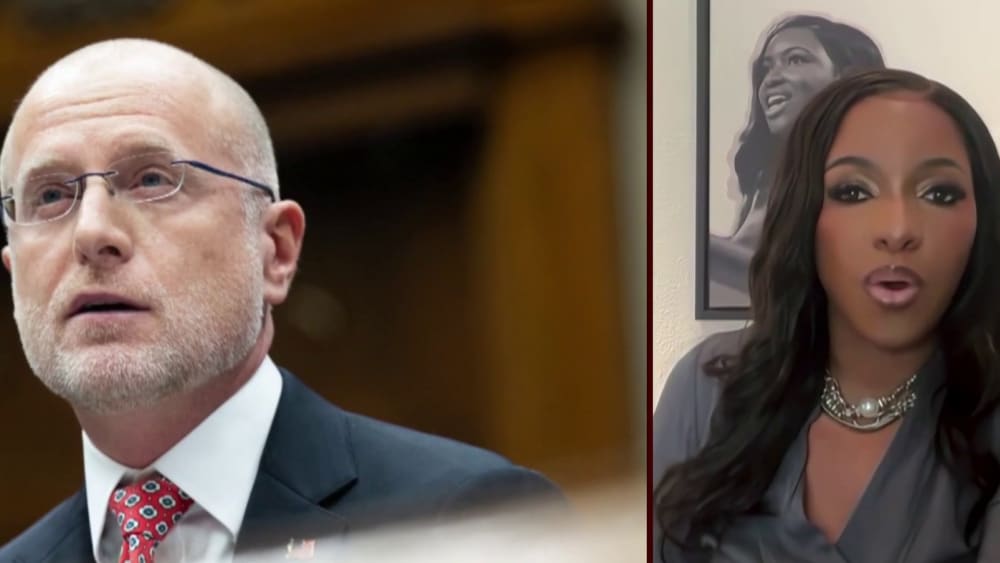
Federal Communications Commission Chairman Brendan Carr apparently isn’t content just to be the comedy and talk show police. With the zeal of a hall monitor a little too eager to please the principal, Carr digs up archaic regulations and flagrantly threatens to use regulatory power for nakedly partisan purposes. And now it seems he’s taking on the role of patriotism cop, too.
In a statement released last Friday, the trollish MAGA culture warrior called for broadcasters to “pledge to provide programming that promotes civic education, national pride, and our shared history” as part of the FCC’s Pledge America campaign — itself a part of President Donald Trump’s Salute to America 250 Task Force.
Some of Carr’s suggestions for patriotic content seem like they’re from the mind of a 150-year-old.
Carr, whose earlier threats to Disney and ABC over a Jimmy Kimmel monologue led Sen. Ted Cruz, R-Texas, to liken the FCC chairman to a “mafioso” straight out of “Goodfellas,” indicated in the statement that this “patriotic, pro-America content” would be seen by the broadcasting regulator-in-chief as “fulfilling their public interest mandate.” This, presumably, would help inoculate broadcasters from punitive investigations like the ones Carr has already made a habit of launching. (An addendum to the FCC’s press release notes that it is “voluntary” for broadcasters to “choose to indicate their commitment to the Pledge America Campaign.”)
Now, to be very clear, there is nothing inherently wrong with “pro-America” content or expressions of patriotism — especially in celebration of America’s semiquincentennial. But as I’ve written previously, the idea that patriotism should be a “my country, right or wrong” monolith — or defined by support of
by Ja'han Jones | Feb 26, 2026 | Congress, Opinion
Democrats in the Senate are sounding the alarm about a grim realm of online betting in which wagers are placed on deadly scenarios, such as U.S. military activities and risky space missions.
In a letter sent to the head of the Commodity Futures Trading Commission on Monday, Democratic senators point to bets that have been placed on online betting platform Polymarket (which, coincidentally, also has a business relationship with the Trump family).
The letter to chairman Michael Selig followed a controversial video he posted last week announcing the Trump administration will attempt to block states from regulating prediction markets like the one Trump and his family launched last year.
“We are writing to express strong concern with prediction contracts that incentivize physical injury or death, and the grave and perverse moral and geopolitical implications of these contracts,” the senators wrote. “These contracts present dangerous national security risks, including creating incentives to incite violence, foment geopolitical conflicts, and disclose classified information. These concerns have already been realized in recent months as these contracts proliferate on exchanges.”
Signatories include Sens. Adam Schiff of California, Richard Blumenthal of Connecticut, Tim Kaine of Virginia, Cory Booker of New Jersey and Catherine Cortez-Masto and Jacky Rosen, both of Nevada.
They specifically called attention to Polymarket wagers related to the ouster of Venezuelan leader Nicolás Maduro, the potential explosion of a NASA rocket known as Artemis II and Russia’s invasion of Ukraine. My MS NOW colleague Sydney Carruth reported in January on insider trading concerns swirling around the Trump administration’s abduction and imprisonment of Maduro, which arose after someone won more than $400,000 from a Polymarket wager centered on Maduro’s capture.
In the
by Josh Bivens | Feb 26, 2026 | Opinion
President Donald Trump has said some strikingly out-of-touch things about affordability: that it’s a “hoax,” he’s “solved it” and he’s “won affordability.” In his State of the Union address, he even said “prices are plummeting downward.” U.S. families know this is nonsense. But to see how much Trump’s policies will erode affordability in the coming years, you must understand that affordability isn’t just about prices.
Affordability is the outcome of a race between incomes and prices. And for typical families, the Trump agenda is near-guaranteed to harm their incomes far more than it can possibly reduce their prices.
For typical families, the Trump agenda is near-guaranteed to harm their incomes far more than it can possibly reduce their prices.
Even judged by the movement of prices alone, Trump’s record on affordability is poor. Inflation fell from 8.0% to 3.0% in the final two years of the Biden administration. This rapid downward movement slowed to a crawl in the first year of Trump’s second term, with inflation falling from 3.0% to just over 2.6%.
There are clear policy reasons why progress in reducing inflation has slowed. Electricity prices have surged as the Trump administration has ended subsidies for renewable generation passed during the Biden administration. The Trump tax cuts passed in the president’s first term were part of a law that gouged loopholes in the tax code, including inviting pharmaceutical companies to offshore their production and import back into the United States. Last year the Trump administration put tariffs on these offshored pharmaceuticals, pushing up their costs. When the administration failed to extend Obamacare subsidies for people buying health insurance through the exchanges, healthier enrollees who