by Ja'han Jones | Apr 9, 2026 | Opinion
The Trump administration’s fragile white ego is in focus yet again thanks to newly proposed changes for an exhibit in Philadelphia centered on George Washington and slavery.
The administration is being sued by the city over its efforts to whitewash Washington’s history of slave ownership from the President’s House Site, the nation’s first official presidential residence. The push has been put on hold by a judge who compared it to the censorship depicted in George Orwell’s book “1984.”
The attempted alteration of the exhibit came after a Trump executive order demanded a review of national parks and museums to bar any displays that “inappropriately disparage Americans past or living.” Last year, Trump also lobbed a puerile complaint that Smithsonian musuems focus too much on “how bad” slavery was.
And all that kvetching provides context for the changes that Trump’s administration is seeking to impose at the President’s House Site — alterations that The Philadelphia Inquirer said places the first president’s slave ownership “in a more sympathetic light.”
The Inquirer flagged government renderings showing plans for new historical panels to be installed at the site, and it seems clear that the administration’s goal is to make Washington out to be a loving patriot or conscientious objector to slavery, rather than a racist slave driver.
First, note what the Inquirer said has been removed:
The panels taken down by the Park Service in January included displays titled ‘The Dirty Business of Slavery’ and ‘Life Under Slavery,’ as well as illustrations about the Fugitive Slave Act and Ona Judge, who was enslaved by Washington and later escaped.
So the administration wants to omit detailed references to Washington’s slavery history —
by Ja'han Jones | Apr 9, 2026 | Opinion
New Mexico Congressman Gabe Vasquez is demanding answers and accountability over reports of widespread civil rights violations at one of the Trump administration’s immigrant detention facilities.
Vasquez on Monday visited Camp East Montana in El Paso, Texas, following an internal U.S. Immigration and Customs Enforcement report that listed more than four dozen examples in which the agency violated national standards for detainees.
“The conditions that I saw inside the detention facility today are beneath our American values,” Vasquez said. “We heard concerns regarding withholding of medical care. They said you practically have to be down on the ground, dying, choking before you receive medical care.”
The largest facility being operated by ICE, Camp East Montana is a conglomerate of massive tents where immigrants targeted in Donald Trump’s racist crackdown are being housed. Last month, ICE replaced the lead contractor operating Camp East Montana after concerns about civil rights violations swirled around the facility for months.
The new report, which came via ICE’s Office of Professional Responsibility, cites 22 violations of standards regarding “use of force and restraints,” including guards failing to document use of force against detainees and failing to preserve evidence, including video, of officials using force. It also cites five examples of violations involving “medical care,” including officials failing to adequately quarantine or test people who showed signs of tuberculosis and failing to test some detainees for HIV. The report found the facility “has not implemented a coordinated, multidisciplinary team approach to responding to sexual abuse and assault.”
Activists and human rights experts have been sounding the alarm about conditions at Camp East Montana for quite some time. The facility seems like the
by Ja'han Jones | Apr 9, 2026 | Opinion
An Arizona Republican lawmaker appears to be attempting to get federal law enforcement to do his dirty work again, this time targeting Arizona’s Democratic attorney general and secretary of state.
Referring political opponents for federal probes has become Arizona Senate President Warren Petersen’s modus operandi. On Tuesday, Petersen sent a criminal referral for Arizona Attorney General Kris Mayes and Secretary of State Adrian Fontes to the Department of Justice.
Both Mayes and Fontes have sounded the alarm on the Trump administration’s potential acquisition of sensitive voter data from 2020, as Trump and his allies rehash debunked conspiracy theories that Arizona’s election results were fraudulently rigged in favor of former President Joe Biden. That inquiry, which has been preemptively discredited by a Republican-backed audit of Arizona’s election results, came as Trump said the United States “shouldn’t even have an election” this year and that Republicans should “take over” elections in areas controlled by Democrats.
Last August, Petersen asked the feds to open an investigation into Democratic state Rep. Analise Ortiz for informing the public where immigration raids were taking place, an act that allies of the president have tried to argue is against the law.
One might also note that Petersen is running in the Republican primary to become Arizona’s next attorney general. Nearly all of Arizona’s state-level elected officials are Democrats.
Petersen’s request for a federal inquiry centers on allegations of obstruction and witness tampering, which stem from letters Mayes and Fontes sent inquiring about whether Petersen handed voter information over to the Trump administration last month.
In a social media post, the Senate leader made clear he was asking the feds to investigate Mayes, his

by Hannah Holland | Apr 8, 2026 | Opinion
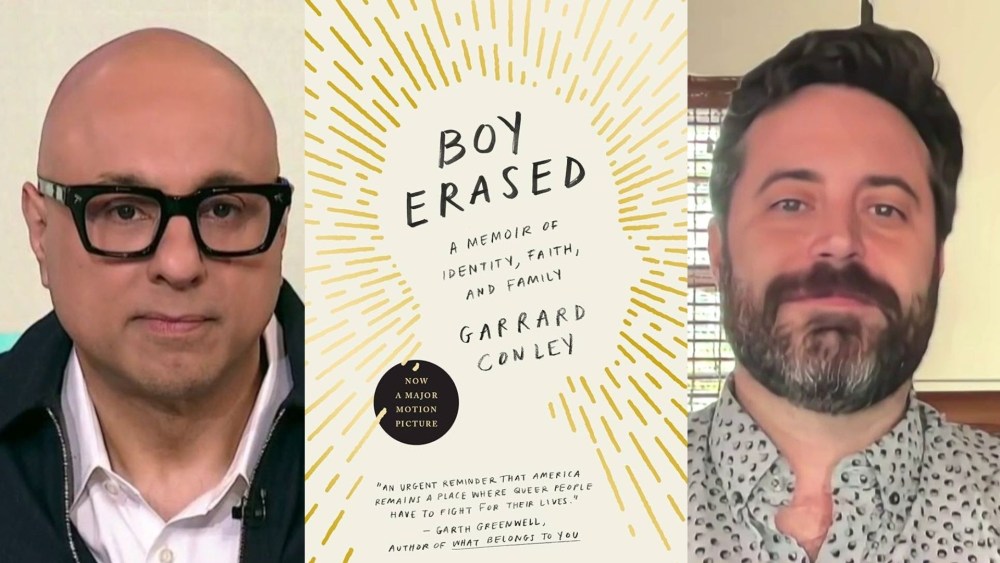
Garrard Conley begins his 2016 memoir “Boy Erased” in a semicircle of folding chairs under halogen lights. Conley, then 19, had only just arrived at Love in Action, a cruelly named so-called gay conversion center, in Memphis.
One of the practitioners stood in front of Conley and his cohorts, all dressed in uniform, and said: “The first thing you have to do is recognize how you’ve become dependent on sex, on things that are not from God.”
For people facing similar circumstances today, the Supreme Court just made it possible for things to get worse.
“We were learning Step One of Love in Action’s Twelve Step program,” Conley writes in his memoir, “a set of principles equating the sins of infidelity, bestiality, pedophilia, and homosexuality to addictive behavior such as alcoholism or gambling: a kind of Alcoholics Anonymous for what counselors referred to as our ‘sexual deviance.’” It would only get worse.
For people facing similar circumstances today, the Supreme Court just made it possible for things to get worse for them, too. Last Tuesday, an 8-1 Supreme Court majority rejected a Colorado law that effectively banned gay conversion therapy for young people. Passed in 2019, Colorado’s Minor Conversion Therapy Law prohibits licensed mental health professionals from providing “any practice or treatment” with the express intent to change a minor’s “gender expressions or to eliminate or reduce sexual or romantic attraction or feelings toward individuals of the same sex.”
The case challenging the law was initiated in 2022 when Kaley Chiles, an evangelical Christian and licensed talk therapist, sued the state, arguing that her First Amendment right to discuss her faith and beliefs on
by Anthony L. Fisher | Apr 8, 2026 | Opinion
Whatever inspired President Donald Trump to not unleash an even more severe bombing campaign against Iran on Tuesday night — and possibly commit scores of war crimes by obliterating civilian infrastructure in the process — a two-week ceasefire is a positive, if short-term, development. But this should not be celebrated as some kind of victory for America or for the Iranian people, who remain under the yoke of a sadistic theocracy.
Over and over in recent days, Trump has pledged to bomb Iranian power plants and infrastructure as part of a mighty American military campaign. In his zeal to project the U.S.’ “strength,” however, Trump’s actions on Tuesday have signaled something else entirely: a weak and unstable leader who has done irreparable damage to America’s reputation and the global order. Among the most befuddling developments: Why did Trump declare Iran’s “10 point proposal” (brokered through Pakistani mediators) “not good enough” on Monday, but suddenly a “workable basis on which to negotiate” on Tuesday? And how can Trump claim to have fully reopened the Strait of Hormuz when Iran still controls it?
This should not be celebrated as some kind of victory for America or for the Iranian people, who remain under the yoke of a sadistic theocracy.
Trump’s evolution on Tuesday was a global spectacle, starting with a social media post warning that a “whole civilization will die tonight” to another post, hours before his self-imposed deadline, about a “double-sided CEASEFIRE” if Iran agreed to reopen the Strait of Hormuz. White House press secretary Karoline Leavitt declared on X later on Tuesday, “This is a victory for the United States that President Trump
by Hayes Brown | Apr 8, 2026 | Opinion
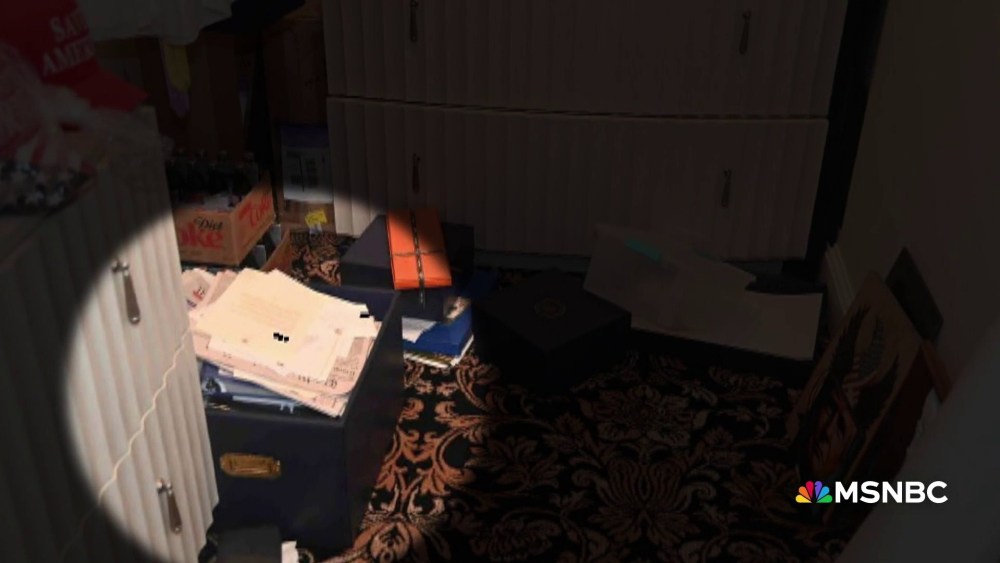
The Justice Department issued a memo last week asserting that one of the key laws passed in the aftermath of the Watergate scandal is unconstitutional. The law in question — the Presidential Records Act — was at the core of one of the federal criminal cases filed against President Donald Trump after his first term ended. The DOJ memo’s sweeping dismissal of the PRA serves as both a de facto attempt to exonerate Trump’s previous criminality and a broadside against the idea that Congress can ever place checks on the presidency.
The 52-page document, first reported by Axios, comes from the desk of T. Elliot Gaiser, the assistant attorney general in charge of the DOJ’s Office of Legal Counsel. While his office’s findings don’t hold the same weight as a court ruling, they are used to set legal policy within the administration. The memo is framed as a response to White House counsel David Warrington’s apparent question whether the PRA is constitutional. (Exactly why Warrington was asking goes unaddressed.)
The memo’s position opens the door to exactly the kind of harm the Presidential Records Act was meant to prevent.
Gaiser argues that the PRA can’t be constitutional for “two independent but interlocking reasons.” First, it exceeds Congress’s enumerated and implied powers” — neither wielding the legislature’s oversight or regulatory authority nor even touching on the power of the purse. Second, “it aggrandizes the Legislative Branch at the expense of the constitutional independence and autonomy of the Executive.” And, crucially, Gaiser determines that the law shouldn’t stand “because it restricts rather than empowers the President.”
Prior to the Presidential Records Act, presidents considered the myriad