by Symone D. Sanders Townsend | Apr 13, 2026 | Opinion
In 2006, a second-term Republican president was on the ropes. A wave of Democratic wins in the midterm elections showed the party was likely to win back the White House in the next election.
Democrats began planning immediately what they would do with that power, settling on a broad outline of a health care proposal that eventually became the Affordable Care Act.
Twenty years later, Democrats are already talking about a wave election. The results of recent races in Wisconsin and Georgia are just the latest signs, as they have consistently outpaced expectations in key races around the country.
Now people are starting to ask: What would Democrats do with that power?
Play
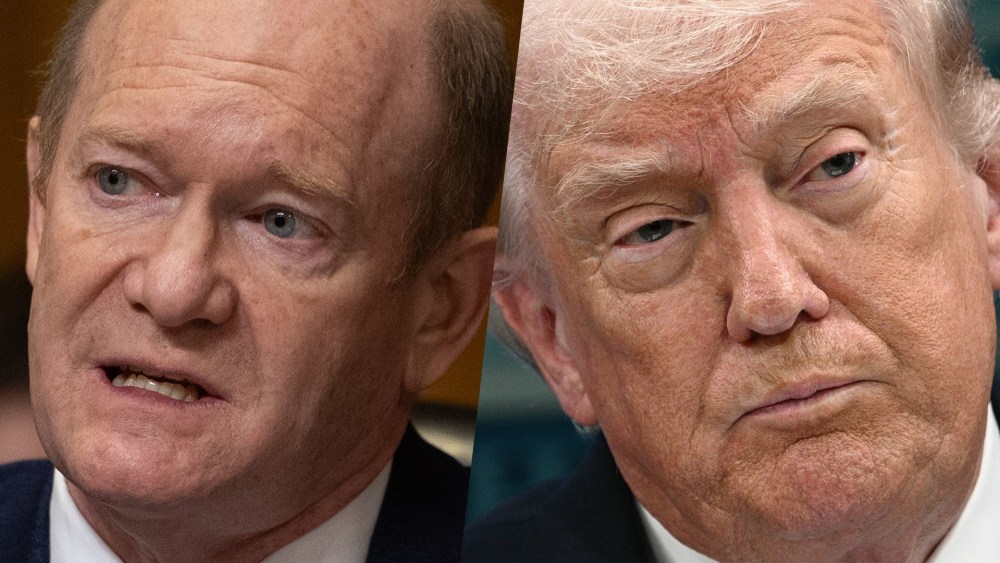
‘Failed leadership’: Sen. Coons slams Trump after no ‘need for backup plan’ comments on Iran
April 10, 2026 / 06:26
It’s a more important question now than ever because, this time, winning will come with more risk and more responsibility. It’s imperative that they begin planning what they will do over the next two years, as well as what they will do if they win the White House in 2028.
Because if Democrats win one or both chambers of Congress in November, it will not just be a rejection of President Donald Trump. It will be an expectation that they can use power in a way that actually changes people’s lives.
It’s important to plan ahead. As it turned out, the window to pass the Affordable Care Act was seven weeks — from Sen. Al Franken’s belated swearing-in to the unexpected death of Sen. Ted Kennedy. If they had not been able to move quickly, the window would have closed.
This time, there is no guarantee of
by Nicole Hemmer | Apr 12, 2026 | Opinion
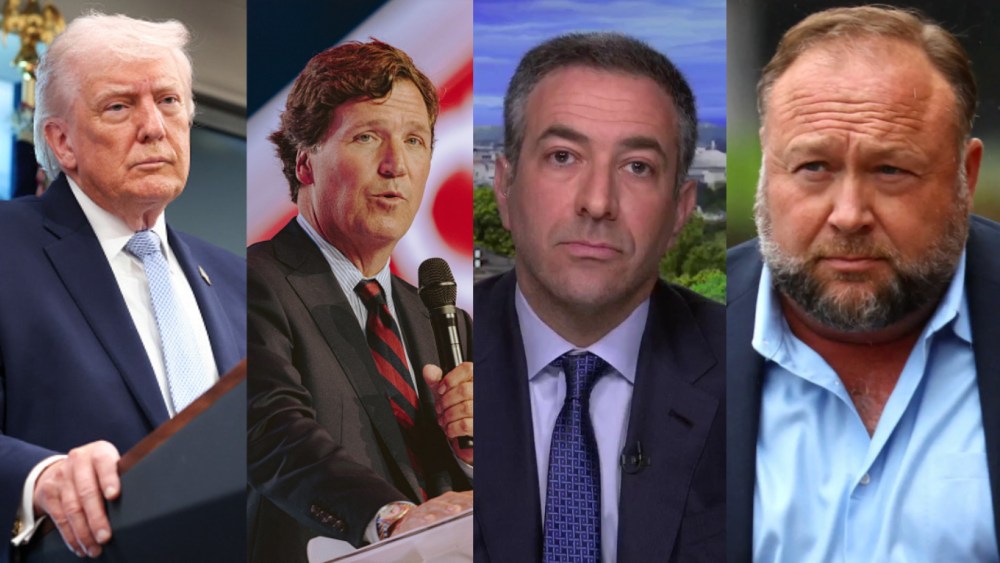
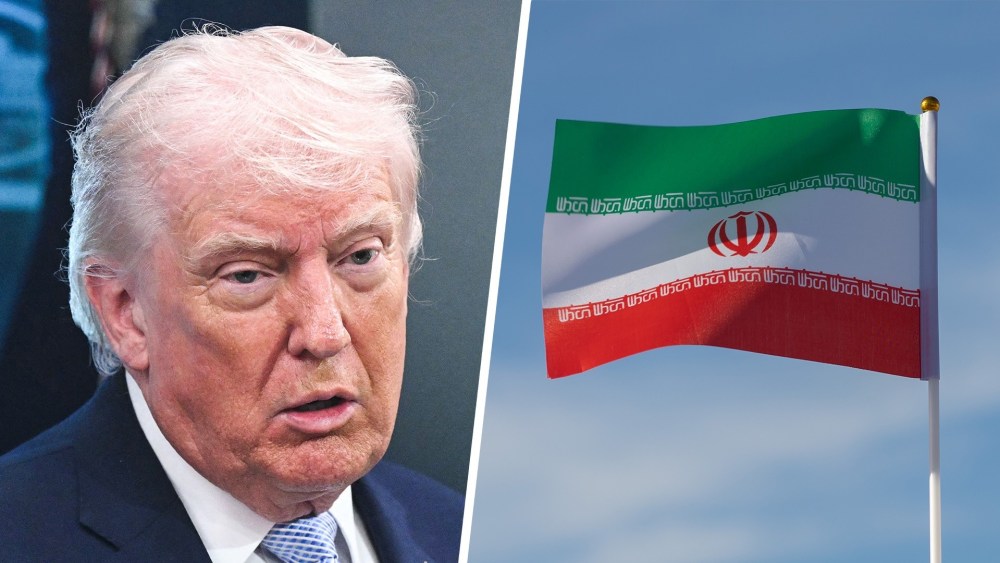
President Donald Trump posted an insult-packed screed on Truth Social on Thursday, aimed at a chorus of right-wing critics of his war on Iran. His targets included conspiracy podcasters Alex Jones and Candace Owens; former Fox News host Megyn Kelly; and, most prominently, another former Fox host, Tucker Carlson.
Right-wing attacks on Trump have not only caught the attention of the president, but also of liberals and progressives, who have applauded these blistering criticisms. During the first round of attacks on Iran last June, Jon Stewart marveled at Carlson’s criticisms, saying, “We’re in such a bizarro world, you’ve got me nodding my head to Tucker Carlson videos.” Just this week, Rep. Ro Khanna, D-Calif., heaped praise on the right-wing critics of the war, musing that they could be part of “a broad, populist social movement” to save democracy.
Right-wing media personalities can be divided into two groups: loyalists and opportunists.
Nor is Iran the only issue on which Carlson has won such praise from his left. His criticism of housing prices and stagnant wages won plaudits from affordability advocates, with some contemplating a left-right populist economic alliance. His embrace of Sen. Elizabeth Warren’s, D-Mass., argument in her book, “The Two-Income Trap,” led the Brookings Institute to admit, “Tucker Carlson has a point.”
But progressives do not, under any circumstances, have to hand it to Carlson or other far-right critics of the Iran war. Such praise does not bolster the case for constraining Trump’s lawless presidency. Rather, it amplifies voices who will use their support to further degrade U.S. democracy.
Right-wing media personalities can be divided into two groups: loyalists and opportunists. The first category, which
by Victor Ray | Apr 12, 2026 | Opinion, Politics
My employer, the University of Iowa, recently joined the reactionary national trend in higher education by creating what it calls the Center for Intellectual Freedom. Iowa’s Republican legislators, after being snookered by decades of evidence-free propaganda claiming left-wing indoctrination at colleges, appropriated a million dollars toward the creation of the center last year as a counterweight to this imaginary problem. But this center isn’t a balance for anything. It is, instead, a beachhead for the right’s attempted authoritarian takeover of higher education in the state.
One of the center’s first planned classes was canceled because only one student enrolled.
But not even conservative students are buying what the Center for Intellectual Freedom is selling. Despite the center’s director personally reaching out to the many conservative student groups on campus, one of the center’s first planned classes was canceled because only one student enrolled. Yes, you read that correctly: one student. The state could have saved some of the money it spent creating a safe space for conservative students by letting that one student enrolls in independent study.
When the two classes did get started in March, one had only 11 of 32 seats filled and the other only eight of 32.
The lack of demand for the center’s offerings should not be surprising, because the best evidence shows that, contrary to what conservative policy makers claim, conservative student’s don’t feel isolated or targeted on campus. According to a recent study from Gallup and the Lumina Foundation, only 2% of college students — and only 3% of college students who identify as Republicans — said their political views have made them feel out of
by Retired Amb. James Story | Apr 12, 2026 | Opinion
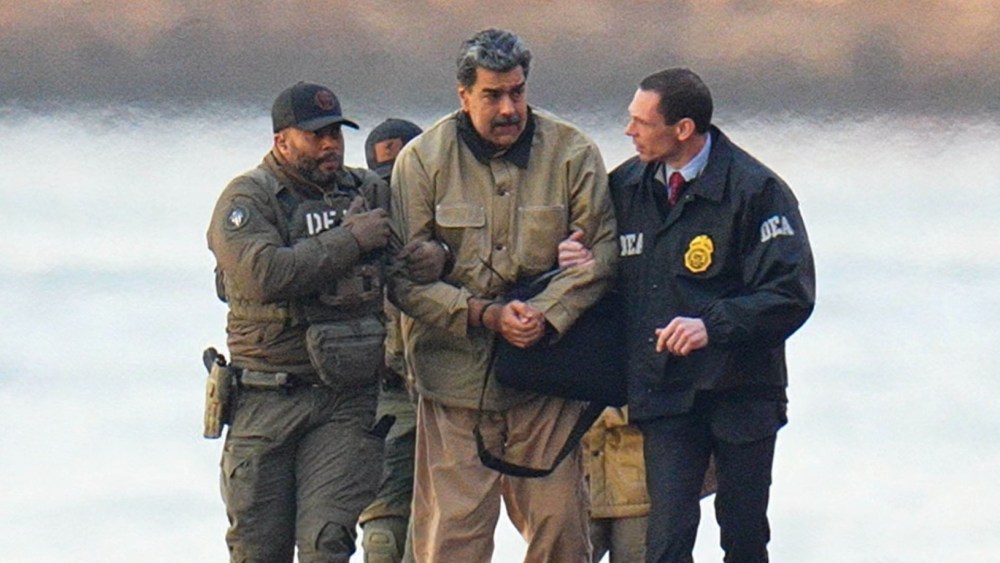
Some major changes are looming for Venezuela: A law passed Thursday opens mining to foreign investors — a priority of the Trump administration. The U.S. government recently recognized the regime of acting President Delcy Rodriguez and removed long-standing sanctions against Rodriguez herself. The message is clear: The priority is economic recovery.
So the question must be asked: What are the people of Venezuela getting out of all this, and what is the Trump administration getting for its concessions? As things stand, the U.S. risks frittering away the leverage it holds over Venezuela’s recovery.
What are the people of Venezuela getting out of all this, and what is the Trump administration getting for its concessions?
President Donald Trump implemented sanctions against Rodriguez and other key regime figures during his first term. The designation drew a moral line. Rodriguez, then Venezuela’s executive vice president, was accused of participating in the dismantling of Venezuela’s democratic institutions and undermining the lawfully elected National Assembly in order to maintain Nicolás Maduro’s control of the country. By directly sanctioning her and others in 2018, the Trump administration, which had sanctioned Maduro the year before, signaled that it considered their actions so egregious that these individuals should not retain access to their assets in the U.S., engage with U.S. business interests or travel to the U.S. They were cut off from the U.S. financial system, with a goal of isolating them internationally.
At the time, the Trump administration also recognized the National Assembly’s president, Juan Guaido, as the interim president of Venezuela, according to the Venezuelan Constitution. I was the top U.S. diplomat on the ground then and helped lead
by Matthew Pryal | Apr 11, 2026 | Opinion
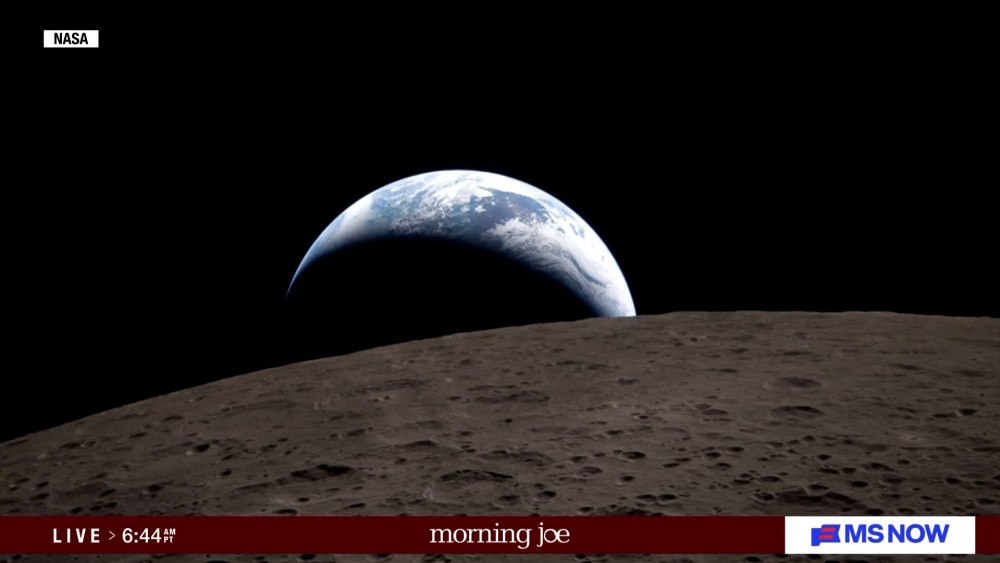
The Artemis II mission has, for the past 10 days, reminded people all across the world just how cool space exploration can be. From the jaw-dropping “Earthset” photo taken by commander Reid Wiseman to the four astronauts’ audible wonder as they flew closer and closer to the moon, to the touching moment when the crew named the moon’s Carroll Crater in honor of Wiseman’s late wife. There’s something about this mission that has felt beautifully, fundamentally human.
The moon has always mattered to us, of course. For as long as our species has been conscious, we’ve incorporated it into our myths and religions. It helped us understand our solar system and has long been a vital component of ancient calendars. Even our modern calendar relies heavily on the moon, from the way we begin our week (Monday) to the 12 sections of our year (months.)
There’s something about this mission that has felt beautifully, fundamentally human.
But it’s also true that this is not the first time we have sent humans on a lunar mission — before Artemis, 24 people had done so, including the 12 who actually walked on the moon’s surface. Given that reality, it’s not surprising that some people aren’t as enthusiastic about this latest attempt. After all, humanity has plenty of things to worry about closer to home — and many Americans likely feel that the tens of billions of dollars that NASA is spending on the Artemis program could be spent addressing more surface-bound problems.
These are fair questions, but I believe there are several reasons why ambitious programs like Artemis are worth our time and our tax dollars.
The most
by James Downie | Apr 11, 2026 | Opinion
When U.S. negotiators arrive in Islamabad, Pakistan, on Saturday for talks to end the war with Iran, they will be led by a new face: JD Vance. The vice president was reportedly Iran’s preferred negotiating partner, but his elevation looks less like a boon to his standing as a diplomatic force in the administration and more like a poisoned chalice.
In the nearly six weeks after the United States and Israel first attacked Iran, Vance has sought to balance his fealty to President Donald Trump with his image as a skeptic of interventions. At times, the appeals to both sides have been almost comical: The New York Times’ Maggie Haberman and Jonathan Swan recently reported, for example, that Vance “thought a regime-change war with Iran would be a disaster” — but “when it seemed certain that the president was set on a large-scale campaign, Mr. Vance argued that he should do so with overwhelming force, in the hope of achieving his objectives quickly.”
Others in the executive branch have not been fooled — at least not entirely.
“Realistically, Vance has lost clout within the White House because of his dissent,” one White House official told MS NOW’s Jake Traylor.
The vice president also lacks experienced diplomats in his corner.
That development has threatened his standing as the GOP’s 2028 front-runner: Skepticism of foreign interventions may be a key feature of Vance’s political identity, but most Republicans have supported the war with Iran. More importantly, if the last 10 years have shown us anything about MAGA voters, it’s that whatever Trump says, they follow. If Trump decides Vance has failed him, his chances of being